.webp "Jagdambika Pal, BJP MP")
New Delhi
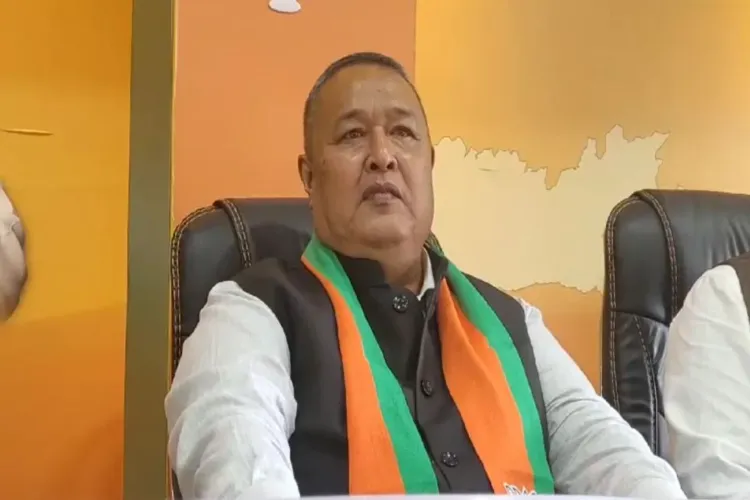
Jagdambika Pal, BJP MP, on Thursday said the proposed ₹1 lakh crore Economic Stabilisation Fund reflects the foresight of the Bharatiya Janata Party-led government and will serve as a buffer against future economic shocks.
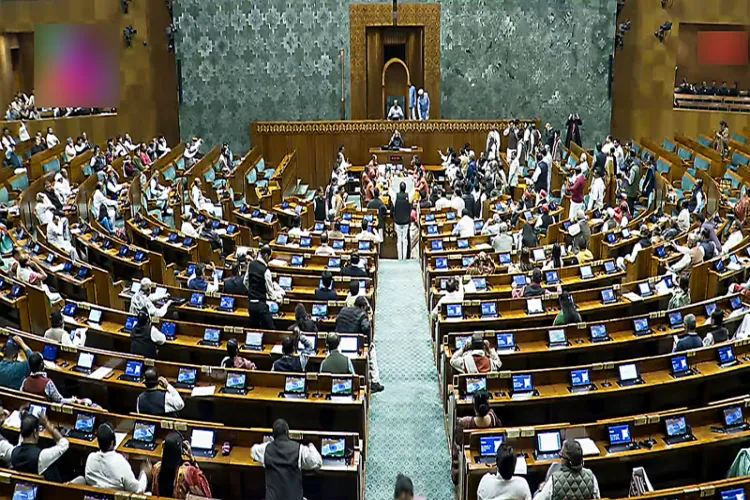
Participating in a discussion on the second batch of Supplementary Demands for Grants for 2025-26 in the Lok Sabha, Pal said the government has also allocated additional expenditure for food and fertiliser subsidies to support farmers and the poor.
Through the second batch of supplementary demands, the government is seeking Parliament’s approval for additional net spending of ₹2.01 lakh crore in the current fiscal.
A major component of this expenditure is the proposed ₹1 lakh crore Economic Stabilisation Fund. The government has also sought approval for an additional ₹19,230 crore towards fertiliser subsidy and ₹23,641 crore for subsidies under the Pradhan Mantri Garib Kalyan Anna Yojana (PMGKAY).
Other key allocations include ₹41,822 crore for the Ministry of Defence.
Pal said the government led by Narendra Modi had transformed India from a “fragile economy” in 2013 into the world’s fifth-largest economy and asserted that the country is on track to become the third-largest by 2027.
He added that amid geopolitical tensions and the crisis in West Asia affecting global supply chains and oil prices, the government is taking steps to shield the Indian economy.
“The proposed Economic Stabilisation Fund shows the farsightedness of the Modi government. It will be a corpus to be used in times of crisis,” Pal said.
During the discussion, Ashwini Vaishnaw, Union Minister for Railways, urged political parties to unite in addressing global challenges affecting the country.
“Today the world is facing a big challenge and everyone should come together to solve this challenge. This kind of politics should not happen,” he said.
Earlier, N. K. Premachandran of the Revolutionary Socialist Party objected to the discussion, saying the government had not circulated a detailed document on the demands for grants.
Responding to the concern, Kiren Rijiju, Minister for Parliamentary Affairs, said the House had lost three days in discussions on the Motion and the demands needed to be passed before March 31.
“Today it is already March 12 and we have to pass the Supplementary Demands for Grants because the money has to be spent by March 31, 2026,” Rijiju said.
Participating in the debate, Congress MP Shafi Parambil raised concerns over reports of LPG shortages affecting restaurants and public facilities.
Referring to reports that the lawyers’ canteen at the Delhi High Court had temporarily stopped serving main course meals due to cooking gas shortages, Parambil said the growing panic over LPG supply was worrying.
“The shortage of LPG supply and the way the government has dealt with the war crisis is becoming a burden on us. The government is creating two crises — one the surrender crisis and second the cylinder crisis,” he said.
Parambil also urged the government to strengthen rural income by expanding the Mahatma Gandhi National Rural Employment Guarantee Act (MGNREGA), adding that the government should acknowledge the economic difficulties faced by people.
READ MORE: DySP Santosh Kumar's emotional reunion with Habib Mastar Sir
He further claimed that the Indian rupee was the worst-performing currency in Asia.