Ahmedabad
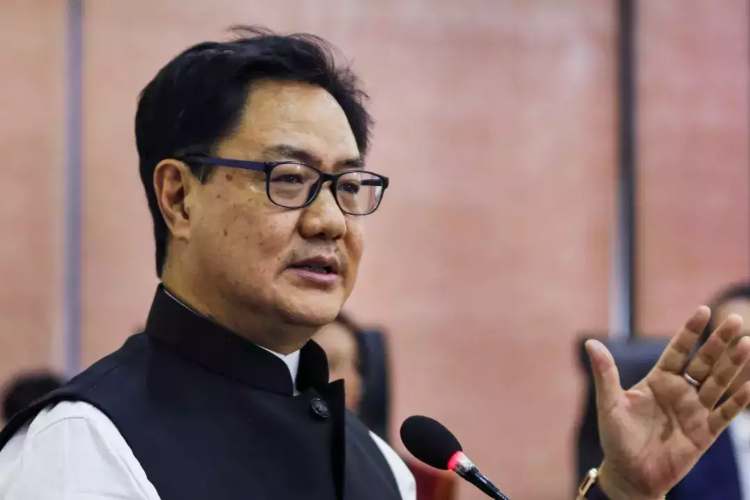
Emphasizing the need for reforms in judicial appointments, Union Law Minister Kiren Rijiju has said the procedure of the Collegium system is very opaque and there exists "internal politics" in the Judiciary.
He was speaking at 'Sabarmati Samvad', an event organised by Rashtriya Swayamsevak Sangh (RSS) weekly magazine 'Panchjanya' on Monday.
The Minister said, "When we brought the National Judicial Appointment Commission (NJAC), it was challenged and the Supreme Court struck it down. If there is no system to regulate the judiciary then the term judicial activism is used."
The NJAC was a proposed body, which would have been responsible for the appointment and transfer of judges to the higher judiciary. The NJAC Act and the Constitutional Amendment Act came into force on April 13, 2015. But the top court on October 16, 2015, struck down the NJAC Act. The verdict brought back the primacy of the collegium system of judges appointing judges.
Rijiju also called for a self-regulatory mechanism within the Judiciary to regulate the conduct of judges.
He said in the era of social media and live streaming of court procedures, it is normal that people would judge the judges.
"I cannot order the judiciary. I just want to caution the judiciary that they are part of the democracy, people are watching them so their behaviour should be accordingly," Rijiju said.
The Minister said he has observed that half the time judges are busy deciding appointments, thereby affecting their primary job of "delivering justice".
"Now I have observed that more than half of the time, judges spend time in appointing judges instead of delivering justice. The internal politics of the Judiciary is not seen from the outside. There are intense deliberations. Sometimes even groupism also happens. The procedure is very opaque, and not transparent. If judges play the executive role, then it would be reviewed," Rijiju said.
ALSO READ: Justice DY Chandrachud appointed as next CJI
Notably, the Supreme Court Collegium is presided over by the Chief Justice of India and consists of the four senior-most judges of the court. Though the government can raise objections or seek clarifications with respect to the recommendations of the Collegium, the government is bound to approve the names if the five-member body reiterates them.










.webp "Representational image")




.webp)