Riaz Malik/Vrindavan
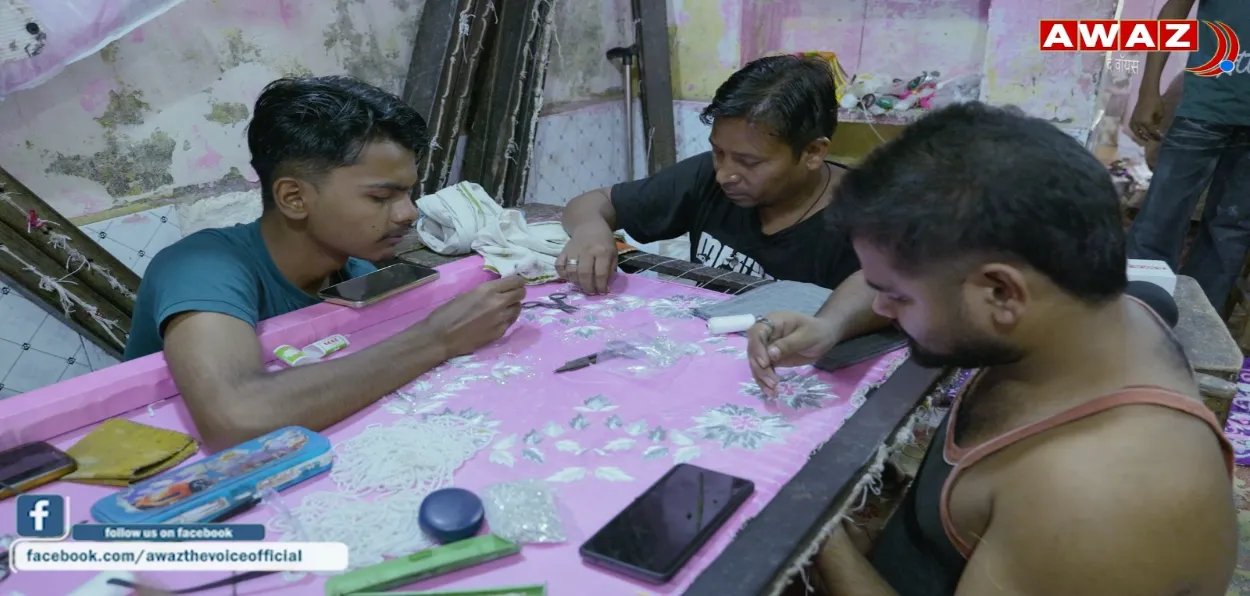
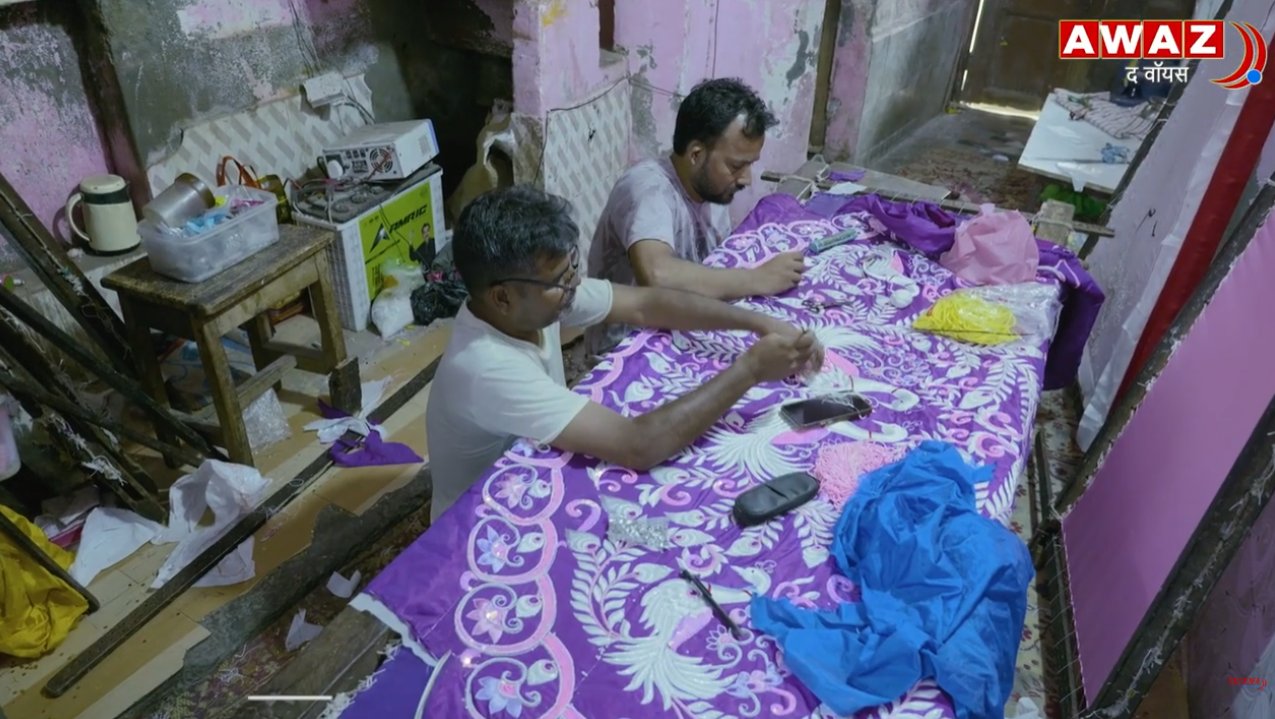
The needle in Mohammad Arif’s hand moves in a steady, rhythmic motion, drawing silk thread through a piece of pink sheer fabric stretched tightly across a wooden frame. His eyes remain fixed on the needle. So do those of the five other artisans seated around the frame.
The Muslim artisans are working on a lehenga (Full length skirt) to be embroidered with silk and metallic threads, and embellished with stones and gems in intricate motifs.
“This lehenga is for Radha Rani, and it has to be delivered well before Janmashtami,” Arif says.
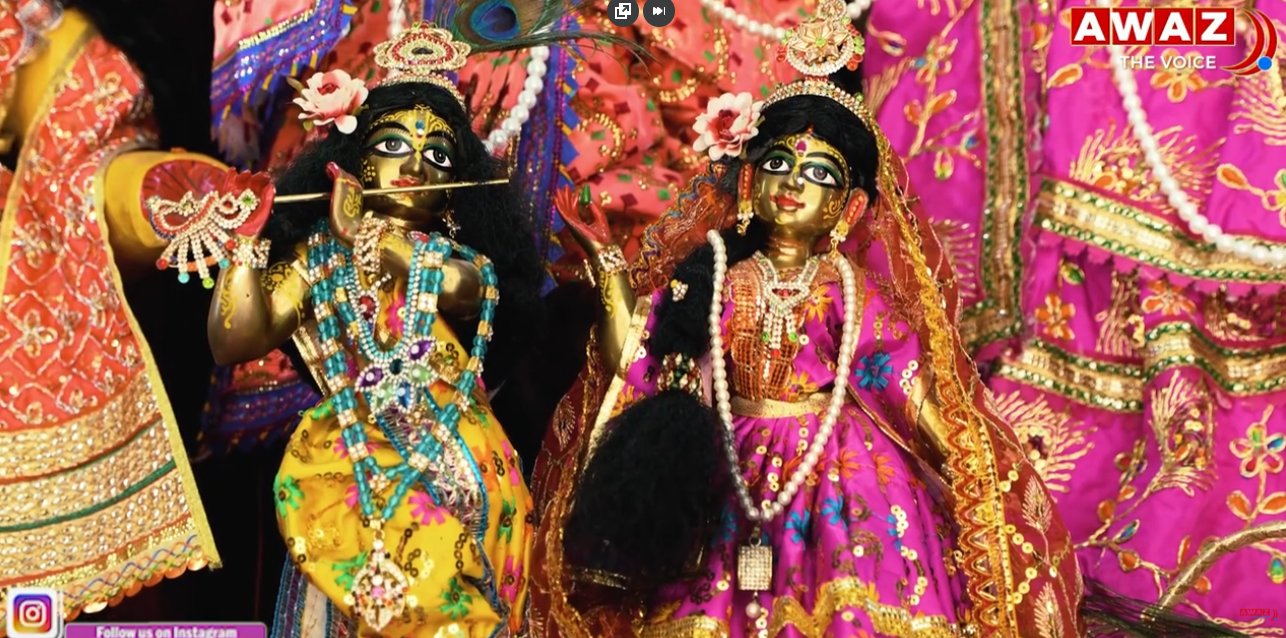
For decades, Muslim artisans in Vrindavan have been quietly contributing to the visual splendour of Hindu devotional traditions. Their hands create everything from the elaborate garments of Banke Bihari and Radha Rani to tiny costumes and accessories for Laddu Gopal, the child form of Lord Krishna.
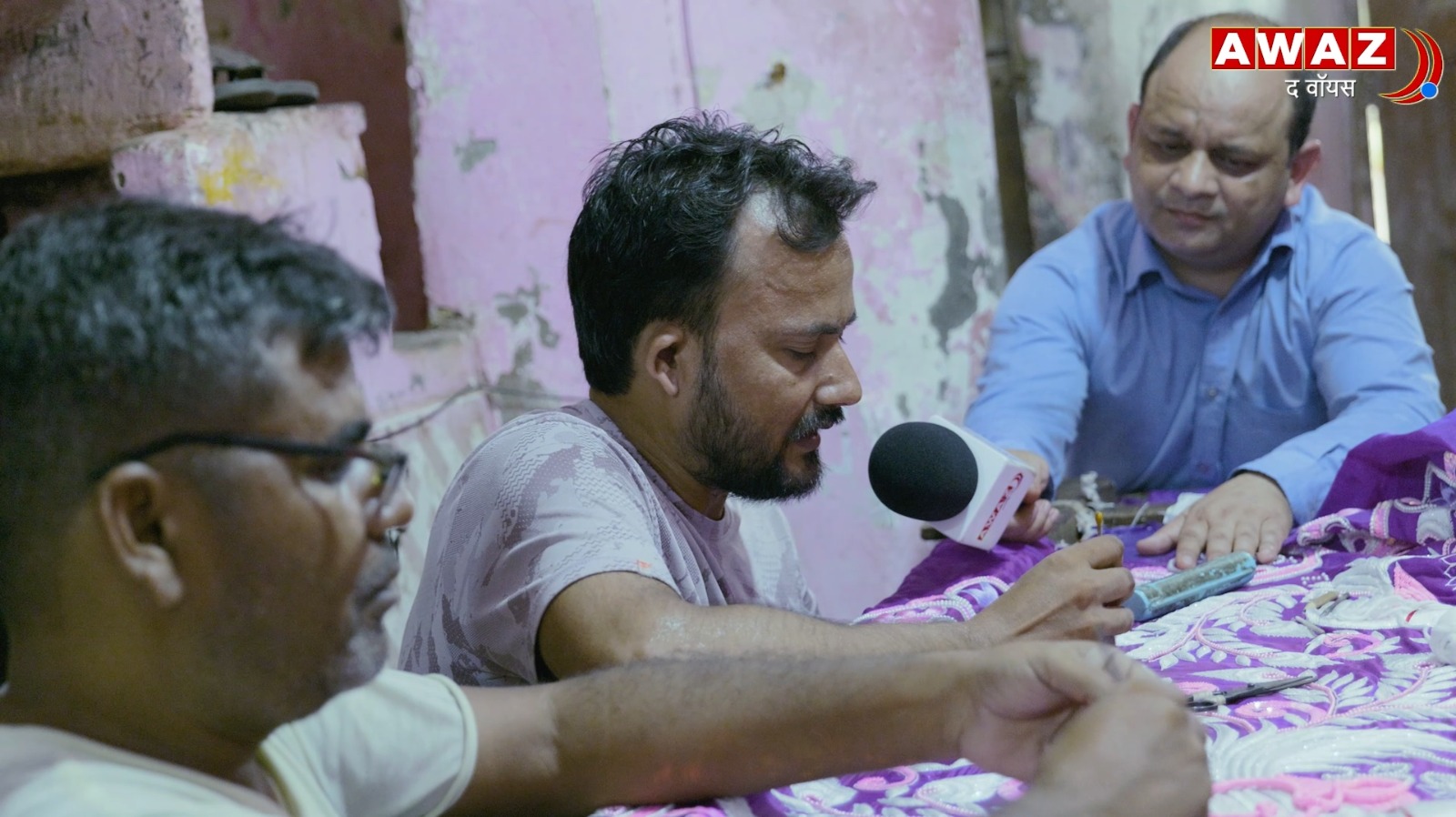
As Janmashtami approaches—the festival marking the birth of Lord Krishna—the pace of work in these workshops intensifies. Orders have to be completed in time for devotees and temples preparing for elaborate celebrations.
The lehenga being embroidered by Arif and his colleagues is intended for Radha, traditionally regarded in the Braj tradition as Krishna’s beloved and the central figure of his devotional lore.
The scene is repeated in many Muslim households and small workshops around Mathura Gate in Vrindavan, where artisans work in groups to complete orders for deity garments. They make patkas and other clothes for Laddu Gopal (Krishna), and lehengas, chunaris and odhnis for Radha Rani and other deities.
“We make dresses for Laddu Gopal, Radha Rani and other deities. Devotees buy them to offer to the deities, and they are also used to dress idols in temples and homes during festivals and special occasions,” says one artisan.
Mathura and Vrindavan, the twin cities of the Braj region in Uttar Pradesh, occupy a unique place in Hindu religious and cultural traditions. Mathura is traditionally regarded as the birthplace of Krishna, while Vrindavan is associated with his childhood and youth, particularly the pastoral and devotional stories surrounding Krishna and Radha.
The region attracts millions of pilgrims and visitors, and its temples are known not only for their rituals and music but also for the elaborate decoration of their deities. Dressing the idols, therefore, is an important part of temple and household worship, particularly during festivals.
Much of this specialised clothing is produced locally by artisans whose skills have been passed down through generations.
And a significant number of them are Muslims.
“We work very hard on these dresses. In fact, many Muslim artisans come from neighbouring places like Agra, Firozabad, etc. to work on embroidery in Vrindavan,” says Arif.
Artisans involved in the trade estimate that around 3,000 Muslims are engaged in making and embroidering such devotional garments in the wider Vrindavan-Mathura area.
Their work is sold not only in local markets but also reaches cities such as Delhi and Jaipur. Some of the garments are reportedly exported to devotees and Indian communities abroad, including in Dubai and the United States.
For Shahrukh, who has worked in the craft for around 13 years, there is little mystery about why he does it.“This is our work and our livelihood,” he says.
Women are also involved in the craft, although artisans say men currently constitute a larger share of the workforce.
For these craftsmen, the religious identity of the customer is secondary to the skill involved in producing the garment. Their finished work eventually becomes part of Hindu religious practice, whether it is worn by a deity in a temple or offered by a devotee at home.
The relationship between the artisans and the predominantly Hindu market around them appears, at least in these workshops, to be largely transactional and cordial.
“All the shops belong to Hindus while the artisans are Muslims,” says another craftsman, who is working on a chunari for Radha Rani. “We work on orders from shopkeepers and wholesalers. Whenever we go to a shopkeeper to deliver the stuff, he treats us nicely and invariably offers us a cold drink.”
Mohan Singh, a non-Muslim artisan who has been in the profession for about 17 years, says that most of his colleagues are Muslims and that religious differences have never caused friction among them.
“We work together peacefully,” he says. Muslim artisans similarly say they have not faced discrimination because of their faith.
The coexistence is particularly striking in a town where Hindu religious life is deeply visible. Vrindavan is home to some of the most prominent Krishna temples in India, while mosques also exist in the vicinity of major temples and religious sites.
The artisans’ work offers a more intimate picture of this coexistence: not one built around grand declarations, but around employment, inherited skills and everyday economic relationships.
Yet the craft faces a challenge that has little to do with religion: low remuneration.
Artisans fear that traditional hand embroidery may not survive another generation unless wages improve and the craft is adapted to changing markets.
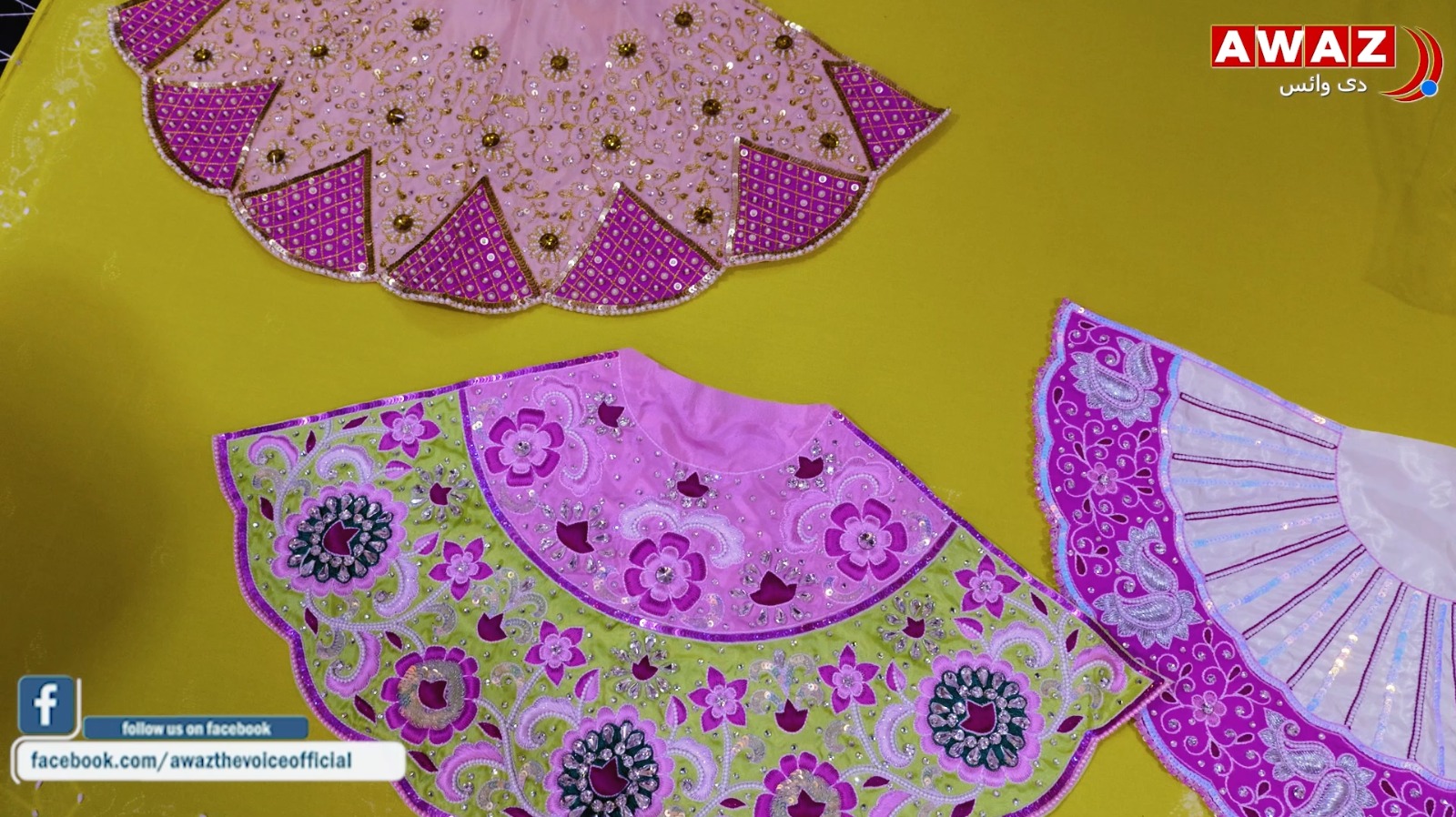
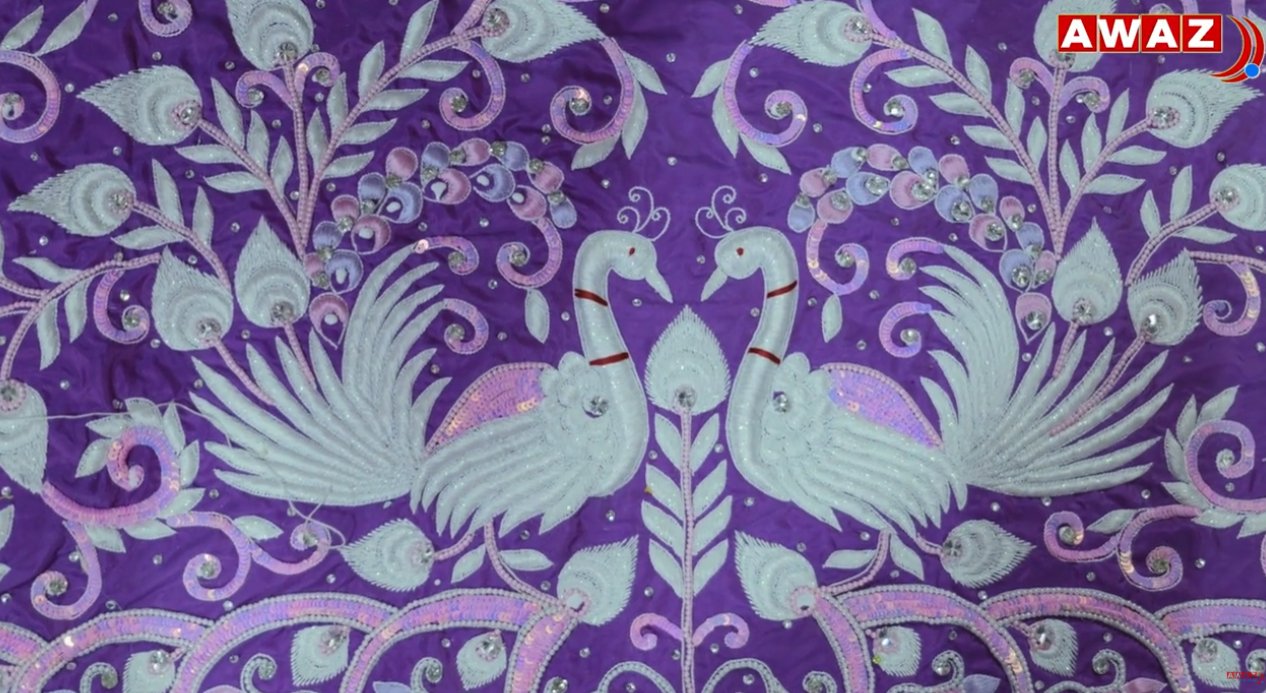 A closer look at the intricate design on a lehenga
“We are paid Rs 300 a day for skilled work, while a labourer is paid Rs 700,” says Arif.
Mohan Singh shares the concern from another perspective. Although he has spent nearly 17 years in the profession and enjoys the work, he says his children are unlikely to take it up because of the low income.
The concern is significant because the craft involves considerable manual labour and time. Unlike machine-made garments, intricate hand embroidery can take hours or even days, depending on the design and embellishment.
Yamin, another artisan, explains the process. “First, we have to draw a design on butter paper, followed by printing it on the cloth. We use resham (silk) and silver- or gold-coated thread for embroidery. Usually, four or five people sit together to work on one item, and the time required depends on the design.”
The process combines drawing, pattern transfer, embroidery and embellishment. The final product can be particularly elaborate for major festivals, when temples and devotees seek new garments for their deities.
For the artisans, however, the work represents more than an unusual occupational niche. It is a traditional craft embedded in the economy and cultural life of Braj.
Their hands work on garments associated with one of Hinduism’s most beloved deities, while their own religious identity is Muslim. Yet inside these workshops, the needle, thread, design and deadline appear to matter more than the faith of the person who will eventually wear the garment—or, more precisely, the deity for whom it is made.
As Janmashtami approaches, Arif and his colleagues continue to work with their eyes fixed on the fine needlework before them.
The colourful lehenga will eventually leave the wooden frame, pass through the hands of a shopkeeper or devotee and become part of a festival steeped in centuries of devotion.
ALSO READ: Allama Iqbal faced fatwa for writing Gayatri Mantra in Urdu
For the artisans who made it, it is also a reminder that traditions often survive through unexpected hands—and that craftsmanship can create its own language of coexistence.

_(1).jpg "Visitors gather at the Santosh Mitra Square Durga Puja pandal, themed on the 150th anniversary of Vande Mataram and its historic role in India's freedom movement, ahead of the festival, in Kolkata")
.jpg "Gujarat’s women entrepreneurs bring their craftsmanship to life during Navratri")





_(4).webp)
_(2).webp)