

 Grace Mubashshir
In India, the Muslim community has largely aligned itself with secular parties, with notable exceptions in Hyderabad, Kerala and Assam, where identity politics plays a more significant role. Muslims have maintained a long association with the Indian National Congress, while also shifting their support to regional parties in response to changing political circumstances and electoral expediency.
Hilal Ahmed’s book Siyasi Muslims helps us understand and challenge many of the myths surrounding Muslim politics. In recent years, Muslim representation in legislative bodies has been on a steady decline, partly due to the reconfiguration of caste politics and the electoral success of the BJP.
This political reality presents both challenges and opportunities for the community. It should encourage community leaders to rethink the manner in which Muslims participate in Indian democracy.
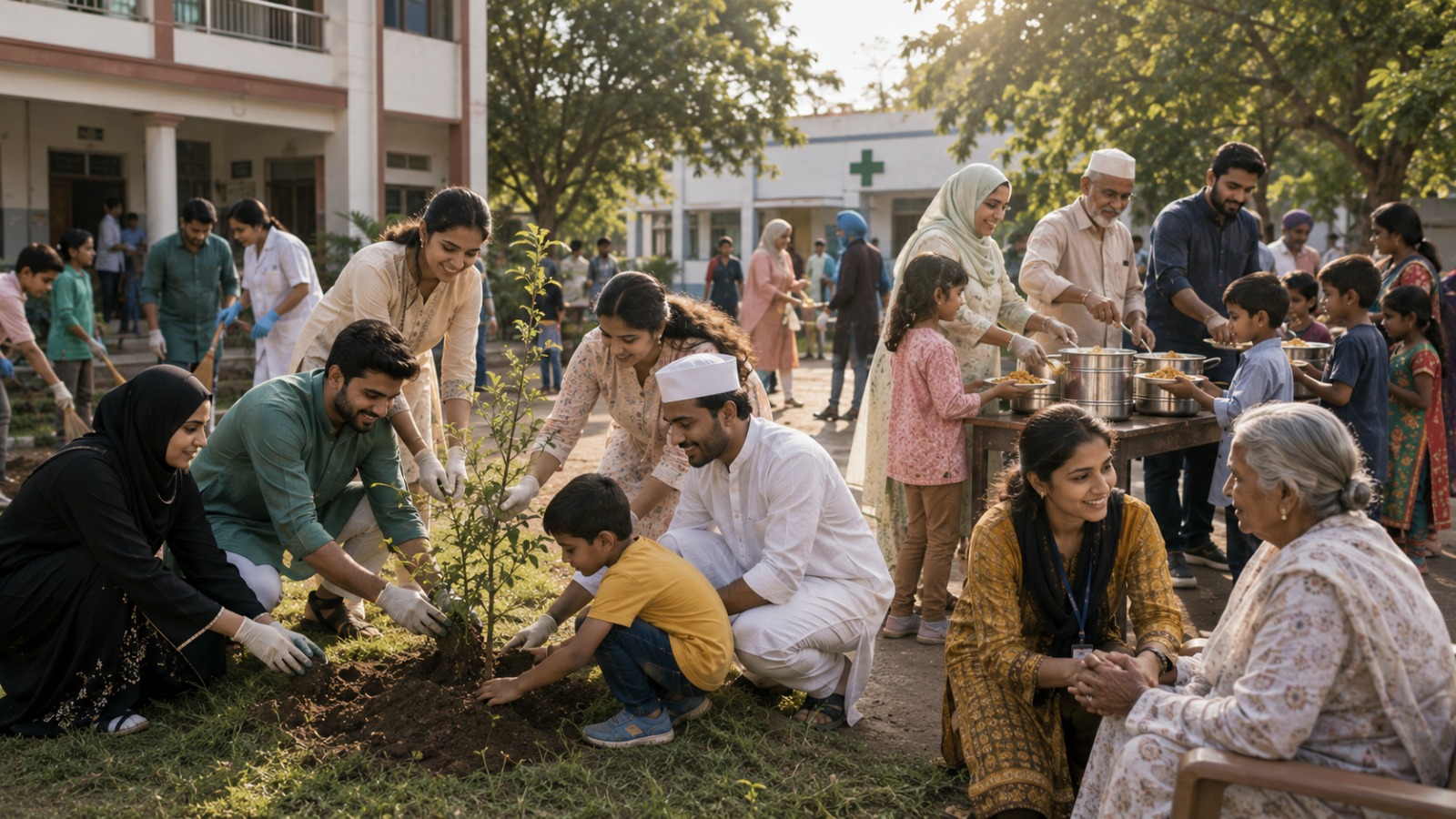
I suggest “instrumental stakeholding” as one possible way forward. Politics is often reduced to elections and rhetoric around secularism.
Why can we not expand our understanding of politics beyond this performative democracy to encompass community-building, civic participation and constructive engagement with the state?
Instrumental stakeholding can be understood as political participation through formal, rights-based engagement rather than merely voting along religious lines, enabling communities to hold the state accountable and secure welfare benefits.
This approach views democracy as a peaceful and continuous striving for the realisation of constitutional guarantees. A few recent developments suggest that sections of the Muslim community are moving towards such a democratic orientation.
In Bengal, sections of Muslims have opposed cow slaughter; Muslims participated in mass movements such as the farmers’ protests; and, importantly, large numbers participated in peaceful, constitutional protests against the CAA in response to what they perceived as injustice.
These developments, although not necessarily representative of the entire community, demonstrate the multiple avenues available for democratic engagement.
Although I do not have official data to substantiate this argument, I have noticed a positive attitudinal change among Indian Muslims: increasing investment in education and the formalisation of madrasa institutions.
I regularly receive requests from madrasas in Nuh district, Haryana, seeking support to facilitate children’s transition to mainstream schools. A local survey conducted in Jamia Nagar, Delhi, has also indicated a trend towards greater investment in education among Muslims.
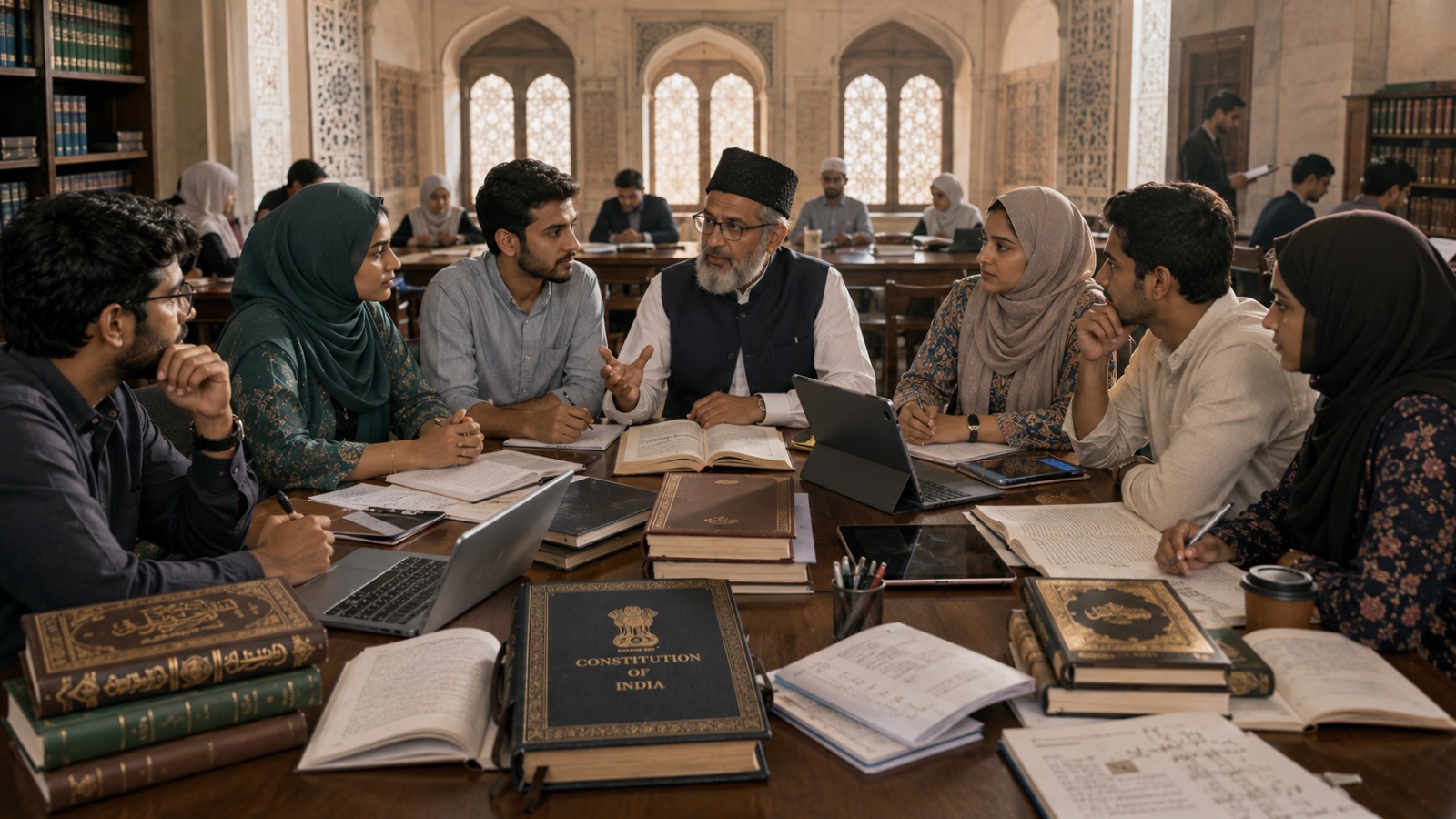
These developmental changes are significant for India, particularly because democracy is ultimately sustained through healthy competition and participation by all sections of society.
It is a fact that Islamic jurisprudence evolved and was applied long before the emergence of modern nation-states. Classical fiqh texts were written by Muslim scholars, often with the patronage of rulers, and in social and political contexts very different from those of today.
From this, a question arises: Does this mean that this jurisprudence must remain unchanged and impervious to new circumstances? Or do changing realities warrant timely adjustments and reinterpretation?
The legal arena remains a major point of contention in India. Across the world, a new body of Islamic jurisprudence has emerged, often referred to as Fiqh al-Aqalliyyat, or the jurisprudence of Muslim minorities. Scholars such as Taha Jabir Al-Alwani were among the proponents of this approach.
Simply put, this approach attempts to contextualise Islamic law in accordance with modern realities while remaining rooted in Islamic principles. Rather than relying exclusively on classical interpretations, it seeks to engage with contemporary circumstances and questions.
For example, how should Muslims relate to non-Muslims in a modern polity? Some classical interpretations treated non-Muslims as occupying a subordinate legal status. Contemporary approaches challenge such distinctions. Since modern political systems are founded on the principle of equal citizenship, discriminatory legal frameworks based on religious identity are increasingly being reconsidered.
Take the question of polygamy. Proponents of Fiqh al-Aqalliyyat argue that Islamic jurisprudence can take into account the legal and social requirements of the country in which Muslims live.
Accordingly, several Muslim-majority countries have restricted or prohibited polygamy, while others require judicial or administrative consent for a subsequent marriage.
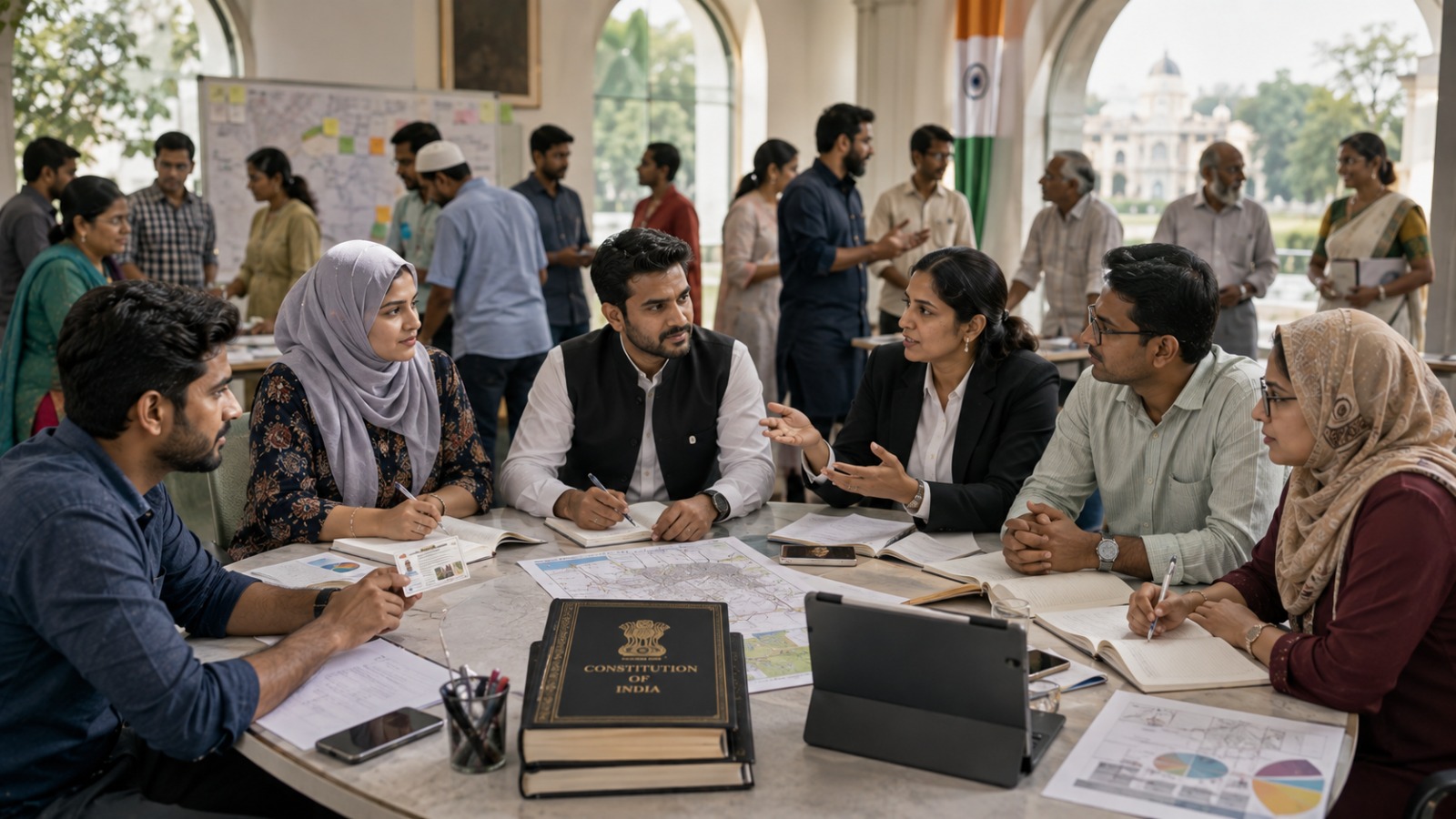
My question, therefore, is simple: why can we, as Muslims, not also embrace adjustment, introspection and contextualisation?
Democracy demands engagement at every level. Rather than viewing change with suspicion, we should make serious efforts to contextualise our personal laws in a timely manner, just as Islamic scholars have reinterpreted jurisprudence in response to changing circumstances throughout history.
Democracy begins at home, extends to the community and ultimately encompasses the nation. The lack of confidence within the community may also stem from our own attitudes. Only a changing society can keep pace with a changing world.
So, how can we, as Muslims, expand and deepen our democratic engagement?
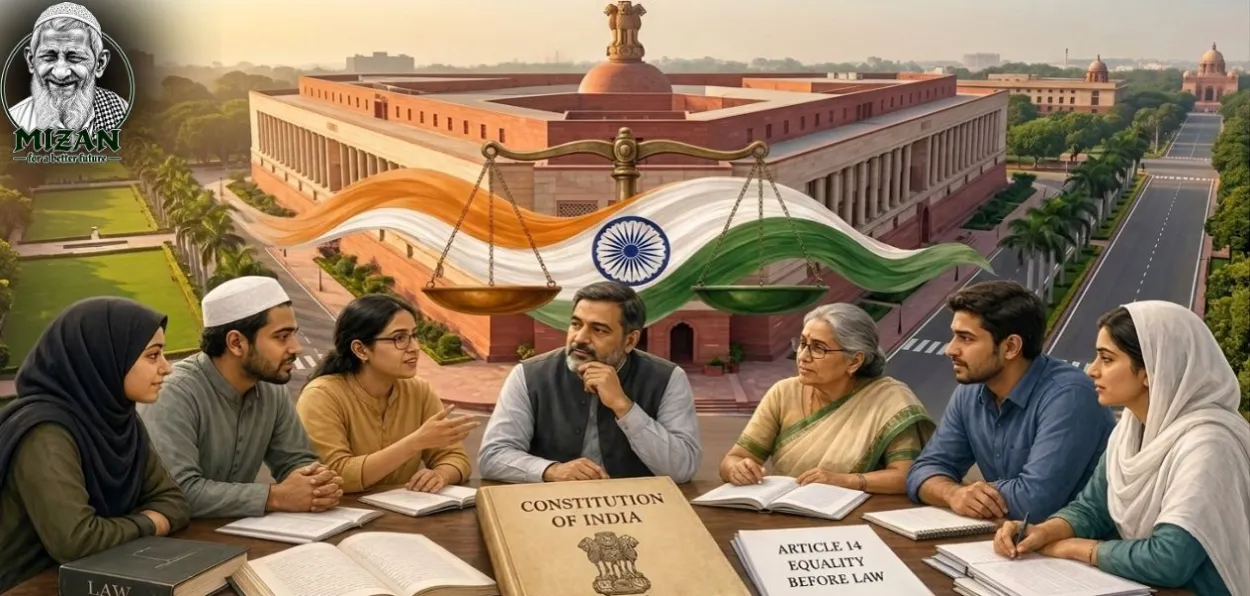
One possible answer lies in the theological principle of Maslahah Mursalah, or public welfare. It can also be understood in the contemporary context as a form of constitutional civic fraternity.
The principle involves forming grassroots, cross-sectional alliances with marginalised communities to defend basic human rights and advance social justice.
This principle has roots in classical Islamic jurisprudence, including the Hanafi tradition. Similar ideas have been deployed in different Muslim societies to develop new forms of democratic and plural engagement.
The concept is particularly relevant to plural societies, where constructive engagement across religious and social identities is essential. It has also been incorporated into the Ihsan Framework for political engagement.
Ihsan may be understood here as a commitment to welfare for all, irrespective of religious or ethnic identity. In the Indian context, this means moving beyond a narrowly Muslim subjectivity and striving for society’s development and the nation as a whole, grounded in the universal values of love, justice and fraternity.
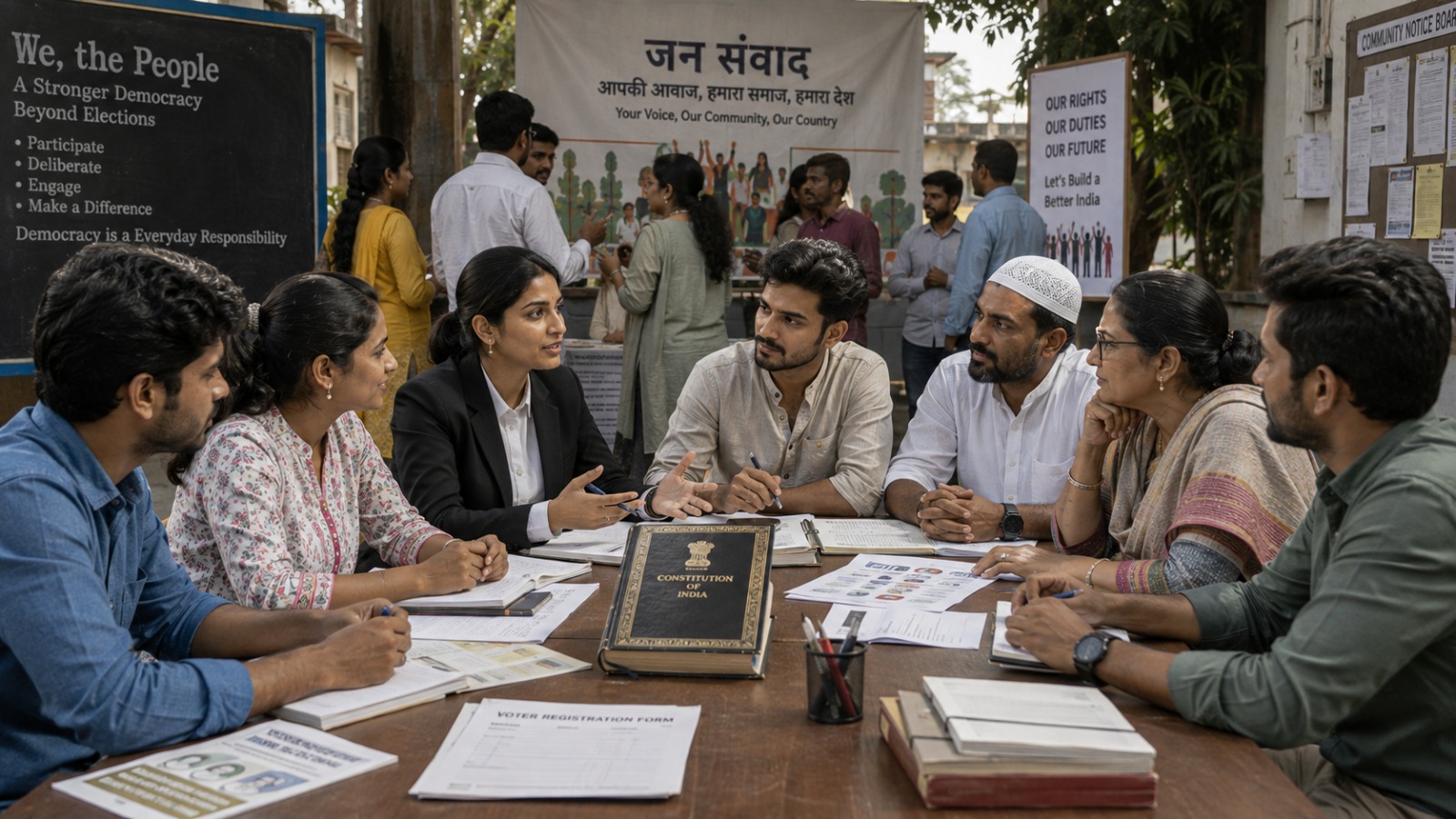
This theological and ethical approach seeks to align Muslim life with the realities of the contemporary world. It encourages common and inclusive approaches to social problems, grounded in justice and informed by the broader objectives of Islamic law, or Maqasid al-Shariah, rather than by a rigid adherence to particular historical formulations.
Such an approach can provide a constructive framework for religious engagement, environmental protection, social welfare and nation-building. Its larger purpose is to align Muslim social life with the principles of constitutional morality.
Muslims are neither condemned to perpetual marginalisation nor trapped in what some critics describe as a state of democratic suffocation. Indian democracy, like every democracy, is constantly evolving.
Democracy is ultimately an embodiment of our collective striving for a common future. As a community, we should actively participate in that process.
The challenges, debates and internal churning within society are themselves signs of an aspiration for improvement.
If we, as a community, are dissatisfied with our present circumstances, that dissatisfaction should become the impetus for a journey towards a better future. But that journey must begin with introspection within the community.
If we can participate in democracy beyond the tokenism of elections and the pursuit of parliamentary representation, it could mark a defining moment in the evolution of Indian Muslims.
ALSO READ: Muslim organisations: Overly politicised and unexplored creative spaces of religion
We should learn from best global practices and remain open to innovation. The space for creative democratic engagement is virtually limitless—provided we are genuinely willing to explore it.
Mubashir Vattaparamban is an independent researcher based in Delhi.