Abdul Moeed Azhari
In Islam, the mosque is an important place. It has historically played a profound role in Muslim life. There is deep wisdom attached to the association with mosques. Therefore, the imam, who leads the prayers and other activities, should be chosen with great care and a sense of responsibility. The imam must be capable of fulfilling the demands of both wisdom and responsibility.
Unfortunately, this profession has become one of the greatest victims of negligence. In many cases, mosque committees are driven by worldly concerns, prestige, reputation, and public recognition. Individuals become presidents of mosque committees because of their wealth and begin to see themselves as custodians of religion.
They prefer an imam who interprets religion according to their wishes. Religious activities become linked to their personal preferences.
Most troubling is the fact that many of these committee members lack even basic religious knowledge.
They are unfamiliar with Islamic teachings and jurisprudence, yet they are the ones selecting the imam. Consequently, they do not appoint a true imam; they hire someone merely to lead the five daily prayers—a service provider.
The salary of an imam is lower than that of a daily wage earner.

The reality today is that many imams themselves are unaware of the true significance and responsibilities of their position.
They do not fully understand how important the office of imamate is or what duties it entails. They have neither been given such knowledge nor received such training or practical experience.
In the eight-to-twelve-year curriculum of most religious institutions, there is no dedicated discipline focused on imamate. What is taught under the label of imamate is usually limited to improving Qur'anic recitation and learning a few legal rulings related to prayer.
Their significance can be understood from traditions that emphasise the greater reward of worship performed in a mosque. The Prophet of Islam gave clear preference to congregational prayer in the mosque over praying alone at home and encouraged it. By declaring that prayer in the mosque carries 70 times greater rewards, he made its importance abundantly clear.
Great virtues have been associated with every aspect of mosque service, be it its construction, maintenance, or administration.
Attachment to the mosque is also linked with reward. Hundreds of narrations speak about the excellence of mosques. It has even been stated that if someone sincerely contributes even a single brick to the construction of a mosque, he earns for himself a house in Paradise.
Many traditions explicitly mention that helping build a mosque is among one of the forms of ongoing charity (Sadaqah Jariyah). As long as prayers continue to be offered in that mosque, Allah continues to reward not only the worshippers but also those who participated in its construction.
If a person contributed with the intention of conveying reward to someone else, that individual also continues to benefit from its blessings. Likewise, cleaning a mosque, sweeping it, washing it, and maintaining it with the same care one gives to one’s own home have all been encouraged and promised tremendous reward.
When we consider these lofty virtues associated with the mosque and its administration, an important question arises: Is the mosque’s relevance only based on worship?
Islamic history and its philosophies answer this question by showing that behind the immense status of the mosque lies a priceless social system. National unity, deliberation over collective concerns of the Ummah, public welfare, reform, and mutual assistance are among noble objectives of the mosque.

Through the mosque, the Prophet Muhammad provided Muslims with the finest social system. Meeting one another five times a day, standing shoulder to shoulder, and forming a single row without regard to status, wealth, race, or social rank constitute one of the greatest systems of human society known to the world.
Thus, mosques could also become useful centres for resolving Muslim issues through consensus of the wise and contribute to nation-building.
Those with means can assist those facing hardship. Mosques are centres of unity and sincerity. This is why, during the earliest periods of Islamic history, mosques served as places where the collective issues were discussed, strategies were formulated, and paths to communal progress were laid out.
They were the central institutions of God's religion; places where sincerity and good intentions had the greatest opportunity to flourish.
Where there are greater virtues, there are also greater responsibilities. A study of personalities and collective efforts throughout Islamic history reveals that the greater a person's importance, the greater his responsibility, and the more responsible a person was, the more significant he became.
From this, one can conclude that the immense importance and excellence of the mosque demand that its administration be conducted with seriousness, sincerity, dignity, and responsibility.
Yet when we look at present conditions, we find that the management of the most important institution—the mosque—has become deeply negligent and, in many cases, destructive. From the imam to the administrators, darkness prevails. Not only are many removed from the true objectives of the mosque, but they often cause harm where they should be providing benefit.
Historically speaking, two major changes have occurred in our society. First, imamate was once not a profession; today it has become a formal occupation.
Second, the mosque was once the best place for discussing collective concerns of the Ummah and exchanging ideas; today it is no longer so.
Mosques have been reduced largely to the performance of the five daily prayers, whereas they once served as primary centres of religious education. The unhealthy competition among madrasas has emptied mosques of their educational role.
The tradition of children attending the mosque has weakened. Mosques themselves have become victims of factionalism and sectarian divisions. Education has been reduced to the teaching of texts, while proper moral and spiritual training has almost disappeared.
.jpeg)
Graduates of religious institutions who have not received adequate training go on to become imams, teachers, preachers, muftis, judges, and now even spiritual guides. These individuals become the leaders of the community. The results are visible before us.
The mosque once served as the finest training institution for the community. Today, mosque-based elementary education has largely disappeared, while separate institutions are often established unnecessarily at great expense.Had educational programmes remained within mosques, children would have developed a lifelong attachment to the mosque from an early age, along with proper training and encouragement.
In that case, the administration of a mosque would have been viewed not as the management of a property but as the stewardship of a training institution.
Mosques also functioned as centres for consultation and welfare. Any beneficial initiative discussed in the mosque carried blessings because people respected its sanctity. As a result, idle talk, chaos, and time-wasting were replaced by meaningful discussion. Even someone with questionable intentions would often rethink his actions out of respect for the sacred environment.
Regular attendance at the mosque nurtured familiarity with it and sustained interest in worship. Children who came to study in mosque-based schools learned not only lessons but also respect for the mosque.
The route to the mosque became as familiar to them as the route to their own homes. They learned purity of body and speech. Backbiting, slander, gossip, and public humiliation of others were discouraged, contributing to a healthier social order.
It should be remembered that all of these benefits are directly connected to the mosque and the imam.
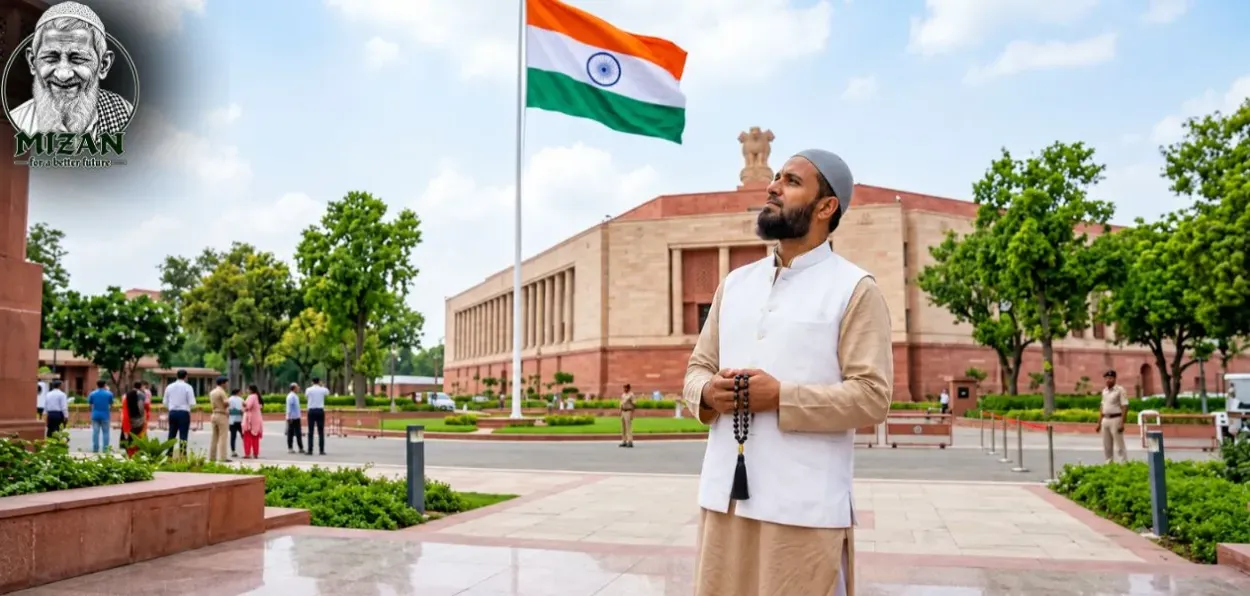
Since imamate has now become a profession, it is essential that the right person be chosen for this role, given the mosque's significance and centrality within the community. He has the power to bring about a positive change within the community and imbibe nationalistic values.
In Islam, the imam has become one of the most important and honoured figures. An imam determines the direction of a community. Imamate has become the very spirit of Islamic life.
The imam of a mosque is the leader of its worshippers and, in effect, the guide of the entire neighbourhood. He is responsible for their material and spiritual development. Even if he is not a physician himself, he should be able to organise access to one.
The duty of an imam is to connect those who are in need with those who can fulfil those needs so that people may benefit from one another. He must understand the community's needs, deficiencies, weaknesses, strengths, talents, and skills so that individuals can support one another.
This applies to every neighbourhood and every mosque. Islam thereby established a powerful system built on compassion, mutual assistance, and social responsibility.
The injustice surrounding imamate is twofold. On one hand, many are not adequately qualified for the position. On the other, the appointment process remains in the hands of unqualified individuals who view imamate as a service and the imam as a service provider. The dangerous consequences of this situation are evident.
Religious institutions have no serious planning regarding this issue. There is no specialised course in imamate, no dedicated one- or two-year training programme. Indeed, one of the greatest tragedies is that the most important position in Islam is often occupied by those who have no option available to them.
ALSO READ: Why a section of Muslims opposes UCC?
If the goal is genuine reform of the community through the mosque, then imamate must be treated with seriousness. Capable, sincere, knowledgeable, and eloquent scholars must be selected. They must be accorded the same respect and status that society grants to political, social, and economic elites.
The quality of an imam ultimately determines the quality of the people who live around his mosque.
Abdul Moeed Azhari is an alumnus of Al Azhar University, Cairo

.jpg "Gujarat’s women entrepreneurs bring their craftsmanship to life during Navratri")








.webp "AI-made representational image")