




Tarun Nandi/Kolkata
For Shariful Islam, clay has never recognised the boundaries of religion.
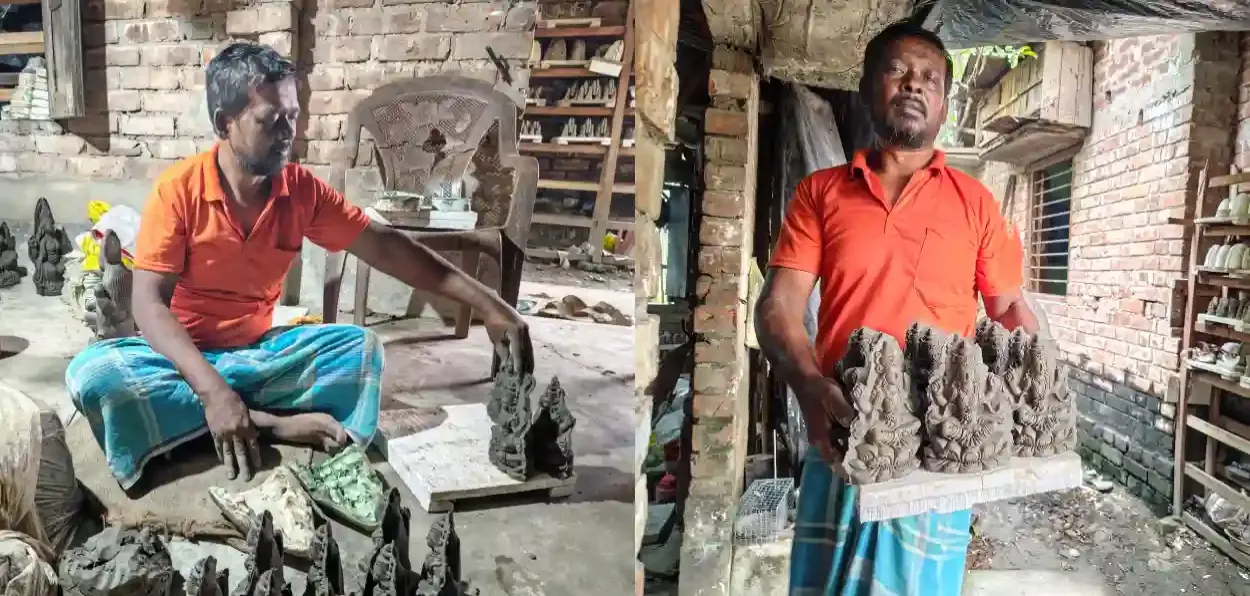
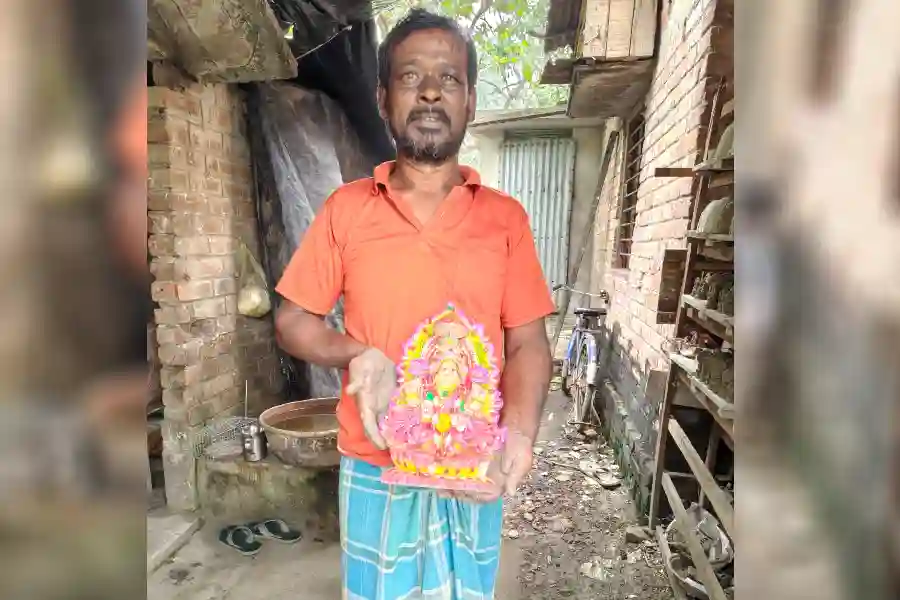
A resident of Dattapukur in West Bengal’s North 24 Parganas district, Shariful makes clay idols of Hindu gods and goddesses. With the magical touch of his fingers, lifeless lumps of clay take the form of deities. In doing so, he has never allowed religious barriers to come in the way of his art.
Better known as ‘Khoka’ among artists and people in his neighbourhood, Shariful has made a livelihood from creating idols of Hindu gods and goddesses for several years. His work is sought after across West Bengal and in other parts of the country, including Mumbai and Delhi.
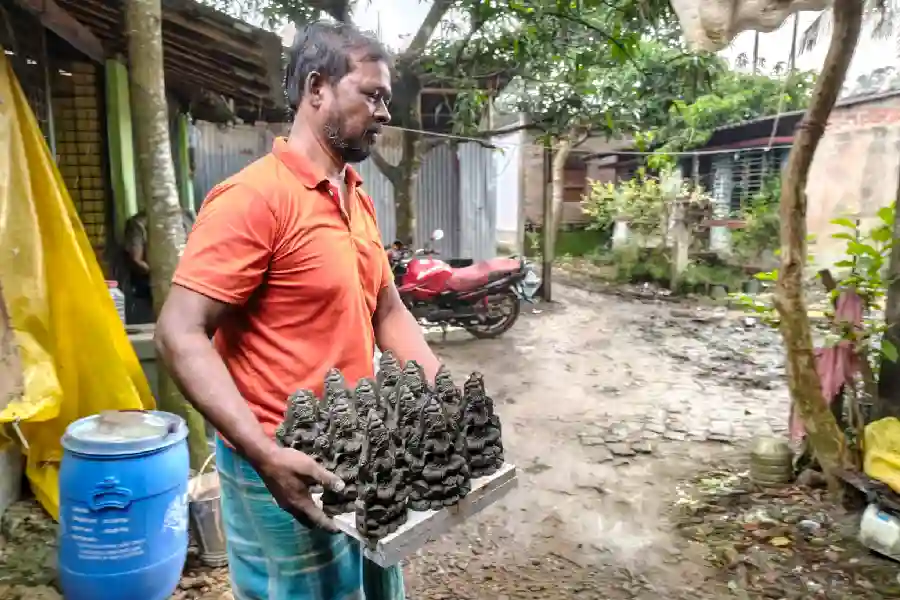
Today, he is an established artist with his own studio. But his journey to recognition was marked by poverty, hardship and struggle.
Shariful had to discontinue his education because of financial difficulties. At a young age, he began working at the potter’s wheel to help support his family. Yet poverty could not extinguish the artist within him.
As a child, he was fascinated by clay, colours and the faces of idols. He never received formal training in art, nor did he begin his career in a renowned workshop. Instead, through years of practice and experimentation, he developed his own artistic style.
He held on to his dream despite the difficult circumstances of his life. Eventually, that dream led him to establish his own studio, which he named ‘Islam Terracotta’ after himself.
Shariful handles almost every stage of the process himself—from identifying the right clay and preparing it for sculpting to constructing the basic framework of an idol.
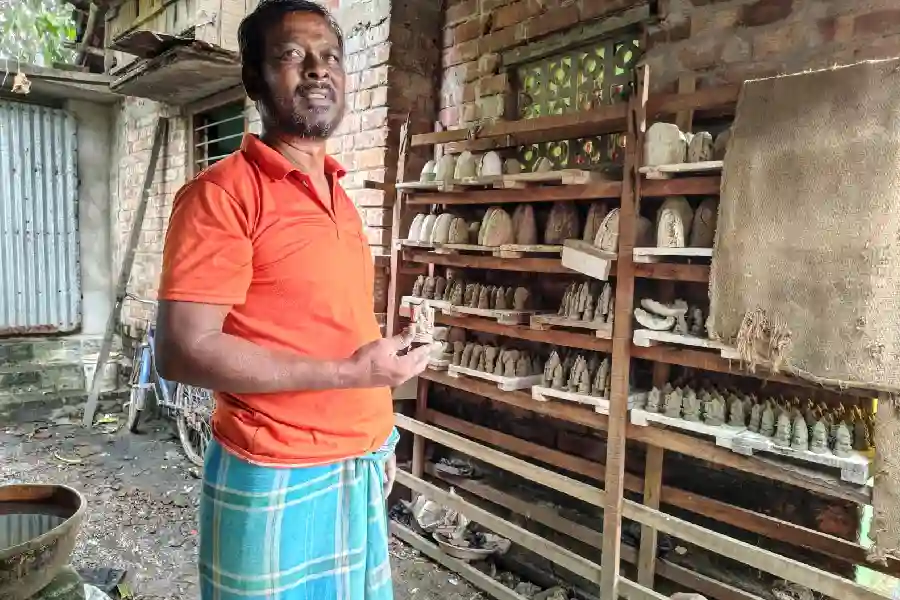
He has become particularly skilled in plastering idols and carving their faces. Over the years, several young artists have learned the craft from him. Thus, a man who once had no opportunity to receive formal artistic training is now passing on his knowledge and experience to a new generation.
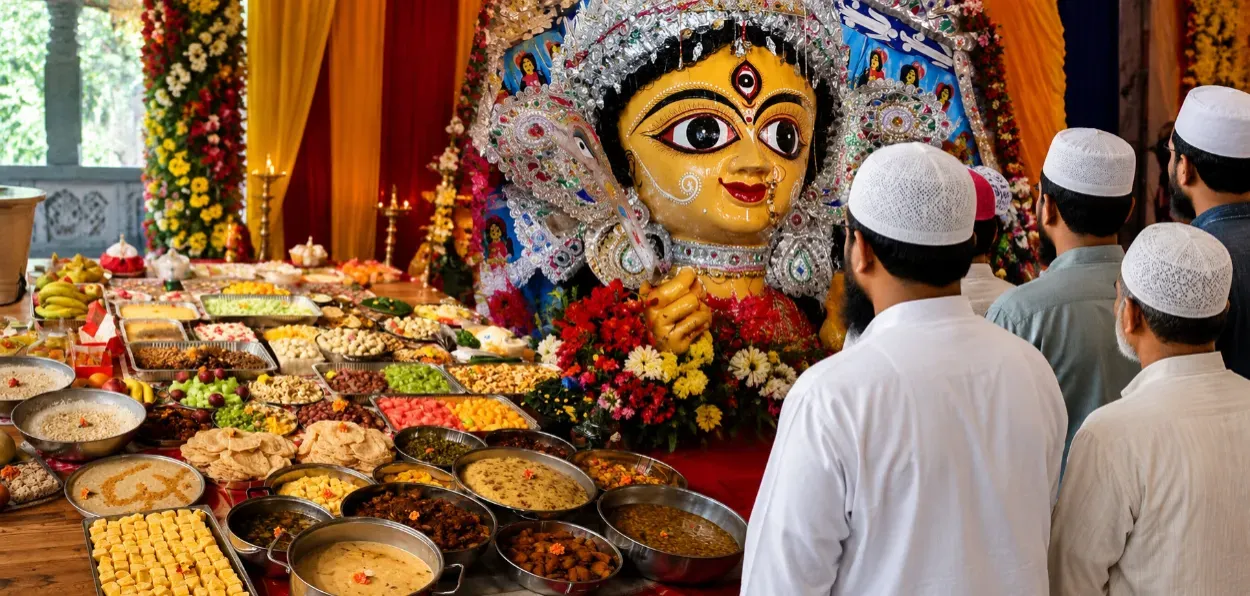
Perhaps the most striking aspect of Shariful’s work is that he is a Muslim artist who creates idols of Hindu gods and goddesses. He does not see this as a religious contradiction. For him, it is simply an expression of art.
His handmade idols of Hindu deities, alongside his own Muslim identity, offer a living reflection of Bengal’s long tradition of shared culture.
“Many people say that I am showing an example of harmony. There can be no greater honour. All religions are one in the world of art,” Shariful said.
His journey has attracted considerable attention. A documentary is being made about the artist who once had to drive a van to support his family. Books have also been published about him, and he has received recognition from various quarters.
Yet recognition has not erased his concerns about the future of the craft.
Shariful says that although many people appreciate his work, no government agency or other institution has provided meaningful support to his craft.
He fears that without sustained support from the government or other agencies, it will become increasingly difficult for the younger generation to continue this traditional art form.
At 56, Shariful Islam is not merely an established sculptor. His life and work have also become a symbol of humanity, brotherhood and Bengal’s shared cultural heritage.
For him, religious identity has never stood in the way of artistic expression. His journey shows that the identity of an artist can rise above the boundaries that divide people.
ALSO READ: JCO Salman Khan's Asiad rowing medal ignites his Olympic dream
And every idol that takes shape under his hands becomes, in its own way, a lasting image of communal harmony on the soil of Bengal.

.jpg "Gujarat’s women entrepreneurs bring their craftsmanship to life during Navratri")










.webp)