 Amir Suhail Wani
Sayyid Mojtaba Hosseini Khamenei, the new spiritual leader of Iran, issued an interesting statement when the memorandum of understanding to end the war between Iran and the US was being signed.
In his address to the Iranian people, he used the word nation four times. He said he had only agreed to the MoU keeping in mind the interests of the Iranian nation. Though he held a different view. The emphasis on the word nation reflected his practical approach. It signified a wider realisation of the fact that the interests of the nation take precedence over all else.
This message assumes significance when viewed in the modern context of Muslim political consciousness, particularly the tension between loyalty to the Muslim community and allegiance to the nation-state.
This tension is especially visible among Muslims living as minorities in plural democracies such as India. There is a perception that Muslims owe their allegiance to the Ummah first, and then comes their own nation.
The statement from Sayyid Mojtaba Hosseini Khamenei, a spiritual leader of an Islamic nation, gives an interesting perspective as to what the Muslim priorities should be in the practical world.
Historically, the concept of the Ummah emerged in the formative period of Islam under the leadership of Prophet Muhammad in seventh-century Arabia. The early Muslim community in Medina was not simply a religious congregation but also a socio-political entity organised around shared faith and mutual obligations.
The classical Islamic notion of the Ummah—a universal community of believers bound by faith rather than territory—was historically meaningful in a world where political authority often overlapped with religious identity.
The famous Constitution of Medina established a community defined partly by belief but also by covenant and civic responsibility. Significantly, this charter described Muslims and the Jewish tribes of Medina as belonging to a single political community while allowing each group to maintain its religious identity.
.png)
In one of its clauses, it states: “The Jews of Banu ‘Awf are one community with the believers; the Jews have their religion and the Muslims have theirs.” This early arrangement illustrates that the idea of Ummah, in its historical origin, possessed both a moral and a civic dimension. If such a proposition was true in that time and space, it should also hold relevance in the Indian context.
In the early period, when Prophet Muhammad and his companions were the pioneers, the idea of the Ummah carried practical political meaning because religious identity and political authority were deeply intertwined. Over subsequent centuries, as Islamic empires expanded across vast territories, the notion of a universal Muslim community remained a powerful moral and spiritual symbol, even though political authority was fragmented among multiple dynasties and states. It is interesting to note that Muslim political growth was at its height when the community was fragmented rather than united.
During the medieval period, Muslim political unity was more aspirational than real. Empires such as the Ottoman Empire, the Safavid state in Persia, and the Mughal Empire in South Asia governed different regions of the Muslim world independently, often competing with one another militarily and ideologically. Despite these divisions, the symbolic idea of a broader Islamic community persisted because the political order of the time was not based on nationalism. Allegiance was primarily dynastic, imperial, or religious rather than national in the modern sense. Muslims could imagine themselves as part of a civilisational space connected by pilgrimage, scholarship, and trade, even while living under different rulers.

At the spiritual level, the Prophet described believers as bound together through mutual compassion, saying that they are “like a single body: when one limb suffers, the whole body responds with sleeplessness and fever” (Ṣaḥīḥ al-Bukhārī, Ṣaḥīḥ Muslim). This metaphor emphasised moral solidarity rather than a centralised political authority.
The emergence of the modern nation-state system dramatically transformed this landscape.
The modern international order, structured around sovereign nation-states and territorially bounded citizenship, has fundamentally altered the context in which Muslims live and understand their obligations. The challenge facing Muslims today, especially Indian Muslims, is not merely theological but civilisational: how to reconcile a transnational religious imagination with the concrete political realities of nationality, citizenship, and constitutional belonging.
The political order that dominates the contemporary world largely traces its intellectual and institutional origins to the Peace of Westphalia. The Westphalian framework established the principle that political authority should be territorially defined and sovereign within clearly demarcated borders. Over time, this system evolved into the modern idea of nationalism, in which citizens share a political identity based on territory, history, language, and constitutional belonging.
The rise of nationalism in the nineteenth and twentieth centuries reshaped not only Europe but also the Muslim world. European Muslims came to terms with the new reality, and the majority adjusted to the secular set-up of their countries. Empires dissolved, colonial rule ended, and dozens of new nation-states emerged across Asia, Africa, and the Middle East.
For Muslims living in these new political formations, the shift required a reconfiguration of identity. The Ummah could no longer function as a political unit in a world where sovereignty belonged to nation-states recognised by international law. Until 1946, France refused to grant Muslims citizenship unless they gave up Islam. Even in countries with Muslim majorities, national identity increasingly superseded transnational religious solidarity. Turks identified primarily with Turkey, Indonesians with Indonesia, Egyptians with Egypt, and Pakistanis with Pakistan. Each state developed its own national narratives, political institutions, and strategic interests. In practice, therefore, the unity of the Ummah remained largely symbolic, expressed through religious rituals and emotional solidarity rather than through shared political authority.

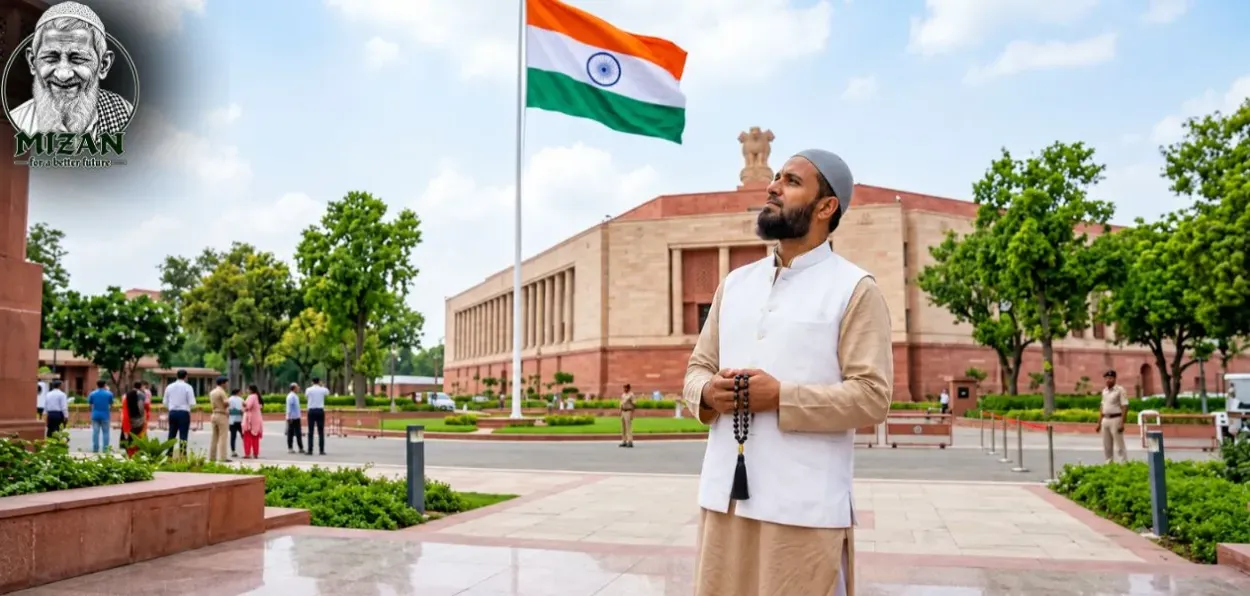
For Muslims in India, the question of loyalty acquired particular complexity during the struggle against British colonial rule. The Indian independence movement brought together diverse communities—Hindus, Muslims, Sikhs, Christians, and others—under a shared aspiration for freedom. Many Muslim leaders participated actively in this struggle, contributing to a composite nationalist vision that emphasised pluralism and shared citizenship. This vision eventually found expression in the Constitution of India, which guarantees equal rights and citizenship irrespective of religion.
From an Islamic ethical perspective, commitment to constitutional citizenship can also be understood through the Qur’anic emphasis on honouring agreements and covenants. The Qur’an instructs believers: “O you who believe, fulfil your covenants” (Qur’an 5:1), and again, “Fulfil the covenant of God when you have taken it” (Qur’an 16:91). In this sense, citizenship within a constitutional order may be interpreted as a form of social covenant requiring loyalty and responsibility.
Yet the trauma of Partition in 1947 introduced new anxieties about identity and belonging. The creation of Pakistan on the basis of religious nationalism complicated the political psychology of Muslims who remained in India. While the vast majority chose India as their homeland and committed themselves to its democratic framework, the conceptual tension between religious solidarity and national citizenship occasionally resurfaced in political discourse. In a globalised era, where media instantly connects distant events—from Palestine to Syria and other conflict zones—many Muslims experience emotional identification with struggles occurring far beyond their own national boundaries. Such identification, while understandable on humanitarian grounds, can sometimes blur the distinction between moral sympathy and political allegiance.
First, the global system is structured around sovereign nation-states whose legitimacy derives from territorial governance and citizenship rather than religious affiliation. International law, diplomacy, economic cooperation, and security arrangements all operate within this framework. No supranational Islamic political authority exists that could realistically embody the unity of the Ummah. Even organisations that claim to represent Muslim solidarity, such as the Organisation of Islamic Cooperation, function primarily as diplomatic forums rather than as political unions with binding authority.
Second, the internal diversity of the Muslim world makes the idea of a unified political Ummah impractical. Muslims differ widely in language, culture, political systems, and national interests. Indonesia, Saudi Arabia, Iran, Turkey, and Morocco, for instance, pursue policies shaped by their own strategic calculations rather than by a collective Islamic agenda. Conflicts between Muslim-majority states themselves illustrate this fragmentation. These realities demonstrate that the unity of the Ummah today is primarily spiritual and ethical rather than institutional or political.
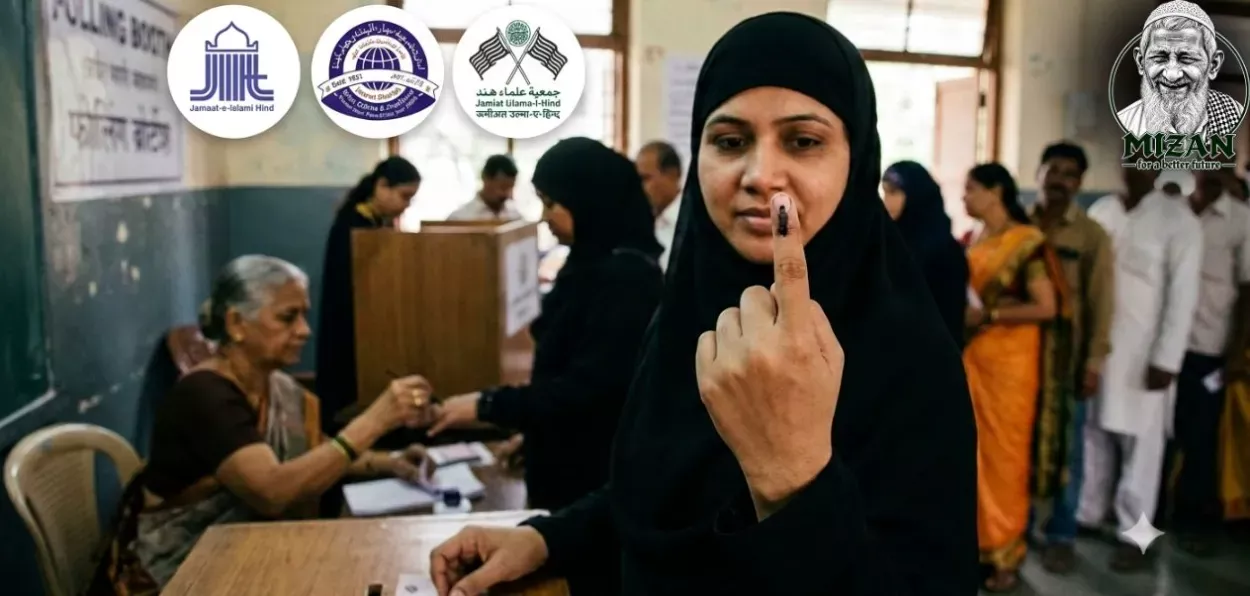
Third, modern citizenship entails responsibilities that cannot be outsourced to transnational identities. In democratic societies, citizens participate in political life through voting, civic engagement, public debate, and constitutional loyalty. These responsibilities require commitment to the well-being, stability, and progress of the nation in which one lives. For Indian Muslims, this means investing intellectual, moral, and civic energy in strengthening India’s democratic institutions and pluralistic ethos. The Qur’an itself recognises the plurality of human societies and the existence of nations as part of the divine order: “O mankind! We created you from a male and a female and made you into nations and tribes so that you may know one another” (Qur’an 49:13). The verse affirms that the diversity of communities and peoples is not a contradiction of divine unity but part of its manifestation.
Indeed, many Islamic scholars have argued that patriotism is compatible with religious devotion. The ethical teachings of Islam emphasise justice, trustworthiness, social harmony, and respect for agreements—principles that naturally support responsible citizenship. The Qur’an commands believers to stand firmly for justice, declaring: “O you who believe! Stand firmly for justice as witnesses for God, even if it be against yourselves or your parents or relatives” (Qur’an 4:135). It also encourages kindness and fairness towards those with whom Muslims coexist peacefully: “God does not forbid you from being kind and just towards those who do not fight you because of religion or expel you from your homes” (Qur’an 60:8). These teachings provide a powerful ethical foundation for peaceful coexistence in plural societies.

Love for one’s homeland also emerges naturally from the human sense of belonging. When Prophet Muhammad was forced to leave Mecca during the migration to Medina, he expressed profound attachment to the city of his birth, declaring: “By God, you are the most beloved land to me, and had your people not expelled me, I would not have left you” (Sunan al-Tirmidhī). This statement illustrates that attachment to one’s homeland is a natural and legitimate human sentiment that does not contradict religious devotion.
For Indian Muslims in particular, prioritising national loyalty does not require abandoning the spiritual idea of the Ummah. The Ummah can remain a moral and cultural bond connecting Muslims across the world through shared rituals, charitable concern, and intellectual exchange. What must be reconsidered is the expectation that this bond should override the concrete political obligations of citizenship. In a world where governance, law, and security are organised nationally, attempts to revive a supranational political Ummah risk generating confusion rather than unity.
Moreover, India’s constitutional framework provides a unique opportunity for Muslims to demonstrate how religious identity and national loyalty can coexist harmoniously. The Indian republic is founded on principles of secular governance, democratic participation, and cultural pluralism. By actively participating in this civic order, Indian Muslims contribute not only to the nation’s progress but also to a broader model of coexistence that challenges stereotypes about Islam and modernity. Islamic teachings on social responsibility reinforce this approach. The Prophet emphasised the importance of honouring social commitments, stating: “Muslims are bound by their conditions” (Sunan Abū Dāwūd). Living responsibly within a constitutional framework, therefore, reflects fidelity both to civic duty and to Islamic ethics.
The struggle between Ummah and nationality, therefore, is less a theological dilemma than a historical transition. The world that produced the classical political idea of the Ummah has largely disappeared, replaced by an international system defined by nations and citizenship. Recognising this transformation does not diminish the spiritual universality of Islam; rather, it situates Muslim identity within the practical realities of contemporary political life. For Indian Muslims, embracing national belonging while maintaining religious integrity is not a compromise but a mature synthesis—one that affirms both faith and homeland in a balanced and constructive manner.
The events of the recent Israel–Gaza war and the subsequent escalation involving Iran and several Gulf actors have further exposed the largely notional character of the contemporary Ummah. Despite unprecedented levels of destruction in Gaza, widespread civilian suffering, and emotive global outrage among Muslim populations, the response of Muslim-majority states remained largely confined to diplomatic statements, humanitarian appeals, and symbolic condemnations.
Institutions such as the Organisation of Islamic Cooperation issued strong declarations against Israeli actions and called for international intervention, yet these pronouncements translated into little meaningful collective action on the ground. Even as rhetorical unity was repeatedly invoked, the political reality reflected fragmentation, strategic caution, and competing national interests. Some states prioritised economic stability, others navigated geopolitical alliances, and many avoided confrontation, revealing the limits of transnational religious solidarity in a state-centric world order.
The emerging tensions surrounding Iran and its adversaries within the Muslim world further deepen this paradox. Rather than presenting a unified front, Muslim-majority countries remain divided along ideological, sectarian, and strategic lines, with conflicts and rivalries often playing out within the same civilisational space that the concept of Ummah seeks to unify.
Even in moments of crisis involving Muslim populations, responses are mediated through national interest rather than collective obligation. These developments underscore a sobering reality: while the Ummah continues to function as a powerful moral and emotional idea, it lacks institutional coherence and political agency in the modern international system. In practice, the bonds of nationhood, state sovereignty, and geopolitical calculation have decisively overtaken the ideal of a unified Muslim community, rendering the Ummah less a lived political reality and more a symbolic expression of shared faith.
In this sense, the future of Muslim political thought may lie in moving beyond the Ummah versus nation binary. The ethical core of Islam encourages justice, compassion, and human solidarity—values that can strengthen national societies rather than compete with them. When Muslims see their country not merely as a place of residence but as a shared moral project, patriotism itself becomes a form of ethical commitment. For Indian Muslims, affirming loyalty to India while nurturing the spiritual bonds of the global Muslim community offers a path towards confidence, stability, and meaningful participation in the modern world.
ALSO READ: Why is it important for Muslim organisations to do introspection?
A sober analysis of contemporary realities suggests that the classical political notion of the Ummah is largely redundant in the modern world.
While empathy with co-religionists, as an aspect of shared humanity, is desirable, the interests of the nation and its people must be prioritised in the new realities of this world.
The author is a Kashmir-based researcher on Islamic studies









_(1).webp)

_(1).webp)
.webp)