

Manoj Kumar Ojha/Doomdooma
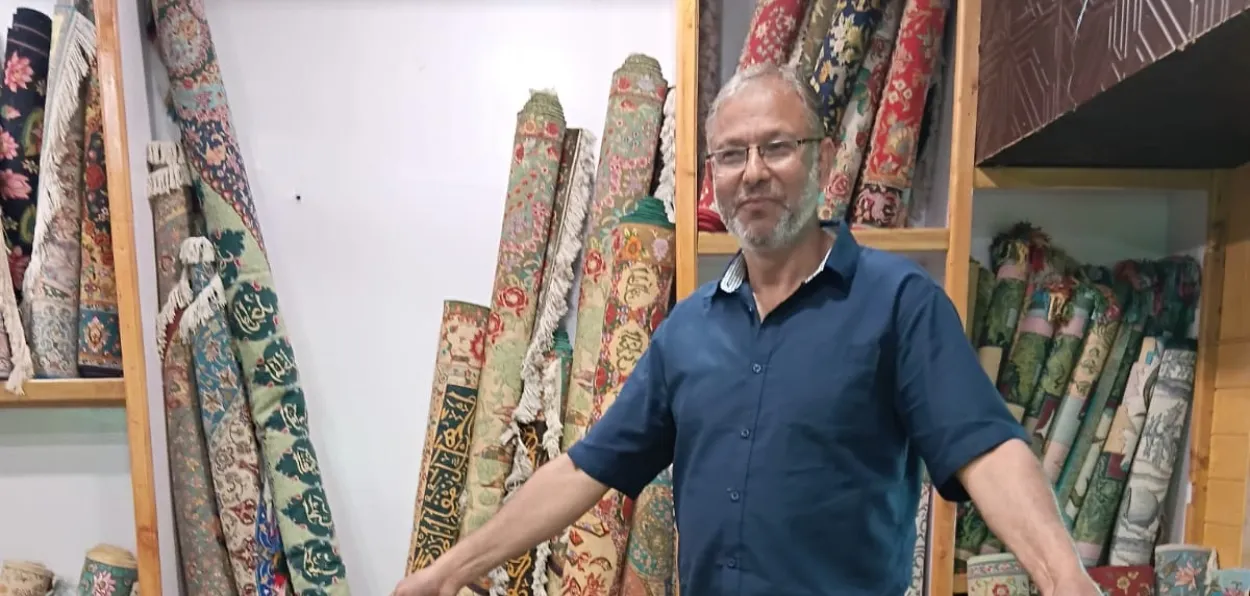
"This Jumma (Friday) is very sacred and special. On one side there is Jumma namaz, and on the other, our Hindu brothers and sisters are taking a holy dip in the Doomdooma river as the Chhath Puja begins with Nahay-Khay today. All are remembering the Almighty, whether you call Him Allah or Bhagwan," Samar Ali told Awaz-The Voice in Tinsukia, Eastern Assam.
As the Chhath Puja began on Friday, riverbanks, ponds and community ghats (jetties) across Assam are preparing to witness an extraordinary expression of faith that transcends religious boundaries. While the festival has its cultural roots in Bihar, its growing celebration across eastern Assam, particularly in Tinsukia, Dibrugarh, Sivasagar, Lakhimpur, Dhemaji and Jorhat districts, is turning into a remarkable example of social harmony, mutual respect and collective responsibility towards nature.
For Noori Begum, however, Chhath is much more than a religious observance. It is an occasion to celebrate the values that bring people together, irrespective of faith.
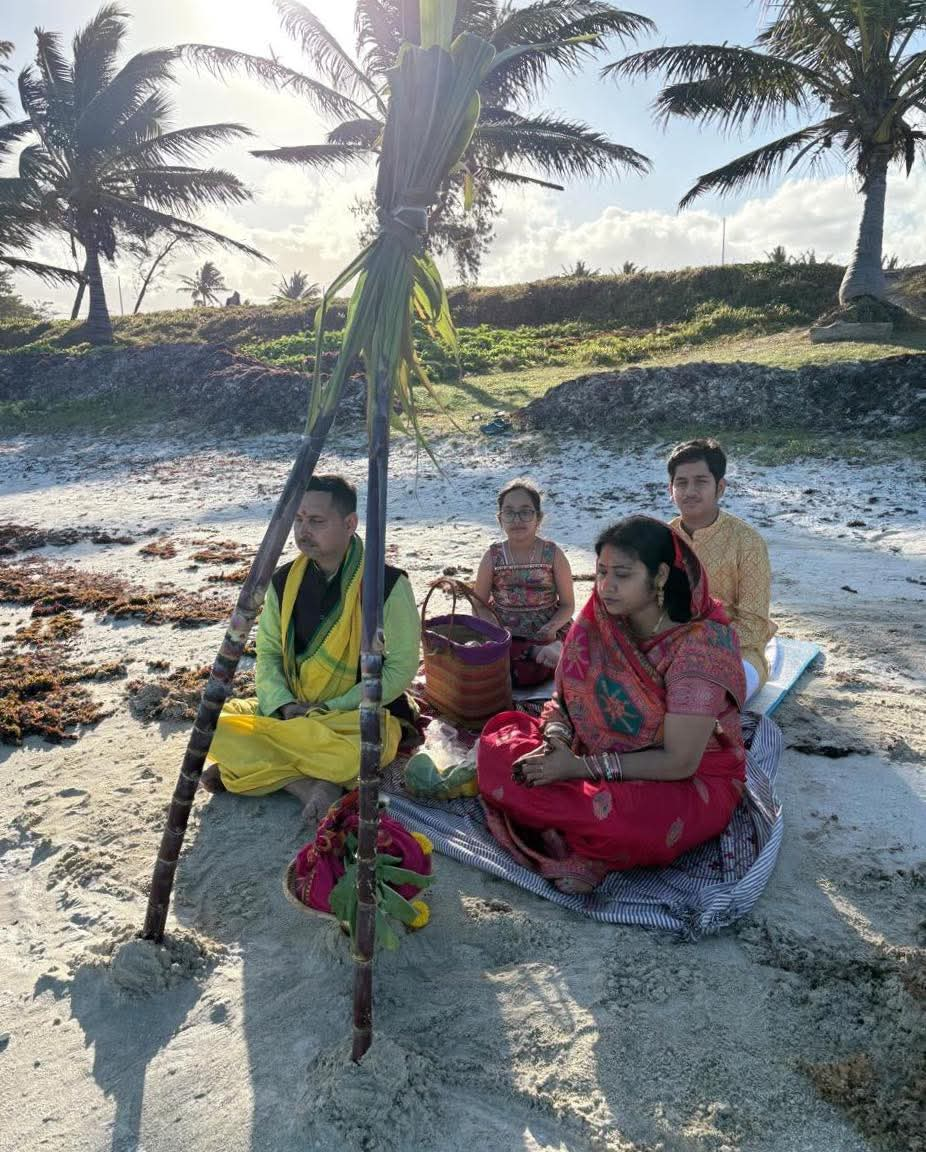 A family waiting for offering prayers to the Sun
"We observe and respect this festival because it represents Hindu-Muslim unity, women's empowerment and a shared responsibility towards our rivers and the environment. It teaches us that humanity, mutual respect and care for nature are much greater than religious differences," she said.
Noori is not the only one in embracing this spirit. In several parts of eastern Assam, people of different religious communities, including Muslims, Sikhs and Buddhists, offer prayers to Chhathi Maiya.
Men and women from these communities join Hindu devotees in celebrations.
Locals across Assam are helping in organising the festival – right from sprucing up the ghats to making good required for prayers available; the locals enthusiastically join the festival, which is thanksgiving to the Sun for his bounties.
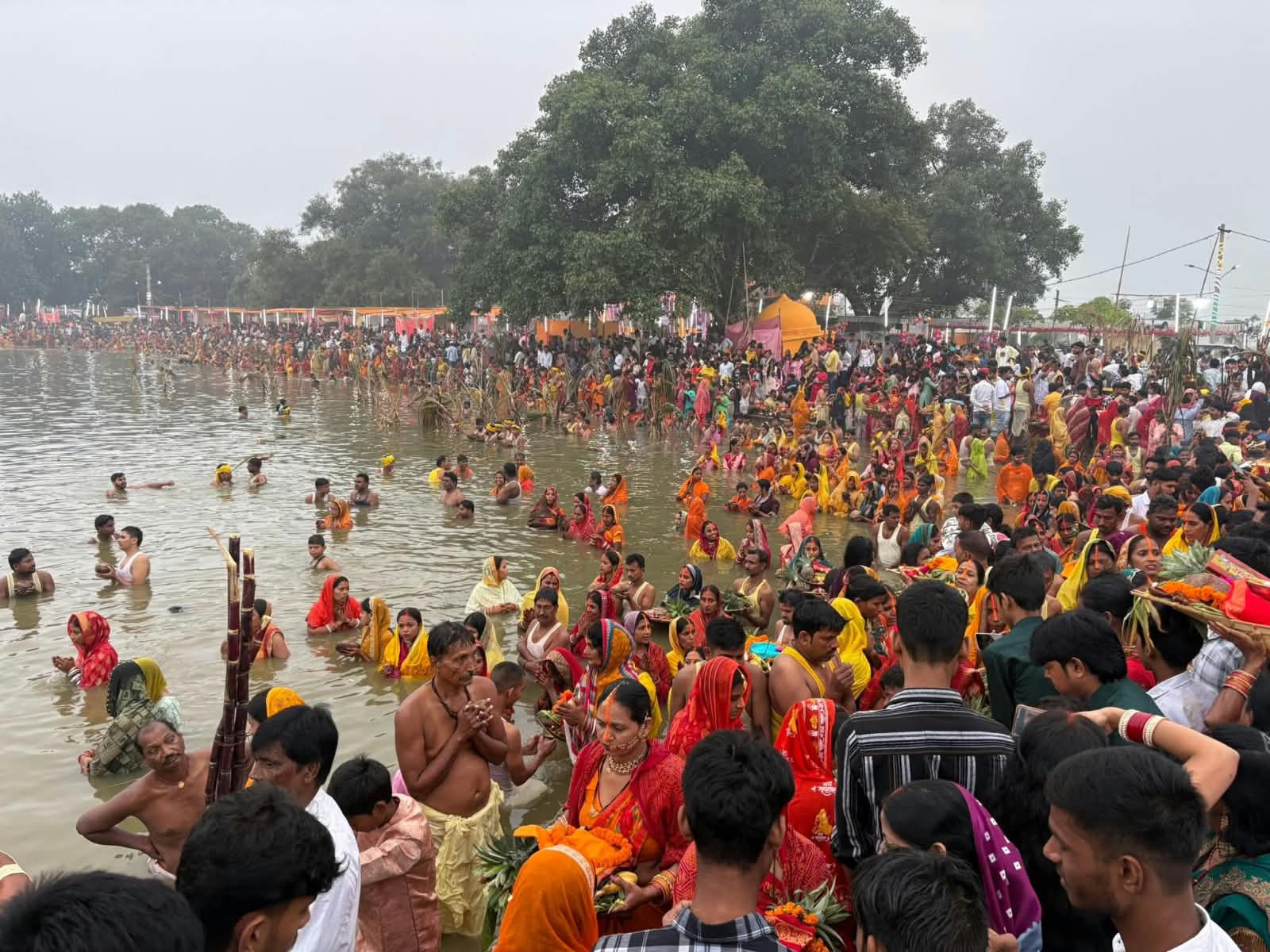 Devout praying to Sun God while standing in water
Perhaps the most touching expression of this solidarity emerges in the hours before devotees proceed to the riverbanks for the sacred offerings. Sudip Prasad of Tinsukia says, “On the days of Chhath, our Muslim brothers take the initiative to ensure that the roads and highways along which devotees walk are clean. They sweep the roads and sprinkle water to keep the surroundings dust-free. Muslim youths also join their Hindu neighbours in cleaning the Chhath ghats. Their contribution does not end there. They make sure to light-up the streets along the routes passing through their localities so that devotees can safely reach the ghats in the wee hours."
He believes that these gestures, often performed without expectations of publicity or recognition, represent the true meaning of communal harmony.
"Many of our Muslim brothers also contribute generously, often without revealing their identities, towards organising the puja. This is a relationship built on mutual love, trust and respect. Hindus, too, extend financial and other assistance to mosques and dargahs (shrines). We stand beside one another in moments of religious and social importance. Ultimately, we are one. Before being anything else, we are human beings," he added.
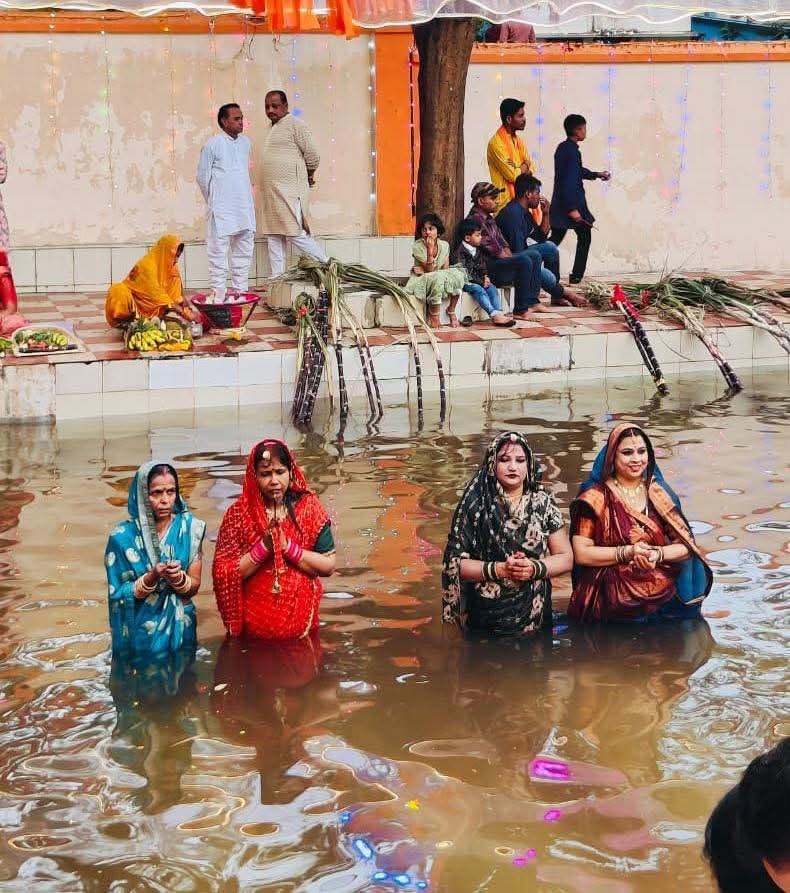 Women devotees praying
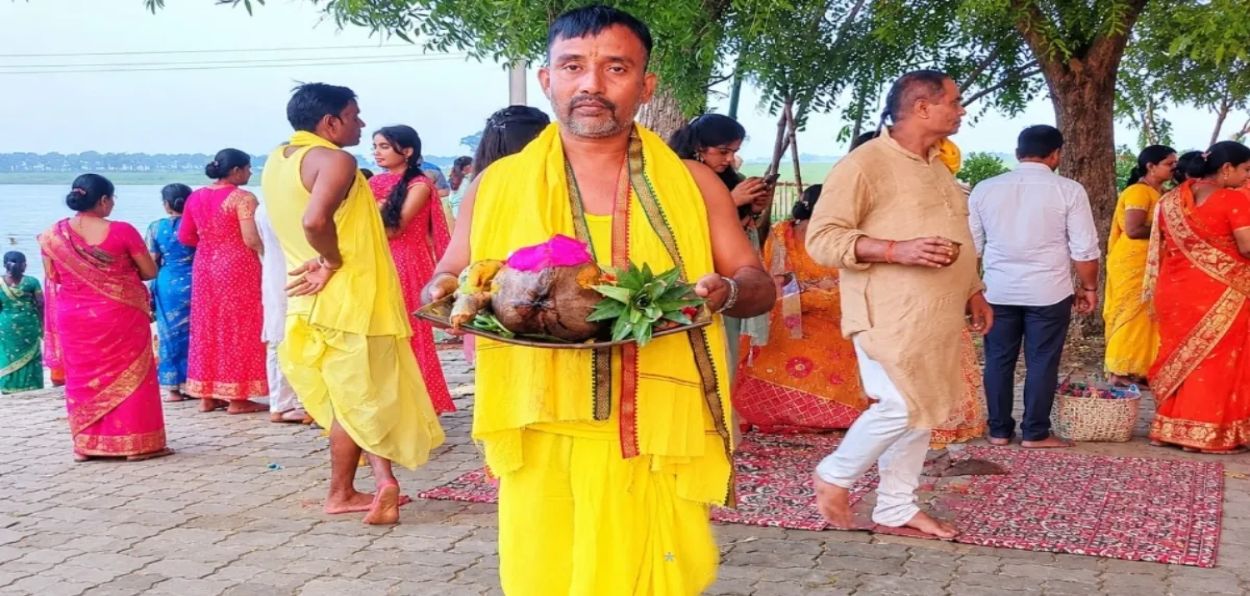
Chhath Puja, dedicated to Surya Dev (Sun God) and Chhathi Maiya (Sister of the Sun), is a thanksgiving festival to the Sun for his bounties of earth.
It’s particularly celebrated in Bihar, Jharkhand and eastern Uttar Pradesh.
The festival is generally observed over four days, beginning with Nahay-Khay, followed by Kharna, Sandhya Arghya and Usha Arghya.
The first day, Nahay Khay, involves ritual bathing, cleaning homes and preparing traditional vegetarian food. On the second day, Kharna, devotees observe a day-long fast and perform evening prayers before beginning a rigorous period of fasting.
The third day, Sandhya Arghya, is the principal evening observance, when devotees gather beside rivers, ponds and other water bodies to offer arghya to the setting sun. The festival concludes on the fourth morning with Usha Arghya, when prayers are offered to the rising sun, followed by the breaking of the fast and distribution of prasada.
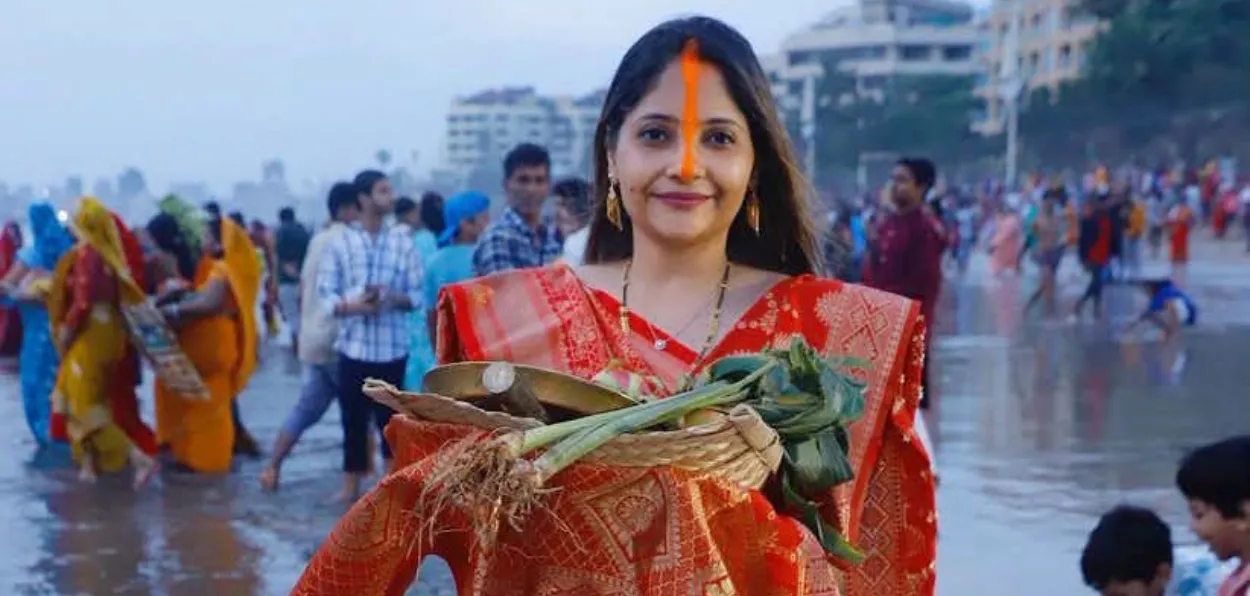
 A woman with offerings to Sun God
What makes Chhath particularly significant is its profound connection with nature. Unlike many other religious festivals, its central rituals take place in direct contact with natural elements. Water, sunlight, soil, fruits and other agricultural produce occupy an essential place in the observance.
In Assam, the mighty Brahmaputra and its numerous tributaries, rivulets and smaller water bodies provide a distinctive setting for the celebrations.
From major riverbanks to modest village ghats, devotees assemble with bamboo baskets filled with fruits, sugarcane, thekua and other traditional offerings. As the evening sun gradually descends towards the horizon, families stand in the water and offer prayers. The following morning, the same riverbanks witness another gathering as devotees welcome the rising sun.
Yet, beyond the religious rituals, these gatherings also bring a powerful environmental message.
The cleaning of ghats, removal of waste, maintenance of access roads and collective efforts to keep water bodies and their surroundings clean demonstrate how religious participation can encourage environmental responsibility. The involvement of local residents from different faiths further strengthens this message.
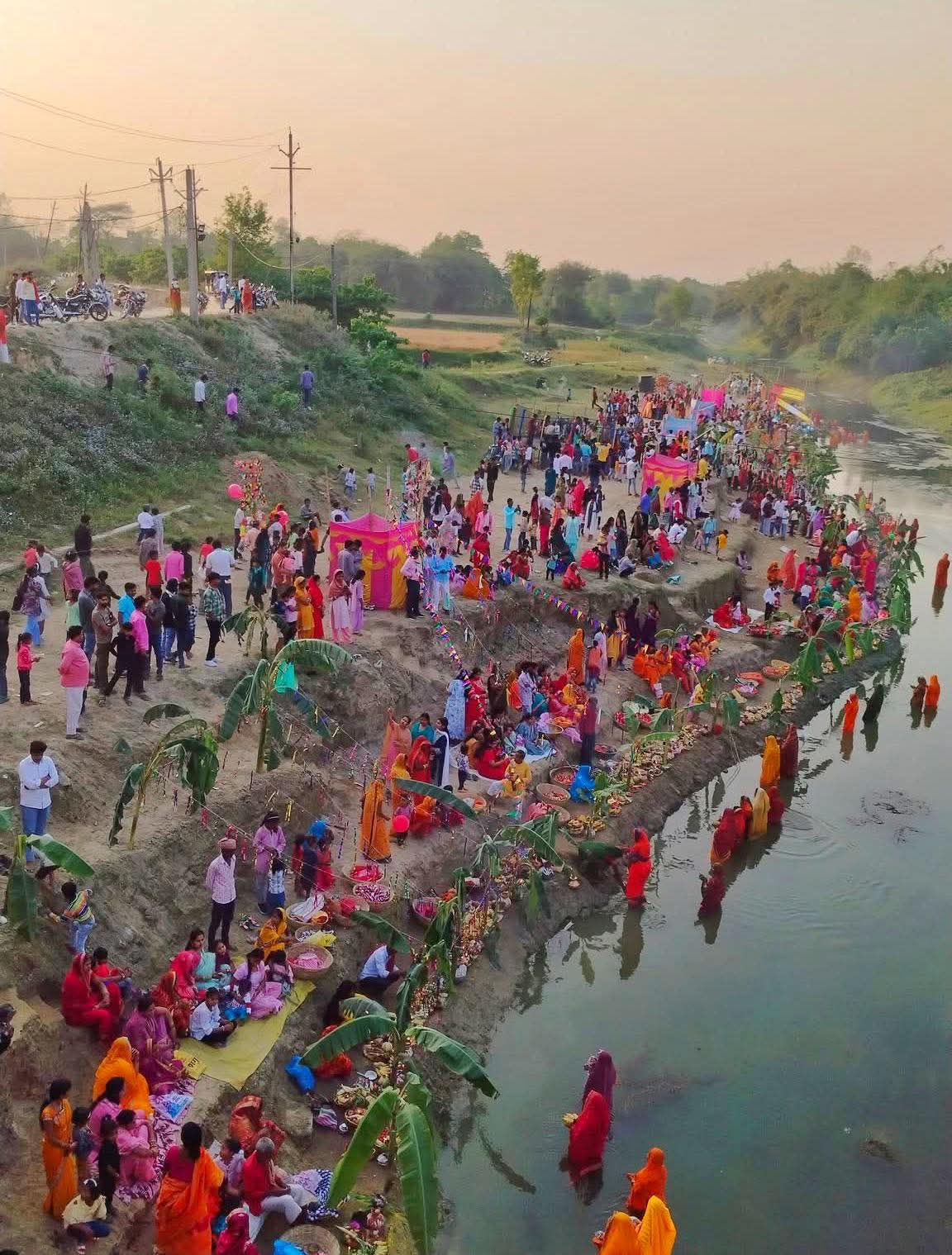 The scene at the banks of a local river in Assam during Chhath Puja
The Brahmaputra and its tributaries thus become more than places of worship during Chhath. They emerge as shared public spaces where people meet, cooperate and demonstrate that protecting rivers and the environment is a responsibility that belongs to everyone, regardless of religion or community.
The growing participation of different communities in Chhath Puja across eastern Assam reflects a larger social reality: communal harmony is often strengthened not through speeches or slogans, but through everyday acts of kindness, cooperation and mutual respect.
A Muslim youth sweeping a road before sunrise, neighbours joining hands to clean a riverbank, families contributing towards another community's religious celebration and people ensuring that devotees can safely reach the ghats are all expressions of a shared humanity.
As Chhath Puja unfolds along the banks of the Brahmaputra and other rivers and water bodies of Assam, its message resonates far beyond the rituals themselves.
Meanwhile, the district administrations have stepped up preparations for the upcoming Chhath Puja celebrations. In Dibrugarh, District Commissioner Vikram Kairi and Senior Superintendent of Police Abhijit Gaurav Dilip today visited the designated Chhath Puja venue at Fulbagan.
READ MORE: Kashmiri youth Musaib is cycling 3,600 Km on an ordinary bicycle
"A Hindu brother quietly arranges Iftar and Sehri during Ramadan for a poor Muslim fasting devotee, while a Muslim brother brings a basket full of fruits for a Hindu observing Chhath Puja. Call it Ganga-Jamuni Tehzeeb or the social harmony preached by Ajan Fakir and Srimanta Sankardeva — the message is simple: We are one," Samar Ali smiles gently as he adjusts the woven skull cap on his forehead.
Chhath Puja in Assam a powerful symbol of social harmony and environmental care