

 Saquib Salim
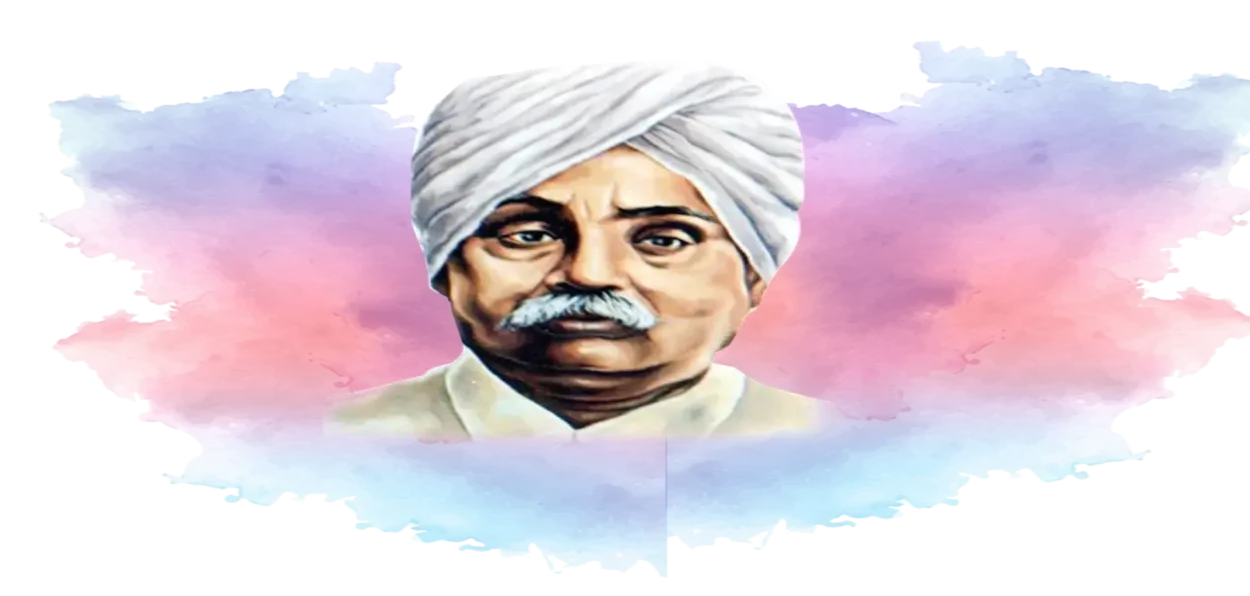
Colonial historians and their brown successors have long painted Lala Lajpat Rai as a Hindu communal leader who deepened the divide between Hindus and Muslims. Some even count him among the early voices of the two-nation theory. His own writings, and the words of Muslims who knew him, tell a different story.
What did Lala think of Muslims, and what did Muslims think of him?
Birth Anniversary
In 1888, Lala Lajpat Rai published a series of open letters to Sir Syed Ahmad Khan, the leader of the Indian Muslims, who had turned against the Indian National Congress. He signed them “The Son of an old Follower of Yours.”
The first letter opened with, “I have been a constant reader and admirer of your writings; from childhood, I was taught to respect the opinions and the teachings of the white-bearded Syed of Aligarh.” His father, who taught Persian and Urdu in a government school, “looked upon you as no less than a prophet of the nineteenth century.”
The letters were not framed as Hindus against Muslims. Lala translated Sir Syed’s own Urdu words himself and read them back to him. At Gurdaspur in 1884, Sir Syed had said that “the words Hindu and Mahomedan are only meant for religious distinction.” At Lahore the same year he had said, “In the word Nation I include both Hindus and Mahomedans.” Lala used Sir Syed’s own words to make his case.
Lala asked, “When were you inspired with the idea that the Hindu and the Mahomedan interests are sure to clash at least in this respect?” The respect in question was representative government. He reminded Sir Syed that up to 1884 he had believed in “the doctrine of Hindus and Mahomedans having one and the same political interests and being members of one and the same nation.” In 1888 Sir Syed argued that Hindu and Muslim interests were bound to clash and Lala campaigned against this.
Lala also refused to accept Sir Syed’s idea that Muslims lagged. He said that Sir Syed wanted the whole nation to remain “in the background” because he thought the Muslim community had not advanced enough to reap the benefits of the Congress demands. He asked why Sir Syed could no longer “feel any pleasure in seeing a combination of all the different races and sects” working towards a common end.
At the Benares (Varanasi) Congress of 1905, speaking on repression in Bengal, he charged the Government with “dividing people against people, in setting the Hindu against the Mahomedan.”
In an essay on Hindu nationalism, he wrote that “Roman, Grecian, and Mohammedan histories must be admitted to present splendid and noble types of nationality and nationalism.”
In an essay, “The Indian National Congress: Some Suggestions,” Lala called “a chimerical and premature union of the various religious nationalities” futile and proposed a Hindu conference alongside the Congress. He claimed that “a large class of educated Mohammedans keep aloof from the Hindus” and that even “the otherwise amiable Sir Syed talked of Hindus with contempt.”
Yet the same essay said, “All welcome therefore to those who are prepared to foresee the future and join with the Hindus in the struggle for political rights”. He also wanted a general assembly to voice “the joint aspirations of such Hindus, Mahomedans and Christians by all means.”
Muslims who worked with Lala rated him highly. Ubaidullah Sindhi, a Muslim revolutionary and Islamic scholar who formed a Provisional Government in 1915, remembered him as a committed nationalist. In the 1940s, Sindhi recalled that Lala once reached Turkey, where Sindhi lived in exile, on receiving his letter asking whether they could discuss revolutionary plans. Lala also helped him look after his mother in India.
Lala died on 17 November 1928, after police batons struck him on 30 October during a protest against the Simon Commission in Lahore. Muslim leaders mourned him in city after city, from Lahore and Delhi to Lucknow and Chennai, and their reaction showed the respect he commanded among them.
Dr. Mohamed Alam, a tall Muslim leader of Lahore, told the press, “The funeral procession of Lala Lajpat Rai testified to the love with which the people of Punjab regarded the departed leader… I am glad that Muslims took a prominent part in demonstrating their grief, and I know that the Muslim community shared the sense of loss that the country has suffered.”
Maulana Mohammad Ali Jauhar wrote in his newspaper, Hamdard, that “the country will deeply mourn the death of Lalaji.” Maulana Zafar Ali Khan, a freedom fighter and the editor of Zamindar, held that the lathi blows which led to Lala’s death were the last nails in the coffin of the British Raj.
Dr M. A. Ansari, another stalwart of the freedom struggle, called the death “a great national calamity.” He said he had lost “a friend so lovable, intimate and dear,” and then took up the old charge. “Many thought that Lala Lajpat Rai was a bigoted Hindu. Far from it. He was a devout nationalist.” Maulana Yakub Hasan seconded these thoughts at the same meeting in Chennai.
In Lucknow, the Raja of Mahmudabad presided over a large public meeting and called Lala “the shining sun in the Indian political firmament.” He “had given every minute of his life to the country’s cause,” the Raja said.
In Delhi, Sheikh Muhammad Taqqi presided over a huge public meeting. Asaf Ali, who later argued Bhagat Singh’s case in court, told the gathering that “the only way in which you can give proof of your love for Lalji and commemorate him, is by following in his footsteps and working for achieving the ideal which Lalaji had died in trying to achieve, namely the liberty of the motherland.”
An appeal signed by Dr Ansari and Maulana Abul Kalam Azad urged the nation to observe 29 November as Lala Lajpat Rai Day, with meetings across the country to mourn “the bravest fighter in the cause of the country’s liberation.”
Bhagat Singh and his comrades risked their lives to avenge Lala. They would not have done so for a man with an iota of religious bigotry.
ALSO READ: Zakat is the Quranic vision of social responsibility
G. K. Nariman, a contemporary scholar of religions, literature and culture, put the matter plainly. “It is an error, if it exists, that Lala Lajpat Rai was anti-Musalman. What he was against is the periodic insanity which possesses some of us and which we euphemistically style religious fanaticism.”