

Rajeev Narayan/ New Delhi
India stands at an important economic crossroads, with expanding opportunities at home and an increasingly prominent place in global markets. But sustaining this momentum requires more than Government initiatives. Prime Minister Narendra Modi’s message yesterday to corporate India is a timely reminder that business must now match national ambition with investment, innovation and enterprise.
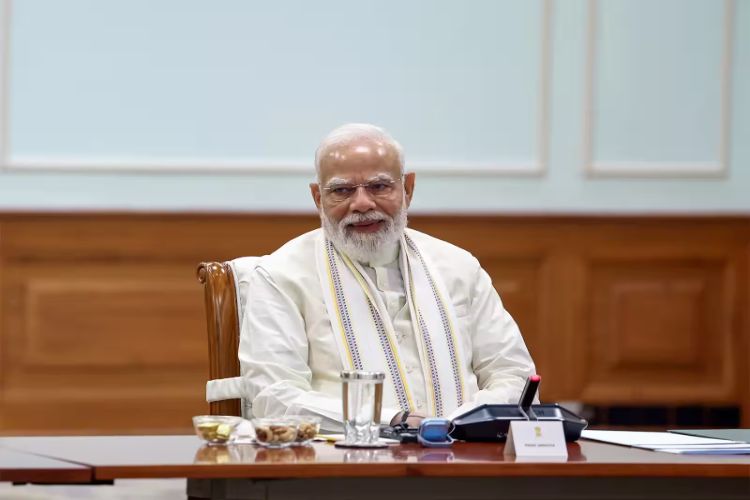
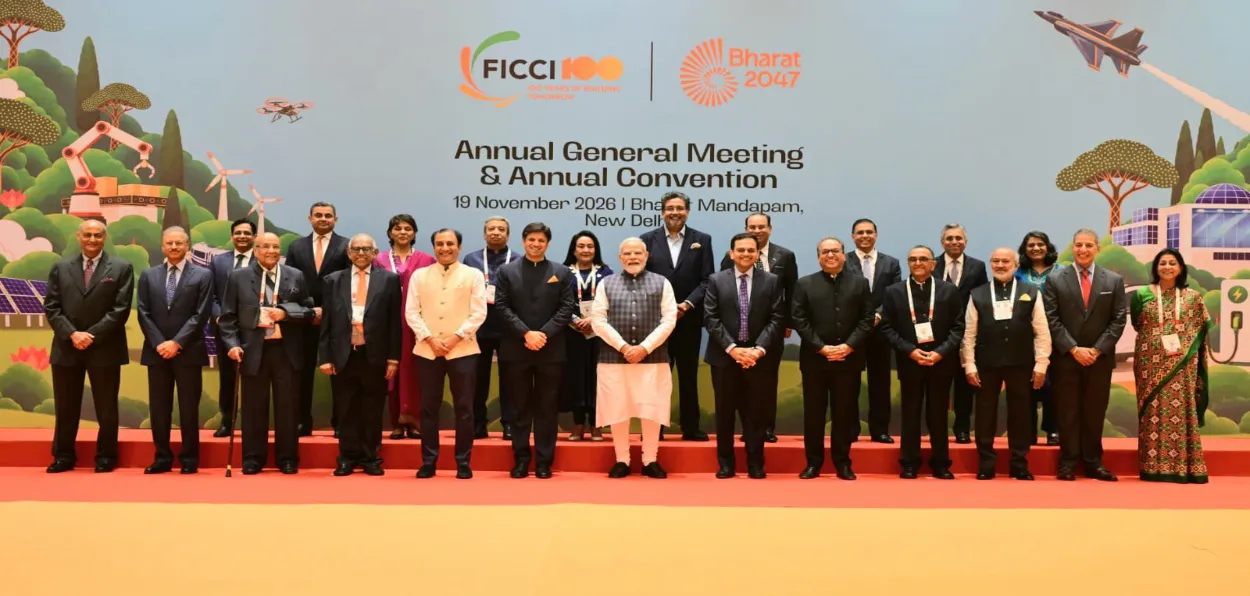
There was something significant about Prime Minister Narendra Modi’s address to India’s corporate leadership at the centenary convention of the Federation of Indian Chambers of Commerce and Industry on Thursday. It was not simply an occasion to celebrate India’s economic achievements or enumerate the Government’s policy initiatives. Instead, it was a pointed appeal to the country’s business leaders to look beyond established markets, familiar business models and immediate commercial returns, and consider the larger economic opportunity before them.
By asking India Inc what it intended to contribute over the next 20 years, Prime Minister Modi effectively shifted the conversation from what the Government could do for industry to what industry could do for the country. His message was unmistakable: India’s growth story is creating opportunities, but the private sector must be prepared to recognise and seize them.
India's growth story is creating new opportunities. Our industries must be ready to seize them. Speaking at FICCI's centenary convention. @ficci_india https://t.co/tJCw2NnpjW
— Narendra Modi (@narendramodi) November 19, 2026
Founded in 1927, FICCI has accompanied Indian industry through the pre-Independence era, the decades of controlled economic activity and the transition to liberalisation and global integration. Its centenary year, thus, offered an appropriate platform for the PM to ask a larger question: having come this far, what should Indian industry aspire to become?
Beyond Policy Support
Modi’s appeal rests on an argument that deserves serious consideration. The Government has undertaken several measures to improve the business environment, including reducing the corporate tax rate for domestic companies opting for the concessional regime from 30 per cent to 22 per cent, simplifying tax administration, accelerating refunds and providing income-tax relief that effectively exempts annual income up to Rs 12 lakh under the new regime. GST reforms have also reduced taxes, potentially stimulating consumption and demand.
Modi’s question to corporate leaders was direct: have these measures translated into more jobs and higher salaries for employees? It was an uncomfortable question, but an important one. Tax relief and an improved environment are intended not merely to make companies more profitable, but to encourage investment, generate employment and expand economic activity.
Admittedly, the relationship between lower taxation and higher wages is not automatic. Businesses contend with competition, input costs, market uncertainty and investment needs. Nevertheless, the PM’s broader principle is valid—economic growth becomes more meaningful when its benefits extend beyond corporate balance sheets to employees, consumers and the wider economy.
Building Capabilities
Perhaps the most strategic part of the address was PM Modi’s emphasis on reducing dependence on imported industrial inputs. He cited the pharmaceutical sector, where India has established itself as a global supplier of finished medicines but continues to import large quantities of active pharma ingredients, bulk drugs and intermediates.
A country recognised as the ‘Pharmacy of the World’ cannot remain dependent on international suppliers for essential ingredients. Building domestic capabilities through technology, R&D and large-scale manufacturing would strengthen supply-chain resilience while creating opportunities for Indian businesses.
The same principle applies to steel and aluminium. India exports iron ore but imports specialised grades of finished steel. There is a need to move up the value chain, developing technological capabilities and manufacturing products that have to be sourced overseas. The PM’s invocation of ‘India First’ as a guiding principle for investment decisions is a call to think beyond personal returns and build India’s capacities in the years ahead.
Shri Narendra Modi, Hon’ble Prime Minister of India addressing the inaugural session of FICCI Annual General Meeting and Annual Convention #FICCIAGM #Bharat2047 https://t.co/WvdOCa0RaL
— FICCI (@ficci_india) November 19, 2026
Tapping Agriculture
One of the more interesting aspects of the PM’s address was the challenge to corporate India’s reluctance to invest in agriculture. Despite enormous agricultural production, India’s share of global exports remains modest, at around 2-2.5 per cent. The problem is not one of production. Success in agriculture depends on procurement, processing, storage, grading, logistics and access to global markets. These are areas where organised private investment can make a massive difference.
PM Modi also noted that the share of processed food in India’s agri-food exports had risen from 13 per cent to over 20 per cent in the past 12 years. That progress suggests potential for further value addition, and businesses can help establish dependable procurement systems and connect farmers to processing facilities geared to international markets.
Investment would also have benefits beyond corporate revenues. It could improve market access for farmers, reduce post-harvest losses, generate rural employment and increase the value earned from agricultural produce. For India, the opportunity is to move from being a major producer to becoming a more significant supplier of processed, branded and value-added food products.
Competing Globally
Perhaps PM Modi’s most compelling message concerned the quality of products offered to Indian consumers. He questioned the tendency among some manufacturers to treat India’s vast domestic market as an assured destination for whatever they produce, reserving better-quality products for exports. His observation that Indian customers should not have to ask for ‘export quality’ products struck at a familiar contradiction. Indian consumers deserve the same standards of quality, design, reliability and value that manufacturers offer customers overseas.
#FICCIAGM
— FICCI (@ficci_india) November 19, 2026
The argument also connects with India’s expanding network of free trade agreements. These deals open doors to new markets, but access alone does not guarantee success. Indian companies must understand consumer preferences, meet global standards, establish distribution networks and develop products that compete on merit. Modi’s suggestion that companies undertake market-mapping exercises and study regional requirements made for practical business advice, beyond an appeal to national sentiment and pride.
READ MORE: Muslims must remember that cleanliness is half faith
The PM also drew attention to opportunities in engineering goods, machinery, packaging equipment and irrigation systems, particularly in developing economies and the Global South. Indian companies could help smaller manufacturers acquire the quality standards, technology and scale needed to participate in global supply chains. The message is simple: what is required is the ambition to turn India’s advantages into enduring global economic achievement. And India Inc has a critical role in determining how India’s economic story unfolds over the next 20 years.
(The writer is a veteran journalist and communications specialist)