Saniya Anjum
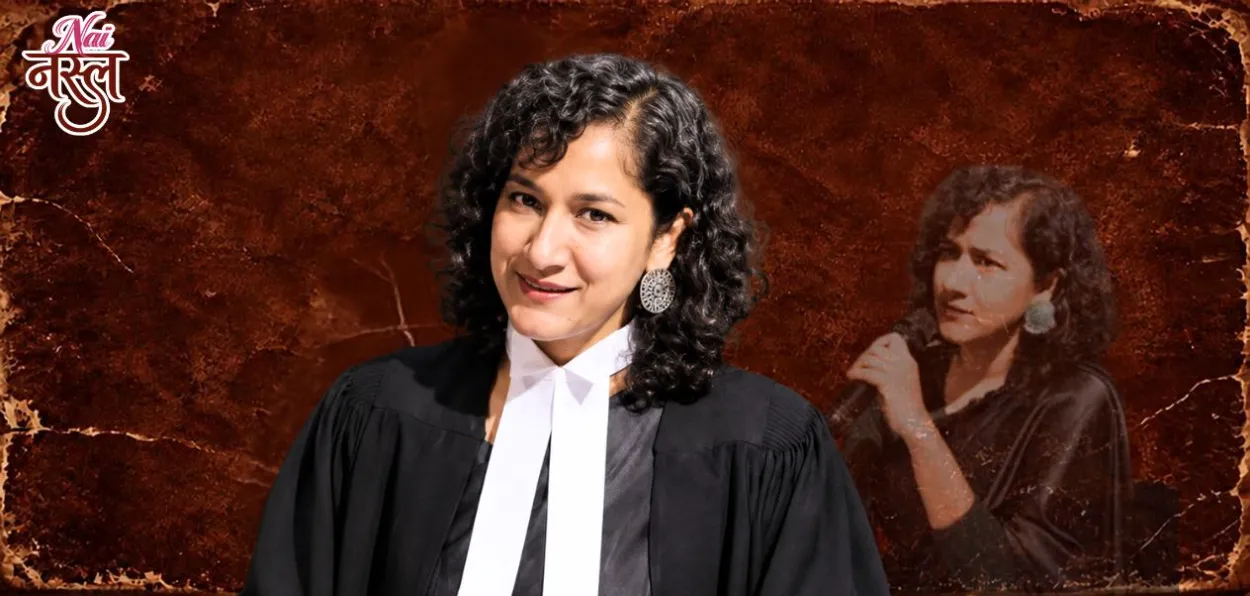
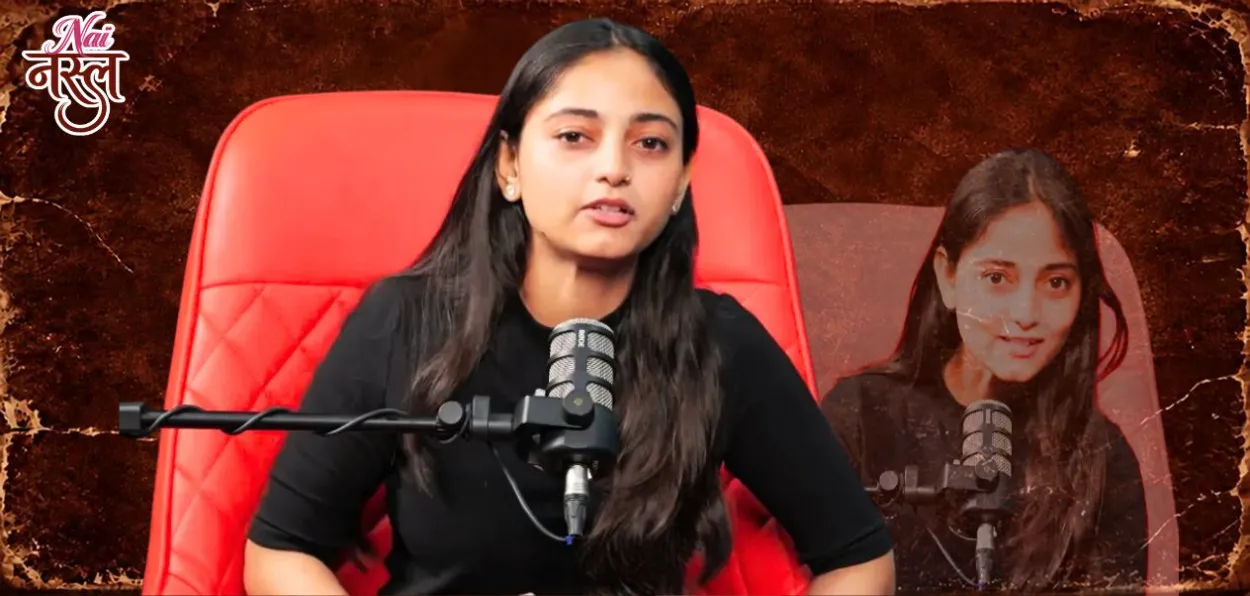
What happens when a lawyer refuses to leave justice inside the courtroom? For Ruha Latif, the answer lies somewhere between a legal petition, a poem, a microphone and a conversation with a woman who has been told that she has no choice.
A practising advocate, poet, writer and speaker, Latif has never been comfortable putting herself into a single box. Her work moves between civil litigation, gender and law, poetry, social commentary and public advocacy. She speaks about feminism, writes poems about social issues and uses literature and performance to engage with questions that the courtroom cannot always resolve.
Her relationship with justice, however, was not shaped by theory alone “I wanted to experience law,” she says. “I wanted to experience litigation. When you actually practise, you understand the reality of the judicial system and what justice really looks like.”
Latif had once imagined herself pursuing a career in academia. Had she followed that path, she believes she might already have completed a PhD or Doctorate. But she chose practice because she wanted to see what happened when the law moved from books into real lives.
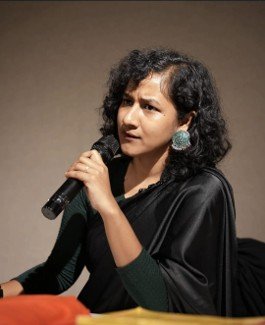 Ruha Latif
That experience challenged one of the simplest assumptions people often make about justice: that if you have been wronged, you can go to court and get justice. “People think that if there is a problem, you can file a case and you will get justice,” she says. “But the reality of what happens after you file that petition, and how many steps you have to go through before you reach the final stage, is something I understood only after entering practice.”
For her, the most difficult part is often what happens to the person behind the case. Delays, repeated hearings, and legal expenses can make the process exhausting, particularly for people who lack the financial means to sustain a prolonged legal battle.
That has also influenced the way she deals with clients, especially women who approach her with sensitive issues. “I cannot give my clients false hope,” she says. “If a woman comes to me with a serious issue, I cannot simply say, ‘Let’s file a case,’ just because I will earn from it. I also have to think about what she will have to go through once she enters the court system.”
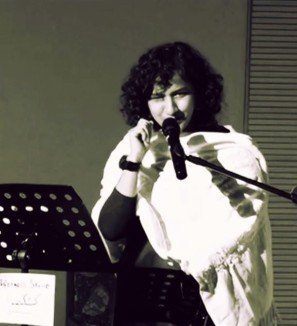 Ruha Latif
Her early professional experiences further shaped her view of the legal profession. Latif recalls working at a firm before moving into independent practice and says she witnessed situations that made her question the influence of money and power within the system. She chooses not to name the firm, but says the experience left a lasting impression.
“I could not stand the way the legal profession had been made,” she says. “The way it is happening now, it has become a business.” She says the problem becomes particularly painful when the person seeking justice simply cannot afford to keep waiting.
“There are so many cases where, because a stay order is not granted, a client tells me, ‘Ma’am, we cannot appeal. We do not have the money.” It was through these experiences that Latif arrived at a realisation that would eventually take her beyond the courtroom: not every injustice can be solved through litigation. “I realised that every problem does not have a solution in court,” she says. “A lot of change has to come through society.” That is where her poetry and public work enter the picture.
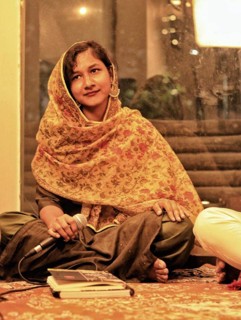 Ruha Latif
Latif writes primarily in the form of nazms, particularly those dealing with social and political issues. Her choice of subject has occasionally attracted resistance, particularly in predominantly male literary spaces. She was asked to write more ghazals,
“Is writing ghazals a duty?” she asks. “Why is it necessary that I sit down and write about love, pain and separation? If I want to write about revolution and social issues, why should that be a problem?”
She says some established poets have deliberately excluded her from mushairas because of the nature of her work. But she no longer sees that as something she needs to fight.
“I have started creating my own niche. I have started creating my own field.” Her poetry, videos, appearances and conversations have therefore become another form of advocacy. She sees public engagement as a way of helping people, particularly women, understand their own agency.
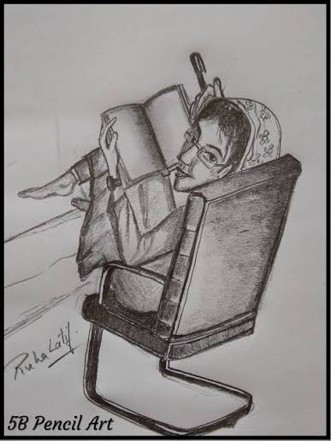 A self-portrait by Ruha Latif
“I want women to empower themselves and become self-reliant,” she says. “Only then will they be able to do something on their own.” Her conversations have even extended beyond India. Latif speaks regularly with Pakistani women through online meetings and says she has found striking similarities in the issues they face. “The geography is different, but many of the problems are the same.”
For her, patriarchy remains one of the deeper structures behind these experiences, particularly when it intersects with power and inequality. Changing individuals’ circumstances, she believes, is important, but changing the thinking that produces those circumstances is equally necessary.
That belief also explains why she refuses to define herself through a single profession. “I think Gen Z is smart enough and rebellious enough,” she says. “They are trying different fields.” She sees a generation moving away from the idea that there is only one acceptable definition of success. For women in particular, she believes, the shift is significant.
“Find your own vocation. Find out what you are good at and what you actually want to do.” But freedom, in her view, needs a practical foundation. Financial independence is one of them. “If you are financially independent, you can pursue your other passions as well,” she says. “Paying your bills is also important.”
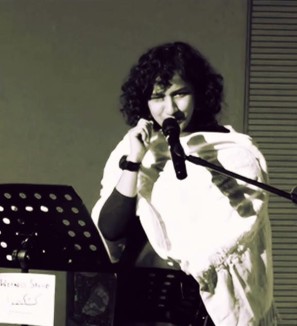 Ruha Latif
The same principle, she believes, should apply to marriage. Women should not feel compelled to enter relationships simply because society has created a timeline for marriage, motherhood and adulthood. “Do not live a life where you are simply waiting for someone to accept you,” she says. “Find a progressive partner who can actually be your life partner and who understands how you want to live.”
Latif chose to marry later because she wanted to find the right person rather than simply follow a prescribed timeline. For her, growing into oneself also means learning to distinguish between social expectations, cultural norms and personal faith.
“You need to have the courage to create a difference between society and culture, and to understand what your faith is telling you and what your culture is telling you. They are not necessarily the same thing.”
Perhaps that is the thread connecting all the different parts of Latif’s work. Whether she is standing in a courtroom, writing a poem, speaking about feminism or talking to women across borders, she returns to the same idea: people should know how to speak for themselves. For Latif, the fight for justice does not end when the courtroom doors close. Sometimes, it begins there.