Eman Sakina
We live in an age where technology has made communication easier than ever, yet genuine human connection seems to be disappearing. A person can have hundreds of contacts on social media and still have nobody to turn to in difficult times.
Friday Musings
Families may live under the same roof but remain emotionally distant, while relatives who once gathered regularly now communicate through occasional messages and formal greetings. In a world increasingly driven by individual success, personal freedom and self-interest, the traditional values of family and kinship are gradually losing their place.
Islam offers a meaningful response to this growing social fragmentation through the concept of ‘Silat al-Rahim’, which means maintaining family ties and nurturing relationships with relatives. It is not merely a cultural tradition or an occasional family visit; it is a religious responsibility rooted in compassion, mutual support and accountability before Allah.
The Quran repeatedly reminds believers of the importance of family relationships. Allah says: "And fear Allah, through whom you ask one another, and the wombs (kinship ties). Indeed, Allah is ever, over you, an Observer." (Surah An-Nisa 4:1)
This verse places the responsibility of protecting family bonds alongside the consciousness of Allah. It reminds us that relationships are not disposable connections that can be abandoned whenever they become inconvenient.
Modern society often celebrates independence as the ultimate achievement. People are encouraged to prioritise their careers, ambitions, personal comfort and individual happiness. While personal growth and independence are not wrong, problems arise when they become excuses for neglecting responsibilities towards others.
In many families, elderly parents experience loneliness, siblings become strangers because of financial disagreements, and relatives meet only during weddings or funerals. Sometimes, even a simple phone call becomes an obligation that people postpone indefinitely.
Islam does not ask individuals to sacrifice their personal development. Rather, it teaches them to balance personal ambitions with social responsibilities. A successful Muslim is not measured only by professional achievements or material possessions but also by the care, kindness and support offered to family and society.
Relationship of Responsibility
The Prophet Muhammad gave great importance to maintaining family ties. He said: "Whoever believes in Allah and the Last Day, let him maintain the ties of kinship." (Sahih al-Bukhari and Sahih Muslim)
This teaching makes kinship more than a matter of convenience. It becomes an expression of faith.
Silat al-Rahim involves visiting relatives, enquiring about their well-being, helping them financially when necessary, sharing their happiness and standing beside them during difficult times. It also means forgiving mistakes, avoiding unnecessary arguments and refusing to allow ego to destroy lifelong relationships.
The Prophet also taught that true maintenance of family ties is not simply returning kindness to those who are kind to us. Rather, it is continuing to maintain relationships even when others have withdrawn. This requires patience, humility and emotional strength.
However, preserving family relationships does not mean accepting abuse or remaining in unsafe situations. Islam values justice and dignity. Healthy boundaries may be necessary, while maintaining goodwill wherever possible.
Antidote to Loneliness
One of the greatest challenges of contemporary life is loneliness. People are surrounded by digital communication but often lack meaningful emotional support. Silat al-Rahim offers a practical alternative by creating networks of care and belonging.
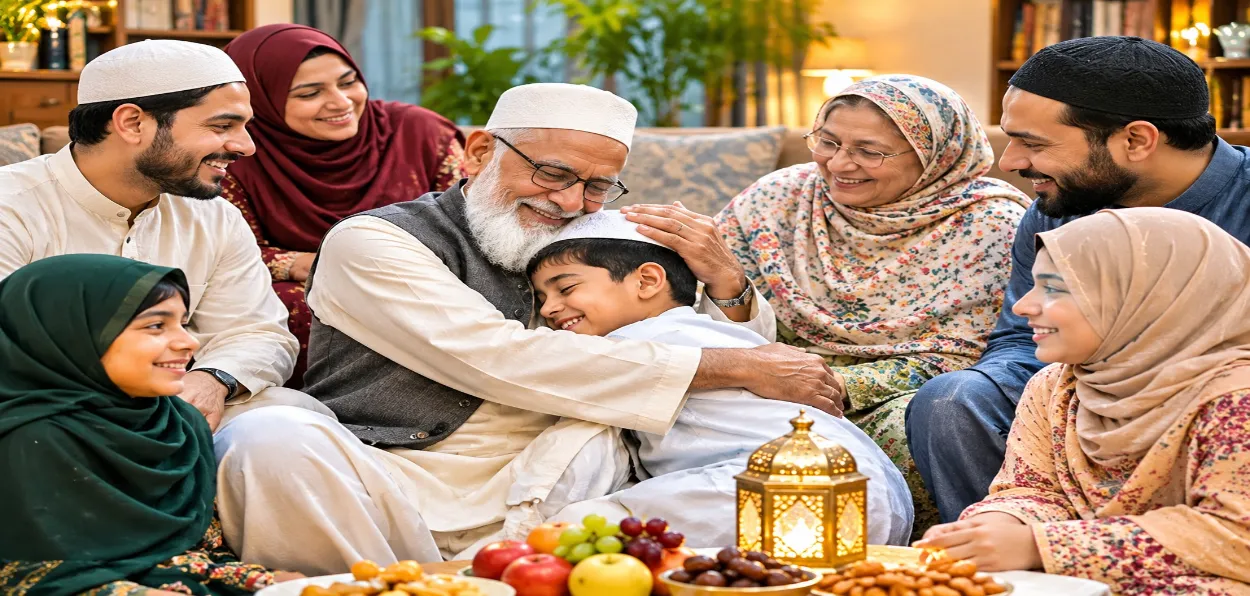
Imagine an elderly parent receiving a daily phone call, a struggling relative receiving financial assistance without humiliation, or a young person finding guidance and encouragement from an elder in the family. These simple gestures can protect individuals from isolation and strengthen the emotional foundation of society.
Family relationships also teach children empathy, patience, sharing and respect. When they see parents caring for grandparents, helping siblings and respecting relatives, they learn that life is not simply about personal achievement but also about being useful to others.
Reviving family connections does not require grand celebrations or expensive gatherings. It begins with small, sincere actions: calling an overlooked relative, visiting an elderly family member, resolving an old misunderstanding, remembering birthdays and important occasions, or offering help without expecting anything in return.
Families must also learn to create meaningful moments away from mobile phones and digital distractions. A shared meal, a conversation after prayer or a regular family gathering can rebuild connections that busy schedules often weaken.
Allah says: "And cooperate in righteousness and piety, but do not cooperate in sin and aggression." (Surah Al-Ma'idah 5:2)
This principle can guide families towards mutual responsibility, where members support one another in goodness and share the burdens.
Ultimately, Islam reminds us that human beings are not created to live as isolated individuals. We are part of families, communities and a larger human society. Personal success becomes more meaningful when it is accompanied by compassion and responsibility.
ALSO READ: After 37 years, Kashmir turns a page as the last terrorist falls
In an increasingly individualistic world, Silat al-Rahim is more than an Islamic teaching; it is a way of restoring humanity. A society that protects its family bonds protects its emotional strength, moral values and sense of belonging. Perhaps the answer to modern loneliness is not always finding more people, but learning to value the people Allah has already placed in our lives.