 Aasha Khosa
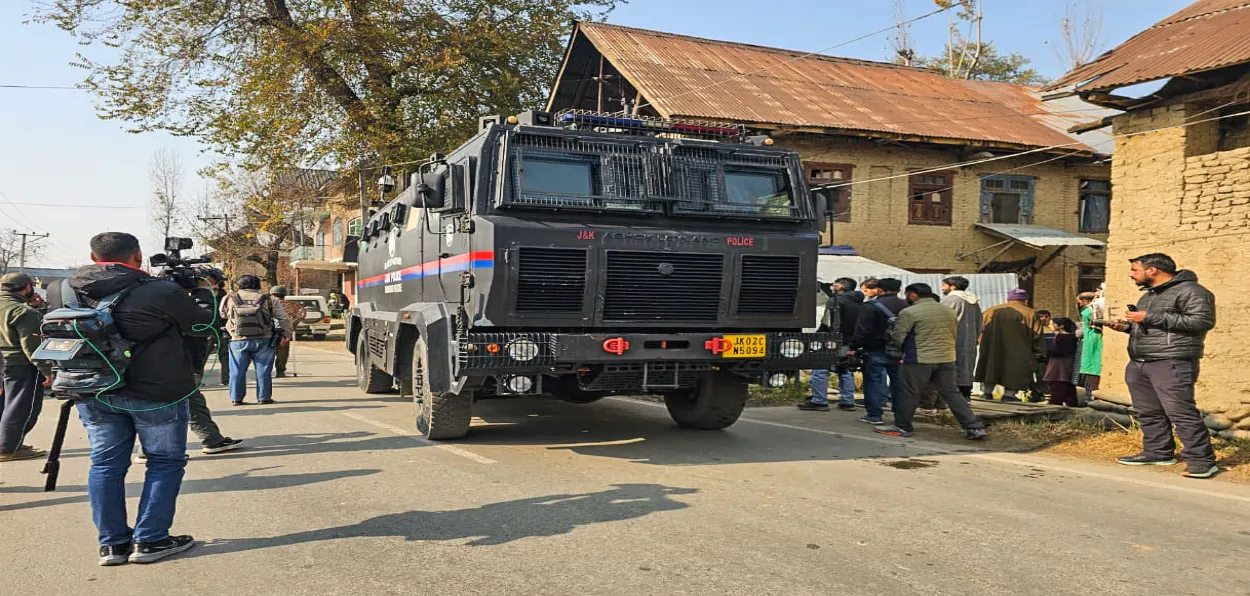
Lateef Ahmed Bhat, a Lashkar-e-Taiba commander who had been active for nearly a year and was involved in several targeted killings of policemen and migrant workers, as well as the recent attack on a CRPF camp, was killed in Kulgam, South Kashmir, near a mosque on Wednesday.
His death marks a defining moment in Kashmir's long and painful struggle against terrorism. It comes 37 years after the first Pakistan-trained militant groups shattered the Valley's peace, beginning with crude bomb attacks at the Central Telegraph Office and the toilet of the India Coffee House in Srinagar's city centre.
This is no smaller a moment for India to celebrate than the recent success in ending Left-Wing Extremism in central and eastern India. There was a time when both violent movements were considered problems that could only be managed, never decisively overcome.
We ought to take the statement of DGP Nalin Prabhat on the killing of the last surviving terrorist seriously because this count is authentic. It's based on a strict regimen of people reporting their missing members of family to the police as soon as it happens. Lateef's family had reported him missing a year ago.
🚨 2 local Kashmiris joined terror ranks in last 02 years, killed: J&K Police Chief Director General J&K Police Nalin Prabhat said two local Kashmiris joined Lashkar and Lateef Bhat has been killed today in Kulgam while Umar Nisar was also killed in Kulgam https://t.co/imAnARf3IU
— Gursimran Singh (@GursimranonX) November 18, 2026
For me, a journalist connected with Kashmir through both birth and work, the killing of this Lashkar-e-Taiba commander came on a day when I was equally thrilled to see another son of the soil, Suhail Ahmed Bhatt, play a key role in India's third consecutive SAFF football triumph.
The 21-year-old Suhail ran around the stadium in Dhaka with the national flag stretched behind his back, celebrating the victory. His face radiated joy, pride and relief. I have witnessed similar exhilarating moments involving other Kashmiri sportspersons over the years.
Another heartening story is that of Qazi Touqeer, a Kashmiri in his forties, who is winning hearts with his performance in a television reality show where viewers will eventually decide the winner after weeks of confinement and the gradual elimination of contestants.
 Suhail Bhat after India winning the SAFF championship in Dhaka
Touqeer had won a popular reality music show years ago. But when he returned home, there was no grand welcome. Instead, he faced discrimination and found few takers for his talent. Kashmir, at the time, was perhaps not ready to celebrate someone who had emerged as a winner on an Indian television reality show.
Having seemingly missed his bus once, Touqeer is now a winner in the minds of many Indians, who will eventually vote to decide the show's champion. More importantly, Kashmir, too, is ready to appreciate him. The ground reality has changed.
This transformation owes as much to the success of India's counterterrorism strategy and a clear policy towards Pakistan - the supporter and sponsorer of terrorism in Kashmir as part of its proxy war against India - as it does to the emergence of a new generation of Kashmiris who do not carry the psychological burden of the past.
Jhagde mein saamne wale ko shock kaise karein? Seekho #Qazi, #Aamrapali aur #YungDSA se! 😎 Watch #24HrsChannel of #BiggBoss20, now streaming exclusively on the #JioHotstar App. #BiggBossOnJioHotstar #BB20OnJioHotstar https://t.co/kI6AtRKLzD
— JioHotstar Reality (@HotstarReality) November 18, 2026
This generation grew up in an era when terrorism was increasingly contained, security forces developed more structured protocols and standard operating procedures for counterterrorism operations, and mistakes during such operations became less frequent.
The cherry on the cake was the abrogation of Article 370, which ended Jammu and Kashmir's special constitutional status. That arrangement had been exploited by sections of the political elite, the ruling establishment and Pakistan's supporters for their own ends.
The ruling class used the privileges and lack of accountability to accumulate wealth and consolidate power. Separatists exploited the same political ambiguity to sow confusion among young people about Kashmir's relationship with India.
Perhaps most damaging was the tendency of certain political parties to exploit this confusion by repeatedly raising the bogey of Delhi's dominance over Kashmir.
Today's Kashmiri youth have far less confusion about Jammu and Kashmir's constitutional position as a Union Territory within India. They increasingly recognise that the region has the same constitutional relationship with the Union as other parts of the country, while its distinctive culture remains as vibrant and valuable as that of any other region.
The change is visible beyond high-profile professions such as singing and sports. Young Kashmiri men and women are studying and working across India, in large metropolitan centres as well as smaller towns. They are finding opportunities, building careers and establishing identities beyond the geographical and psychological boundaries that once confined their ambitions.
The railway link connecting Kashmir with the rest of the country is another major barrier-breaker. By enabling more reliable movement into and out of the Valley throughout the year, it is gradually freeing Kashmiris from the anxieties of geographical isolation.
I know what that isolation means. I have lived through Kashmir's winters, with their perpetually gloomy skies, snow-covered roads and slush, when every route out of the Valley could be closed for days. The fear of being trapped by nature, cut off from the rest of the country, creates panic and resentment. Its cumulative impact on people's lives and attitudes cannot be positive.
Vande Bharat in Kashmir 🇮🇳 https://t.co/N6wJwCo1XE
— Vestige¹⁸ (@SanatanEdge) August 13, 2026
Perhaps most importantly, the younger generation has grown up watching India's influence expand while Pakistan has struggled with deep political and economic instability, increasingly resembling a failing state. The leaders and political formations that survived by repeatedly invoking the bogey of a plebiscite on Jammu and Kashmir's accession to India have steadily lost relevance.
The Hurriyat Conference is defunct. Many of its prominent leaders are dead; others are active, and the era when separatist leaders issued calendars of hartals for people to follow appears to have receded into history.
A new narrative centred on development, merit and putting young people first has captured the imagination of a significant section of the younger generation. They no longer wish to spend their lives looking backwards and feeling overwhelmed by history. They want to look ahead and build a future defined by opportunity, dignity and achievement.
That, perhaps, is the most significant change in Kashmir. The Valley's young people increasingly want to be recognised for what they can achieve, rather than be defined by the conflict they inherited.
ALSO READ: Where did Hurriyat vanish to pave way for peace in Kashmir?
The death of a terrorist commander may mark the end of an era of violence and must be celebrated but the near challenge for the government is to weed out the embedded Satanic agents who would not easily give up fomenting trouble and shattering peace,
The Author is Editor, Awaz-the Voice, English, and has reported from Kashmir in the peak of insurgency