 Prof Baladas Ghoshal
National Security Adviser Ajit Doval’s two-day visit to Vietnam, beginning November 1, to broaden and deepen political, economic and strategic relations between the two countries highlights the importance of Hanoi in New Delhi’s Act East Policy. It also marks a major step towards strengthening the Enhanced Comprehensive Strategic Partnership, which is rooted in civilisational links, convergent strategic interests and a shared commitment to a free, open, inclusive and rules-based Indo-Pacific.
Beyond the Act East Policy, Vietnam is also a key pillar of India’s Vision MAHASAGAR (Mutual and Holistic Advancement for Security and Growth Across Regions) and its broader engagement with ASEAN.
The relationship was elevated to an Enhanced Comprehensive Strategic Partnership during Vietnamese General Secretary and President To Lam’s state visit to India in May 2026, making Vietnam the first country in the region with which India has bilateral ties at this level. The relationship was initially elevated to a Strategic Partnership in 2007 and subsequently to a Comprehensive Strategic Partnership in 2016. This progression reflects the mutual confidence, trust and appreciation of each other’s needs and strategic compulsions, as well as the determination to nurture a meaningful and enduring partnership. The significance of Doval’s visit lies in consolidating closer, multi-dimensional ties that have matured over decades and culminated in the present Enhanced Comprehensive Strategic Partnership.
History and Mutual Trust
India and Vietnam enjoy excellent political relations, shaped by India's unwavering support for Vietnam, first in its struggle against French colonialism and subsequently against US intervention, which inflicted enormous suffering on the Vietnamese people and the country. India was also among the few countries that supported Vietnam when it sent its troops into Cambodia in late 1978 to end the genocide perpetrated by the Pol Pot regime.
Although this position entailed a considerable diplomatic cost for India, particularly in its relations with the Association of Southeast Asian Nations (ASEAN) and the West, New Delhi remained determined to stand by Hanoi.
“Vietnam values India’s friendship most. India has always stood by us in our difficult times, and we can always depend on India,” the late Truong Tan Sang, former President of Vietnam, told me during a meeting in Hanoi in 2011.
Following an excellent overview of the prevailing strategic and political environment in the Asia-Pacific region, he made an emphatic observation: “India is a responsible stakeholder in the peace, stability and security in the region and has a unique role to play in the security architecture of Asia.”
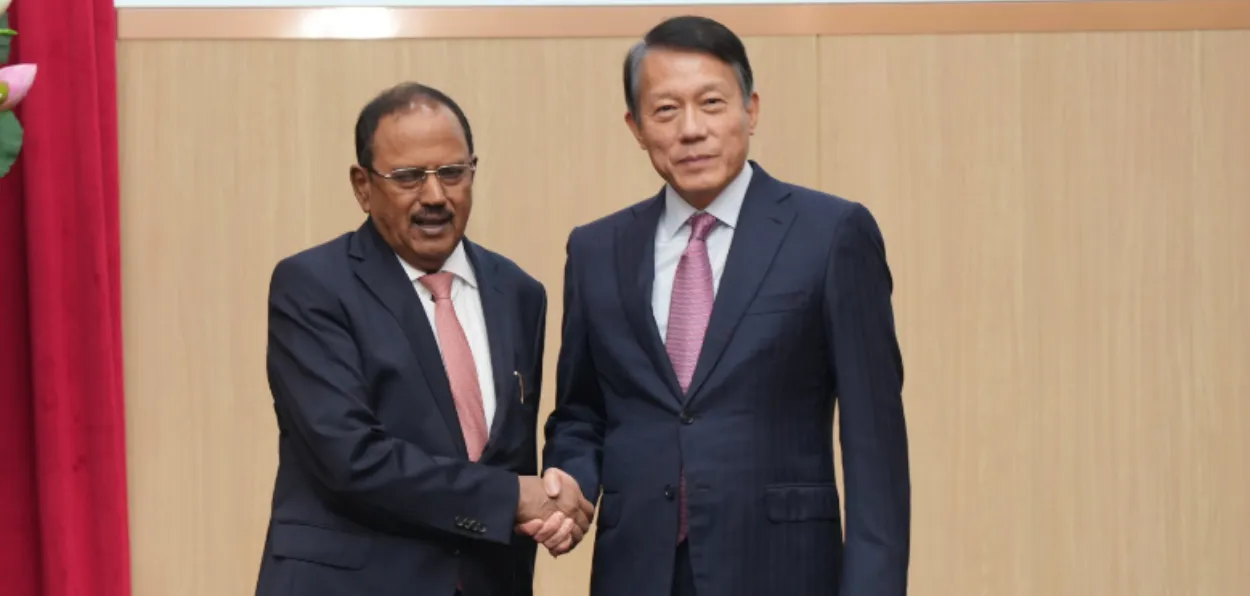
Cố vấn An ninh Quốc gia Ấn Độ Ajit Doval hôm nay đã tiến hành hội đàm với Đại tướng Lương Tam Quang, Ủy viên Bộ Chính trị Ban Chấp hành Trung ương Đảng Cộng sản Việt Nam, Bộ trưởng Bộ Công an Việt Nam. Hợp tác an ninh song phương phản ánh mối quan hệ đối tác có bề dày văn minh, sâu sắc và dựa trên sự tin cậy lẫn nhau giữa Ấn Độ và Việt Nam. Hai bên đã thảo luận về hợp tác hiện nay trong lĩnh vực an ninh và nhất trí tiếp tục thúc đẩy hơn nữa các mối quan hệ đa dạng hiện có. Hai bên cũng trao đổi quan điểm về những diễn biến trong khu vực và trên thế giới. ~~~ NSA Ajit Doval held delegation level talks with General Luong Tam Quang, Politburo Member of the Central Committee of the Communist Party and Minister of Public Security of Viet Nam, today. Bilateral security cooperation reflects the deep and mutually trusted civilisational partnership between India and Viet Nam. Both sides discussed ongoing cooperation in the security domain and agreed to further enhance the existing multifaceted ties. They also exchanged views on regional and global developments.
— India in Vietnam (@AmbHanoi) November 2, 2026
The same warmth, friendship and goodwill were evident in my meetings with Vietnamese interlocutors in both Ho Chi Minh City and Hanoi. Among the countries of Southeast Asia, Vietnam therefore occupies a special place in India's Look East Policy. Vietnam, too, attaches considerable importance to its relationship with India and views it as a natural ally.
Indo-Pacific strategy
For India, Vietnam has emerged as one of its strongest partners, as reflected in the unprecedented frequency of high-level visits from both sides to strengthen a relationship founded on shared perspectives and convergent interests.
Vietnam's troubled relationship with China, particularly over the disputed islands and waters of the South China Sea, has encouraged Hanoi to seek deeper engagement with New Delhi across a range of areas. India, too, has its own territorial disputes with Beijing, which periodically lead to tensions and confrontation. This strategic convergence provides a strong foundation for closer cooperation.
On political and foreign policy issues, Vietnam has consistently supported India, including its proposals for reform of the United Nations and its aspiration for permanent membership of the UN Security Council. Beyond the bilateral framework, the two countries have maintained close cooperation and mutual support at regional and international forums, including the UN, the Non-Aligned Movement (NAM) and ASEAN-led platforms such as the ASEAN Regional Forum (ARF), the East Asia Summit and the Mekong-Ganga Cooperation mechanism.
Vietnam, along with other Southeast Asian countries, generally perceives India as a benign power whose peaceful rise offers significant strategic benefits and creates opportunities for it to play a larger role in the region. This contrasts with apprehensions about China, whose emergence as a major economic and military power, coupled with its expansive claims in the South China Sea and over exclusive economic zones, has raised concerns across Asia about its future ambitions and intentions.
The growing convergence between India and Vietnam on political and strategic issues is therefore partly a consequence of Hanoi's strained relations with its larger neighbour over the South China Sea dispute and its desire to hedge against Beijing in the event of a wider confrontation. India, with its own unresolved border disputes with China, also regards Vietnam as an important partner in Southeast Asia in advancing its economic and strategic interests.
Defence and Maritime Cooperation
Against this backdrop, defence cooperation has emerged as a central pillar of the Enhanced Comprehensive Strategic Partnership. It has expanded beyond conventional defence exchanges to encompass military-to-military dialogue, capacity-building initiatives and training across all three services.
Cố vấn An ninh Quốc gia (NSA) của Ấn Độ, ông Ajit Doval, KC, đã thăm Hà Nội từ ngày 01-02 tháng 11. Dưới đây là những điểm nổi bật trong chuyến thăm của Ngài Cố vấn. 🇮🇳-🇻🇳 ~~~ National Security Advisor (NSA) of India Shri Ajit Doval, KC visited Hanoi from 01-02 November. Here are the highlights of his visit. 🇮🇳-🇻🇳
— India in Vietnam (@AmbHanoi) November 4, 2026
India gifted its indigenously built missile corvette INS Kirpan to Vietnam in 2023. This followed the transfer of 12 high-speed guard boats in 2022 under a US$100 million Indian Line of Credit. The two countries also signed two additional Lines of Credit, worth US$120 million and US$180 million respectively, in 2024. They are now exploring the co-production of Indian defence equipment, which could further strengthen defence-industrial cooperation and enhance supply-chain resilience.
During Defence Minister Rajnath Singh’s visit to Vietnam in May 2026, both sides agreed to expand cooperation through regular dialogues, joint military exercises and exchange programmes between their armed forces. The areas identified for greater collaboration included maritime security, defence industry, military training, cybersecurity, capacity building and regional stability in the Indo-Pacific.
During his visit, Ajit Doval met General Luong Tam Quang, a Politburo member of the Central Committee of the Communist Party of Vietnam (CPV) and Minister of Public Security. Their discussions covered ongoing security and intelligence cooperation, including law enforcement, cybersecurity, maritime security and economic security. Both sides agreed to strengthen capacity-building cooperation in these areas.
Doval also met several other senior Vietnamese leaders, including the Minister of National Defence. These engagements clearly indicate the strategic and security dimensions of his visit and point towards the areas in which future cooperation is likely to expand.
According to the Ministry of External Affairs, Doval’s visit provided an opportunity to review bilateral cooperation under the India-Vietnam Enhanced Comprehensive Strategic Partnership ahead of the 55th anniversary of diplomatic relations between the two countries.
Doval also visited the historic Quan Su Pagoda in Hanoi, the headquarters of the Vietnam Buddhist Sangha. The visit symbolised the shared Buddhist civilisational heritage and the historical links that continue to underpin the relationship between the two countries.
ALSO READ: Hindu-Muslim couples light up the lamp of love on Diwali
India and Vietnam need to expand trade, investment and mutually beneficial supply chains alongside greater market access for Indian marine and agricultural products and pharmaceuticals. Cooperation covers financial, port, and air connectivity that has achieved some successes. New areas include nuclear energy, space cooperation, heritage conservation, standards for seafarers, capacity building and people-to-people ties.
Professor Baladas Ghoshal is former Professor and Chair of Southeast Asian Studies at Jawaharlal Nehru University and Secretary of the Society for Indian Ocean Studies.