

Ananya Karn
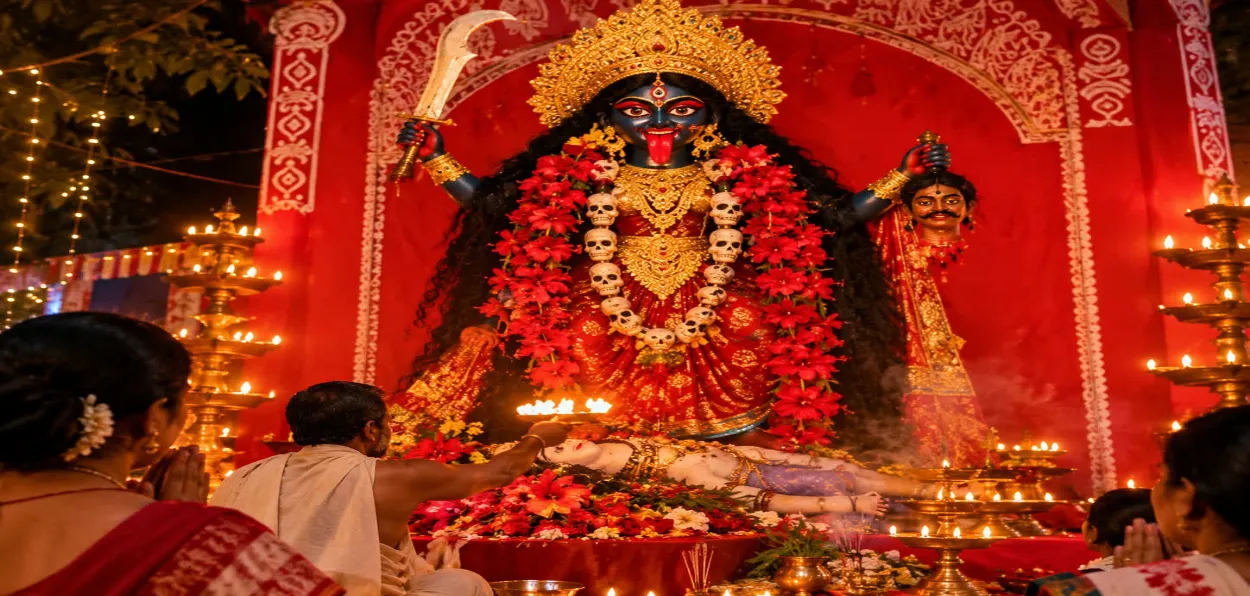
While much of India celebrates Diwali to mark the victory of good over evil and invoke the blessings of Lakshmi, the goddess of wealth and prosperity, parts of eastern India observe the occasion differently. As bells ring, devotional chants fill the air and prayers rise, devotees gather at midnight to worship another manifestation of the divine feminine — Goddess Kali.
In West Bengal, Assam, Tripura, the Mithila region of Bihar and parts of Odisha, the new moon night (Amavasya) of Diwali is dedicated to Goddess Kali. The celebrations, known as Kali Puja, reflect the distinctive religious beliefs and cultural traditions of these regions.
A major deity in Hinduism, Kali personifies time (Kala), destruction and transformation, as well as fierce maternal love. Far from being merely a symbol of destruction, she represents ultimate reality (Brahman), the dissolution of the ego and spiritual liberation (moksha). Devotees believe that the goddess possesses the power to destroy evil and protect her followers.
Having experienced both celebrations, what I find fascinating is how the same night is observed through different rituals and cultural expressions. From artistic displays and elaborate decorations to traditional food and household customs, each region brings its own identity to the festival.
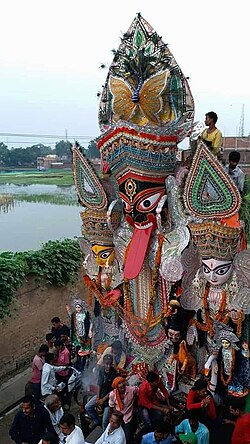
In Bengal, Kali Puja is impossible to miss. One of the most striking features of the celebration is the creativity displayed in the pandals dedicated to Maa Kali. Neighbourhoods compete to create distinctive themes, elaborate decorations and artistic installations, transforming ordinary streets and community spaces into festive attractions.
The idols, too, reflect different artistic interpretations of the goddess, making every pandal a unique experience for visitors.
As evening sets in, families and groups of friends move from one pandal to another, admiring the decorations and seeking the goddess's blessings. The atmosphere becomes particularly special as midnight approaches. The main puja and aarti are performed around midnight on the night of Amavasya, as priests conduct the rituals and devotees offer flowers and prayers.
The celebrations do not end with the midnight worship. In Bengal, pandals generally remain open for another day or two, allowing devotees to continue visiting before the idols are taken for immersion (visarjan). This extends the community celebrations, with the excitement of pandal-hopping continuing even after the main puja.
Food is another important part of the festivities. Bhog is prepared as an offering to the goddess and subsequently distributed among devotees. Pushpanjali, the ritual offering of flowers accompanied by prayers, is also an important part of the worship. Together, these practices make Kali Puja more than a night of religious observance; they bring neighbourhoods and communities together in celebration.
Mithila's different devotion
Crossing into Bihar's Mithila region, the celebration takes on a different character. Here, Kali Puja is also known as Mahanisha Puja, marking the sacred Amavasya night dedicated to Goddess Kali. The observance is distinct from Bengal's elaborate public celebrations, with greater emphasis on local customs, household rituals and traditional forms of worship.
The sheer artistic brilliance of Bengal’s Sanatan heritage never fails to amaze. Look at this breathtaking Kali Puja pandal in Dum Dum themed "সত্ত্বা" (The True Essence / Divine Existence). The rotary idol depicts the multifaceted manifestations of Adishakti—from the serene, benign form of Mahamaya to the fierce, dark cosmic wrath of Maa Kali, uniting creation, destruction, and eternal truth in one single divine being. Absolute goosebumps. Joy Maa Kali! 🪔🚩
— বাংলার টিনটিন (@Banglar_Tintin) November 6, 2026
One of the distinctive elements of Mithila's celebrations is aripan, the region's traditional floor-art form. Made with rice paste, intricate patterns are drawn in courtyards and around places of worship. Beyond their decorative appeal, these designs carry ritual significance. Their presence during the puja connects religious observance with Mithila's rich artistic heritage.
The offerings, too, reflect the region's distinctive food traditions. Makhana, closely associated with Mithila, along with traditional sweets, forms part of the offerings made to the goddess and distributed as prasad. In some communities, fish and mutton are also offered as part of customary worship. These practices vary across households and local traditions, reflecting the diversity of Kali worship in the region.
The night is marked by prayers and rituals through which devotees seek the goddess's protection and blessings. Known as Mahanisha Puja, the observance gives the festival a distinct regional identity, bringing together religious beliefs and the cultural traditions of Mithila.
Although the celebrations in Bengal and Mithila differ in their forms and expressions, both communities dedicate the same new moon night to Goddess Kali, worshipping her according to their respective customs and traditions. Kali Puja is not confined to these two regions. It is also observed in other eastern states, including Odisha, Assam and Tripura, each bringing its own cultural influences to the festivities.
What makes experiencing these celebrations particularly fascinating is the contrast between their expressions. In Bengal, the festival is marked by the visual grandeur of pandals, elaborate idols and the energy of neighbourhood festivities. In Mithila, greater attention is drawn to traditional art, food offerings and household rituals. Yet, at the heart of both celebrations lies the same devotion to the goddess.
Diwali, therefore, is not celebrated uniformly across India. While the festival is widely associated with the worship of Goddess Lakshmi, in these regions the Amavasya night becomes an occasion to worship the fierce yet protective form of the divine feminine. Devotees seek her protection, strength and blessings, expressing their faith through traditions shaped by their regional identities.
ALSO READ: Five money-spending sprees Muslims can divert to community welfare
The diverse traditions of Kali Puja offer a reminder of India's cultural richness and how a shared festival can acquire different meanings across communities, preserving their distinctive identities while celebrating a common spiritual heritage.
The author is an intern with Awaz-the Voice, Delhi