

 Sushma Ramachandran
The October report of the Reserve Bank of India has highlighted India’s resilience and ability to withstand geopolitical pressures. The central bank's optimism, despite the downside risks to the economy, is significant as it comes nearly eight months after the onset of the US-Iran war. It’s projection of an upbeat outlook comes at a time when the turmoil in the global economy is likely to accelerate. It comes even as many international financial institutions are carrying out an upward revision of the country’s growth rate for the coming year.
This is in spite of the fact that the basket of Indian crudes has risen to 121 dollars per barrel in October from 114 dollars in mid-September. The spike in oil prices has been worrying for a country heavily reliant on hydrocarbon imports, but it has not slowed the momentum of growth.
The RBI’s analysis, at the outset of the festive season, gives a strong indication that the 7.8 per cent growth recorded in the first quarter will be sustained for the rest of the year. The report prepared by central bank officials observes that strong macroeconomic fundamentals and policy interventions continued to cushion the economy against global headwinds. It also refers to the International Monetary Fund having raised its growth projections for India by 60 basis points from the July estimates to seven per cent for 2026-27, citing stronger economic momentum, resilient domestic demand and robust services activity. The report notes the economy had withstood external shocks well, based on the high frequency indicators across industry and services.
It highlights the fact that robust consumer demand, a healthy services sector and rising exports have given a boost to the economy while geopolitical tensions and inflationary pressures continue to pose downside risks. The report also refers to the narrowing trade gap which has been made possible by the country's exports having risen by double digit levels in the first six months of the financial year (2026-27). Simultaneously, gold imports have fallen.
Other indicators like stronger foreign direct investment, external commercial borrowings and remittance flows in August have played a role in the resilience of the economy.
The RBI’s cautiously optimistic projections for the economy have come soon after the central bank raised interest rates by 25 basis points and gave a signal that rate cuts are not likely in the near future. It has also hiked its inflation forecast to 5.2 per cent from 5 per cent earlier while the growth projection for 2026-27 has also been raised from 6.7 to 7.1 per cent. It is noteworthy that the bank has not downplayed the impact of external headwinds in the coming days even as it has underlined the strength of the Indian economy in the midst of global turmoil.
In this context, it points to volatility of global financial markets in the midst of the renewed conflict in West Asia. Along with the strengthening of El Niño conditions globally, these have raised inflationary risks. Headline inflation in this country was 5.5 per cent in September driven by a broad - based increase in food, fuel and core components. In October also, it comments that high frequency data suggested a broad based increase in food prices.
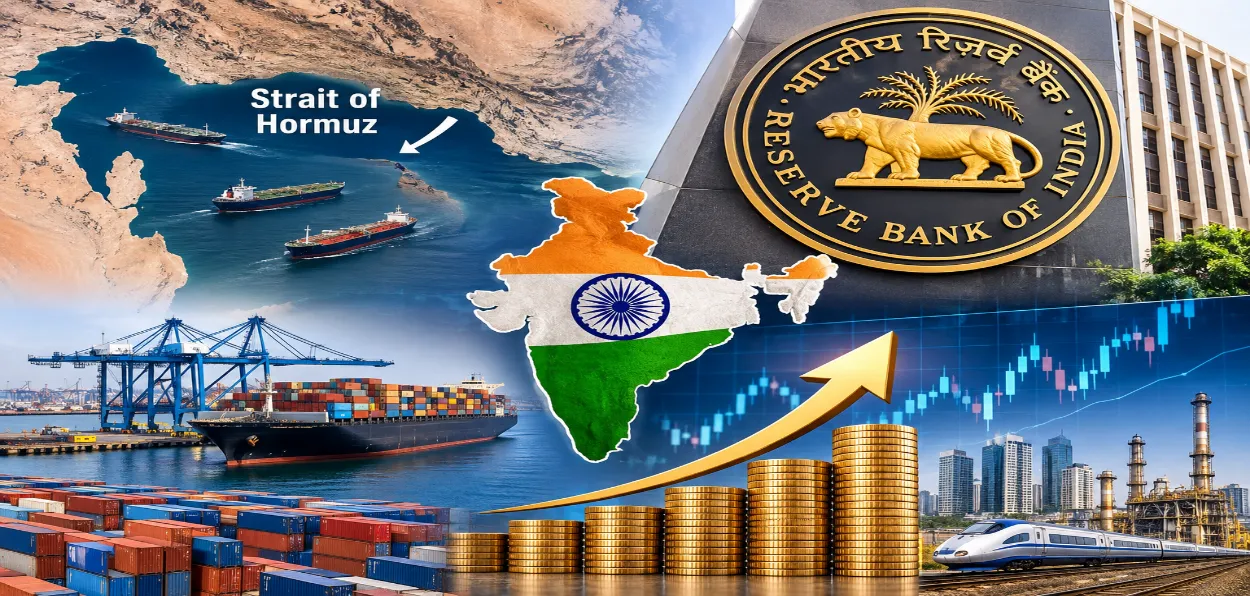
The central bank’s confidence in the economy’s ability to bounce back from adversity will be put to the test in the coming days as it increasingly looks as if the U.S. - Iran war will not end anytime soon. The blockades of the Strait of Hormuz and the Bab el Mandab inlet to the Red Sea have disrupted supply chains leading to inflationary pressures around the world. These are set to worsen as the West Asian conflict continues to simmer. Freight rates are reported to have risen by about ten times compared to pre-war levels. These could go up even further as insurance premia are rising at the same time. Container shortages have pushed up rates while cargo movement through the region has slowed down considerably.
On the plus side, the movement of oil through the Strait of Hormuz has been steady though slow paced, as tankers traverse the passage with U.S. military protection. As far as India is concerned, the policy of diversifying sources of supply has paid rich dividends. With Russia continuing to be the major supplier of crude oil, imports have been insulated to a large extent from any shortages in availability. Similarly, the pivot to alternative LPG suppliers has resolved the short - term shortfalls faced at the beginning of the West Asian war. Domestic production has been ramped up while reliance on the Gulf region has been reduced with more purchases being made from countries like the U.S.
The effect of higher prices, on the other hand, remains an issue of concern. The growing oil import bill could lead to a widening of the trade deficit as well as the current account deficit in the current fiscal - 2026-27. The inflationary effect of imported oil prices is also undeniable. Pump prices of petroleum products have been contained to some extent after price increases allowed earlier in the year. Yet oil marketing companies will have to be compensated ultimately for the rising under-recoveries on sale of products like petrol and diesel. This will increase the overall subsidy bill of the exchequer which has been kept at Rs. 3.9 lakh crores in the 2026-27 budget estimates. In addition, higher prices of petrochemicals have a cascading effect on the economy. Fertilisers are another pain point though it is reported that imports of raw materials and finished products were made during a window when prices had fallen to some extent.
ALSO READ: Indian universities must review libraries for extremist books
The economic outlook is thus challenging. An expected rebound of demand in the upcoming festival season is bound to provide considerable relief. Market research firm Datum Intelligence expects online festive sales alone to go up by 25 to 29 per cent. Automobile sales have already risen in September from 22 per cent for passenger cars to 13.5 per cent for two wheelers. This gives an indication that the hurdles facing the economy can be overcome in the short term. Yet, there is no doubt that external headwinds will continue to pose downside risks in a medium and long term perspective.