Onika Maheshwari/New Delhi
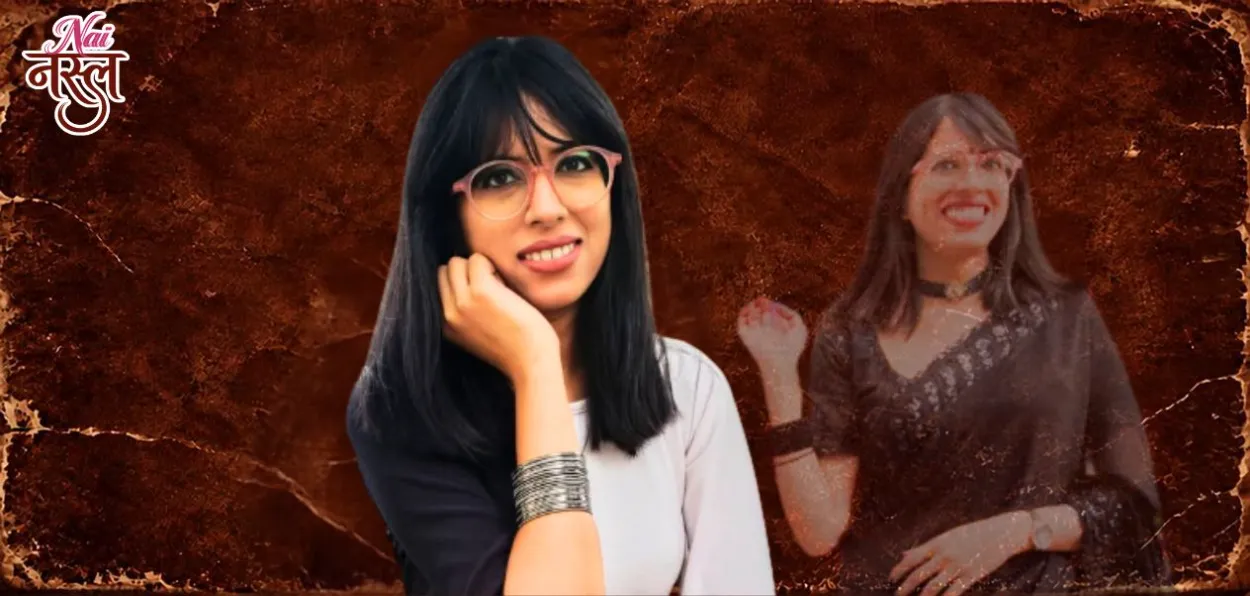
Art is more than a combination of colours and canvas. It is a medium through which people express emotions, share experiences and raise questions that are not always easy to put into words. For some, art is a hobby; for others, it is a livelihood or a way to engage with society. For Ghazala Parveen, it is all these things and much more.
A painter, performance artist and art teacher, Ghazala uses creativity not only to express her own ideas but also to encourage the next generation to recognise the value of artistic expression.
Her journey began in a government school in a village in Uttar Pradesh and eventually took her to Jamia Millia Islamia, where she won gold medals in both her bachelor’s and master’s programmes. She has attended art shows in Japan and South Korea.
Today, through her work, she is challenging the belief that career choices should be dictated by social expectations rather than individual interests, hard work and dedication.
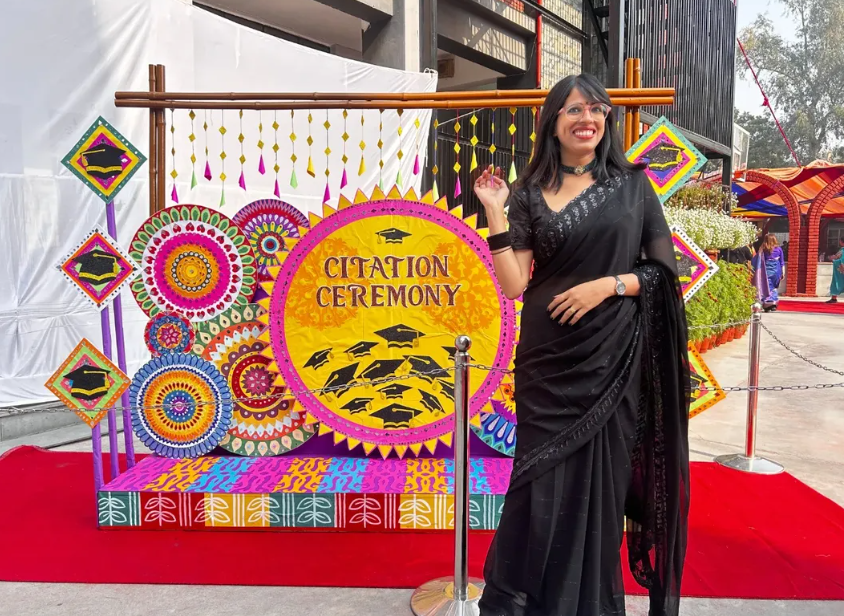 Ghazala Parveen
Ghazala’s story began in Class 3 when she developed a habit of scribbling and drawing random shapes on paper. Gradually, these sketches turned into more detailed drawings. She began making portraits and attempting to capture on paper whatever caught her attention.
Her parents appreciated her work, and their encouragement strengthened her interest in art. At the time, she perhaps did not realise that this childhood pastime would eventually become the foundation of her identity and profession.
Her school art teacher, Rajkumar Singh, recognised her talent and played an important role in nurturing it.
Speaking about her teacher, who passed away, Ghazala says he recopgnised her artistic abilities and encouraged her to pursue them seriously. Besides supporting her, Singh made her think about why young persons should pursue arts at a time when others preferred conventional professions.
Ghazala was academically strong, particularly in science. Her family hoped she would become a doctor, a profession widely regarded as secure and prestigious. Choosing art, by comparison, raised several questions among family members and relatives.
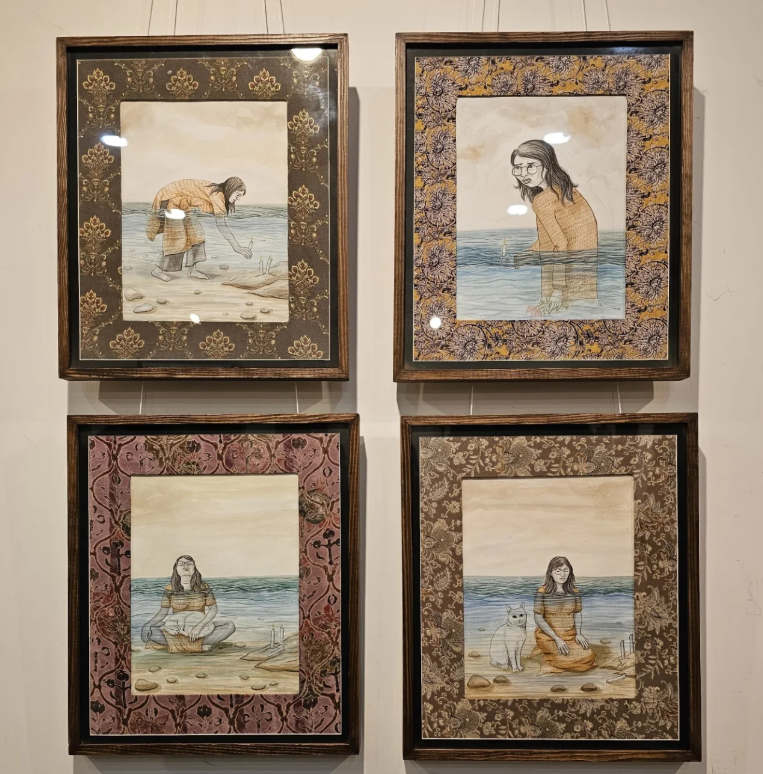 Paintings by Ghazala Parveen
After her father’s death, the family also had practical concerns about her higher education and moving to Delhi. Leaving a village to study in another city, travelling independently and taking responsibility for her future were not easy decisions.
When she secured admission to Jamia, her brother persuaded the family to give her an opportunity. Eventually, they agreed, allowing her to take the first major step towards her dream.
For Ghazala, admission to college was about much more than pursuing a degree. It marked the beginning of her journey towards independence.
Until Class 12, she had studied at a government school in her village. The academic and social environment at a university in Delhi was very different from what she had known. Moving from a village to a metropolitan city brought new challenges. She had to find her place among unfamiliar people, adapt to a different academic culture and develop confidence in herself.
She says it took her several years to bridge this gap. By the time she completed her undergraduate studies, she had gradually adjusted to the new environment and gained the confidence to interact with her classmates and keep pace with them.
Living in a hostel at Jamia also helped her develop an independent personality. Being away from home, making her own decisions and managing her daily routine became important parts of her growth.
She won a gold medal during her bachelor's programme in 2013 and another during her master's degree in 2015. These achievements were not merely academic honours. They were also an answer to those who had questioned whether art could provide a secure future.
Ghazala credits her family for her success. Her father would carefully preserve her drawings. He kept her drawing file beside his pillow and proudly showed her work to friends and visitors, telling them that his daughter had made the pictures.
She recalls an incident from when she was in Class 4 or 5. Her father once asked her to draw a picture of a bus that he had seen in a book. He also asked her brother to draw the same picture, turning it into a friendly competition. Ghazala finished her drawing quickly, while her brother struggled to complete his.
Her mother’s contribution was equally important. Although she had not received formal education, she understood its value. Whenever Ghazala studied late at night, her mother would sit beside her and encourage her to continue. During examinations, she would stay awake with her daughter as she studied.
Ghazala is among the youngest daughters in a large family of 12 siblings, comprising 10 sisters and two brothers. Growing up in such a household, she gradually made space for her individual interests. While her drawings were appreciated during childhood, choosing art as a profession remained difficult.
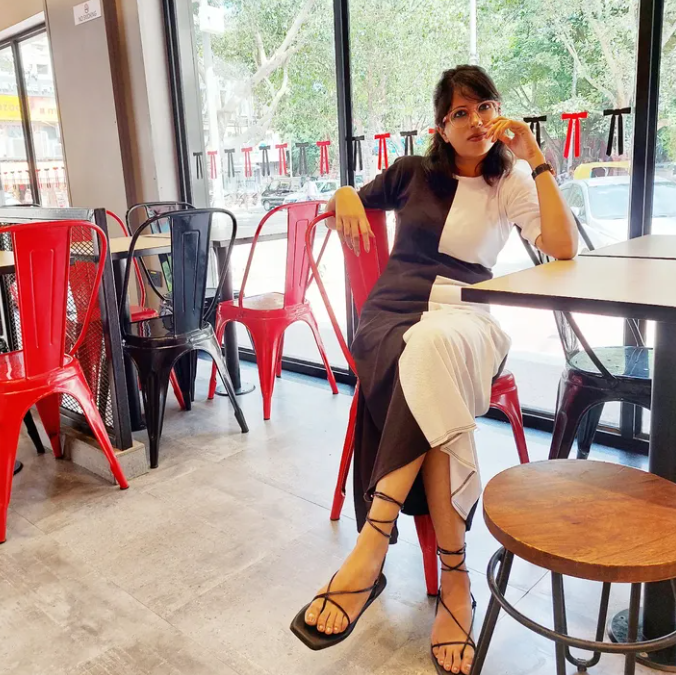 Ghazala Parveen
She had to convince relatives and acquaintances that painting was not merely a pastime and that it could lead to a meaningful career. Her academic achievements and international exposure gradually helped change these perceptions.
An important turning point in Ghazala’s artistic journey came when she discovered performance art.
The medium was entirely new to her. In 2014, while pursuing her master's degree at Jamia, a Japanese artist visited the university. Ghazala considers him her mentor. Through him, she got an opportunity to understand performance art and explore her creativity in a different form.
Initially, she knew very little about this art form. She would watch the artist with curiosity but also felt nervous about the possibility of being asked to perform in front of an audience. At the time, she was even hesitant to speak into a microphone.
One day, her mentor gave students an opportunity to present their art for two minutes each. A friend of Ghazala put her name forward as well. When her turn arrived, she was unsure what to do. Teachers, spectators and cameras were all watching.
She was wearing a suit and had a dupatta with her. In a spontaneous gesture, she threw the dupatta upwards and lay down on the floor before it could fall. The dupatta descended and covered her body completely.
That brief presentation became her first performance artwork.
Although it lasted only a few moments, it opened the door to a new form of artistic expression. The Japanese artist liked her performance, took a video clip to Japan and showed it there. When he visited again, some artists in Japan asked about the young woman who had performed with the dupatta.
Ghazala was surprised by the response. An experiment she had attempted without elaborate planning or preparation had unexpectedly opened up new avenues of recognition and opportunity.
She explains that painting and performance art differ fundamentally. In painting, an artist communicates ideas and emotions through colours, lines and shapes on a canvas. In performance art, the artist's own body becomes the medium of expression.
The artist uses the body, objects, movements and a particular situation to communicate an idea. Unlike conventional theatre, performance art does not necessarily require dialogue or a pre-written script. Sometimes, the artist's body, movements and surrounding objects together create the meaning of the presentation.
According to Ghazala, performance art should not simply be understood as theatre. It transforms an idea or emotion into a visual and physical experience, allowing audiences to interpret it in their own way.
For her, this medium is particularly important because it allows her to raise questions about social issues that occupy her thoughts. In her performances, the body is not merely an instrument of presentation but a powerful means of communicating ideas.
While studying at Jamia, Ghazala received opportunities to present her work internationally. Her teachers recognised her abilities and encouraged her to explore new platforms. This eventually took her to Japan and later to South Korea.
The journey from a village to a metropolitan university and then to international art platforms marked a remarkable transformation in her life.
She was the first girl in her extended family to travel abroad. The young woman whose decision to study art had once been questioned was now presenting her work before international audiences.
In Japan, she met artists from different countries and gained exposure to diverse artistic approaches. The experience helped her learn, exchange ideas and look at her own work from a wider perspective.
Before travelling abroad, she experienced a mixture of excitement and nervousness. Travelling alone and entering an unfamiliar environment were new experiences. However, presenting her work among artists from different countries gradually strengthened her confidence.
She realised that the language of art can often transcend words and geographical boundaries. Artists can communicate their experiences and ideas through forms of expression that audiences from different cultural backgrounds can also attempt to understand.
 Ghazala Parveen with school students
During her presentations in Japan, Ghazala explored themes related to Indian culture, marriage and women's lives. In one performance, she appeared as a bride. Through the bindi and bridal appearance, she brought elements of Indian wedding culture into her work.
But her intention was not simply to portray traditional customs. The performance also raised questions about the lives of married women, patriarchal structures and the position of women in society.
A feminist perspective runs through her work. She examines the social expectations within which women are often required to organise their lives.
Her art, therefore, represents Indian culture while also questioning some of the social experiences and realities within it. She remains connected to her cultural background but does not hesitate to examine the experiences of women within that environment.
For Ghazala, representing one's culture is not just about showcasing its beauty. It is also about understanding and expressing the diverse experiences and questions that exist within it.
The appreciation her work received in Japan made her family proud. Her mother and brother were happy that she had pursued her chosen field and established herself through her work.
The family that had once imagined her as a doctor could now see her building a distinct identity through art. Ghazala believes that she might have achieved something in science as well, given her academic interest and willingness to work hard. However, she chose art and decided to explore the possibilities within it.
Her journey also offered a new example to her relatives and people in her village. Those who once considered art merely a hobby could now see that it offered opportunities for education, professional achievement, employment and international exposure.
For Ghazala, this change in perception is more meaningful than personal success alone. She hopes her experiences will encourage other girls and young people to pursue the fields they genuinely love.
Ghazala's art is not limited to public performances and international platforms. Some of her works are deeply connected to personal emotions and family relationships.
One painting dedicated to her mother holds a special place in her heart. She recently gifted the artwork to her, expressing gratitude for the role she played in shaping her education and life.
Although her mother had not received formal schooling, she remained deeply committed to her daughter's education. Whenever Ghazala studied late into the night, her mother would sit beside her, encourage her and stay awake during examination periods.
For Ghazala, these are not merely childhood memories. They represent the sacrifices and emotional support that helped her move towards her dreams.
Through the painting, she wanted to express her gratitude. Her father strengthened her confidence in art by proudly sharing her drawings with others, while her mother supported her education and determination to move forward.
Together, these experiences taught her how recognising a child's talent and providing opportunities can change their future.
Today, Ghazala Parveen works as an art teacher while continuing her independent practice as an artist. She paints, develops ideas around specific themes and presents performance art. Her professional work also includes commercial projects, commissioned artworks and exhibitions.
Art is therefore not just a means of personal expression for her but also the foundation of her professional life.
She recalls that one of her small paintings was sold for Rs 500 when she was still in school. The sale became a memorable moment for her. She later took up commercial assignments and worked on different projects to develop her practice.
However, she does not consider her journey complete. She believes there is still much to learn and accomplish.
Her experience challenges the perception that art offers limited financial opportunities. She believes that success in any field requires talent, hard work, discipline and a willingness to keep learning. Opportunities exist in art as well, but awareness about them needs to grow.
People must understand that formal education and professional training in art can open up several career paths.
Financial independence is another important aspect of her journey. She says that if a child in her family now wants to pursue art, it would be difficult to discourage them in the way she was once discouraged. Her family has seen through her experience that art can provide a sustainable career.
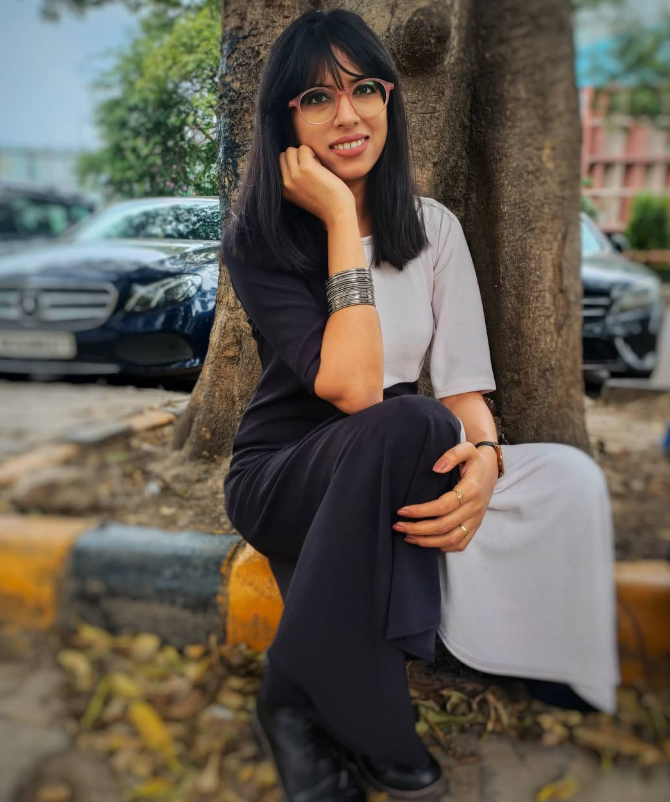 Ghazala Parveen
Ghazala teaches art to students in Classes 11 and 12. Through this, she often meets young people with creative abilities who do not always have the freedom to choose subjects according to their interests.
She says many students want to pursue fine arts, but their parents do not allow them. Some parents believe that spending time on art may limit their children's career opportunities.
In such situations, Ghazala speaks to both students and their parents. She tries to explain that studying art is not a waste of time and that children should be given the opportunity to develop their talents.
She wants schools to give importance to art and encourage students who wish to pursue it. While the arrangements and requirements for art education may differ across schools, she believes it should be recognised as an essential part of learning.
She says that every year, around three or four students from her school complete courses in fine arts. For her, this is a small but meaningful achievement. It means students who might otherwise have been discouraged are getting an opportunity to build careers based on their interests.
Ghazala's creative work has connection with the lives of rural women. Over time, she has explored themes involving women's experiences, their everyday circumstances and the social structures that shape their lives.
She is particularly interested in showcasing human experiences that are often overlooked or treated as an ordinary. She says her objective is not merely to create visually appealing images but to make viewers reflect on the realities they represent.
Questions about women's position in society and patriarchal attitudes also appear in her performance art. Her bridal presentation in Japan is one example. Using symbols associated with Indian marriage, she explored the lives and experiences of married women.
Her journey demonstrates that art does not exist separately from society. It draws its themes and experiences from the world in which an artist lives. For Ghazala, remaining connected to her village, family and the experiences of women around her is an important part of her creative process.
 Paintings by Ghazala Parveen
Ghazala advises young people to pursue whichever field they choose with honesty, dedication and commitment. Success, she believes, requires hard work whether one chooses art, science, engineering, commerce or any other profession.
Instead of categorising subjects as good or bad, young people should identify their interests and consider where they can make their best contribution.
She particularly supports students who are interested in art but find it difficult to pursue their ambitions because of family expectations or social pressure. She believes parents should understand their children's interests and provide appropriate guidance.
Her journey is far from over. She believes she still has much to learn and achieve. But today, she has the confidence gained through experience, the ability to communicate through art and the opportunity to guide the next generation.
READ MORE: Sarpanch Aslam Khan brings urban amenities to UP village
Ghazala's journey carries a powerful message: when talent receives an opportunity, hard work finds direction and dreams are supported by family, even a modest beginning in a village can lead to an international platform.