

 Saquib Salim
Contrary to popular perception, the history of Islam over the last four centuries has been driven by scholars of the Indian subcontinent. With a rich legacy of Muslim thinkers, can India continue this leadership position?
Indian Islamic scholars, or the Ulema-e-Hind, have crafted a theology that is as much rooted in the Quran as it is in the unique socio-political realities of India to lead global Muslims.
The 18th century witnessed several developments like the fall of the Mughal Empire, the rise of European colonialism and the Industrial Revolution.
Indian Islamic scholars led a vibrant, often contentious, and yet profound internal dialogue that would eventually influence the global Muslim Ummah. These movements were not dry academic shifts, but a living Tehzeeb (civilisation) responding to the call of the hour.
Shah Waliullah Dehlavi laid the foundation of South Asian Islamic thought in the early 18th century, which would go on to dominate the World in the next three centuries. He could see the "writing on the wall" and realised that Islam had to move from the elite courts to the common man’s heart.
Waliullah introduced democracy to the understanding of Islam by translating the Holy Quran into Persian. Though he invited the wrath of the conservative clergy, his act opened the doors of divine revelation for the larger Indian masses who couldn’t understand Arabic.
 Shah Waliullah Dehalvi
He believed in Tatbiq (synthesis), i.e., reconciling the legalism of jurists with the spiritual depth of Sufis. Allama Iqbal said, "The pulse of the Muslim world began to beat with the thought of Shah Waliullah."
He defended Islamic law with rationale, framing it not as a series of dogmas, but as a system designed for the collective welfare of humanity. Later, his sons and grandsons kept the movement alive and translated the Quran into Urdu, effectively making Islamic knowledge a vernacular reality.
Deoband school applied Shah Waliullah’s theory to society.
Founded by the Islamic scholars who had led the 1857 War of Independence, the Darul Uloom Deoband was not just a religious school; rather, it was an institution of cultural and political resistance.
Maulana Muhammad Qasim Nanautavi and Rashid Ahmad Gangohi, who led the armed struggle against the British forces in 1857, understood that British rule was a reality. At the time of this crisis, the Ulema had to lead the movement against the cultural invasion of India
 Rashid Ahmed Gangohi
Darul Uloom sought to purge the faith of social evils and advocated a return to the foundational texts. Their organisational mode — the madrasa system — has proved its importance and utility over time.
They refused government aid and relied on small public donations (Chanda), thus creating a truly "public" Islam, independent of state interference. The madrasa system took off in 1866, and today there are thousands of affiliated madrasas in India and the world.
Deoband's contribution to the Indian freedom struggle remains a glorious chapter of its history. The "Silk Letter Movement" (Reshmi Rumal Tehreek), led by Shaikhul Hind Maulana Mahmud Hasan, proved that Deobandi theology was intrinsically tied to the Indian Freedom Struggle.
Later, these Islamic scholars formed Jamiat-i-Ulema, which fought for freedom along with Mahatma Gandhi and Subhas Chandra Bose. In the Deobandi view, faith was inseparable from the struggle against colonial oppression.
While Deoband focused on the reform of the intellect, Imam Ahmed Raza Khan of Bareilly sought to protect the "soul" of the Indian Muslim, which was the deep-seated love for the Prophet Muhammad.
The Barelvi movement (Ahl-e-Sunnat wa Jama'at), led by Ahmed Raza, rose in the late 19th century to defend the Sufi-oriented practices that had defined South Asian Islam for centuries.
 Maulana Mahmud Hasan
Ahmed Raza was a polymath who wrote on everything from astronomy to jurisprudence. His theology was centred on Ishq-e-Rasool (Love for the Messenger). He argued that the Prophet is not just a historical figure but a living spiritual presence. For the Barelvis, the celebration of Mawlid, the veneration of saints (Pirs), and the culture of the Dargah (shrine) were the essential cultural buffers that kept Islam rooted in the local soil.
They provided a theological shield for the aesthetic and emotional dimensions of faith, ensuring that the "Ganga-Jamuni Tehzeeb" remained vibrant within the Islamic framework.
In the 1920s, Maulana Muhammad Ilyas Kandhlawi observed that in rural areas there were Muslims who were Muslims only in name, alienated from their own faith by poverty and lack of education. He responded with Tablighi Jamaat, which is arguably the most successful grassroots Muslim movement in modern history.
The Tablighi movement shifted the focus from the "Ulema in the Madrasa" to the "Muslim in the Street." By simplifying the faith into six basic points, Maulana Ilyas empowered the common man to become a preacher.
It was an egalitarian revolution; a labourer and a businessman would sit on the same floor, eat from the same plate, and travel together for the sake of God.
Its contribution to theology was the "sanctification of the mundane." It taught that every act, like eating food to greeting a neighbour, is a theological statement.
This movement de-politicised the community at a time of intense communal tension, focusing instead on internal moral reconstruction. Ilyas asked Muslims to look into themselves and be good Muslims first rather than trying to make Muslims out of others.
Syed Abul A'la Maududi responded to the 20th-century challenge of modern "Isms" like Nationalism, Socialism, and Secularism by presenting Islam as a system (Nizam). His organisation, Jamaat-e-Islami, preached, contrary to Tablighi Jamaat, that Islam was not a private affair of Muslim individuals but a comprehensive roadmap for the state and society.
 Syed Abdul Aala Maududi
Maududi’s theology was revolutionary in its logic. He used modern language to explain the sovereignty of God (Hakimiyyah). While his political views remain a subject of debate — with a section of people believing that his ideology was a mere theory — his intellectual contribution had a far-reaching impact on far-off places like Egypt.
We cannot talk about the contribution of Indian scholars without mentioning the Ismaili traditions viz., the Dawoodi Bohras and the Aga Khanis. These communities have provided a unique model of how Islamic theology can embrace modernity without losing its essence.
The Dawoodi Bohras, under their successive Dais, have preserved the Fatimid tradition of intellectual inquiry. Their focus on education, environmentalism, and trade has made them a model of a prosperous, law-abiding, and deeply religious community.
Similarly, the Aga Khanis, led by the Aga Khan, have championed a theology of "pluralism and intellect." They have shown that the Imamat can be a bridge between the spiritual and the material, focusing on quality education and humanism as a religious duty. As the Aga Khan says, "The Quran tells us that the world is a sign of God, and to study the world through science and intellect is, in itself, an act of worship."
In the last 400 years, the Islam the world has been following is largely defined by the Indian Islamic scholars. Tablighi Jamaat remains the largest mass Muslim movement in the world, while Deoband has the largest madrasa system with thousands of its affiliates in Europe, Africa, Asia and America as well; the Barelvi movement has defined the way Muslims in the subcontinent as well as outside identify themselves; among Shia scholars, the impact of Ayatollah Khomeini, who hailed from Lucknow, is undeniable. Maududi’s teachings had inspired leaders of brotherhood in Egypt and elsewhere.
In a nutshell, the very idea that Islam is defined by Arabs or that they lead the world spiritually is misplaced. Rather, in the last several centuries it’s India which is leading the Islamic world.
The idea among the modern educated class that Indian Muslims should only follow the Arab examples for true Islam has no historical precedent.
Indian scholars have developed their own understanding, which was later followed by the world, including the Arabs. The question is whether India, which has created legendary Islamic thought leaders, can continue to do so in future as well and whether we are grooming young thought leaders who will position Muslims appropriately.
ALSO READ: Indian Armed Forces are a sacred calling for India’s youth
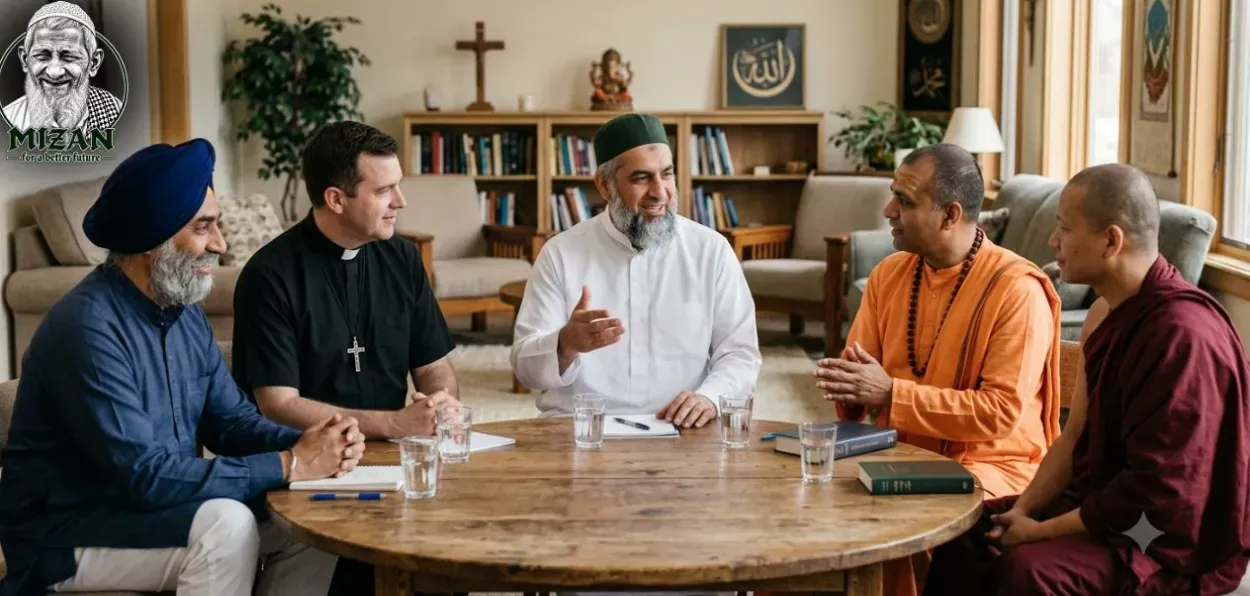
Leadership positions will definitely require cultivating thought leaders who could offer a fresh meta-narrative. It’s inclusive and not in conflict with other thought systems of the world.
Saquib Salim writes on history and heritage