

Saquib Salim
On 9 January 1823, the Marquess of Hastings sailed for England, and John Adam became acting Governor-General. A year before, in 1822, Adam had urged that James Silk Buckingham, editor of the Calcutta Journal, be sent out of India, but Hastings had declined.
Now Adam had the administrative power. Within a few weeks he ensured that Buckingham's licence to reside in India was revoked. He was banished without trial. The action concerned the publication of a satirical article about the appointment of the Reverend James Bryce, a Presbyterian minister, to a government clerkship.
The Journal was suppressed. On 14 March, Adam's Council issued an ordinance placing every Bengal news publication under licence, and on 4 April the Supreme Court registered it as law.
Not the first gag
The English East India Company had come to India as a trader, yet it had long policed what people in Calcutta (Kolkata) could read.
Hicky's Bengal Gazette was closed in 1782. Its editor was fined and jailed, and editors were deported in 1794 and 1798.
In 1799, Lord Wellesley ordered that every proof be submitted for approval before publication. In 1818 Hastings abolished that censorship but kept every prohibited subject, and his rules carried no force of law.
Deportation could not touch Indian editors, or Europeans born in India, and by the early 1820s Indians were publishing in Bengali and Persian. Buckingham often reprinted extracts from these papers.
After the ordinance of 1823, every newspaper needed a licence; the Governor-General could revoke it at will, and printing without one could attract a fine of four hundred rupees.
This was a conceptual change. The colonial rule required a regulated press rather than a free one.
Company's fears
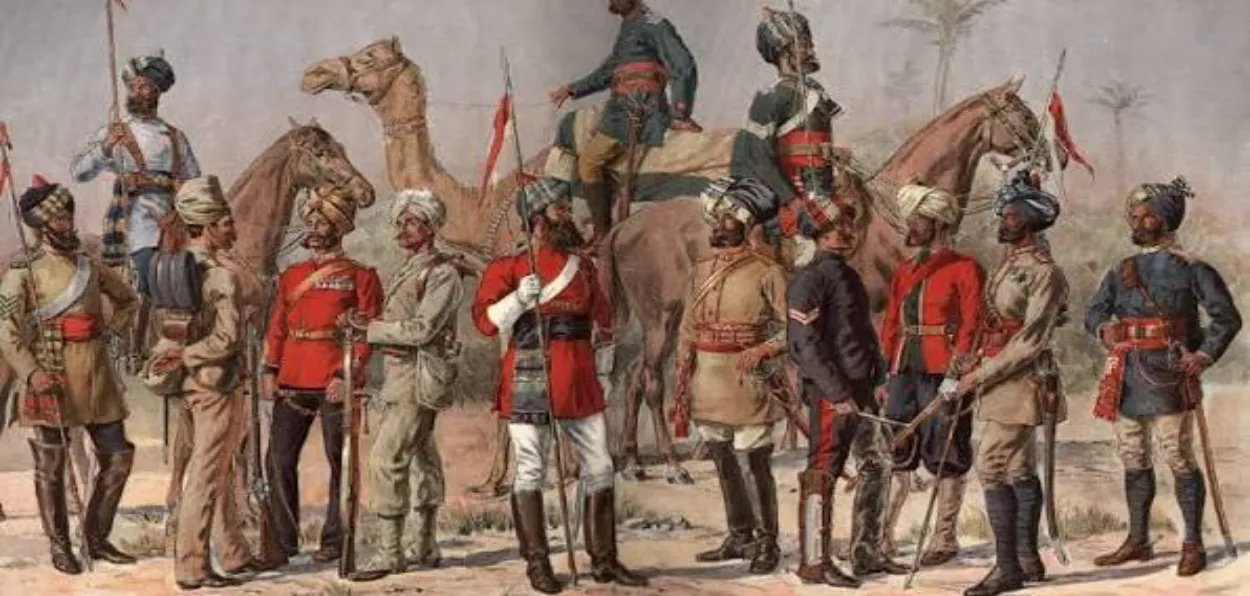
The Company's power rested on an army with large numbers of Indian soldiers. The administration feared that European officers airing grievances through Buckingham's Journal might carry discontent to the ranks.
Adam warned that such appeals would 'confound all principles of military subordination'. Madras officials had already said in 1807 that Indian readers could not form a correct opinion of what papers printed and might be misled.
In 1822 Thomas Munro, Governor of Madras, judged a free press and the 'dominion of strangers' incompatible. Bengal had no legislature to restrain its executive, and that, Buckingham argued, was exactly why the press had to.
Rammohun Roy answers
Indians did not accept this ordinance silently. Rammohun Roy, associated with at least five journals in Bengali, Persian and English, filed a memorial two days after the ordinance reached the Supreme Court.
Dwarkanath, Prasanna Kumar and Chandra Kumar Tagore, Harachandra Ghosh and Gauri Charan Banerjee signed it with him. It professed loyalty to British rule yet argued from principle.
Hindus, it said, held an invincible prejudice against voluntary oaths, and Indians could not be charged with ever having abused the press. Roy's biographer Sophia Dobson Collet likened the memorial to Milton's Areopagitica. The judge, Sir Francis Macnaghten, dismissed it, admitting that he had already pledged its sanction. The ordinance was registered on 4 April.
In protest, Roy closed his Persian journal, the Mirat-ul-Akhbar, the Mirror of News. In its last issue he gave three reasons.
A European friend of the Chief Secretary could easily obtain a licence, but a humble Indian must push past the porters of the great and into a crowded police court.
To pledge on an affidavit in open court was considered demeaning by respectable people.
And a licence that could be recalled at any moment would leave an editor no peace of mind, since truth cannot always be told in words pleasing to the government.
Roy ended with a couplet of Hafiz telling the poor recluse to be silent, since 'Princes know the secrets of their own Policy'. This was political defiance in the rulers' own courteous language.
Roy then appealed to the King in London. A free press, he wrote, had 'never yet caused a revolution in any part of the world', since grievances that reach a government can be redressed by it. He recalled that under earlier Muslim rulers Indians had held the highest offices, commanded armies and governed provinces.
Even the wiser Mughal princes, despotic as they were, posted a news writer, the akhbar navees, and a confidential reporter, the khufia navees, at their governors' residences so that none was trusted to report on himself.
Licence outlives its repeal
The Court of Directors in London approved Adam's policy, and the Privy Council concurred. Buckingham carried his fight to Parliament, whose select committee on his Journal's suppression reported in 1834.
Later, Governor Generals, Amherst or Bentinck, would not enforce the ordinance. Bentinck pointed out in 1829 that such intervention only gave editors celebrity.
In 1835 Charles Metcalfe, aided by Macaulay, removed Adam's licensing through Act XI, and Indians raised Metcalfe Hall by public subscription in his honour. But the Company's authorities in London later penalised him.
In 1857, Lord Canning reintroduced the restrictive provisions of the 1823 regulations after Calcutta's bilingual Samachar Sudhabarshan reported on the First War of National Independence.
On 14 March 1878, Lytton enacted the Vernacular Press Act against the language newspapers. The premise of 1823, that colonial rule required a regulated press, outlived each repeal. Roy's memorials became a template for Indian opposition on the Jury Act, taxes and education.
ALSO READ: ‘I didn’t give up’, Capt Machchhar speaks on cockpit attack
Adam wished to silence one editor. Instead, the protest he provoked fed a growing public sphere that contested an empire in its own courts and in its own language of rights.