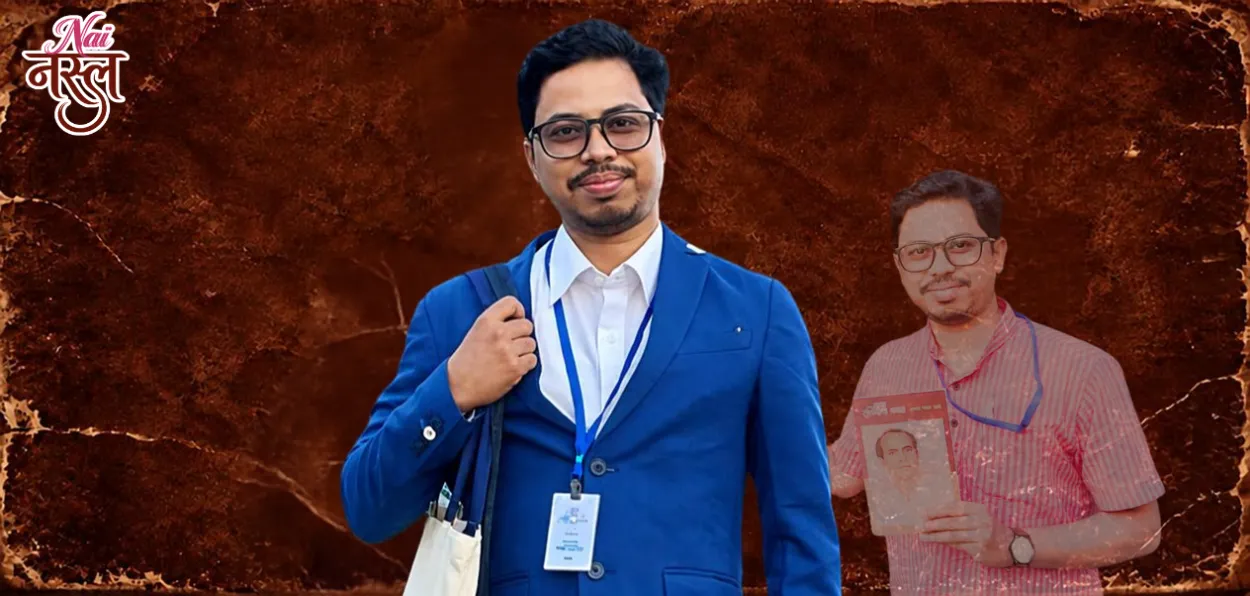
Mrudgandha Dixit
While pursuing his graduation, Irshad Wadgaonkar of Kolhapur read English translations of Russian authors like Dostoevsky, Gorky, and Chekhov as part of the World Literature syllabus. Reading 'Poor People', 'White Nights', and 'Crime and Punishment', he simply fell in love with Russian literature, and Dostoevsky became his favourite author.
This eventually changed the course of his life. Today, he is translating Russian literature into Marathi.
Irshad's home is in the 'Lugdi Ol' area of Kolhapur's Somwar Peth. He doesn’t come from a background of books or writing.
His grandfather ran a small kiosk (tapri) selling paan and eggs. Around 1996, the family sold that house and moved to the Lakshatirtha colony.
Irshad's father has studied till the fourth grade, while his mother has passed the sixth. For over 30 years, his father has been selling hosiery on a handcart opposite the Mahalaxmi Dharamshala on Mahadwar Road.
Irshad is the second of three siblings. His elder brother holds an M.Sc. degree and works in Goa, while his younger brother has completed his M.Com.
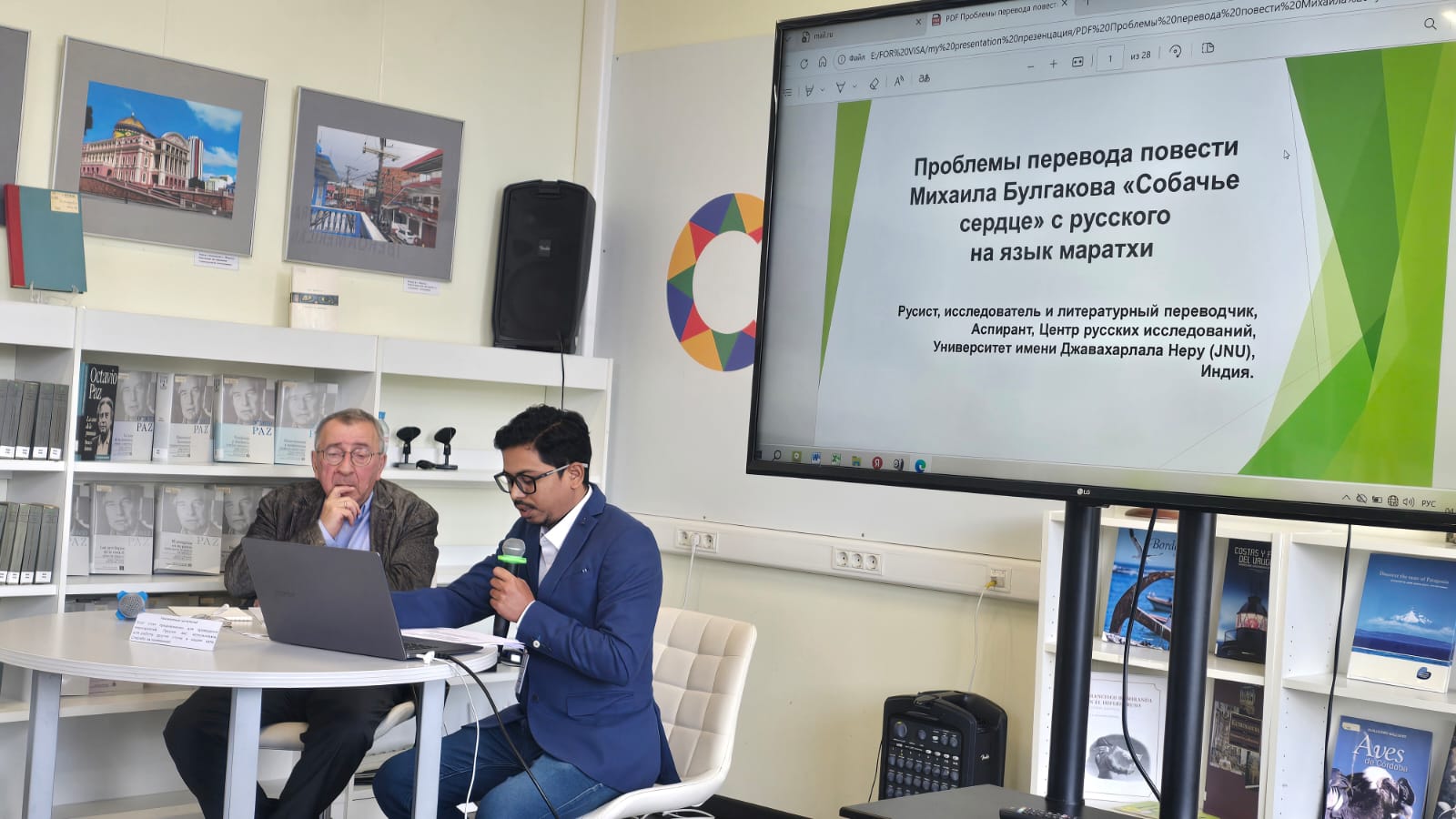 Irshad Wadgaonkar during a conference in Russia
Irshad completed his education till the seventh grade at the municipal corporation's Annasaheb Shinde School. He only knew the names of a couple of books like 'Batatyachi Chal' and 'Shyamchi Aai'.
While in the first year of his B. Com, he realised that he wanted to study English literature. For this, he changed his stream to Arts (B.A. English). He faced opposition from everyone and also lost an academic year.
During his graduation, he took up a part-time job at an old bookstore, Chand Book Stall, opposite the Mahalaxmi Market. His discussions with the professors and readers who visited the shop further intensified his attraction towards books.
Sometimes, instead of taking money as his wages, he would just buy books from the stall with that amount.
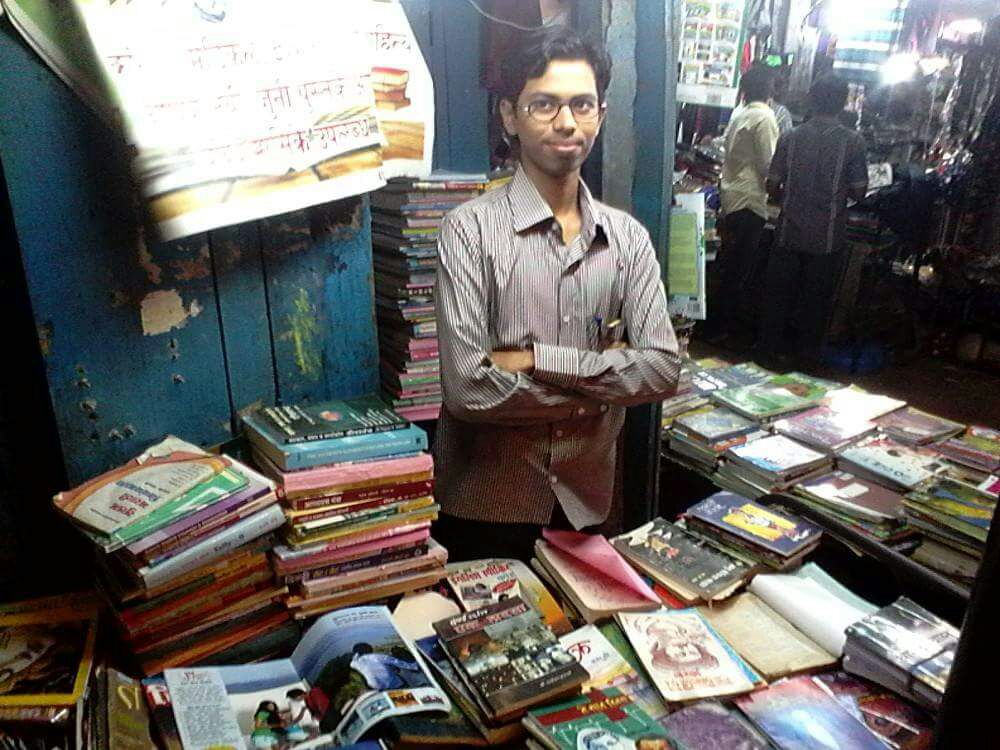 Irshad Wadgaonkar working at a bookstall
During his M.A. in English at Shivaji University, he came to know about the Foreign Language Department there. Eager to read the works of his favourite author in the original language, he made up his mind to learn Russian.
Initially, the study of the Russian language from books made his lose interest in it. He gave it up. At that time, some professors advised him to instead learn German.
Irshad did not heed that advice. With renewed vigour, he used social media and language learning apps to make Russian friends. By talking to them over WhatsApp and audio/video calls, he mastered 'spoken Russian'. Along with his M.A., he completed his Certificate, Diploma, and Higher Diploma in Russian.
In 2015, Irshad's mother suffered a brain stroke, and he dropped out of his M.A. in the second year. He later worked as an English teacher at an English medium school for two years, and also took private classes for competitive exams and spoken English.
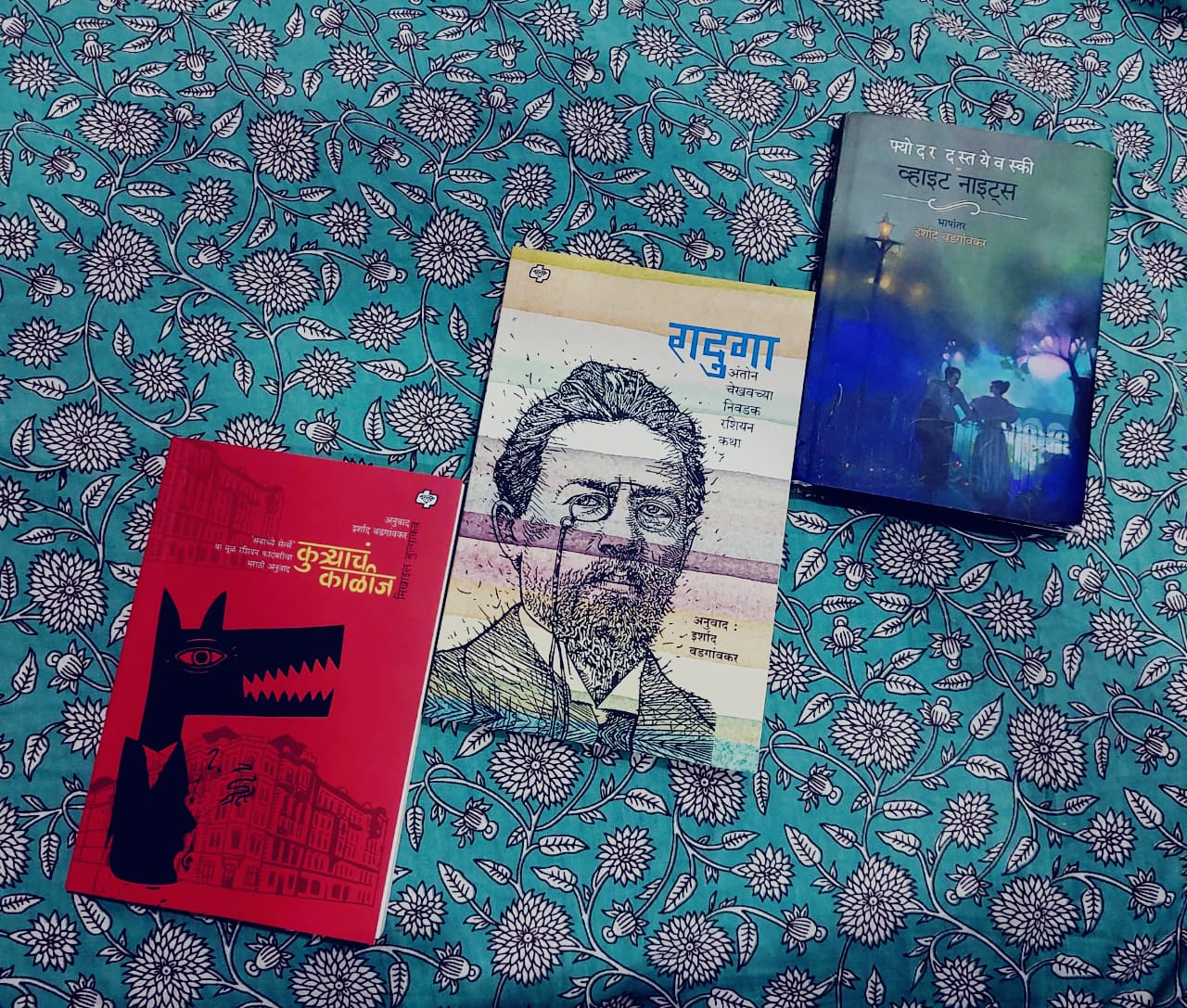 Irshad Wadgaonkar's''s books
Later, while working as a 'Research Assistant' on a major research project at the university, he pivoted back to academics. He completed his M.A. (Russian), cleared the.. NET exam, and became the first student in the university to receive the 'NFOBC (JRF)' fellowship in the Russian language.
Participating in online webinars and the Russian Language Olympiad during the COVID period made him realize the vast opportunities available in the Russian language.
For his PhD, he appeared for the entrance exams of 'EFLU' in Hyderabad, Shantiniketan, and JNU, and he was selected at JNU.
The three-and-a-half years he spent at JNU proved to be highly dynamic, giving him a completely different experience. He even taught a grammar paper for one semester there.
During the COVID period, he had run out of savings while staying at home. He stepped up to pursue his PhD.
At this crucial juncture, with the help of friends, he bought and read Sharad Baviskar's book 'Bhura'. "If a young man from a place like Raver, with no social or cultural capital, can make it that far, then why should I, coming from a culturally and historically rich city like Kolhapur with the legacy of Shahu Maharaj, be afraid to leave home?" This thought inspired him to go all the way to JNU.
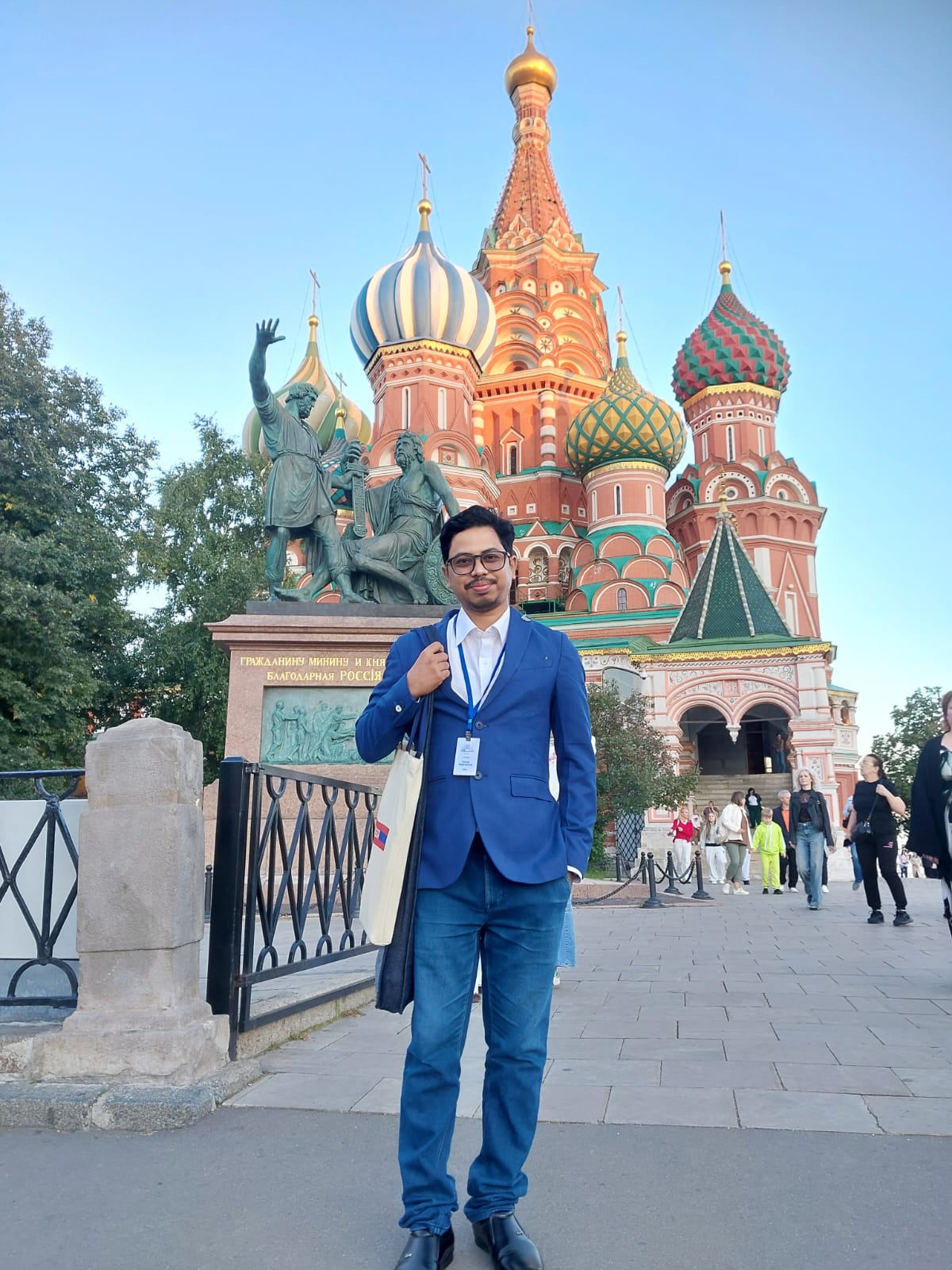 Irshad Wadgaonkar in Russia
He also travelled to Malaysia for an interpretation assignment, becoming the first person in his family to travel abroad.
Driven by Chekhov's simple Russian and a love for his stories, Irshad started a blog called 'Kavadse' and began translating short stories from Russian into Marathi.
After receiving excellent responses to his blog, he thought of publishing his own book of Chekhov's translated stories. Tying into the nostalgia of the old Soviet publications, his first story collection titled 'Raduga' (Rainbow) was published by Diamond Publications in 2023.
After that, he translated Mikhail Bulgakov's 'Heart of a Dog' (which came into Marathi for the first time) and Dostoevsky's 'White Nights' for Warden Prakashan. He got the opportunity to translate the very book that had sparked his love for Russian in the first place.
His translated book 'Heart of a Dog' has also been nominated this year for the prestigious Balshastri Jambhekar Translation Award given by Antarbharati.
Recently, he received a grant from the 'Institute for Literary Translations' in Russia for translating Nobel laureate writer Ivan Bunin's novel 'The Village'. Upon the invitation of this institute, he visited Russia for a conference in the first week of September.
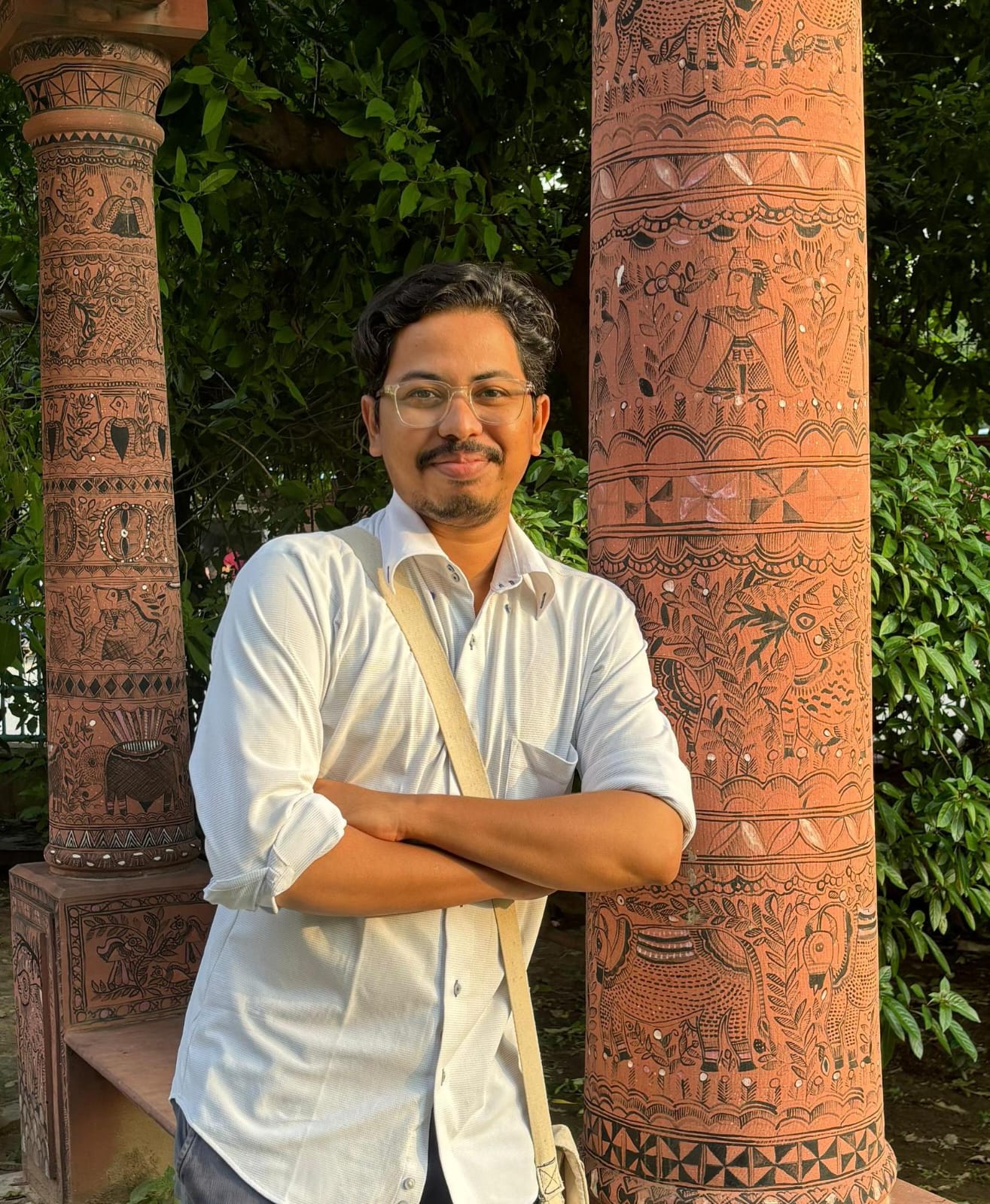 Irshad Wadgaonkar
He presented a research paper on "Problems in Translating Heart of a Dog into Marathi" (challenges in translating political satire).
He is trying to wrap up his PhD on "Coming of Age Novels of Contemporary Russian Literature" (novels depicting the psychological journey of teenagers in 21st-century Russian literature). Unable to find a guide who knew Marathi, he chose this topic instead of doing a PhD on translation. Alongside, he continues to take up freelance translation and interpretation projects.
Irshad's father disliked books as these started clogging the space in his two-room house.
During his B.A. days, in a fit of frustration, Irshad packed 5-6 sacks of books and left the house, keeping those books at the homes of friends and professors. For many years in between, he continued storing his books with relatives and acquaintances.
Recently, after getting married and moving into a bigger house, he built a rack himself, brought all those books back, and decorated his home library.
Last year, he had a registered marriage, and it was the first registered marriage in his family.
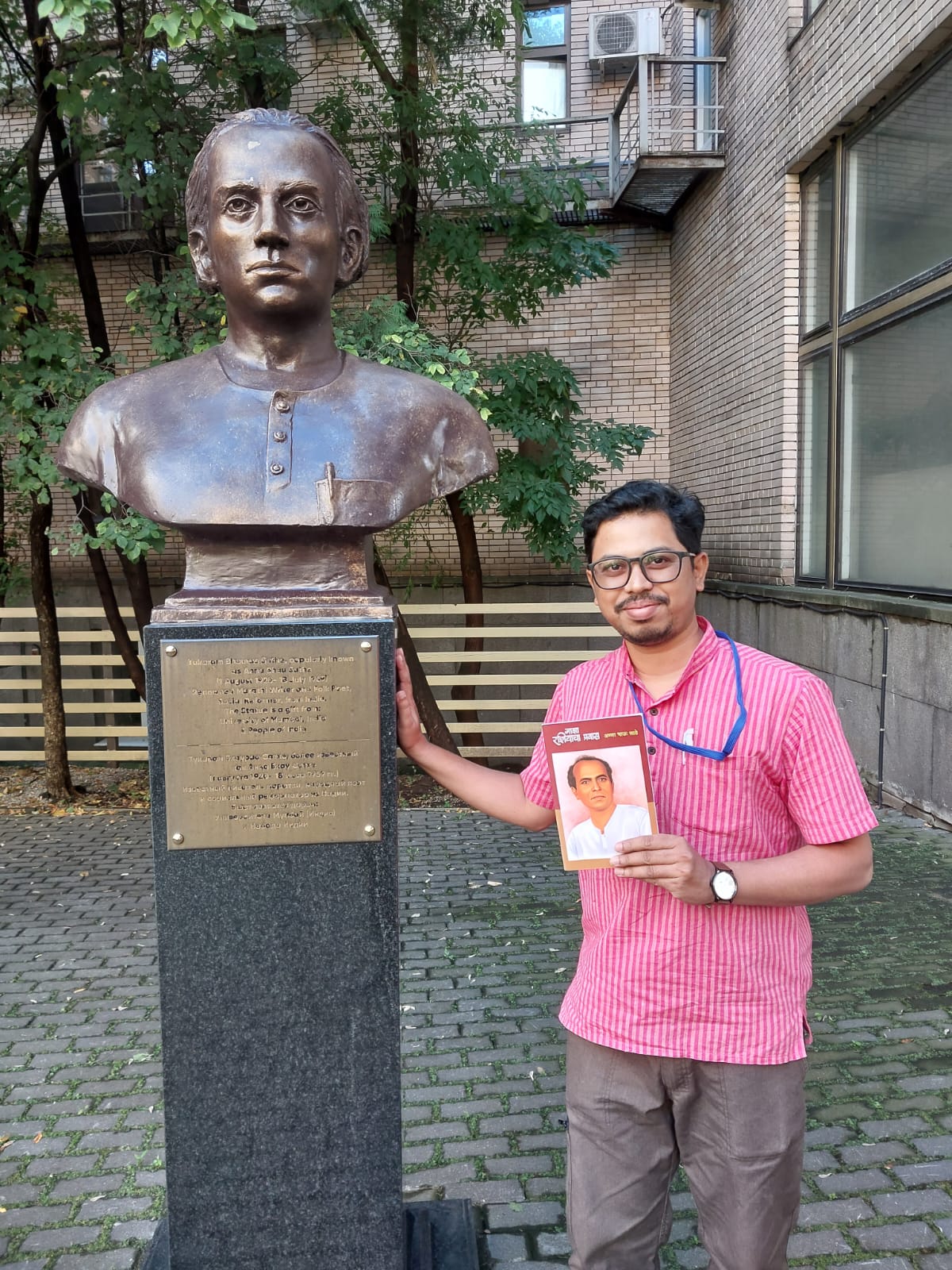 Irshad Wadgaonkar with the bust of Marathi author Annabhau Sathe
Dakhni Marathi is spoken at Irshad's home. His wife is from Parbhani, and Dakhni is spoken at her home too. But there is a lot of difference between the Dakhni spoken in Kolhapur and Parbhani. Therefore, both of them converse in standard Marathi with each other.
"Because of this, many people even think that we might have had an interfaith marriage. But Marathi is the mother tongue of both of us," he says proudly.
Irshad, who has taken flights across so many languages, has a beautiful observation about language.
He says, "Language is not just learnt from books, but from people, their culture, their history, and even their food. While learning the Russian language, I discovered Russian culture and Soviet history. My prejudices regarding the limited identity of Russia based on Lenin, Stalin, the Red Square, or wars and Putin just melted away."
ALSO READ: Junaid Mohiuddin pulls youth out of reel-surfing into boxing ring
The Russian language brought about a positive change in Irshad's life. A shy and introverted young man became cheerful and started conversing openly with people because of the Russian language. "The way to a man's stomach goes through his language," he says with a laugh.