Saquib Salim
On the morning of 21 October 1943, in Japanese-occupied Singapore, delegates of the Indian Independence League (IIL) from across East Asia met and unanimously approved a motion to establish the Aarzi Hukumat-i-Azad Hind Sarkar, or Provisional Government of Free India.
Subhas Chandra Bose accepted the leadership and took the oath as its Prime Minister before hundreds of witnesses. His proclamation invoked God, the generations that had welded Indians into one nation and the heroes who had bequeathed a tradition of sacrifice. No inch of Indian soil was under the new government's control. But, on that day, a rebel army of prisoners of war and expatriate civilians acquired a state, a cabinet and a claim to speak for the whole country.
The Azad Hind Fauj did not begin in October 1943. After Singapore was taken from the British on 15 February 1942, Major Fujiwara Iwaichi of the Japanese Army accepted the surrender of some 50,000 Indian soldiers. He and Captain Mohan Singh persuaded about half of them to volunteer for an Azad Hind Fauj, or Indian National Army (INA).
The IIL, led by Rash Behari Bose, worked in coalition. Mohan Singh pressed the Japanese for more independence than they were willing to grant and clashed with Rash Behari Bose. As a result, by late December 1942, he was in Japanese custody, and the first INA was disbanded.
Subhas Chandra Bose escaped British house arrest in January 1941, reached Berlin, and in 1943 crossed the oceans in an unprecedented 90-day voyage in a submarine. On 4 July, Ras Behari Bose resigned the presidency of the IIL in favour of Bose. Between 4 and 5 July Bose accepted both that leadership and the supreme command of the Azad Hind Fauj in Singapore. Many prisoners who had held back from the first INA now joined him.
The Proclamation
On 21 October 1943, at the Cathay Building, Singapore, the Indian delegates from Malaya, Java, Borneo, Sumatra, Burma, Celebes, Thailand, Indo-China, the Philippines, Hong Kong, Canton, and Japan, and officials of the army's women's department came together. The assembly sang the national anthem, Bose moved a motion for a provisional government, and the delegates approved it unanimously, and they named him its head.
Bose declared an armed offensive against the Anglo-Americans. It would serve for the INA the duration of the war and would become a regular government once it entered Indian territory. Since war was its object, military leaders would form the majority of the cabinet.
Bose took the premiership and the portfolios of war and foreign affairs. A. C. Chatterjee held finance, Dr Lakshmi Swaminathan women's affairs, and S. A. Ayer publicity; Rash Behari Bose became supreme adviser, and eight army officers sat as representatives of the forces.
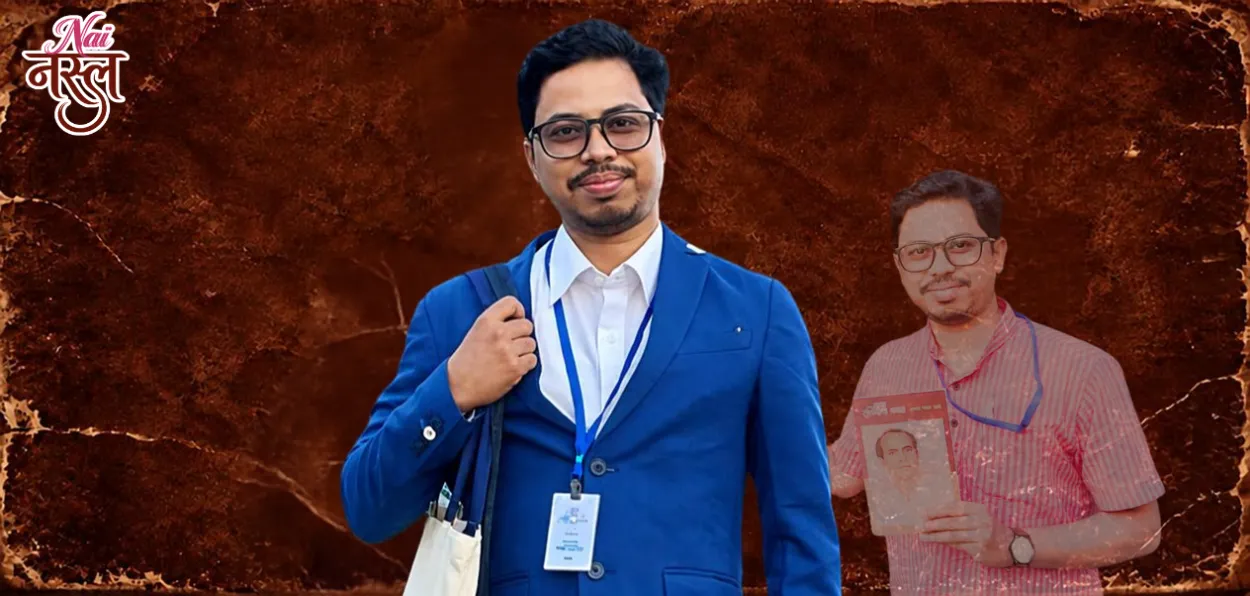
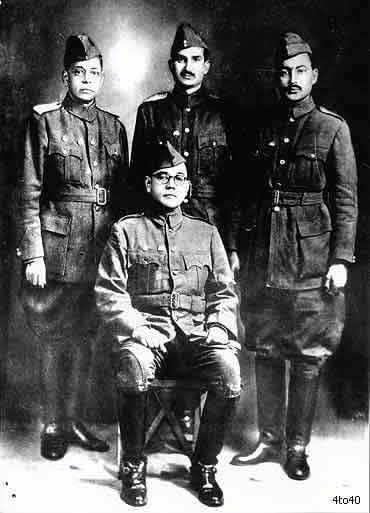 Netaji Subhash Chandra Bose with his companions
By 24 October the government had declared war on Britain and the United States, and Burma had recognised it through its foreign minister, Thakin Nu. Japan recognised it on 23 October. On 6 November Prime Minister Hideki Tojo announced the transfer of the Andaman and Nicobar Islands, and in December Bose hoisted the national flag on Indian soil there.
An Army Behind the State
The proclamation named the Azad Hind Fauj as the Army of Liberation through which the government would fight. On the morning of 24 October, thousands of its soldiers stood in ranks while Bose reviewed them as head of the new government.
The Fauj drew on former prisoners of war and on civilian volunteers from the Indian communities of Southeast Asia, a force which was partly civilian and partly military. Sugata Bose records that 30,000 Indians in Malaya alone pledged allegiance to the government.
Its brigades carried the names of Gandhi, Nehru and Azad, and a fourth was named Subhas. The Rani of Jhansi Regiment opened its main camp in Singapore on 22 October, with 156 women and girls of many faiths and languages already enrolled. In April 1944 the government opened the Azad Hind Bank, which issued its own notes.
Bose also resisted the Japanese. Tokyo wished to use the INA in small guerrilla and intelligence units. He insisted that it fight as one force and spearhead the advance, since the first bloodshed on Indian soil had to be Indian. The compromise left the INA under Japanese command but fighting in Indian units under Indian officers.
A Government of All Faiths
The proclamation guaranteed religious liberty and equal rights and opportunities to all citizens, and it pledged to transcend the differences that the British government had fostered. The people who took office that day took the pledge. The cabinet and its military representatives included Hindus, Muslims and Sikhs, Bengalis and Tamils, among them Aziz Ahmed, Shah Nawaz Khan, M. Z. Kiani, Ehsan Qadir and Gulzara Singh.
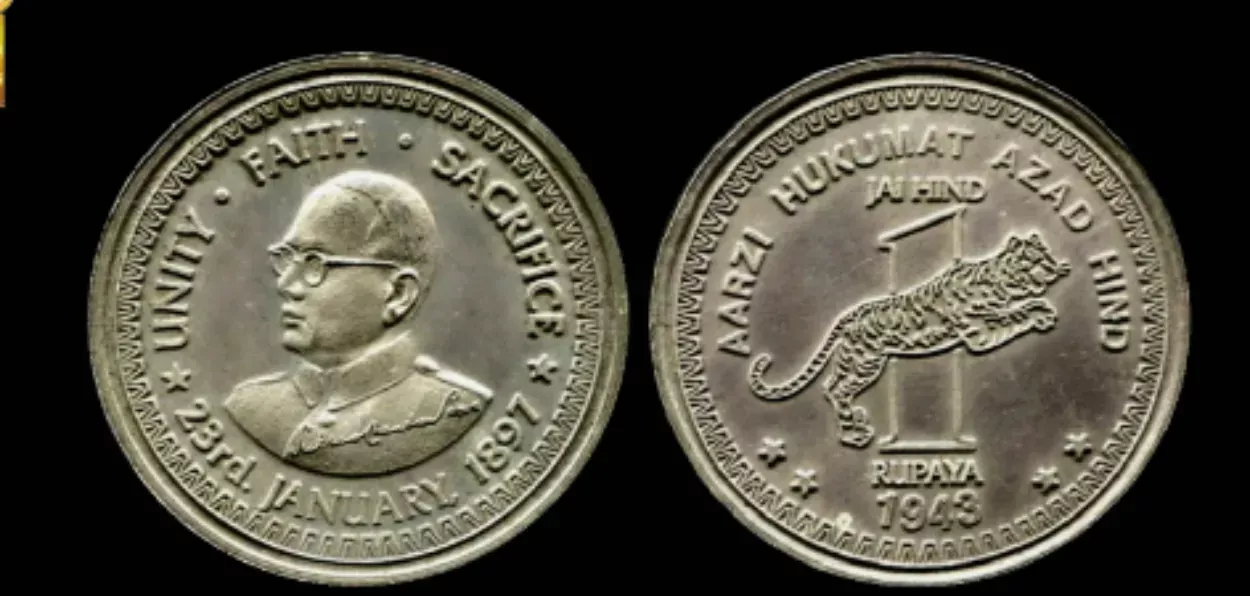
Symbols and language carried the same message. The greeting was Jai Hind, the working language was Hindustani in Roman script, and the anthem was a Hindustani rendering of Tagore's Jana Gana Mana. The INA's springing tiger recalled Tipu Sultan.
On 26 September 1943, at the tomb of Bahadur Shah Zafar in Rangoon, Bose honoured the last Mughal emperor as the man under whose flag Indians of every province and faith had fought. His secretary Abid Hasan recalled that men of every region, religion and caste served even in platoons. Bose himself held that a patriotic Hindu and a patriotic Muslim were no different.
Why It Mattered
A government gave the army a legal frame, and that mattered in court as much as in sentiment. At the Red Fort trials of 1945 and 1946, the officers' oaths of allegiance were produced as evidence that their actions were lawful.
The central question was whether the government and its army were independent of Japan. If they were not, the accused were traitors. If they were, they could not be convicted of treason.
The campaign failed, and the INA fell with Japan. Even so, popular support for the INA finally precipitated British withdrawal, and Britain decided to leave only when the loyalty of its army and navy came into serious question in 1946. Ashis Ray's study of the 1945 trials argues that they hastened Britain's acceptance of independence. Britain had feared Bose enough to plan his assassination in Turkey in March 1941.
ALSO READ: Why must the Muslim way of life be streamlined with constitutional values?
On 21 October 1943, Hindus, Muslims and Sikhs took office together under a founding text that promised equality and pledged to transcend divisions fostered by an alien government. Against a politics that sorted Indians by religion, the Azad Hind Sarkar offered a working model of unity, armed and imperfect, but real.