




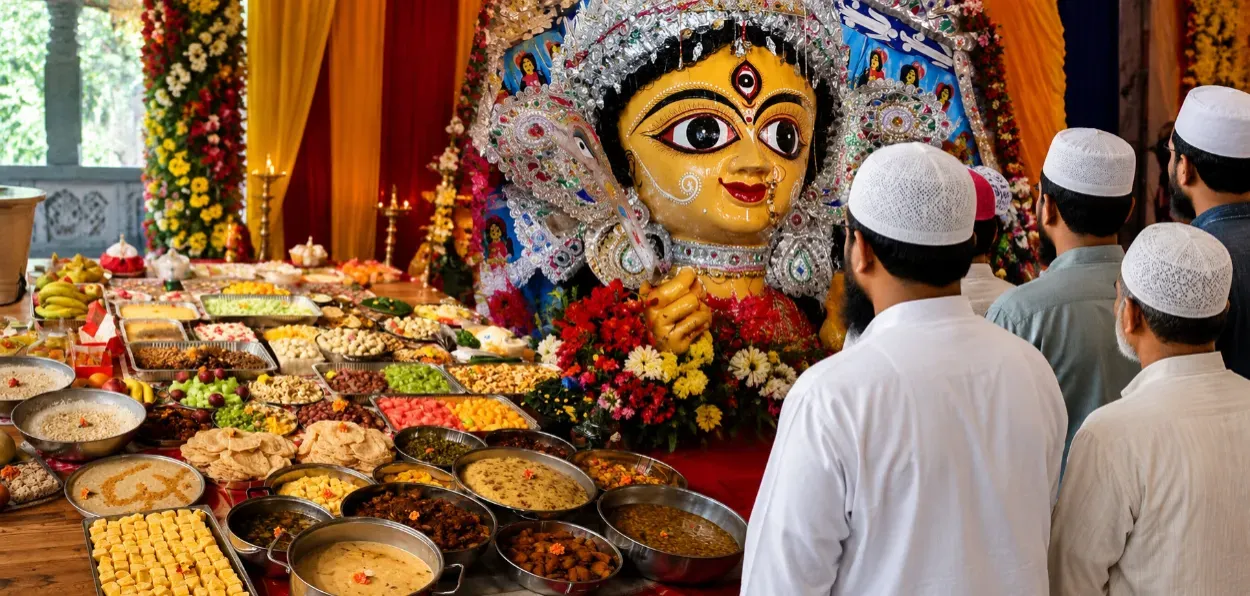
.webp "AI-generated representational image")
 Grace Mubashshir
The ecosystem that amplifies conservative voices within the Muslim community needs to be challenged. A healthy community requires not only institutions that preserve tradition, but also platforms that encourage debate, reform and creative engagement with contemporary realities.
The legacy of the British colonial system of organising people around collective community identities was carried into independent India.
In the constitutional framework of the Republic, lobbying through political engagement, legal action and social movements came to be regarded as legitimate ways of securing community interests and maximising benefits from the state.
While many organisations established during the colonial period continued to flourish in secular India, new ones also emerged. With direct political mobilisation of Muslims becoming relatively constrained after Independence, many community organisations focused primarily on religious, social, educational and philanthropic activities.
Religious organisations, in particular, used social initiatives to build trust and strengthen their influence. Many continue to play an important role in education, charity and community welfare.
The All-India Muslim Personal Law Board, founded in 1972, sought to bring together Muslim organisations to protect what they regarded as Muslim personal law from perceived threats.
At the same time, Muslims also established organisations on explicitly secular and reformist platforms. The Muslim Satyashodhak Mandal and the Indian Secular Society were founded by Hamid Dalwai, andAsghar Ali Engineer laid the foundation of the Centre for Study of Society and Secularism. This is by no means an exhaustive list
.jpeg)
.This brief history makes one point clear: Muslims in India have created and run organisations representing a wide spectrum of religious, social, political and intellectual positions.
The history of Muslim organisations in India goes back to colonial Bengal. The Anjuman-e-Islami of Calcutta was founded in 1855 as an early organisation seeking to foster cooperation with the British administration while protecting and advancing Muslim interests in the Bengal region.
Sir Syed Ahmad Khan founded the Muhammadan Literary Society in 1863 to promote modern education and intellectual engagement among Muslims. The Central National Muhammadan Association, founded in Kolkata in 1877 by Syed Ameer Ali, worked for the socio-economic and educational advancement of Muslims.
The Deoband madrasa movement took institutional shape in the late Nineteenth Century and subsequently spread across the subcontinent. Other major organisations emerged over time, including the All-India Muslim League in 1906, Nadwatul Ulama in 1894 and the Al-Ahrar movement in 1929.
In South India, organisations such as Kerala Nadwatul Mujahideen, founded in 1921, and Samastha Kerala Jamiyyathul Ulama, founded in 1926, became influential. The Jamiat Ulama-i-Hind, established in 1919, played a significant role in mobilising Indian Muslims in the anti-colonial struggle.
Are Muslim Organisations Inimical to Constitutional Morality?
This background is important when analysing Muslim organisations in contemporary India. The organisation of Muslims along different socio-political and religious lines is neither inherently harmful nor something to be frowned upon.
In a democracy, citizens have the right to organise themselves according to their beliefs, interests and aspirations. Yet there are persistent fears surrounding Muslim organisations, the most prominent being the myth of Muslim political consolidation.
Several studies have challenged this electoral assumption, arguing that, like other citizens, Muslims make political choices based on a range of factors, including livelihood, development, governance, identity and secular considerations.
.jpeg)
Another common allegation is that Muslim organisations are monolithic and committed to separatism because they defend personal law and minority rights.
This, too, is an oversimplification. The diversity of opinion among Indian Muslims can be seen clearly in debates surrounding the Shah Bano case and numerous other issues. Yet conservative voices often receive disproportionate attention, while moderate, reformist and secular voices within the community remain relatively invisible.
One reason is the extensive network and political patronage enjoyed by some orthodox sections, as well as the media's tendency to highlight the most contentious voices. More nuanced voices are consequently pushed to the margins.
This ecosystem of amplifying conservative voices needs to be challenged if diverse opinions within the community are to emerge and receive meaningful public space.
Religious Organisations and the Crisis of Representation
There is another suspicion surrounding Muslim organisations: that Muslims are well connected within their own networks but do not extend their social services to non-Muslims.
Such perceptions have sometimes contributed to communal mistrust. Muslim organisations should therefore be especially prudent in designing and communicating their welfare activities.
In Kerala, for instance, the charitable health services provided by several Muslim organisations have earned appreciation precisely because they are open to people in need irrespective of their religious identity.
From my own experience, I can rebut the broader allegation that Muslim organisations are inherently exclusionary. At the same time, a climate of mistrust can sometimes discourage non-Muslims from using services offered by Muslim institutions.
Sriya Iyer's work on the economics of religion in India offers useful insights into understanding these dynamics.
Let us now turn to the core religious organisations. Jamaat-e-Islami Hind, Jamiat Ulama-i-Hind, Nadwatul Ulama and Samastha Kerala Jamiyyathul Ulama are among the prominent.
The All-India Muslim Personal Law Board was established as a coordinating platform for various Muslim organisations. Instead of dismissing every criticism of these institutions as Islamophobia, it would be more productive to examine both their achievements and shortcomings and consider the path ahead.
These religious organisations have, over time, acquired considerable influence over questions relating to religion and Muslim community life. Their control over networks of madrasas and other knowledge centres has given them significant authority in shaping religious discourse.
This is not necessarily a negative development. Their contribution to providing religious guidance and basic religious literacy deserves recognition. Samastha Kerala Jamiyyathul Ulama, for example, has developed an extensive network of maktabs that has helped provide basic religious education to generations of Muslims in Kerala.
At the same time, some of these institutions have acquired influence over a wide range of community affairs, from marriage and divorce to dispute resolution and charitable activities.
Organised efforts are necessary to address the aspirations of any community. The problem arises when institutional authority becomes an obstacle to contextualising religion in response to changing social realities.
.jpeg)
Many of these organisations remain deeply rooted in inherited traditions and have struggled to reframe their agendas for the contemporary world. Attempts to address shortcomings within Muslim religious and social life are often resisted, sometimes because of a genuine fear of weakening established institutions and sometimes because of concerns over losing community leadership.
A cursory examination of opposition to recent legal changes illustrates how some institutional responses have been driven more by political considerations than by sustained engagement with the religious and jurisprudential nuances involved.
Tradition has an important place in religious life, but institutions cannot remain permanently resistant to change. Take the All-India Muslim Personal Law Board, for instance. Instead of primarily responding to proposed changes, why cannot it also actively explore how Muslim personal laws can be reinterpreted in the light of contemporary jurisprudence, including experiences from other Muslim-majority countries?
Why should these organisations remain dependent on political patronage rather than becoming open forums for intellectual debate and engagement?
Religion in India has often become a collective community concern rather than remaining solely a matter of private faith and piety. This is partly a consequence of the country's social structure, in which identities are frequently organised around communities.
In such an environment, reformist ideas can easily be perceived as threats to collective identity. The result is a paradox: while the community may advance materially, it can sometimes struggle to move forward socially and intellectually.
Many Muslim issues are mediated through these organisations. The long-pending question of madrasa reform is one example where institutional resistance has slowed change.
The structures created to provide leadership can, under certain circumstances, become a burden on the very community they were established to serve.
As long as religious organisations remain hesitant to introduce positive and creative interventions that respond to the aspirations of contemporary Muslims, their institutional authority will increasingly appear burdensome. If that authority can instead be deployed constructively, the impact could be transformative.
Individual Muslims should not be constrained by the argument that protecting an institution is synonymous with protecting the faith. Muslim women, in particular, have often been marginalised within institutional structures dominated by male religious leadership.
Persistent patriarchy within these organisations can weaken the ability of the entire community to advance.
The Waqf Question: A Test of Institutional Imagination
Consider the question of Waqf properties. These properties are scattered across the country and represent one of the largest underutilised pools of community resources. Why has this happened?
Political and administrative lethargy is the easiest explanation. But after examining major Waqf properties across India, I would argue that the deeper problem is also one of jurisprudential and institutional innovation.
.jpeg)
Many Waqf endowments were created to serve beneficiaries and social purposes that no longer exist in their original form. Yet the legal and jurisprudential mechanisms required to reinterpret such endowments for contemporary needs remain underdeveloped.
As custodians and interpreters of Muslim law, religious organisations have an important role to play in addressing these questions. Their inability to provide innovative jurisprudential solutions has contributed to the continued underutilisation of a potentially valuable community resource.
The Waqf question therefore offers a broader lesson: religious institutions cannot merely defend inherited legal positions; they must also develop the intellectual tools required to make those traditions relevant to changing circumstances.
Another troubling trend in recent years has been the tendency of some Muslim organisations to encourage a form of inward withdrawal. Instead of engaging with all stakeholders to secure the rights and protection of Muslims, some institutions increasingly adopt a reactionary posture.
This can inadvertently deepen suspicion and reinforce the very alienation that these organisations seek to prevent.
The Way Forward
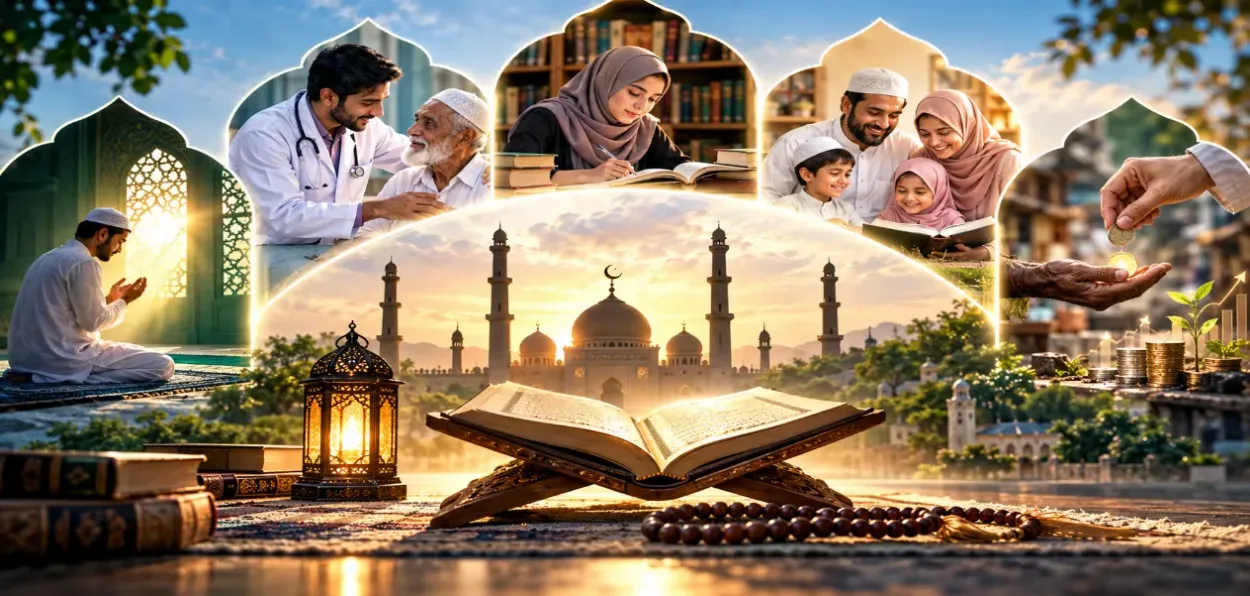
Islamic and Muslim community organisations can be a blessing for both the community and the country. They have played an important role in organising social life, providing education, preserving religious knowledge and responding to community needs.
But they risk losing relevance if they turn increasingly inward and fail to address the aspirations of contemporary believers.
An individual's relationship with religion should not be suffocated by institutional structures. Instead, these structures should be used to create space for greater intellectual freedom, social reform, community welfare and constructive engagement with the wider society.
Religious organisations need to shed obsolete legal assumptions, encourage fresh thinking and become more open to debate. They can play a crucial role in developing new approaches to the challenges facing Indian Muslims.
The choice before them is not between preserving tradition and embracing modernity. The real challenge is to demonstrate that a living religious tradition has the intellectual capacity to respond creatively to a changing world.
ALSO READ: Why great care must be taken while selecting an Imam?
Governments, administrations and civil society should encourage and support this transformation—not by controlling religious organisations, but by creating an environment in which they can engage openly, reform themselves and contribute more effectively to India's democratic and social development.
Mubashir Vattaparamban is an independent researcher based in Delhi.

.jpg "Gujarat’s women entrepreneurs bring their craftsmanship to life during Navratri")









.webp "AI-made representational image")
_(2).webp)
_(2).webp)
.webp)

.webp)
