




Srijan Pal Singh
Some people become immortal in history because of their inventions. Others are remembered for their political achievements, while some are identified by the positions they hold, their prestige or their power. Dr APJ Abdul Kalam, however, belonged to a rare category of individuals who, despite making extraordinary contributions to science, technology and national security, considered their greatest identity to be that of a teacher.
For him, life’s greatest achievement was not developing missiles, helping India realise its ambition of becoming a nuclear power or reaching Rashtrapati Bhavan as the President of India. His deepest wish was that future generations would remember him as a teacher.
This may sound like a simple aspiration, but it carries a profound philosophy of nation-building. Dr Kalam believed that teachers do far more than impart knowledge from textbooks. They shape personalities, build character and guide society towards a better future. A good teacher does not merely prepare students to score high marks in examinations. A good teacher nurtures citizens capable of confronting the challenges of their times and contributing to the nation’s progress.
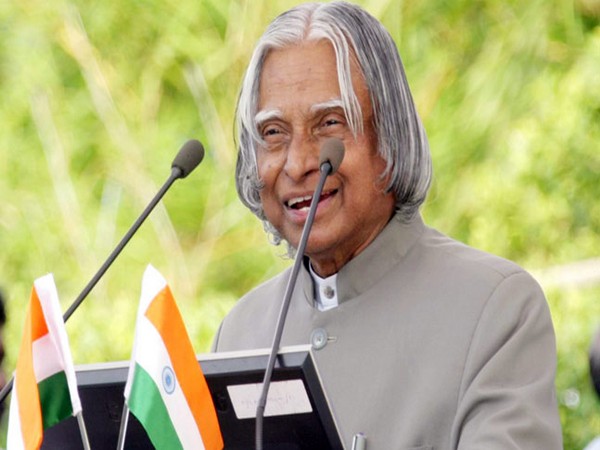 APJ Abdul Kalam
On July 27, 2015, Dr Kalam passed away while addressing students at the Indian Institute of Management Shillong. A man who had dedicated his life to India’s scientific advancement, national security and the dreams of its young people breathed his last among students. He was on the stage, holding a microphone, with students seated before him. He was doing what he loved most. Few images could capture the meaning of his life more powerfully.
More than a decade after his death, Dr Kalam remains alive in the collective memory of people across the country. Schools name their houses after him, display his photographs and revisit his ideas through speeches, books and educational programmes. Children know him as the Missile Man of India, while young people remember him as a President who brought the dignity and stature of Rashtrapati Bhavan closer to ordinary citizens, especially students.
Perhaps the most remarkable aspect of his popularity is that his legacy is not confined to a political party, religious community or linguistic region. People from different parts of India, young people belonging to diverse faiths and cultures, and students interested in education and science continue to look up to him as a role model.
The greatest achievement of an exceptional individual is when their ideas transcend their personal identity and become a shared inheritance of society. Dr Kalam’s life offers a powerful example of this.
From science to nation-building
Dr Kalam’s journey demonstrates how an individual’s vision can help shape the capabilities of an entire nation. He made significant contributions to India’s missile programme, defence research, space technology and the development of indigenous scientific capabilities. He envisioned an India that would not depend on other countries for its security and would advance confidently in science and technology.
Reducing his scientific career to missiles and defence systems would diminish the breadth of his contribution. His larger objective was to make India technologically capable and self-reliant. He wanted Indian scientists, engineers and young people to use their knowledge to solve the country’s problems. In his view, science had its greatest value when its benefits reached the nation and society.
From developing indigenous defence technologies to strengthening India’s strategic capabilities, Dr Kalam’s work inspired the country to move towards self-reliance. His name is remembered with particular respect in discussions about systems such as the Akash, Agni and BrahMos missiles, as well as India’s wider defence research efforts.
The success of these programmes was the result of years of collective work by numerous scientists, engineers and institutions. Dr Kalam, however, played an important role in guiding these efforts and inspiring the scientific community.
His contribution remains relevant to discussions about India’s security and strategic strength. His ideas remind us that a nation’s real power lies not merely in its resources but also in the talent, discipline and vision of the people who use them.
Yet, Dr Kalam’s greatness cannot be measured solely through his achievements in defence and science. He chose to move beyond laboratories and reach the minds of young people across the country. It was this ability to connect scientific progress with human potential that transformed him from a distinguished scientist into a nation-builder.
The question that made a young man reflect on his life
The experiences of Srijan Pal Singh, who worked closely with Dr Kalam, reveal a side of his personality that remains relevant to young people and the education system alike.
When Singh began working with Dr Kalam in 2009, he was at the beginning of his career. For a young professional, the opportunity to work with one of India’s most respected scientists and a former President was extraordinary in itself. But Dr Kalam had a distinctive quality: he was more interested in the potential of his colleagues than in their designations or experience.
He would often ask Singh a question that was not easy to answer: How would you like future generations to remember you? What kind of identity do you want to create through your life?
This was not an ordinary conversational question. It was Dr Kalam’s way of encouraging a young person to discover his purpose in life. He would listen to Singh’s answer and bring up the same question, in a different form, during their next meeting. He wanted his young colleague to clarify his response, refine his thinking and reflect seriously on the direction of his life.
Eventually, Singh decided to turn the question around and ask Dr Kalam the same thing.
He presented four possible identities. Would Dr Kalam want to be remembered as India’s Space Man, the Missile Man, the Nuclear Man or the People’s President?
Each identity represented an extraordinary achievement and decades of hard work for the country. Yet, smiling, Dr Kalam told him that the right answer was not among those four options. There was a fifth identity that people often overlooked.
That identity was teacher.
Dr Kalam wanted India to remember him as a teacher. He believed that teachers bring light into the lives of others. They nurture scientists, doctors and engineers, guide administrators and help shape the future of society. Behind every national achievement are teachers who recognise talent, provide opportunities and believe in the potential of their students.
Dr. APJ Abdul Kalam achieved remarkable success as a scientist and became known as India’s Missile Man. But one of the moments that brought him immense happiness was helping children with mobility disabilities walk more easily using lightweight calipers. Traditional calipers were heavy and uncomfortable for children affected by polio. Working with his team, Dr. Kalam helped adapt lightweight materials developed for missile technology to create calipers that weighed a fraction of conventional ones, making movement easier for the children. For Dr. Kalam, this was the true purpose of science not just building missiles or advancing technology, but using innovation to reduce suffering and transform lives. It is a powerful reminder that the greatest achievement is not always what makes history, but what makes someone’s life better. #DrKalam #compassion #kindness #MissileMan #india
— Srijan Pal Singh (@srijanpalsingh) October 14, 2026
His answer offers a key to understanding the philosophy that guided his entire life.
One of the most distinctive features of Dr Kalam’s thinking was that he did not confine education to the walls of schools and universities. For him, learning was a continuous process connected to families, communities, institutions and the future of the nation.
A teacher’s responsibility is not merely to provide the correct answers. It is also to teach students how to ask the right questions. Genuine learning takes place when teachers allow students the freedom to think, encourage their curiosity and give them opportunities to learn from their mistakes.
Dr Kalam’s interactions with Srijan Pal Singh reflected this approach. Rather than telling a young person what they should become, he repeatedly asked questions and encouraged them to develop their own answers. Instead of imposing a goal, he helped others discover their purpose.
This is precisely the approach that India’s education system needs today. Students face growing pressure to secure high marks, clear competitive examinations and obtain well-paying jobs. These goals have their importance, but education cannot be reduced to them alone.
We need an education system that also develops scientific temper, empathy, moral courage, creativity and a sense of social responsibility among children.
Parents, too, have an important role to play. It is not enough to tell children what they should do. They must also be encouraged to think about what they want to achieve in life and how they can contribute to society. Listening to their questions, respecting their curiosity and responding patiently to their mistakes are all essential parts of education.
A good teacher is not necessarily someone who speaks all the time. A good teacher is also someone who helps students develop the ability to think independently, ask questions and make their own decisions.
Dr Kalam’s legacy belongs to everyone
The enduring respect people continue to have for Dr Kalam, even after his death, reflects the lasting place he has secured in the public imagination. His memory has not needed a political campaign or the backing of a single ideology to survive. People inspired by his ideas have carried them forward and introduced them to new generations.
One reason for this wide appeal was his vision of India’s development. For Dr Kalam, progress did not mean economic growth alone. Knowledge, self-reliance, character-building and human values were equally important.
His life demonstrates that a person’s identity can rise above their birth, religion, language or social background. Through their actions and ideas, individuals can bring together people who have grown up in very different circumstances but share the dream of a better future.
At a time when society faces challenges of division and mistrust, Dr Kalam’s legacy reminds us that education and knowledge have the power to unite people. Children’s dreams are not restricted by religious or linguistic boundaries. The benefits of scientific discoveries and educational opportunities, too, should reach all of humanity.
Remembering Dr Kalam, therefore, is not merely an act of paying tribute to a great scientist of the past. It is about carrying forward a vision in which India’s future rests on the talent, hard work and moral responsibility of its young people.
Nation-building begins at home
Embracing Dr Kalam’s philosophy of teaching does not require a prestigious position, specialised training or an institutional platform. It can begin with the way we conduct ourselves in everyday life.
Parents can become teachers to their children. Older siblings can set an example for younger ones. Experienced colleagues can help others learn at the workplace. Responsible citizens can inspire those around them through their conduct.
Being a teacher, however, does not mean exercising authority over others. It means being patient, communicating calmly, listening to different perspectives and demonstrating good values through one’s actions.
Society does not change through sermons alone. It changes when people practise the values they expect others to follow.
When families create an environment of honesty, empathy, discipline and mutual respect, children learn from it. When children are encouraged to ask questions, their curiosity grows. When they are taught to help others, their sense of social responsibility becomes stronger.
Nation-building does not begin only in Parliament, government ministries or through large policy initiatives. Its foundations are laid in homes, schools and the everyday interactions that gradually shape society’s culture.
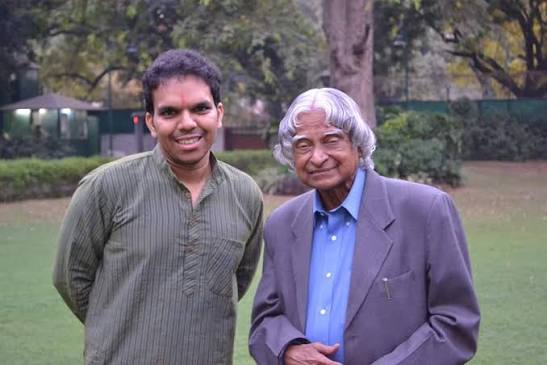 APJ Abdul Kalam with Srijan Pal Singh
This is also the real meaning of Dr Kalam’s legacy. The India he dreamed of was not merely a country with advanced missiles, sophisticated technology and a strong economy. He wanted an India where young people could dream big, value knowledge and connect their personal growth with the progress of the nation.
Dr Kalam encouraged young people to dream big. He believed that dreams should not be mere fantasies experienced during sleep. A true dream inspires a person to work hard, confront difficulties and keep moving towards a goal.
But dreaming big does not necessarily mean securing a prestigious job, attaining a powerful position or achieving personal fame. A big dream could belong to a teacher who wants to transform the lives of thousands of children. It could be the resolve of a doctor to provide better treatment to the poor, a scientist determined to make life easier through a new discovery, or a young person working to improve education in their village.
Everyone’s circumstances are different, and so are their dreams. What matters is that our lives should not be limited to personal gain. Our work should also bring positive change to the lives of others.
A true tribute to Dr Kalam cannot be offered merely by displaying his photograph, sharing his quotations or organising events in his name. The greatest tribute would be to make his ideas part of our everyday conduct: helping others move forward, believing in the potential of young people and creating an environment of knowledge and empathy around us.
Sharing his experiences of working with Dr Kalam, Srijan Pal Singh brought the discussion back to a question that remains as relevant today as it was then. It is not merely a question about how we remember a great individual. It is a question that asks each of us to examine the purpose of our own lives.
How do you want future generations to remember you?
Do you want people to remember you for your wealth, position and achievements? Or would you rather leave behind ideas, actions and transformed lives that continue to inspire people long after you are gone?
No one else can answer this question for you. You must find the answer yourself.
This is perhaps Dr APJ Abdul Kalam’s greatest lesson: the meaning of life lies not only in what we achieve for ourselves but also in how much light we bring into the lives of others.
Let us recognise the teacher within us. Let us spread good ideas in our families, communities and country. Let us give children the freedom to dream and equip them with the knowledge, courage and confidence they need to turn those dreams into reality.
For the future of a nation is shaped not merely by its resources but by the people who awaken the light of possibility in others.
READ MORE:IPS Shahnaz Illyas shows the way to deal with caste discrimination
So, the question is yours now: How do you want future generations to remember you?
An enterpreneur and author Srijan Pal Singh ‘Kalam’, was a member of Dr APJ Abdul Kalam’s advisory team and co-authored books with him. Deeply influenced by the former President, Singh adopted ‘Kalam’ as part of his name. This article is based on his experiences with Dr Kalam as he has chronicled in his books and in various interviews.

.jpg "Gujarat’s women entrepreneurs bring their craftsmanship to life during Navratri")









.webp)
_(2).webp)

.webp)
