Amir Suhail Wani
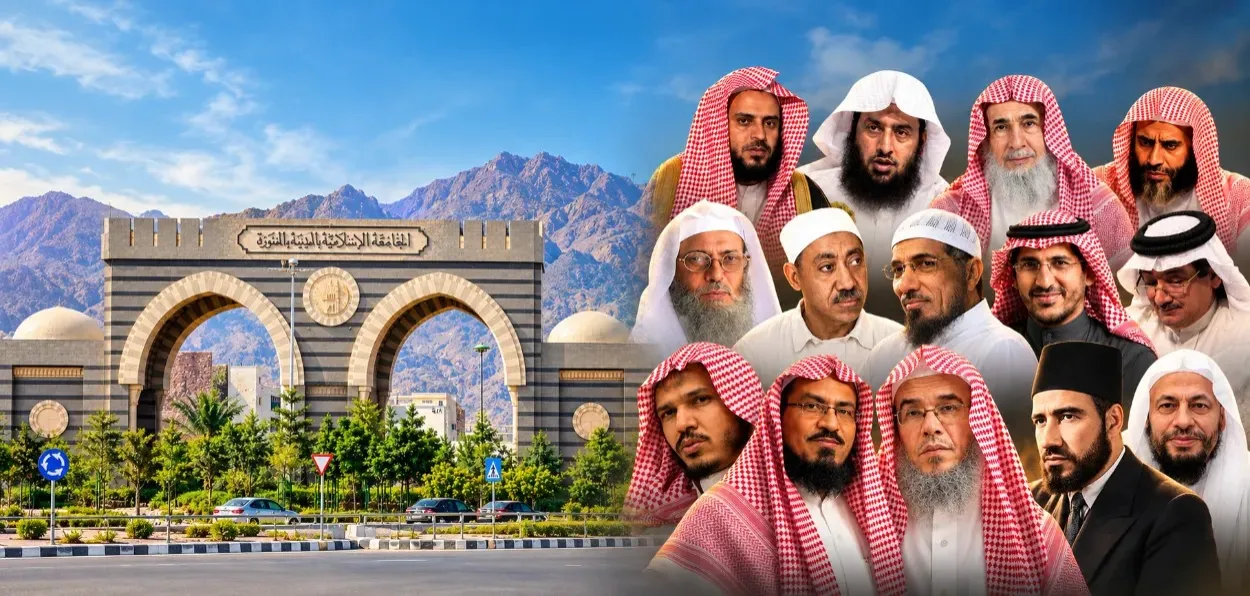
The Islamic University of Madinah, Saudi Arabia, has banned 100 authors from its library system. A report published by The Observer Post on October 29, 2026, titled Madinah Islamic University's Purported 'Banned Authors' List Names Maududi, Nadwi, Qutb, identifies several extremist Islamic writers on the list, including Abul A'la Maududi, Sayyid Qutb, Abul Hasan, Hasan al-Banna, Yusuf al-Qaradawi and Malik Bennabi.
This action deserves attention from universities across India and South Asia. It raises an urgent question about the responsibility of educational institutions in preventing the spread of literature that promotes religious extremism, sectarianism and ideological intolerance.
Indian universities must take a cue from this and order a review of their libraries, prescribed reading lists and academic resources. They should ban books that propagate religious extremism, communal hostility, sectarian divisions and political radicalisation.
The writings of Maududi and Sayyid Qutb, in particular, deserve scrutiny because of their considerable influence on modern political Islam. Their interpretations of religion, state, political authority and society have shaped several ideological movements across the Muslim world. Their writings have also been invoked to justify exclusionary political thinking, challenge pluralistic arrangements and cultivate hostility towards different religious and political convictions. Universities must not allow such literature to circulate uncritically or acquire the legitimacy of academic endorsement.
The issue is not whether these writers possess historical or intellectual significance. They undoubtedly do. The real question is whether educational institutions should provide unrestricted institutional space to literature that promotes intolerance, ideological confrontation and hostility towards other communities.
Academic freedom cannot mean an obligation to circulate every published work. There is a fundamental difference between studying an ideology to understand its historical development and promoting its doctrines among students. The former is legitimate academic inquiry; the latter can become a form of ideological indoctrination. Universities must understand this distinction and act accordingly.
South Asia has witnessed the devastating consequences of religious extremism and sectarian mobilisation. Pakistan's prolonged struggle with sectarian violence, Bangladesh's encounters with religious radicalisation and India's recurring communal tensions demonstrate the dangers of turning religious identity into an instrument of political hostility. These developments have multiple historical, economic and political causes, but the influence of ideological literature cannot simply be dismissed. When books present religious differences as irreconcilable conflicts, portray other communities as enemies and glorify ideological conformity, they contribute to an intellectual environment in which intolerance can flourish. Educational institutions must not become passive participants in this process.
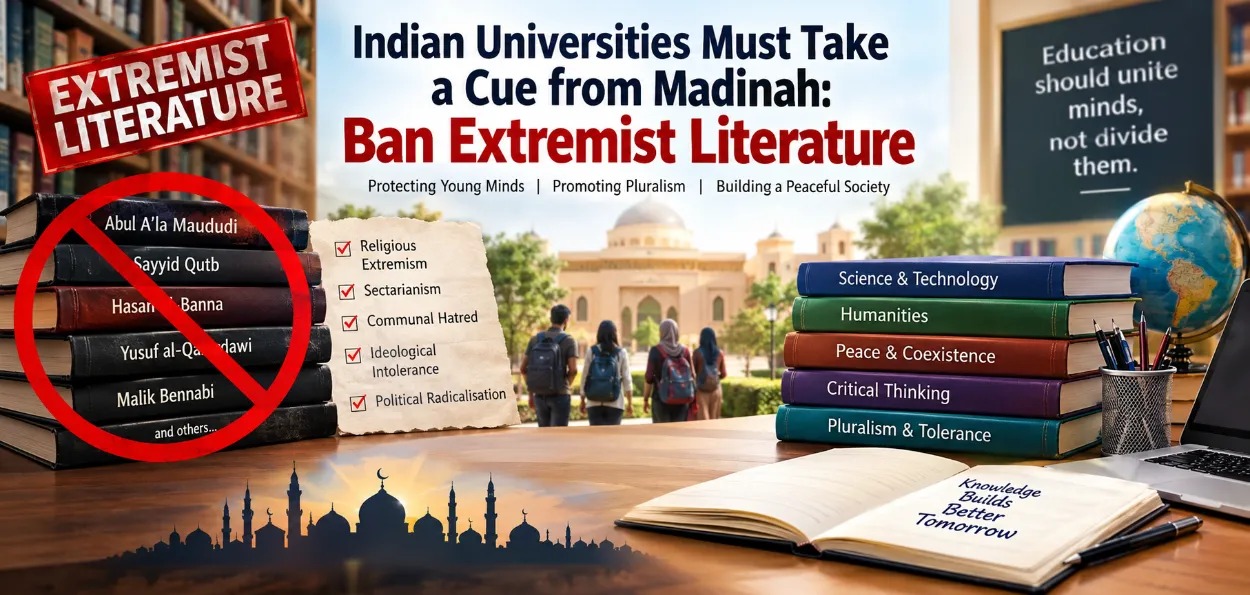
Universities should constitute independent committees comprising scholars, historians, social scientists and experts in religion to review their existing collections and prescribed literature. Such committees should identify books that explicitly promote terrorism, violence, communal hatred or persecution and recommend their prohibition in university libraries and curricula. Material that promotes extremist political doctrines should not be prescribed or circulated as authoritative educational literature. Where historically significant works need to be studied to understand the development of radical ideologies, they should be examined critically rather than presented as models for emulation. The objective must be to prevent ideological indoctrination, not obstruct legitimate research.
Such a policy is neither an attack on religion nor an assault on academic freedom. It is an attempt to protect education from ideological capture. Students must be introduced to the plurality of religious interpretations, philosophical traditions and intellectual movements. They must learn that no religious or political faction has an exclusive monopoly over truth and that disagreement is not an invitation to hatred.India possesses a rich tradition of intellectual pluralism. The ethical teachings of classical Islamic scholars, the universal humanism of Rumi and Ibn Arabi, and the Bhakti-Sufi heritage offer valuable alternatives to narrow and exclusionary interpretations of religion. Universities should promote traditions that cultivate compassion, intellectual humility, coexistence and respect for human dignity.
The reported action at Madinah should serve as a wake-up call for Indian higher education. Universities must stop treating extremist literature as an ordinary addition to their library shelves. They have a responsibility to protect young minds from material that glorifies fanaticism, legitimises communal hostility or turns religious conviction into political hatred. Waiting for such ideologies to produce violence before taking corrective measures would amount to a serious failure of institutional responsibility.
A university's responsibility extends beyond distributing books and awarding degrees. It must cultivate minds capable of independent thought, moral judgement and peaceful coexistence. The freedom to examine controversial ideas must be protected, but there can be no obligation to institutionalise or promote literature that threatens the social fabric.
ALSO READ: Can India continue to be the thought leader of the Islamic World?
Indian universities must draw a firm and unmistakable line between intellectual freedom and ideological extremism. They should systematically identify and ban extremist, factional and communal literature, irrespective of its author or religious affiliation. The education system must not become a breeding ground for fanaticism. Books that preach hatred, glorify violence and undermine peaceful coexistence have no legitimate place in the libraries and academic curricula of a democratic society.