




Aasha Khosa
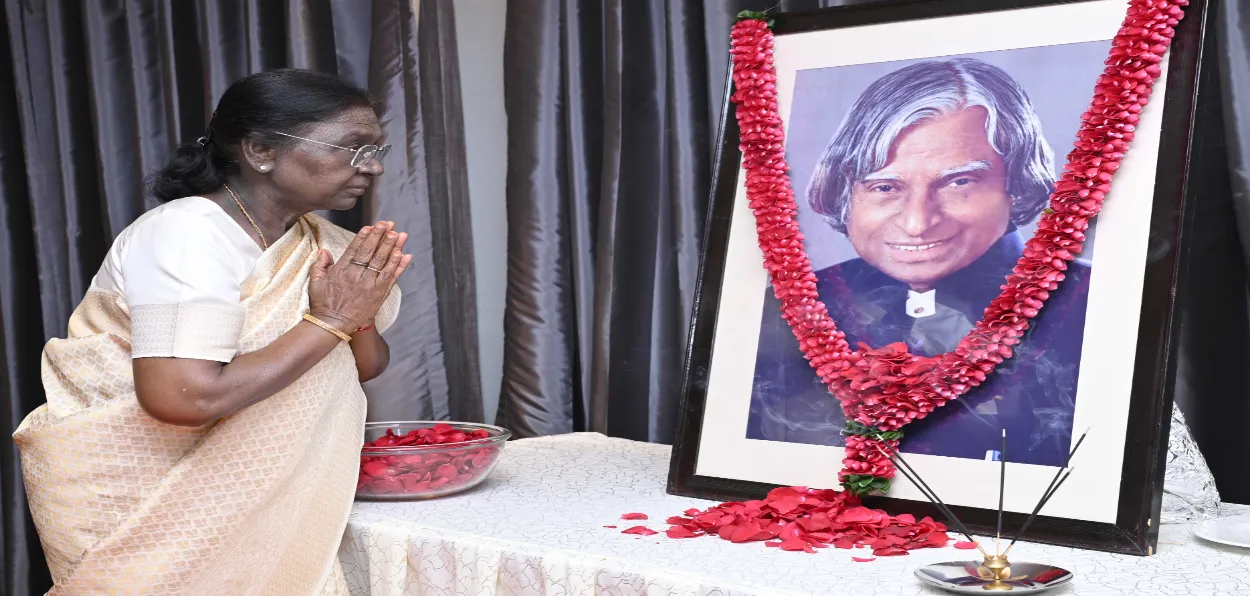
Dr APJ Abdul Kalam was People’s President, a scientist who earned admiration across the world and a national icon whose influence extended far beyond the boundaries of political power. Even today, his name ignites young minds. His ability to inspire students to dream big and his memorable exhortations to take responsibility for India’s development remain unmatched.
The Big Debate
On his birth anniversary, a question raised by some Muslims, almost as an exercise in collective introspection, prompted me to reflect on the issue: Why do Muslims not seem to claim Kalam as their own as much as they identify with certain radical figures or lesser-known leaders?
To understand this apparent paradox, we must first look at the life he led and the values he embodied.
By all accounts, Kalam grew up in a modest South Indian Muslim family where human values were inseparable from the ethical teachings of religion. He did not grow up in a ghetto but in a mixed neighbourhood where people of different faiths lived alongside one another. Such an upbringing helped shape his inclusive outlook. South India also has a long tradition of engagement with diverse religious and philosophical texts.
Kalam rose from humble beginnings to become a distinguished scientist, a dreamer and, eventually, the President of the world’s largest democracy. These were largely secular spaces in which religious identity was not the primary consideration. His achievements rested on scientific ability, dedication and an unwavering commitment to the country, not on the need to demonstrate his religious credentials to win public approval.
As a young scientist, Kalam worked in an institutional environment shaped by pioneering figures such as Homi Jehangir Bhabha and Vikram Sarabhai, who laid the foundations of modern India’s nuclear and space programmes. They dared to dream big for a country that had only recently emerged from colonial rule and was struggling to feed millions of its people.
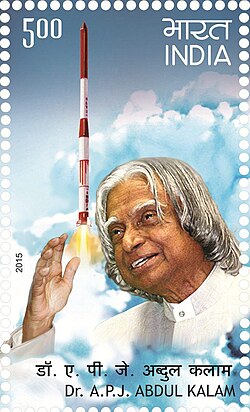
Kalam imbibed that spirit of nation-building and selfless service. He devoted himself to making India a scientific power and strengthening its defence capabilities through the achievements of its laboratories.
He remained steadfast in his pursuit of that larger mission. He never married and devoted his life to science, education and the country. What greater purpose could there be than to dedicate one’s life to empowering a nation through scientific progress?
A spiritual life beyond public display
Among Muslims, as in other religious communities, there is sometimes a tendency to assess a person’s religious commitment through visible practices. Because the average Muslim did not necessarily see Kalam offering namaz five times a day or publicly discussing his engagement with the Quran, some may have been unsure about the place of religious observance in his life.
But a person’s faith cannot always be measured by what others see.
Those who knew Kalam closely admired his simplicity, discipline and sense of purpose. He played the veena, read religious and philosophical texts from different traditions and led an austere life.
My brother-in-law, who served as Kalam’s personal assistant in ISRO, once had occasion to visit his room in a lodge in Trivandrum, now Thiruvananthapuram. He was struck by its stark simplicity. There was little more than a bed, a table and a chair. A straw mat lay at the centre, with books neatly arranged along its edges.
Such simplicity often reflects a deep inward discipline and spirituality. It need not belong exclusively to any one religion.
Kalam also visited a mosque near Rashtrapati Bhavan without fanfare. He would join the congregation and stand wherever he found space in the row. He did not need to wear his Muslim identity on his sleeve to establish that he belonged to the faith.
His spirituality was notably inclusive. His engagement with Hindu spiritual leaders, his interest in different religious traditions and his emphasis on harmony helped make him a bridge-builder across religious boundaries.
Dr A. P. J. Abdul Kalam The True Inspiration Of India 🇮🇳🚀 https://t.co/BDDgtf233A
— SURAJ (@SURAJ_624) March 5, 2026
For many Muslims, this is a source of pride. For others, however, a public figure’s religious outlook may seem less relatable if they look to prominent Muslim personalities primarily for Islamic scholarship, an articulation of Muslim cultural heritage or advocacy on issues affecting the community.
As President of India, Kalam became a leader of all Indians, Muslims included. Perhaps this is one reason many people instinctively identify him first as an Indian, a scientist, a teacher and a patriot rather than exclusively as a Muslim.
We all possess multiple identities. Unless a person is engaged in politics or religious leadership, there is no obligation to foreground one identity at the expense of all others. Kalam’s relationship with Muslim identity must be understood in this context.
Social scientist Ashis Nandy’s work on identity offers a useful perspective on how individuals are shaped by multiple social and cultural affiliations rather than by a single, fixed label. Applied to Kalam, this suggests that Muslims’ identification with him need not be weaker simply because they see him primarily as a scientist, educator and Indian patriot.
At the same time, his national identity did not erase his Muslim background. The two coexisted. His life demonstrated that a person could retain a religious identity while serving a diverse nation without making that identity the defining feature of every public action.
Kalam’s achievements can therefore be a powerful source of pride for Muslims precisely because he reached the highest constitutional office in India without ceasing to be Muslim. His example need not compete with the contributions of Muslim theologians, reformers, political thinkers or community leaders. Each represents a different form of achievement and service.
His public life placed scientific progress, education, national development and interreligious harmony at its centre. It demonstrated that a Muslim could rise to the country’s highest constitutional office and earn the affection of people across religious boundaries.
While reflecting on these questions, I made a small, informal observation of my own.
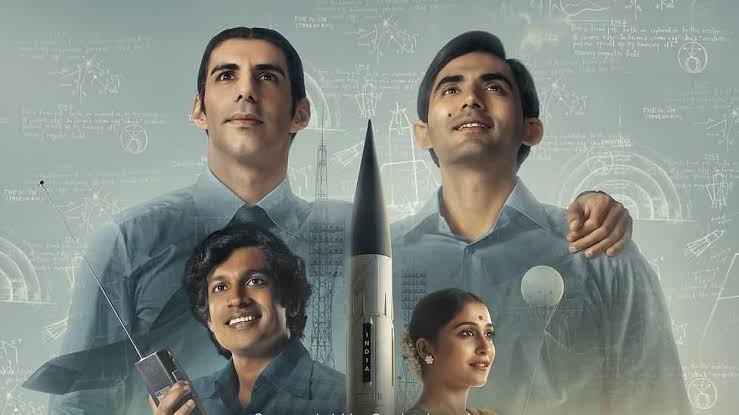 APJ Kalam (Extreme left lower) in the poster of Rocket Boys
The brilliant series Rocket Boys, based on the lives of pioneering Indian scientists and the early development of the country’s scientific institutions, was released on an OTT platform. It depicts the world in which India’s scientific establishment took shape and features Kalam as a young scientist. Watching the series, one can better appreciate the scientific environment that helped shape his imagination, ambition and ability to inspire others.
Yet, to my surprise, none of my young Muslim colleagues had even heard of the series, let alone watched it.
This was only a small personal observation, not a representative survey of Muslim youth. Nevertheless, it made me wonder whether the real problem lies less in Muslims’ reluctance to identify with Kalam and more in the limited exposure many young people may have to his life, ideas and intellectual influences.
If we want Kalam’s dream of a developed and scientifically strong India to remain alive, we must find ways to engage the younger generation with the lives of scientists, teachers, innovators and nation-builders. We need to encourage them to look beyond fleeting social-media memes and reels towards ideas and achievements that can shape their own lives and the country’s future.
ALSO READ: Kalam’s question: How do you want the world to remember you?
Kalam’s legacy belongs to all Indians. But Muslims have every reason to embrace it as part of their own heritage, too—not because he constantly asserted his religious identity, but because he showed that being a Muslim and being an Indian were never mutually exclusive.


.jpg "Gujarat’s women entrepreneurs bring their craftsmanship to life during Navratri")







_(2).webp)
.webp)
