 Shankar Kumar
“A commander who becomes overconfident, underestimates opponents or ignores changing circumstances exposes himself to defeat,” Sun Tzu, a Chinese military strategist, said in his classic treatise ‘The Art of War.’
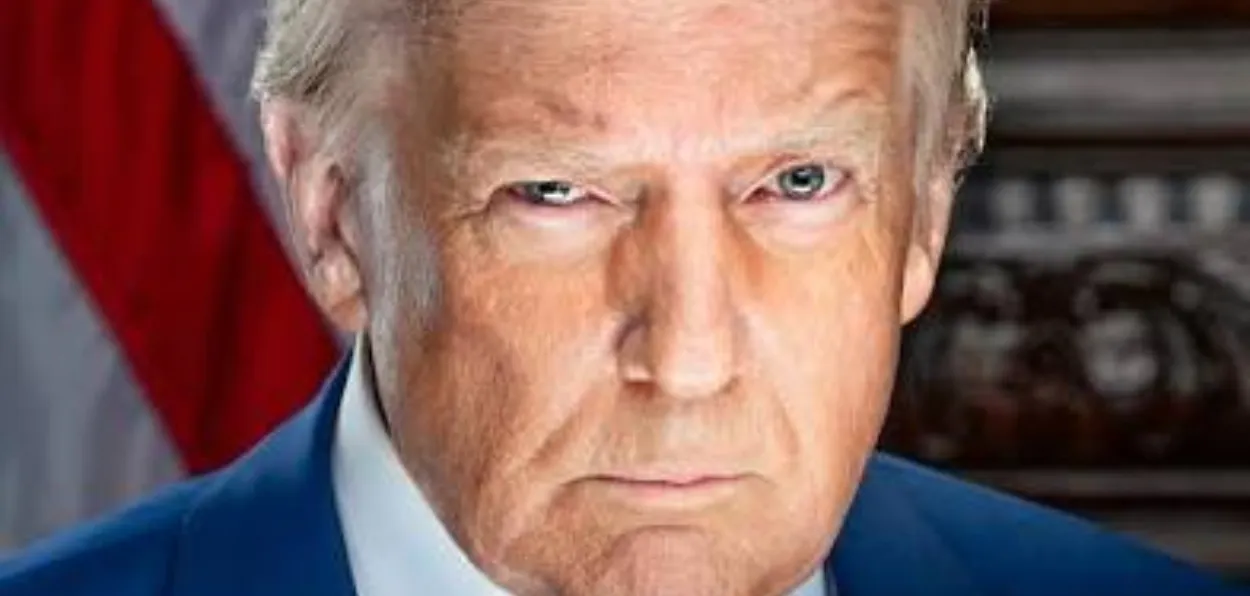
Exactly, this is what appears to have happened to US President Donald Trump. Under his watch, the Republican Party has suffered a humiliating setback, losing its majority in both the House of Representatives and the Senate in the midterm elections.
For the first time in 20 years, Republicans have lost the majority in both chambers of the US Congress, giving a serious political blow to the US President and his style of functioning. Even though vested with massive executive power, the mid-term election results have impacted his capacity to dictate and disrupt issues, at least, at the domestic front.
On the national security and the external front, it has little bearing. The US President retains significant constitutional authority over military deployments, international negotiations, and diplomacy. But that does not mean Trump will override Congressional control on funding of the US-led war against a country or get an untrammelled backing for his initiatives.
Yet there is a catch here. Since any Congressional bill requires Presidential approval, Trump will nonchalantly use his veto power to override it, making both chambers’ control simply theoretical and ineffective.
In reality, if Congress wants to restrain the President, it will require a two-thirds majority in both the House of Representatives and the Senate. Democrats do not have it despite gains in the midterms.
Experts, however, say that the humiliated Trump, known for his mercurial ways, may act more aggressively on national security and foreign policy to keep domestic audiences engaged in the rest of his term. Still, it is not clear whether he would continue his flip-flop engagement with India, especially on trade, tariffs and immigration.
Trade and tariff
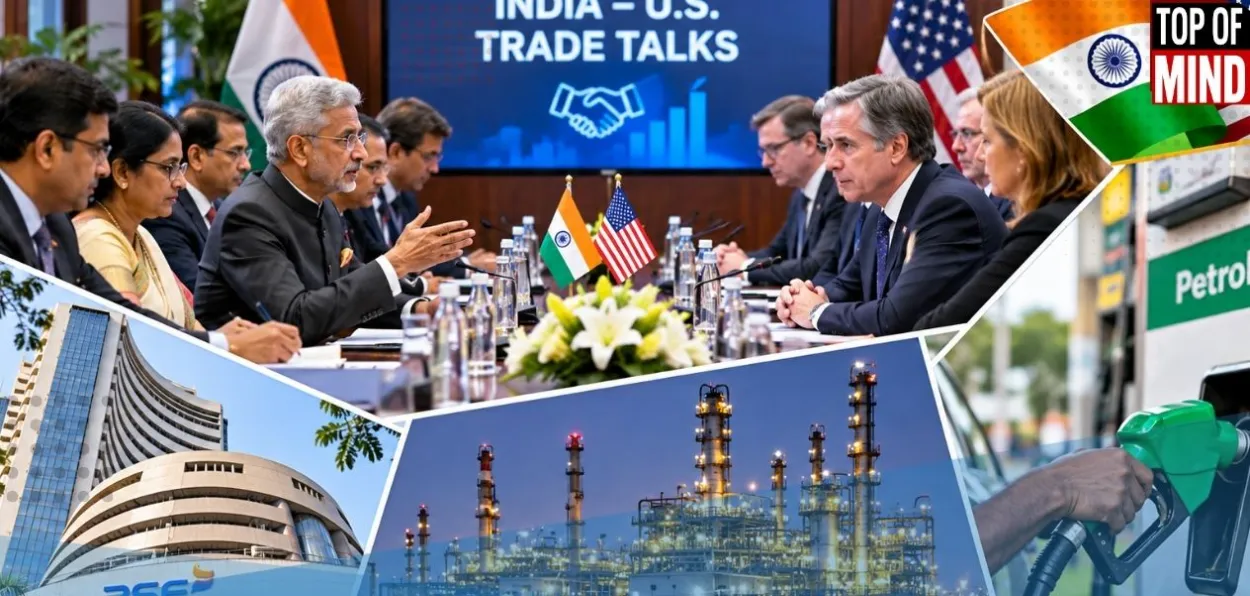
Against the backdrop of Democrats gaining control, Trump may encounter stiff opposition to his approach, especially on tariffs and trade with India in Congress. Experts say Democrats may question and challenge the rationale behind imposing high tariffs on friendly and key strategic partners like India.
🚨President Trump just said if the Democrats try to impeach him, it will "DESTROY" the Democrat Party. "Impeachment for what? Having a successful country?" We the People stand with Trump. https://t.co/IwHfQnYb1U
— Bo Loudon (@BoLoudon) November 4, 2026
Associated Press poll of 100,000 mid-term voters concluded that Trump’s tariffs on imports had done more harm than good to the US economy. The election results reflected voters’ frustration against Trump’s policies.
A majority were unconvinced by the US President’s claims of an economic turnaround. According to AP, consumer prices have risen 3.7% over the past 12 months, compared with an inflation rate of 3% when Trump began his second term.
With Trump now no longer facing an election in the remaining two years of his second term, he may like to close a trade deal with India soon. Experts also feel that since Trump is likely to face political constraints at home, he may like an early trade deal with India to show his influence on the international front.
They argue that India may exploit the changed political landscape in the US to bargain for a balanced trade agreement with Washington. New Delhi may also ask the US administration to ensure that all its sensitivities are addressed in the proposed trade agreement.
Immigration
It is less likely that the Trump administration will abandon its goal of restricting immigration and implementing deportation of illegal people following the mid-term election setback to the Republicans.
Also, it will not be easy for President Trump to advance his agenda on immigration in Congress given the huge majority of Democrats.
Though Congressional scrutiny of immigration rules would certainly increase, it does not mean that the Democrats will force Trump to take a U-turn and abandon his immigration policy. The US President is likely to override any Congressional legislation that hampers his action against illegal immigration.
In particular, focus will be on H-1B visa applications. After returning to the White House for the second term, Trump introduced a $100,000 fee for new H-1B visa applications. In June 2026, a federal court in Massachusetts ruled it unlawful. The Trump administration has since extended it through 2027. Trump also slapped a freeze on green-card sponsorship at eight companies, including TCS, Infosys, HCL and Wipro.
Iran factor
Democrats have been strongly opposed to Trump’s decision to launch military action against Iran. Given that Democrats now control both chambers of the US Congress, they will ensure that the Trump administration does not carry out a military campaign against Tehran without Congressional approval.
🚨 GET READY: President Trump just teased HUGE moves coming over the next two weeks. “We have a lot of things cooking.” The midterms are over and Trump is taking the gloves off. Fasten your seatbelts, America is getting back on track! 🇺🇸 https://t.co/uffSkdQABJ
— Ryan Fournier (@RyanAFournier) November 5, 2026
Moreover, since Democrats will be on various Congressional committees, they can summon senior Trump administration officials to explain the objectives, costs and consequences of the war. Experts maintain that Democrats can use defence spending and confirmation of presidential nominees as leverage to press Trump to seek Congressional approval for the war.
For Trump himself, the Iran war has not served him in good stead. While Republicans have significantly lost in the mid-term election, the war has hugely impacted Americans and their economy. According to Moody’s Chief Economist Mark Zandi, the Iran War has cost the US almost $2,000 per household. He said so long as Trump continues with his war on Iran, costs to American families will only continue to rise.
Pakistan factor
During the two years of Trump’s second term, Pakistan invested hugely in courting the US. Trump too never lagged in showering special love on Pakistan, despite Washington's relations with Islamabad having become episodic and patron-client in character rather than structural.
Trump repeatedly described Asim Munir as his “favourite field marshal,” and invited him to the White House for lunch in June 2025-- weeks after India launched a four-day war on Pakistan in response to terrorists, linked with The Resistance Force (TRF) an offshoot of Lashkar-e-Taiba, who killed 26 tourists—25 Indians and 1 Nepali citizen in Pahalgam in Jammu and Kashmir on April 22, 2025.
Even as an offer of lunch to Asim Munir piqued India, Trump was unstoppable in his overt display of admiration and affection for him. Islamabad nominated the US President for the Nobel Peace Prize.
Yet for Trump, Pakistan was a favourite nation. Ignoring the ground reality about the country, which is itself in the midst of internal strife for years, it was given the role of a mediator between the US and Iran over the ceasefire.
Taking it as a much-needed opportunity to end its international isolation, Pakistan, instead of capitalising on the opening, squandered its chances by seeking to appease Saudi Arabia, other Gulf nations and China, thereby making genuine neutrality structurally impossible.
READ MORE: A ‘Namaste’ can make a difference: Muslims must reach out and connect
However, with Democrats now commanding a majority in both chambers, Pakistan and its leaders likely face an uphill task in advancing their country’s interests. Experts say there will be greater Congressional scrutiny of Pakistan’s dealings with Trump and his inner circle. Pakistani leaders’ outreach to Trump was also held privately, involving his family.