

Eman Sakina
The question of women's rights in Islam is often trapped between two opposing narratives. One portrays Muslim women as victims who need liberation from their religion. At the same time, the other suggests that preserving religious traditions requires women to remain silent, dependent and confined to limited social roles. Both narratives overlook an important reality: Islam has its own intellectual and spiritual foundations for women's dignity, rights, education and empowerment.
Friday Musings
Perhaps it is time to reclaim Islamic feminism, not as an imitation of Western liberal feminism or a rejection of Islamic traditions, but as a thoughtful return to the Quran, the teachings of the Prophet Muhammad, and the scholarship of Muslim women throughout history.
Islam introduced principles of spiritual equality at a time when women in many societies were denied basic rights. The Quran makes this equality clear in Surah Al-Ahzab (33:35), where believing men and women, patient men and women, charitable men and women, and those who remember Allah are mentioned together. The verse concludes by promising forgiveness and a great reward for both. It establishes that a person's worth before Allah is determined by faith and righteousness, not gender.
Similarly, Surah An-Nisa (4:7) declares that men and women both have an established share in inheritance. This was a significant recognition of women's independent financial rights. Islam also recognised women's ownership of property, their right to receive a marriage gift, and their entitlement to financial protection within marriage. These were not favours granted by men but rights established through divine guidance.
Empowerment is not a foreign concept in Islam. It is rooted in the idea that every human being is accountable to Allah and deserves dignity, justice and respect.
However, reclaiming Islamic feminism also requires honest reflection. Not every practice followed in Muslim societies represents an authentic Islamic teaching. Cultural restrictions, patriarchal attitudes and historical social arrangements have sometimes been presented as religious obligations. The distinction between Shariah, the divine guidance of Islam, and fiqh, the human understanding and interpretation of Islamic law, is therefore important. Classical jurisprudence contains valuable scholarship, but its interpretations must also be studied in their historical and social contexts.
This does not mean dismissing classical scholars. Rather, it means engaging with their intellectual contributions, understanding their methods and recognising that scholarly interpretation has always involved discussion and debate.
If we look at the history of Islam, we would find that women transmitted Hadith, taught students, participated in public life and contributed to the development of Islamic knowledge. Their presence challenges the assumption that religious scholarship was exclusively a male responsibility.
The Quran also records the voice of a woman seeking justice. Surah Al-Mujadilah (58:1) begins by mentioning a woman who appealed to the Prophet regarding her marital difficulties, and Allah declares that He heard her conversation. This powerful passage reminds us that women's concerns deserve to be heard and taken seriously.
Reclaiming Islamic feminism means bringing these forgotten dimensions of our intellectual heritage into contemporary discussions. It means encouraging girls to pursue education, allowing women to participate in scholarly conversations, protecting their inheritance and property rights, challenging domestic abuse, and ensuring that marriage remains a relationship built on mutual respect and responsibility.
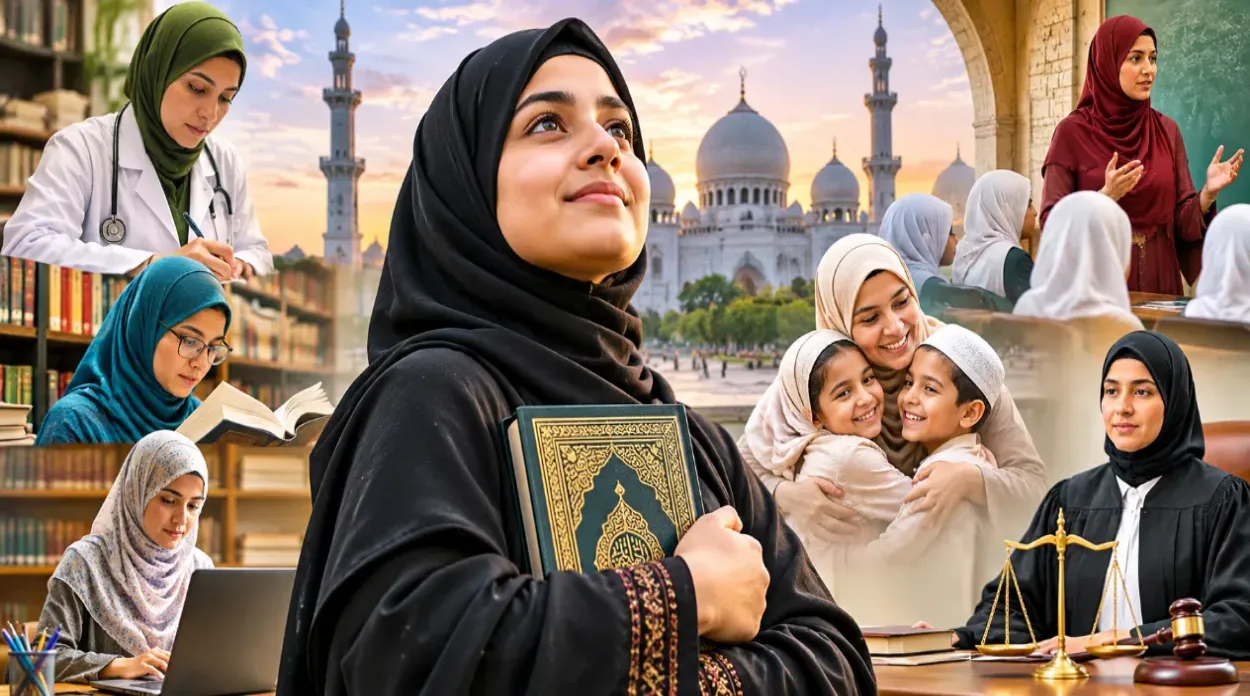
It also means moving beyond the assumption that empowerment must look identical in every society. A Muslim woman may find strength in education, entrepreneurship, motherhood, public service, religious scholarship or a combination of these roles. Her choices should be approached with dignity rather than judged through cultural stereotypes.
The future of Islamic feminism depends on serious scholarship, not slogans. Women must be encouraged to study the Quran, Hadith, jurisprudence and Islamic intellectual history, rather than being treated merely as subjects of religious discussions. Their voices should be part of interpreting, teaching and applying the tradition.
Ultimately, Islamic feminism should not be about choosing between Islam and women's dignity. It should be about ensuring that the dignity, justice and rights promised by Islam are reflected in the everyday lives of Muslim women.
ALSO READ: Imam has far greater responsibilities than leading prayers
The real task is neither to abandon our religious heritage nor to defend every inherited social practice unquestioningly. It is to rediscover the principles of justice within our faith and dare to apply them. A tradition that once opened doors to women's learning, ownership and participation should not become a reason to close those doors today.