Amir Suhail Wani
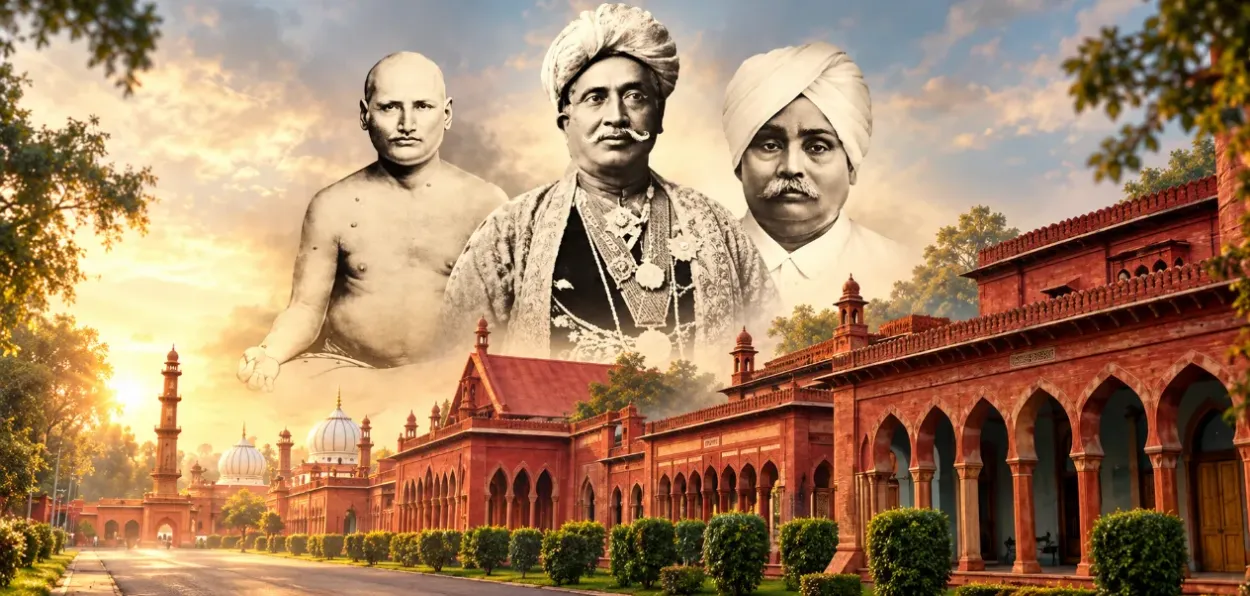
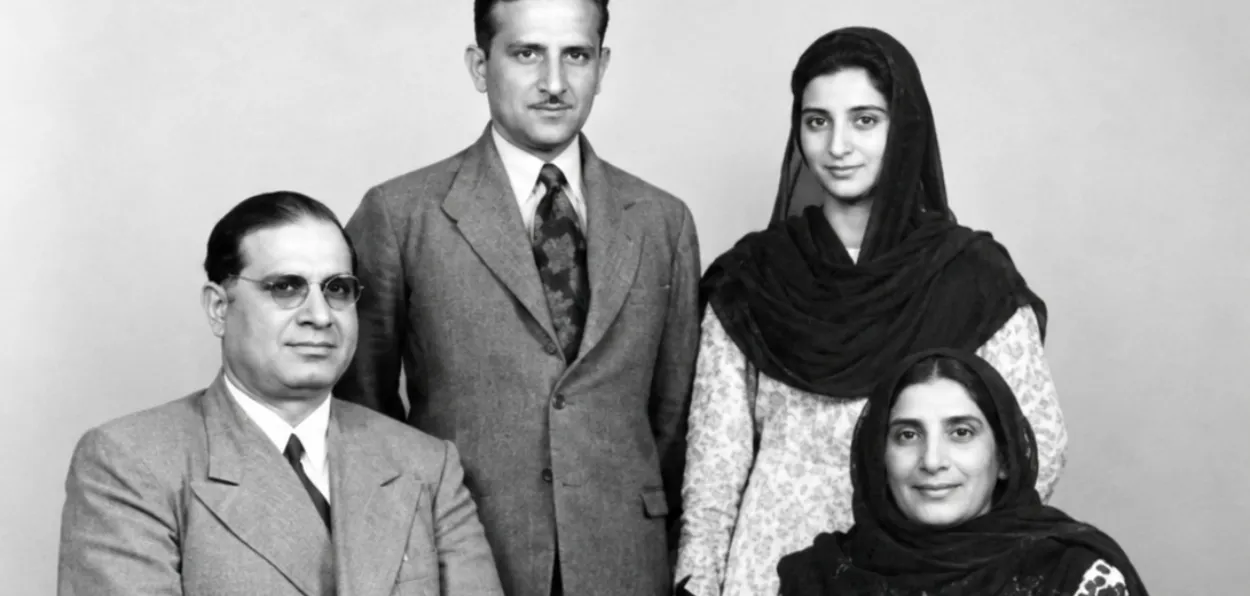
Khalifa Abdul Hakim, philosopher, researcher, translator and interpreter of Islamic thought, if a much-forgotten man today. He tried to bring Islam into a meaningful conversation with philosophy, modern knowledge, humanism and other traditions, and believed that faith should deepen our understanding of humanity. Yet, in Pakistan, where he lived, his legacy never received the place it deserves in mainstream education and public discourse
Born in Lahore in 1893, Abdul Hakim studied philosophy, earned his doctorate from Heidelberg University in Germany, taught at Osmania University in Hyderabad, served as Principal of Amar Singh College in Srinagar, and became Director of Education in Kashmir.
He returned to Lahore and became the founding director of the Institute of Islamic Culture in 1950. He was not simply a commentator on religion but an accomplished academic who approached intellectual traditions through research, comparative study and philosophical reflection.
What made Hakim particularly significant was his understanding of Islam as a living intellectual and moral tradition. He did not regard religion as a collection of slogans to be repeated or boundaries to be defended through perpetual confrontation.
For him, Islamic thought had to engage with the questions raised by changing societies, economic injustice, human freedom and the challenges of modern life. His Islamic Ideology: The Fundamental Beliefs and Principles of Islam and Their Application to Practical Life attempted to connect religious principles with the practical needs of society.
His Islam and Communism explored questions of social justice and economic organisation, while his writings on Rumi and Iqbal demonstrated the philosophical depth of the Muslim intellectual tradition. He was interested not merely in what Muslims believed, but also in what those beliefs could contribute to human life.
Considering the contemporary religious atmosphere in which loudness is often mistaken for knowledge and religious discussions can become dominated by instant judgements, and the impulse to declare other people misguided, his works were significant. The language of takfeer, or declaring fellow Muslims unbelievers, can turn religious disagreement into a struggle over who possesses the authority to belong.
Hakim's Iqbal aur Mulla is particularly relevant here. His engagement with Iqbal's criticism of religious literalism reflected a larger concern: the danger that religion might be reduced to rigid formulas while losing its creative and ethical spirit. Iqbal himself had struggled with the tension between living religious thought and the stagnation of inherited interpretations. Hakim recognised that a civilisation could not advance merely by invoking the achievements of its past.
Perhaps the most remarkable illustration of Hakim's intellectual courage was his Urdu translation of the Bhagavad Gita. Here was a Muslim philosopher, deeply interested in Islamic thought, who considered it worthwhile to enter the world of a foundational Hindu text and make it accessible to Urdu readers. Such an undertaking requires more than linguistic competence.
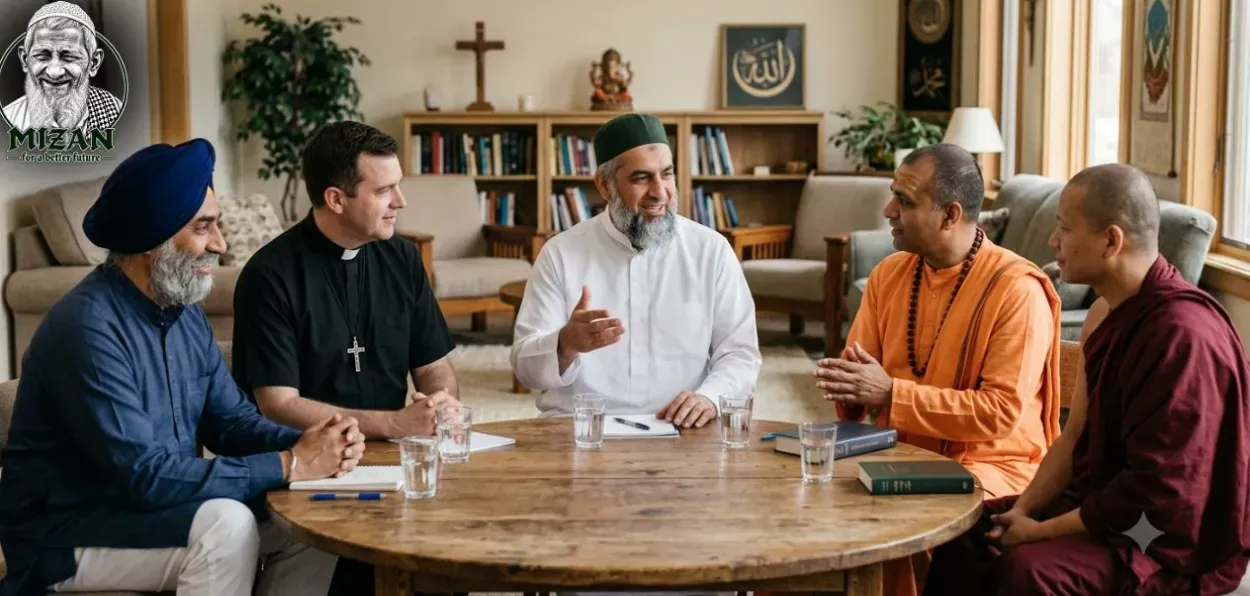
His translation challenges the assumption that religious commitment necessarily demands cultural isolation. It reminds us that intellectual exchange is not the same as theological agreement. A Muslim scholar can study the Gita without becoming a Hindu, just as a Hindu scholar can study the Quran without abandoning Hinduism. The purpose of comparative learning is not to dissolve all differences but to understand them with greater honesty and respect. Hakim's work represented precisely this possibility: a religiously grounded universalism in which human beings could learn from one another without surrendering their convictions.
This is where his legacy becomes uncomfortable for narrow versions of religious identity. When religion is made dependent upon constant opposition to the religious or cultural other, the scholar who builds bridges can appear suspicious. When patriotism is confused with cultural uniformity, translations across traditions become difficult to accommodate. When religious identity is presented as a permanent defensive battle, universal human concerns are pushed aside. Hakim's intellectual life offered an alternative to these tendencies. His work suggested that confidence in one's faith need not produce fear of another person's scripture, philosophy or cultural inheritance.
Pakistan's intellectual and political history helps explain the marginalisation of such voices, although it would be unfair to attribute it entirely to religious clerics. The country's educational priorities, political instability, ideological pressures and limited public engagement with the humanities have all affected the reception of independent scholarship. Religious nationalism has, at different moments, encouraged a narrower understanding of cultural belonging. The state and society have often found it easier to celebrate selected symbols of Muslim identity than to sustain the difficult conversations required by a diverse intellectual tradition.
Contemporary religious discourse often devotes enormous energy to questions of personal conduct, symbolic identity and the policing of religious boundaries. These matters can have their place, but they cannot replace sustained engagement with poverty, inequality, education, economic exploitation and the ethical responsibilities of power. Hakim's work invited Muslims to examine how their principles might shape institutions and improve material conditions. His vision of religious life demanded more than public declarations of faith; it required a serious concern for the conditions under which ordinary people lived.
This is precisely the kind of intellectual contribution that deserves renewed attention in South Asia. The region faces economic hardship, social polarisation, communal suspicion and a growing tendency to interpret disagreement as hostility. The answer cannot be found in abandoning religion, nor in turning it into an instrument of exclusion. It requires a richer understanding of religious traditions, one that brings together spiritual depth, rational inquiry, moral responsibility and sympathy for the human condition. Hakim's writings offer resources for such an undertaking.
His example is also a reminder that the history of Muslim thought is far more diverse than contemporary polemics sometimes suggest. The Muslim intellectual inheritance includes philosophers, scientists, poets, jurists, mystics and translators who engaged with ideas across civilisations. Rumi spoke to the human longing for meaning; Iqbal wrestled with the challenges of modernity; and Hakim attempted to bring philosophical inquiry into conversation with the practical questions of his age. To reduce this rich inheritance to arguments over who is entitled to call whom a Muslim is to impoverish the very tradition one claims to defend.
ALSO READ:
The tragedy, therefore, is not simply that Pakistan has forgotten an important philosopher. It is that the neglect of thinkers like Hakim reflects a broader difficulty in making room for intellectual independence within public religious life. The problem is not that every scholar must agree with his conclusions. Serious traditions grow through criticism, debate and disagreement. The problem arises when the conditions necessary for serious disagreement are replaced by denunciation, when research is displaced by rhetoric, and when the performance of religious certainty becomes more influential than the patient work of understanding.