In Kashmir, my grandmother had the privilege of serving food to all of us in bronze thalis. Sometimes, we, the children, were so hungry and wanted her to serve us quickly but that never happened.
Back then in Kashmiri families, the first portion of all the cooked food was reserved for birds – sparrows, mynahs, and crows. Each house had a wooden plate called “Tchrea paeta” (plate of the sparrow) fixed on the outer wall of the first floor of the house.
This was the exclusive platter for the avian; they were served food on it.
My grandmother and a generation after her dutifully served the freshly cooked food to the birds before serving it to the members of their family. The humans came only next to the birds.
The cardinal rule was that no leftovers were to be served at the Tchirae paeta; it has to be always untouched and freshly cooked food!
On the birthdays of members of the family, soon after mandatory prayers, the first offering of the yellow cooked rice and either mutton or cheese dish would be kept for the birds.
No wonder Kashmir was a land of abundance: birds were as much part of the ecosystem as humans because they helped in pollination and acted as natural pest controllers. Women often spread the chopped vegetables for sun drying in summer on the slanting roof made of shingles and yet the birds never touched them. These vegetables were preserved for the months of scarcity in winter as the roads got blocked and supplies were scanty.
Birds left it untouched probably because they were fed well and were not hungry to poach on the food of humans. The birds in Kashmir definitely looked healthier than those outside Kashmir. The sparrow was plum, mynahs with their well-done backcombed hair looked chic and crows were as fat as probably a kite.
Three decades ago, Kashmir saw the flight of Hindus from their homes due to violence and unrest.
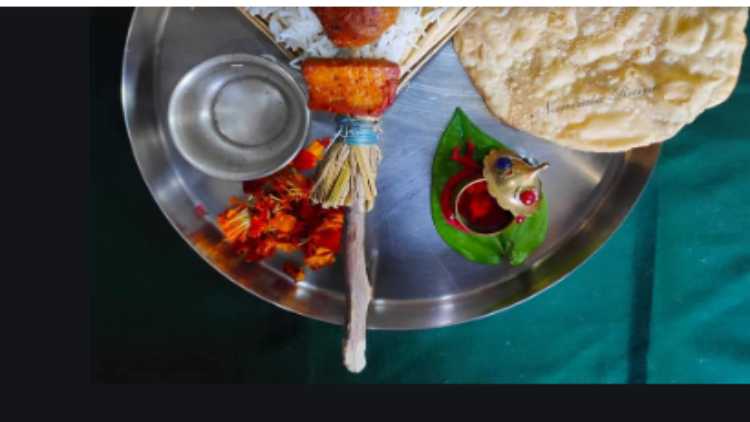 The food for crow (on Kaw Punim)
The community of Kashmiri Pandits celebrates another festival dedicated to the wise crow: Kaw Purnima. On that day, the crow is fed yellow rice on specially-made hey plates. The children sing a song in praise of the crow's wisdom.
Having moved to the big and small cities across India and the world to take shelter and restart their lives, Kashmiri found it difficult to live in an environment sans the birds. Some long to see the leaves changing colours to signal the onset of the season. The sparrows lived in the crevices of the trees and also nested in the attic of houses usually open from the front side.
In Mumbai, my sister Anita felt homesick in a skyline without the birds. She started keeping water and food for them. In the meanwhile trees also grew tall and within some months a few birds started visiting her home. Kashmiris living in apartments in big cities had to stop feeding the birds from their balconies as neighbours complained of pigeons visiting them and making the places dirty. The pigeons also nested in the AC ducts and corners.
Thinking of a home that they seem to have lost, many Kashmiris in exile still think of Mynahs and Sparrows and wonder who is feeding them.











.webp)