Malick Asgar Hashmi/New Delhi
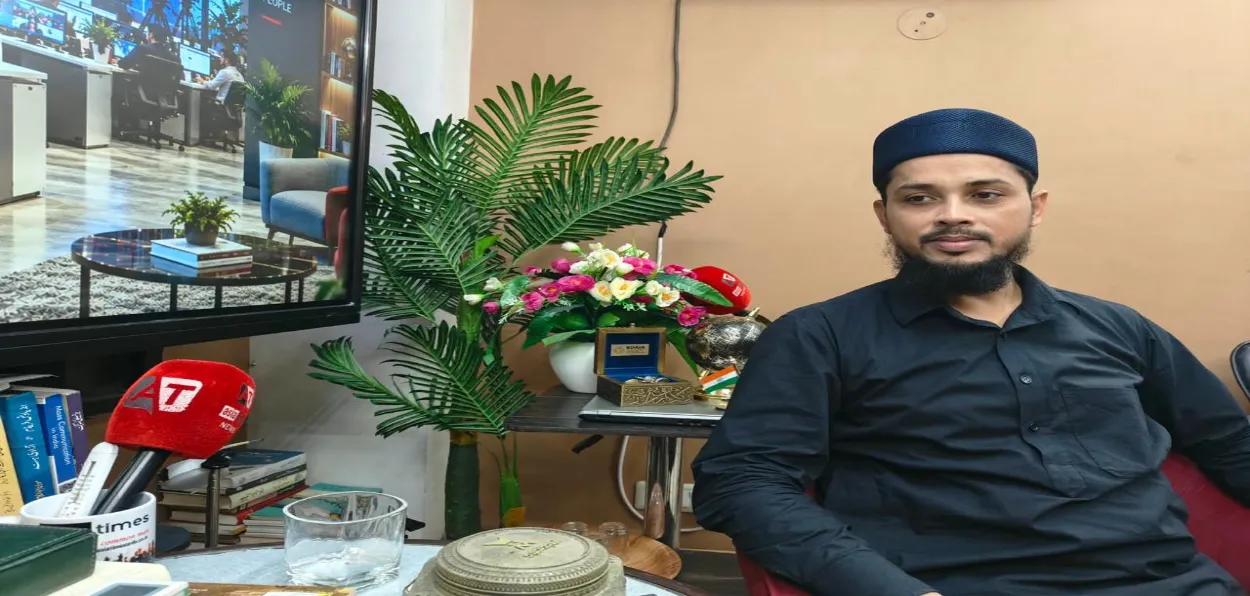
Rapper Sid Niaz, who hails from a family of weavers in Banaras, uses his music to express the pain, struggles, and reality of his community. Through his rap songs, Sid Niaz not only highlights the plight of the weaver and Pasmanda communities, but also raises a question – why are youth from the weavers' community held back in the name of religion and tradition and not allowed to grow and rise.
Sid Nyaz, who belongs to the Ansari community of Banaras, entered the world of rap just six months ago. In this short time, he has released 15 songs on YouTube. While his popularity may be limited, the struggles of the weaver community and Pasmanda families resonate clearly in each of his songs.
Initially, people ignored the message of his songs, but soon the listeners began to understand that Sid Niaz was trying to convey something more profound through rap.
Sid Nyaz is using this genre to expose the realities of his community. According to his Facebook profile, he comes from a family of weavers and is trying to establish himself as a musician, singer, and actor. Notably, he also acts in his song albums, while Imran Siddiqui handles the camera and editing.
His latest rap song, "Duaayein Deta Raha," released three days ago, may seem like a romantic ballad on the surface, but it reveals the struggles of a young man from a weaver family. His previous popular song, "Bhumar Jot Dene," was dedicated to the weaver communities of Banaras, Mughalsarai, Surat, and Bengaluru.
In this song, Sid Nyaz and Rider Abrar Ansari present the Jhulaha culture in a fun, desi, and Banarasi style. The blend of Banarasi slang, hip-hop, and comedy makes this song unique, but it also reflects the hard work and lives of the weavers.
Another notable song from Sid Niaz is "Ansari Khandaan," in which he reveals a personal story from his family. In this song, he recounts how his parents were once evicted from their home and how conditions became so dire that they had to spend the nights under plastic sheets.
His mother worked as a domestic help, and his father toiled on a loom. Things improved over time, but the struggle remained. At the family's request, one of his brothers was made a Hafiz-e-Quran, but his untimely death shattered the family.
In the rap song "Khandaan," Sid Niaz addresses the Sunni-Wahhabi differences within his family and society, and the arguments that prevent him from rapping in the name of Islam. He questions why weavers, who earn their living through hard work, are repeatedly viewed with suspicion. The song also reflects the pain of the loom's vanishing business, a reality facing millions of weaver families today.
ALSO READ: Nikhath Fathima's mission has empowered girls, poor kids through education
His song "Teri Soch Par Khari," released four weeks ago, addressed the mental conflict and narrow-mindedness prevalent in society. His rap song on "Maa," portrays his mother's struggle, sacrifice, and strength.