New Delhi
India’s economic growth outlook remains stable even as the United States considers imposing tariffs of up to 500% on select Indian goods, according to PHD Chamber of Commerce and Industry (PHDCCI) CEO and Secretary General Ranjeet Mehta.
Speaking to ANI, Mehta said the proposed duties would severely impact exporters in textiles, engineering, pharmaceuticals, toys, and gems and jewellery, making trade with the US extremely challenging. He described the move as part of a broader trend of protectionism by major economies, urging India to diversify its export markets.
“India has signed free trade agreements with the UK, New Zealand, and Oman, and negotiations with the EU are at an advanced stage, which will be crucial to offset trade risks,” Mehta noted.
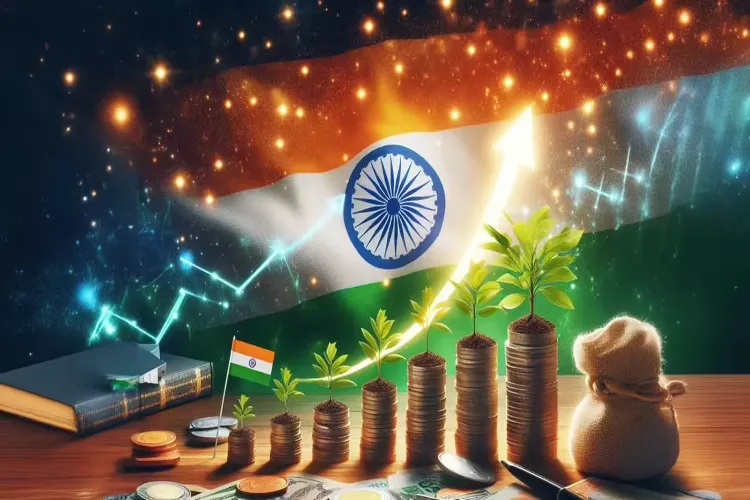
Despite these global uncertainties, PHDCCI aligns with the government’s advance estimate of 7.4% GDP growth for the current financial year, driven by strong domestic demand, investments, and resilient manufacturing. Mehta highlighted that Gross Fixed Capital Formation at 7.8% reflects solid economic footing, while the services sector remains a key growth driver.
Industrial data also show strength, with the Index of Industrial Production (IIP) growing 6.7% year-on-year in November, and manufacturing expanding nearly 8%.
Mehta emphasized that sustaining growth would require continued public capital expenditure, simpler compliance, and easier access to finance for MSMEs. He suggested deeper implementation of CGTMSE, cash-flow-based lending, and faster rollout of working capital initiatives, such as the proposed Rs 5 lakh MSME credit card.
READ MORE: Nawabzada Mohammad Asif Ali shows the humble side of royalty
He also called for refining PLI schemes to prioritize job creation, particularly in labour-intensive sectors, and boosting large-scale apprenticeship programs. Long-term growth, Mehta said, depends on budgetary support for infrastructure, healthcare, R&D, and emerging sectors like semiconductors, defence, rare earths, and critical minerals, aiming for a self-reliant India by 2047.








.webp "Union Commerce and Industry Minister Piyush Goyal")
.webp "Representational Image")

_(1).webp)