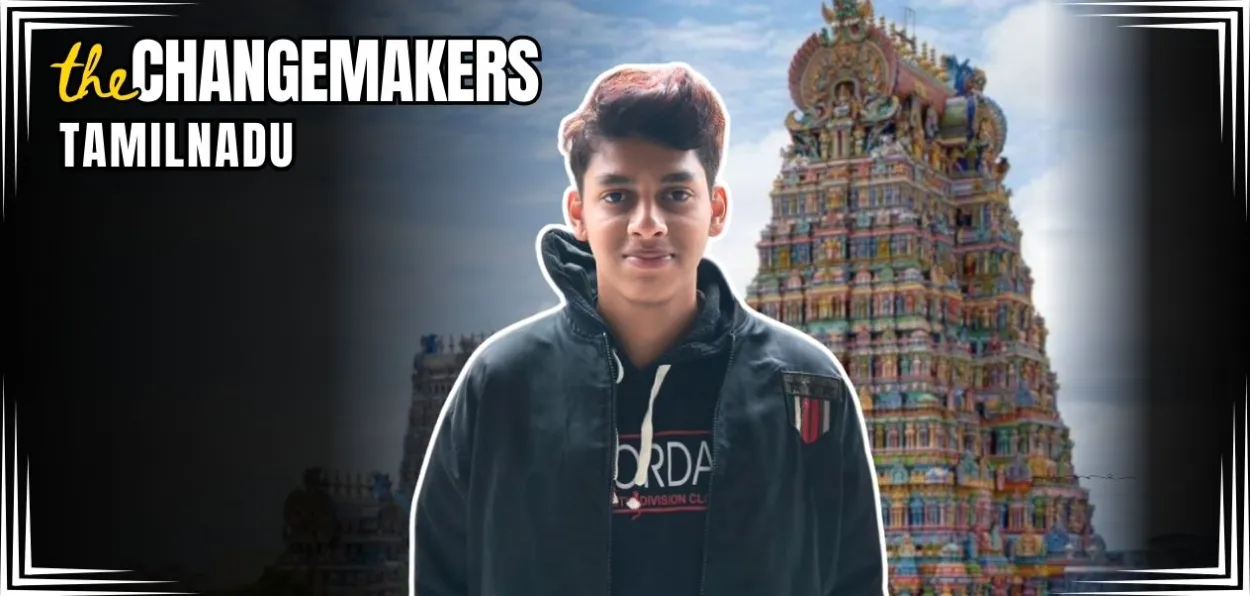
Sreelatha M
Is linguistic diversity chaos or cultural wealth, especially in a country like India, where languages change every few hundred kilometres? For 19-year-old Mahmood Akram of Tamil Nadu, however, the question barely exists.
Akram can read and write around 400 languages and understand 46 of them. He is fluent in ten languages - Tamil, English, Hindi, Urdu, Arabic, German, French, Spanish, Chinese, Japanese, and Korean. His journey began early: at the age of four, he learnt the English alphabet and all 299 Tamil characters within weeks. By eight, he was reading, writing, and typing in nearly 50 languages.

Mehmud Akram in Europe
World records followed. At ten, he wrote India’s national anthem in 20 different scripts in under an hour. At twelve, he translated a sentence into more languages within three minutes than any of the other 70 linguists competing with him.
Born to a polyglot father who mastered 16 languages while working outside Tamil Nadu, Akram grew up immersed in sounds, scripts, and phonemes. Yet he is careful to distinguish between literacy and comprehension. “Of the 400 languages I can read and write, I understand only 46,” he tells Awaz.
.jpg) Mehmud Akram with friends in a foreign country
Mehmud Akram with friends in a foreign country
He is very matter-of- fact when it comes to languages. For him, language is just a medium, not a vessel of human emotions and memories.
Comparing China and India, he says, both are like continents in linguistic diversity. In China, Mandarin is compulsory in all regions, and its native languages may be dying. The same would happen if India were to follow a uniform language in all states.
“The advantage is unity,” he says. “The disadvantage is that many languages will die if everyone learns a uniform language like Hindi.”
.jpg) “Language is language,” he concludes, implying that the thought conveyed and the speakers are more important than the language itself. If you look at the top five spoken languages in the world, Hindi is among them, he points out, suggesting the relevance of mastering it. He does not get into the discussion on whether or how languages should be saved.
“Language is language,” he concludes, implying that the thought conveyed and the speakers are more important than the language itself. If you look at the top five spoken languages in the world, Hindi is among them, he points out, suggesting the relevance of mastering it. He does not get into the discussion on whether or how languages should be saved.
His passion for learning languages has not dimmed over the years. While most people divide the year into months, Akram divides his time into weeks, each dedicated entirely to one language. He follows a schedule rigorously as he feels that without discipline, nothing is possible. So, as we spoke, it was Arabic week for Akram.
He had set all his social media accounts, phone and other devices in Arabic this week. He was watching news, movies, reels and shorts in Arabic. He read and wrote in Arabic.
Next week, he will be doing the same thing in another language.
Asked if he wanted to learn Sanskrit, often associated with ancient knowledge and wisdom, he said he did try but gave up due to the lack of good learning resources. "I find the traditional way of learning from a teacher very dull and prefer self- learning. The other reason why he did not pursue it was that he felt it was not in use anymore. ``It is a dead language, and I am not a nerd. I am not someone who looks to the past. I look to the future, and Sanskrit is not for the future,” he says.
He adds that he also tried to learn Latin as it has connections with prevailing languages, but did not pursue it either for similar reasons.
He says he is working towards obtaining at least B1-level certification in all 46 languages he understands, though he currently holds such certification in only a few. “I want to reach B1 level in all 46 first and then move on to mastering more languages,” he says.
Asked why he is engaged in this pursuit of learning languages and how it helps him, he seems to be quite sure of his chosen path. “When we speak in a person’s native language, we appeal to the heart, not just the brain,” he says.
Thanks to his passion, school was a struggle for Akram. The rigidity of the system left little room for his linguistic obsession. Eventually, he turned to open schooling in India and later spent four years in Austria studying languages and subjects of his choice, gaining fluency in German along the way. He completed his matriculation through the National Institute of Open Schooling.
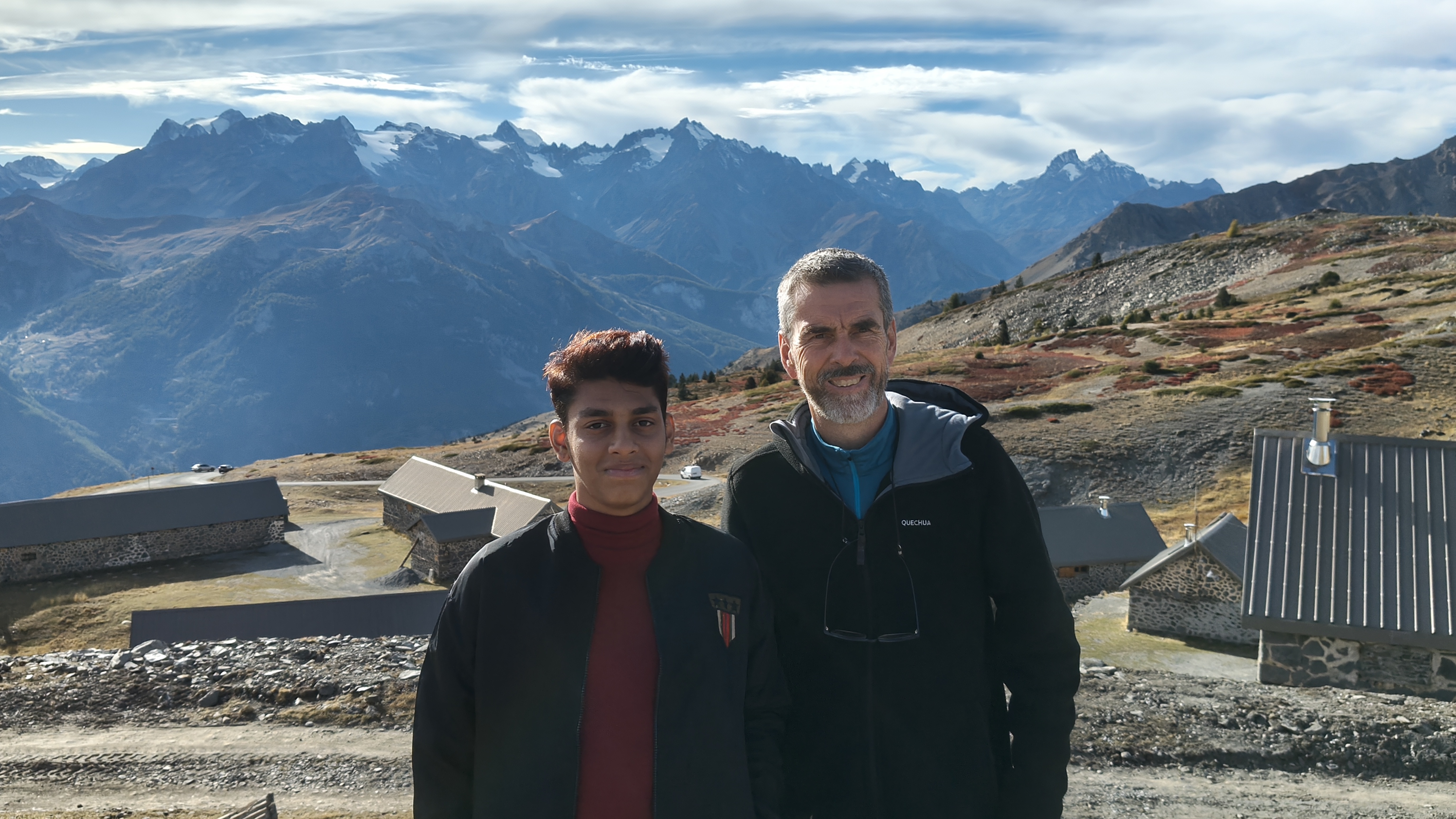
Mahmood Akram with a friend
Akram believes anyone can reach an upper-beginner or intermediate level in a language within 100 days, provided they have focus, memory, and discipline. His method is systematic: three weeks of reading and writing, followed by graded reading, social media listening, films, music, and finally full immersion—using the language exclusively in daily life.
Currently based in Chennai, Akram is pursuing three degrees simultaneously: Linguistics from an open university in England, a BA in English from the University of Madras, and a degree in animation from Alagappa University. He attends classes only for animation and writes examinations for the other two.
His long-term goal is teaching—specifically, teaching foreign languages through the learner’s mother tongue. “If I can teach Hindi to a German while speaking in German,” he says, “that’s when knowledge really opens doors.” He teaches at his father's Akram Global Languages Institute.
.jpg) Mahmood Akram with friends
Mahmood Akram with friends
As a prodigy, he attracted international attention. At ten, he was reportedly offered South African citizenship, and schools across Southeast Asia invited him as a guest teacher.
On growing up Muslim in India, Akram’s comments are measured. A decade ago, he says, state support was scarce. No one was prepared to listen to us or help us when we had issues with my schooling. “Things are changing now,” he adds briefly, without elaboration.
Today, his most cherished ambition is to translate the Thirukkural into multiple languages, besides continuing to learn new languages, which he considers a path that goes straight to the heart of the people.
ALSO READ: Mohammad Usman’s Madrassa Imdadiya is illuminating the lives of the blind
As we part, he offers a few Arabic words: Marhaba (hello), Shukran (thank you), Kayf al-hal? (how are you), and Alhamdulillah (all is well, by God’s grace).