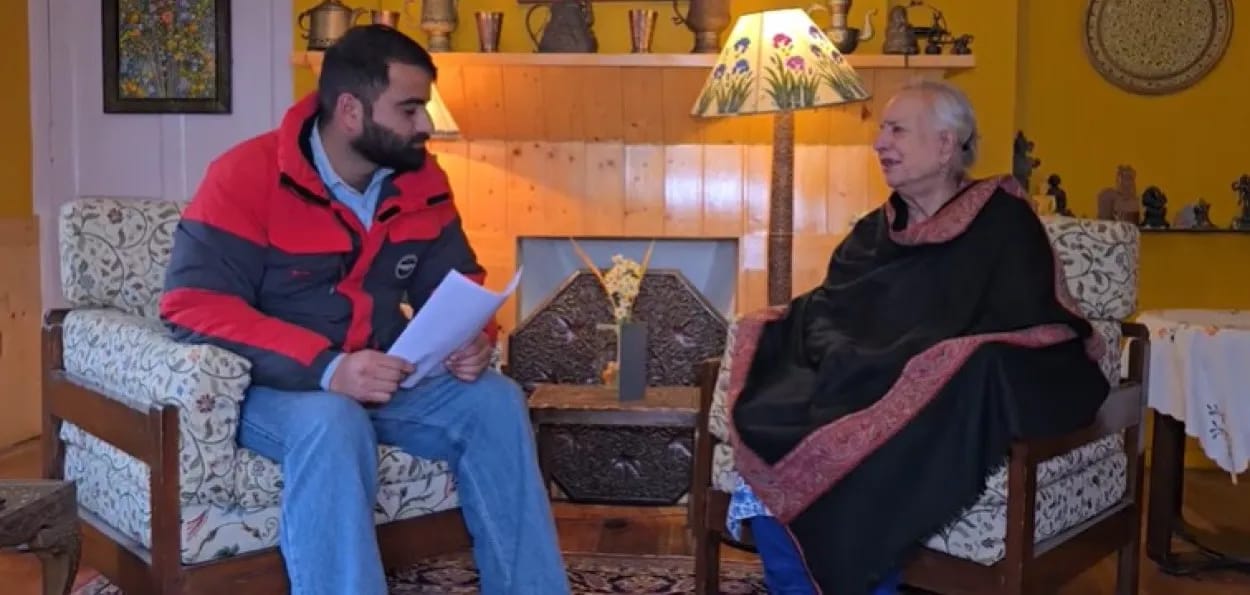
Danish Ali/Srinagar
Kashmiri litterateur and cultural icon Neerja Mattoo has called for carrying the mystical voices of Lal Ded and Habba Khatoon to a global audience. “Kashmir’s spiritual and literary heritage deserves recognition beyond narratives of conflict,” she told this reporter in a recorded interview.
Speaking in Srinagar, she noted that Lal Ded laid a powerful foundation for Sufi poetry in 14th-century Kashmir through her deeply philosophical verses and direct spiritual dialogue, while Habba Khatoon gave a new dimension to romantic poetry in the 16th century.
However, after the turmoil of the 1990s, Mattoo felt that the world had begun to see Kashmir only through the lens of violence. She believed it was essential to highlight the region’s ancient literary and cultural traditions alongside contemporary realities.
Driven by this conviction, she translated Lal Ded’s poetry into English and later published it under the title The Mystic and the Lyric.
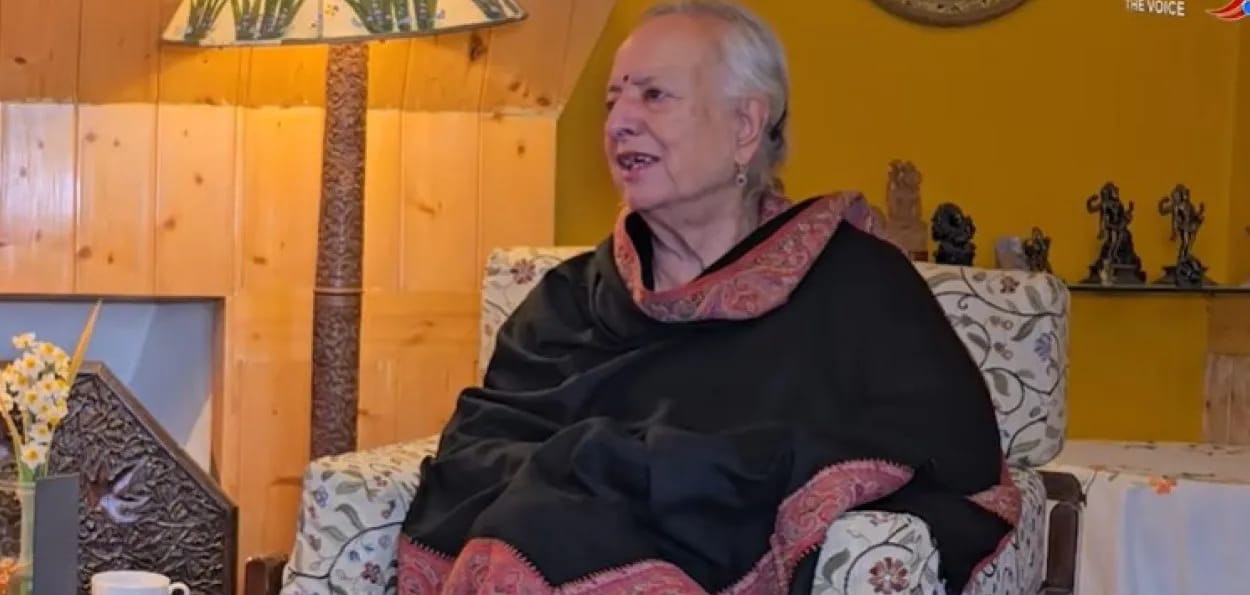
Prof Neerja Mattoo
In 1994, she also brought out an anthology of modern Kashmiri fiction titled The Stranger Beside Me, introducing contemporary Kashmiri short stories to English readers.
Through her works, she sought to ensure that global audiences could appreciate the depth and richness of Kashmiri literature.
Beyond literary translation, Mattoo also documented Kashmiri cuisine, bringing together both Muslim and Pandit culinary traditions in a book that has since gone through multiple editions. For her, this too was a way of preserving and presenting Kashmir’s shared cultural heritage.
Reflecting on her journey, the 88-year-old academic recalled that in her childhood, Kashmiri Pandit girls were rarely sent to school. She received her early education at home and entered formal schooling only after her family moved to Jammu in 1951, when she was placed directly into the ninth grade based on her English proficiency.
In 1958, she was appointed Lecturer in English at Government College for Women on Maulana Azad Road in Srinagar, where she taught for 38 years until her retirement in 1996.
Mattoo expressed concern that many young people are drifting away from their mother tongue. When parents stop speaking Kashmiri at home, she observed, the language begins to feel alien to the next generation. At the same time, she acknowledged with optimism that several young writers are producing quality literature in both English and Kashmiri.
She also voiced worries about the declining habit of serious reading in the age of the internet and instant information, cautioning that superficial knowledge cannot replace deep learning.
Her life and work stand as testimony to how one determined individual can bring the language, literature, and spiritual heritage of Kashmir to the world stage.

.jpg "Gujarat’s women entrepreneurs bring their craftsmanship to life during Navratri")







.webp)