New Delhi
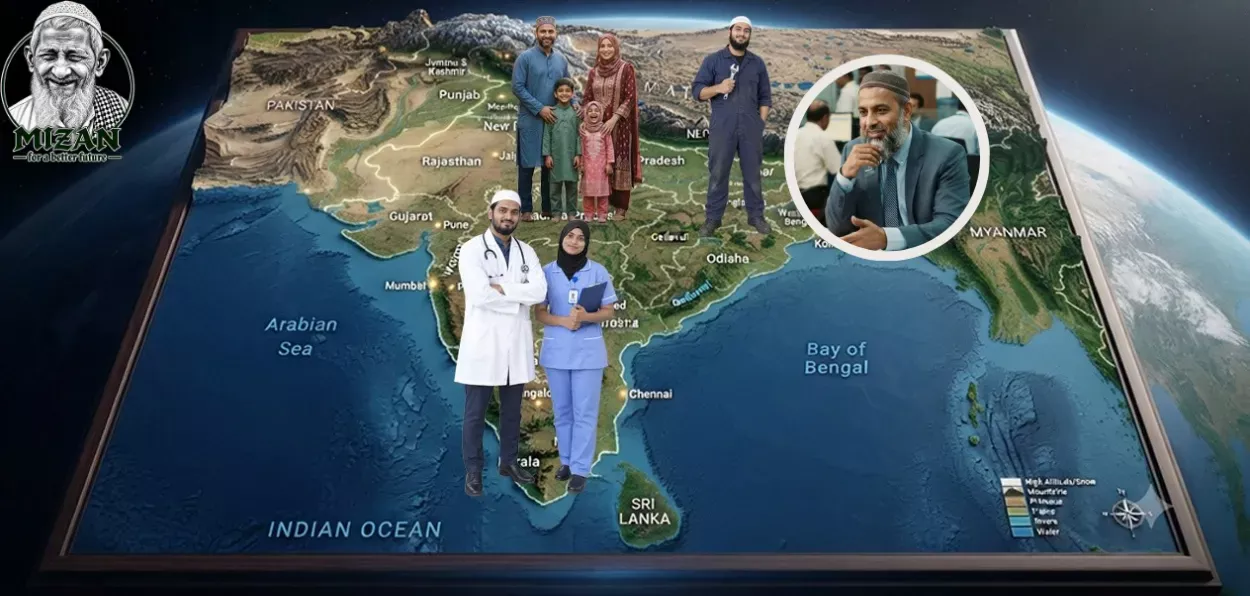
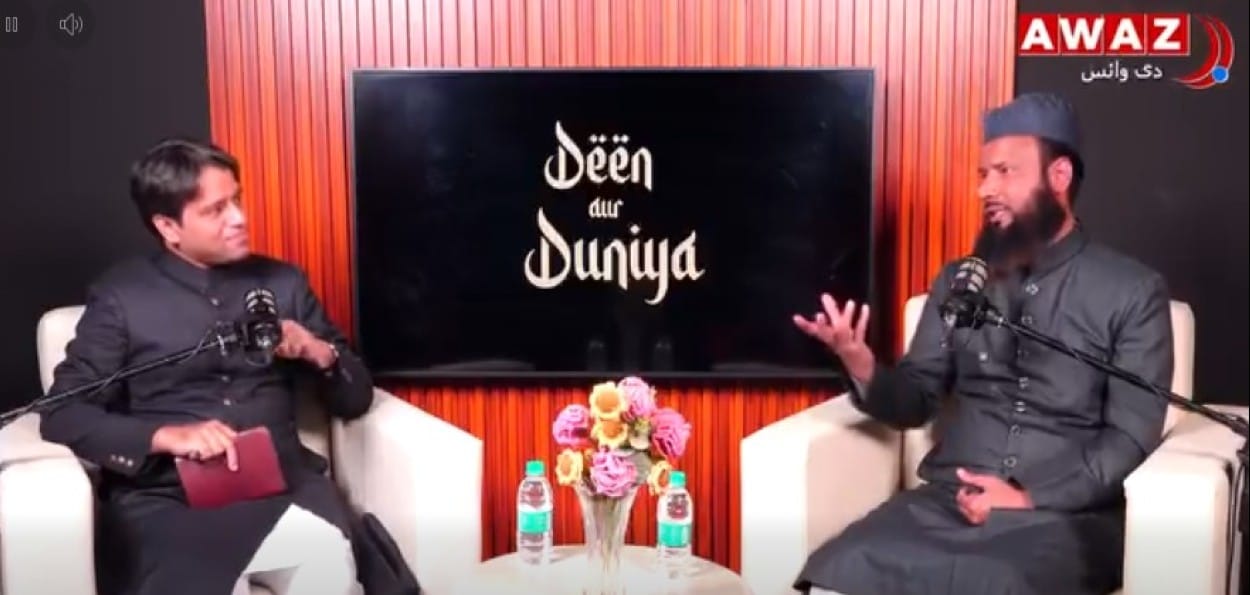
There are 57 Muslim countries in the world today, but these countries have not developed an ideal model that can be considered an example for the world. Dr. Mufti Saad Mushtaq said this in a during a conversation with Saqib Saleem on Awaz-The Voice's special podcast, "Deen Aur Duniya."
Dr Saad Mukhtar is an Islamic scholar and a doctor by profession. He was educated at the Darul Uloom Deoband, where he later taught.
He also shares his bold and candid analysis on religious topics on various TV channels and YouTube.
To Saquib Salim’s question whether the creation of an Islamic state is an essential part of religion, Dr Saad Mushtaq said that categories such as do "duty" and "permissible" exist within religion. However, “It is not correct to directly consider every administrative or political matter a religious duty.”
He argued that the state is an administrative necessity, and its purpose is to establish justice, protect people's rights, and maintain social balance. Religion only provides guidance, but applying it directly to a political framework does not necessarily constitute a religious duty.
Dr. Saad Mushtaq said that if an Islamic model is discussed, it cannot be limited to emotional slogans and support for the Caliph. It is necessary to present a realistic and practical model.
.jpeg) Dr Mufti Saad Mukhtar
Dr Mufti Saad Mukhtar
He said that if a system is successful, it should be implemented on a small scale. It is important to provide examples in the community or neighbourhood so that people can see how it can be implemented in practice. According to him, there is no clear model in the 57 Muslim countries that can be universally accepted as ideal.
On the issue of non-Muslim leadership, he cited the example of Prophet Muhammad's life in Mecca. The Prophet lived in Mecca at that time within a social and political structure that was not fully Islamic. Despite this, he continued to preach justice, morality, and honesty.
This makes it clear that the true objective is not to implement a particular political system, but to spread moral values in society. He said that the Quran does not stipulate the implementation of any particular political structure. Rather, it repeatedly emphasises justice, fairness, and human rights. This includes fundamental principles such as respect for parents, the rights of orphans and the needy, honesty, and fairness in measurement. These principles can be applied to any administrative or political system.
On democracy and secularism, Dr. Saad said that a system was acceptable if it ensures justice, honesty, human rights, and social balance to its citizens. Islam does not mandate the implementation of any specific political structure, but rather recognizes justice and fairness as paramount. Therefore, any modern state that fully implements these principles can be considered to be in accordance with Islamic values and ethics.
Dr Saad Mushtaq also emphasized the need for ijtihad. He said that problems change over time, and finding new solutions to new circumstances requires serious thought and practical thinking. Unfortunately, this kind of thinking is rarely seen on a collective level in society. Therefore, practicing ijtihad in modern circumstances is crucial to put religious and social values into practice.
On the relationship between religion and the world, he clarified that it is not correct to divide them into separate compartments. Business, employment, daily activities, and social behavior all fall within the scope of religion if they incorporate morality and honesty. The fundamental purpose of religion is to establish moral values in society, and these values are not limited to any particular time or place. They can be adopted in every sphere of society.
He said that true religion is not merely the observance of rules and rituals, but rather the teaching of moral values and humanity. “The purpose of religion is to foster justice, honesty, compassion, and social balance in people's lives. If the principles of religion are applied in practice, it can improve both society and the world.”
Dr Saad believes that while there is no ideal political model for Muslim countries globally, the principles of justice, morality, and fairness can be applied to any system.
This indicates that the aim of Islamic ideology is not to impose a political structure, but to spread moral values. He also stated that it is not necessary to separate religious and administrative functions; rather, combining them can bring about social reform.
See the Podcast here:






.jpg "Representational Image")
.jpg "PMK president Anbumani Ramadoss")
.jpg "Himachal Pradesh Chief Minister Sukhvinder Singh Sukhu")
.jpg "Fire tenders douse flames after a fire broke out in Noida's Sector 126")