




Chennai
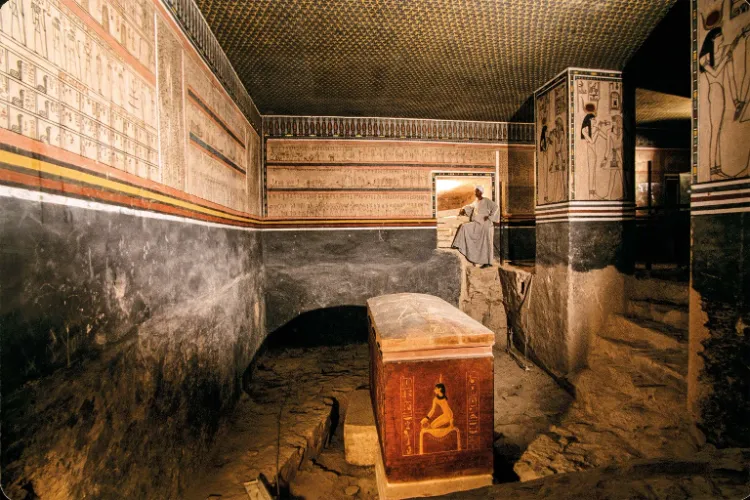
In a discovery that significantly reshapes understanding of ancient maritime and cultural exchanges, researchers have identified around 2,000-year-old Tamil-Brahmi inscriptions inside high-security royal tombs in Egypt’s Valley of the Kings, indicating the presence of Tamil traders far beyond coastal regions.
The findings were presented by Swiss scholar Prof Ingo Strauch at the inaugural session of the four-day International Conference on Tamil Epigraphy here on February 11.
Prof Strauch of the University of Lausanne, along with Prof Charlotte Schmid of the French School of Asian Studies, Paris, documented nearly 30 inscriptions written in Tamil-Brahmi and Prakrit across six rock-cut tombs, including that of Pharaoh Ramesses VI.
Among the most notable discoveries is the repeated appearance of the name “Cikai Korran”, found at eight different locations within the tomb complex. One inscription reads “Cikai Korran vara kanta”, which translates as “Cikai Korran came and saw”, a phrasing comparable to Greek tourist graffiti already known from the same site.
Addressing the gathering, Prof Strauch said that while earlier archaeological evidence had established the presence of Tamil merchants in Egyptian port towns such as Berenike, the new inscriptions demonstrate that these traders ventured deep into the interior.
“This proves that Indian merchants were not just passing sailors. They stayed for longer durations and travelled inland to visit important cultural and historical sites,” he said.
The scholar explained that the name “Cikai”, meaning tuft or crown, and “Korran”, meaning leader, suggests the individual was likely a prominent figure within early Tamil merchant guilds.
The conference is being organised by the Tamil Nadu State Department of Archaeology and was inaugurated by Minister for Finance and Archaeology Thangam Thennarasu.
In his address, the minister said inscriptions constitute the most reliable historical sources, as they provide contemporaneous records unaltered by later additions common in literary traditions.
He noted that Tamil Nadu alone accounts for nearly 30,000 inscriptions discovered across India, offering an almost continuous historical record dating back to the 6th century BCE.
The conference, which concludes on February 14, will also see the release of a detailed publication on traditional water management systems, drawing on ancient sluice inscriptions that document early irrigation practices and public resource governance.
READ MORE: Muslim couple arrange wedding of their adopted Hindu son
Upcoming sessions will focus on hero stones, records of trade guilds, and the digital documentation and mapping of archaeological sites across Tamil Nadu.














.webp)