Mujeeb Al-Rahman
Within Varanasi, one of the world's oldest inhabited cities, breathes a unique art form where precision, patience, and beauty intertwine to create something timeless. This art is Zardozi, embroidery of textiles with gold and silver threads, which is not merely decoration, but a living expression of history, culture, and memory.
Zardozi reflects the very soul of Varanasi, a city that has, for centuries, harmoniously blended spirituality, beauty, and human ingenuity. This art does not simply move with time, but rather carries time within itself—from royal palaces to narrow lanes, from imperial grandeur to folk heritage.
The roots of Zardozi embroidery can be traced to ancient India, but its golden age arrived during the Mughal rule. The Mughal emperors, particularly Akbar, patronised all traditional arts and crafts and elevated Zardozi to the status of a court industry.
Akbar invited skilled artisans from Persia and Central Asia to cities like Varanasi, Delhi, and Lahore to expand the design range and craftsmanship of this exquisite art by interacting with local artisans. Over time, Persian motifs blended with Indian aesthetics, giving rise to a style that was both distinctly Indian and universally appealing. It was during this period that Varanasi emerged as a major centre of Zardozi, a place where royal tradition and local sensibilities combined to elevate the art to new heights.
In that era, zardozi embroidery was called the "language of royal splendour." The gleam of gold and silver threads on royal garments, court curtains, throne cushions, and ceremonial robes became a symbol of power, prestige, and opulence. These shimmering threads, glittering in the light, did more than simply create visual appeal; they shaped the aesthetics of power. Over time, this art form moved beyond the palaces and found its way into the homes, neighbourhoods, and workshops of artisans, where it continues to thrive today.
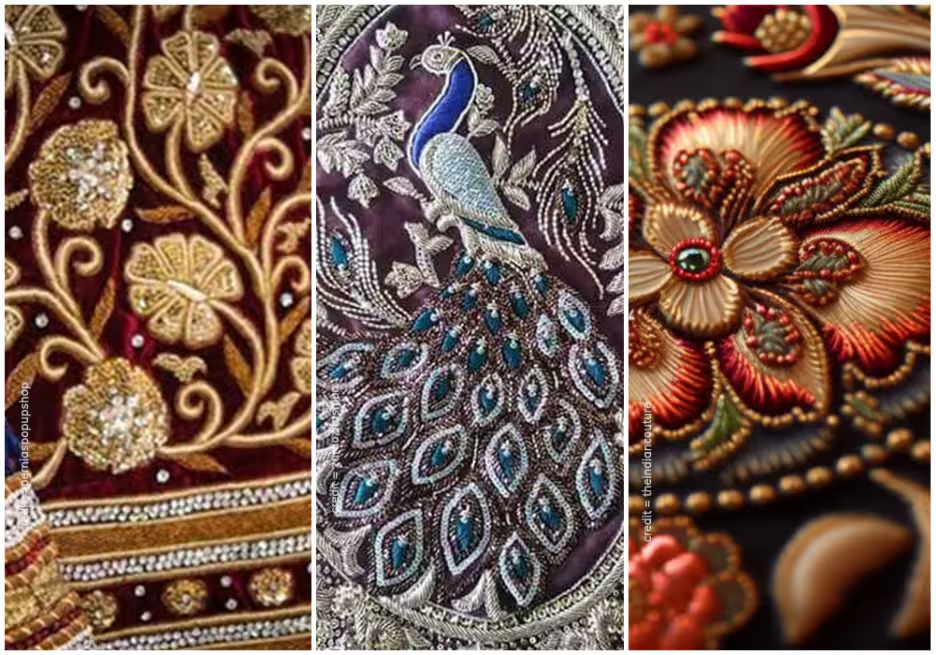 Patterns of Zardozi
The art of Zardozi embroidery is a discipline in itself. The process begins with sketching the design onto the fabric using chalk or charcoal. The fabric is then stretched tightly over a sturdy wooden frame called an "adda," ensuring that each stitch is precise. Next, gold or silver threads—often made by coating copper with gold or silver—are threaded through a fine needle called an "ari."
The artisans typically sit around the frame, each hand working on a different section of the design. Starting from the edges and working inward, the motifs are filled with colourful threads, beads, stones, and sometimes even tiny mirrors. This process demands not only skill but also rhythm, patience, and imagination. Every stitch becomes a part of the accumulated beauty found in the streets of Varanasi.
Luxurious fabrics like silk, velvet, and velour are the preferred canvases for Zardozi embroidery. The precious stones and pearls embedded in them bring the creations to life—transforming the garments into moving works of art. In old neighbourhoods like Madanpura and Lalapura, the rhythmic sound of needles can still be heard today, a sound passed down through generations from father to son. Here, Zardozi is not merely a livelihood; it is an identity, a commitment, and a mission to preserve a rich heritage.
In symbolic terms, Zardozi embodies luxury, prestige, and spirituality. In Indian culture, gold symbolises purity, eternity, and prosperity, which is why Zardozi has been deeply intertwined with religious rituals and weddings. The shimmering threads on a bride's attire represent eternal beauty and auspicious blessings. In Islamic art, Zardozi expresses concepts of infinity and harmony through geometric patterns and floral motifs—a beauty that transcends mere aesthetics and creates profound meaning.
Throughout history, Zardozi embroidery has experienced both periods of flourishing and decline. During the British colonial era, as royal patronage diminished, the art form went into a period of stagnation. However, it did not disappear entirely. In the 20th century, a renewed global interest in traditional garments led to a resurgence of Zardozi. Government institutions and craft organisations established training centres to engage young people in this art form and gave it the status of "Protected heritage."
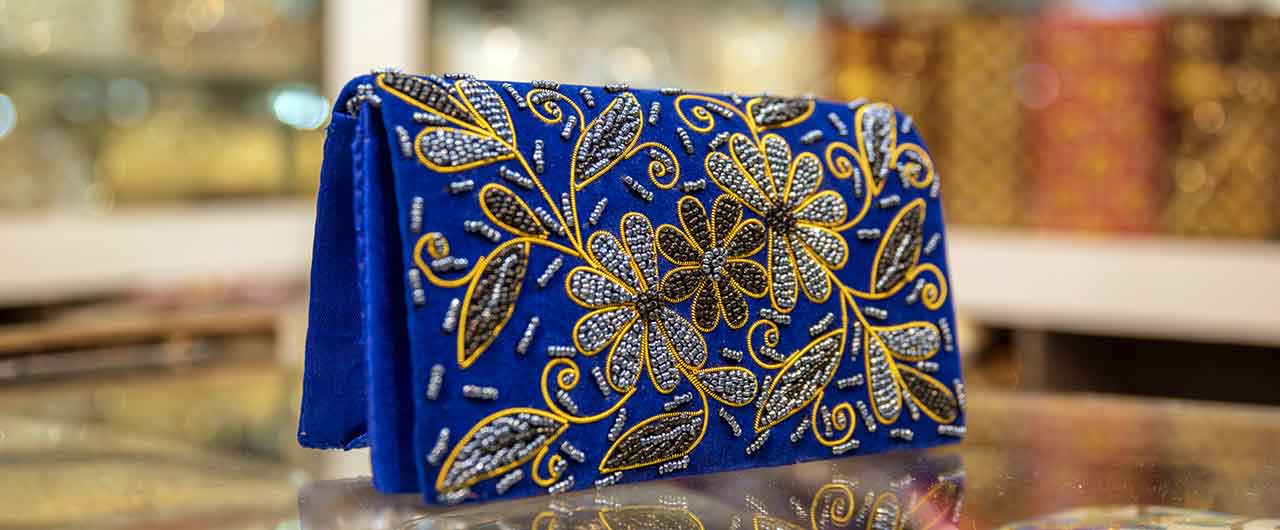 A Ladies' purse with Zardozi embriodery
Today, Banaras, now Varanasi, is considered the global capital of Zardozi. Works from this region are exported to Europe, the Middle East, and the Americas, representing Indian aesthetics and craftsmanship at international exhibitions.
Even in the age of modern machines and technologies, Zardozi embroidery has preserved its handcrafted essence. The words of an experienced craftsman reveal the heart of this art: “Zardozi is not just work, it’s a prayer; we read the stories of our ancestors with our needles.” This statement establishes Zardozi as a bridge between the past and the present, where skill connects with inspiration and art with the soul.
Zardozi is a lifeline for Varanasi as it is a source of livelihood for thousands of artisans, mostly from traditional artisan families, who have practised the art for generations.
ALSO READ: Assam: Polygamy is a declining trend among Muslims
It is estimated that Varanasi's embroidery industry is worth over 400 crore rupees annually, with a significant part coming from exports. More than half of all embroidery produced in India originates here.
However, the significance of Zardozi embroidery goes beyond statistics. It is an integral part of the socio-cultural fabric, present in the celebrations, weddings, and religious attire of both Hindu and Muslim communities.
#أخبار_الهند #آواز_دي_وايس #الحضارة #الثقافة #بنارس #الزردوزي #Zardozi #الفن pic.twitter.com/UET07uzF1P
— AwazTheVoice Arabic- صوت الهند (@AwazArabic) January 30, 2026
It is a symbol of local pride, where knowledge is exchanged in small workshops, and the heritage is passed down to younger generations. In Varanasi, Zardozi is not just a craft—it is a way of life, connecting generations, weaving together the tapestry of Indian aesthetics, and embodying the spirit of a city synonymous with sanctity, beauty, and creativity.
(The author is a Professor and former Head of the Centre for Arabic and African Studies at Jawaharlal Nehru University, New Delhi.)

_(1).jpg "Visitors gather at the Santosh Mitra Square Durga Puja pandal, themed on the 150th anniversary of Vande Mataram and its historic role in India's freedom movement, ahead of the festival, in Kolkata")
.jpg "Gujarat’s women entrepreneurs bring their craftsmanship to life during Navratri")





.webp)