Amir Khan
Ramzan is the holy month of fasting, prayer, and reflection for Muslims, which begins and culminates with the sighting of the new moon, ‘hilal’. The moon sighting heralds the onset of the month of Ramzan and also brings it to a close with Eid al-Fitr, the first day of the next month of Shawwal.
In India, every year, Ramzan begins and ends across India amid a lot of confusion over the sighting of the moon.
The term hilāl (crescent) is a classical Arabic word for the first light of the moon that appears for up to three days and is called the qamar (moon). The crescent moon is a physical phenomenon that people see and rejoice in, with the term ‘halla’ referring to the act of appearing, beginning to shine, exclaiming, exulting, singing, rejoicing, or praising God.
Traditionally, moon sighting was done by naked eye observation, and the Ruat-e-Hilal Committee, consisting of Muftis, was responsible for declaring the beginning of Ramzan and Shawwal.
In some countries, the meteorological department assists the committee in getting the lunar data. With advances in science and technology, and easy availability of high-resolution telescopes, sky-gazing mobile apps, and meteorological data, the question arises: Should technology be used for moon sighting?
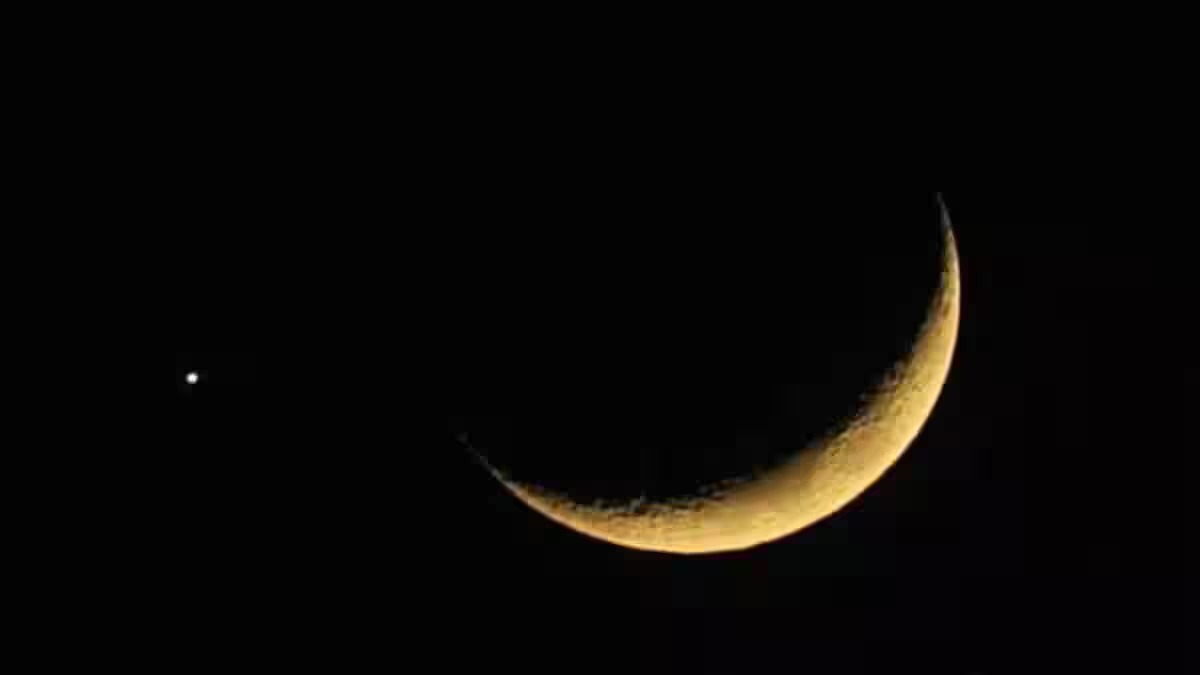 The New Moon
Scholars have different opinions on this. Some believe that naked eye observation is the traditional method of moon sighting and should continue, while others suggest that technological advancements should be utilised to determine the sighting of the new moon. The scholars refer to the Quran’s Ayat no 185 from Surah Baqrah to rule that it is the naked eye observation of the crescent and not calculations that decide the onset of the Islamic month and its end.
The Ayat has been differently translated and while Yusuf Ali puts it as ‘so every one of you who is present (at his home) during that month should spend it in fasting’, Maulana Maudoodi translates it as ‘therefore from now on whoever witnesses it, it is obligatory on hire to fast the whole month’, leaning more towards naked eye witnessing of the new moon.
The International Astronomical Union (IAU) has developed standardised methods and criteria for sighting of the new moon. These criteria are based on scientific calculations, and they take into account the position of the moon to the sun and the observer's location on Earth. Many Muslim countries, including Saudi Arabia and the United Arab Emirates, have adopted these scientific methods for moon sightings.
In Malaysia and Indonesia, the use of technology for moon sightings is widely accepted. The Indonesian government has established an agency known as the "Governmental Observatory of the Republic of Indonesia" to monitor and announce the sighting of the new moon. The agency uses telescopes and astronomical calculations to determine the sighting of the crescent moon.
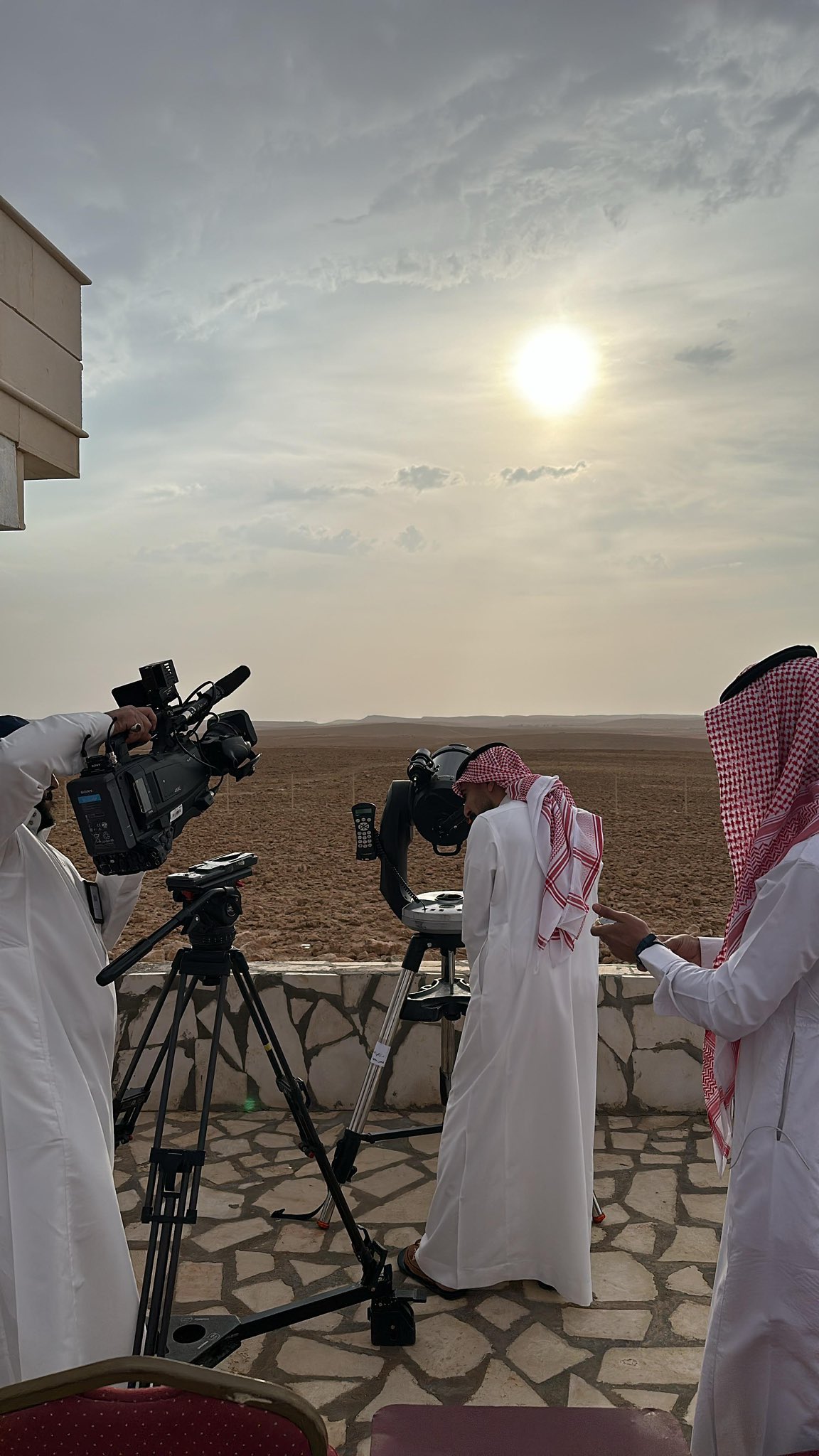 Moon sighting at an observatory in Saudi Arabia
Similarly, in Malaysia, the Department of Islamic Development (JAKIM) uses astronomical calculations and technology to determine the sighting of the new moon. JAKIM also collaborates with the National Space Agency of Malaysia (ANGKASA) to determine the sighting of the new moon using technology.
Saudi Arabia has multiple Hilal sighting committees, which include one member of Qada (scholar/justice department), one member of KACST/Astronomer, one member of Amarah (ruling council of the city), and many local volunteers. The committee uses advanced telescopes and astronomical calculations to determine the sighting of the crescent moon.
The point is that the use of technology for moon sighting during Ramadan is a topic of debate and discussion among Islamic scholars and communities worldwide. However, countries such as Malaysia, Indonesia, and Saudi Arabia have already adopted the use of technology and astronomical calculations for determining the sighting of the new moon.
India has a sizeable Muslim population, and the geographical expanse is such that a more decentralised approach to moon sighting is needed. Even if the naked eye sighting of Hilal is the preferred practice, religious scholars should be assisted by scientists in this exercise to make it reliable and in sync with modern practice.
ALSO READ: JK bureaucrat Anissa Nabi promotes fitness among women, youth
It is essential to continue the dialogue and collaboration between Islamic scholars and experts to ensure the accurate and consistent determination of the sighting of the new moon.
Amir Khan is a Delhi-based research scholar. This is an edited version of article published earlier
.webp "Union Home Minister Amit Shah")











_(1).webp)