Eman Sakina
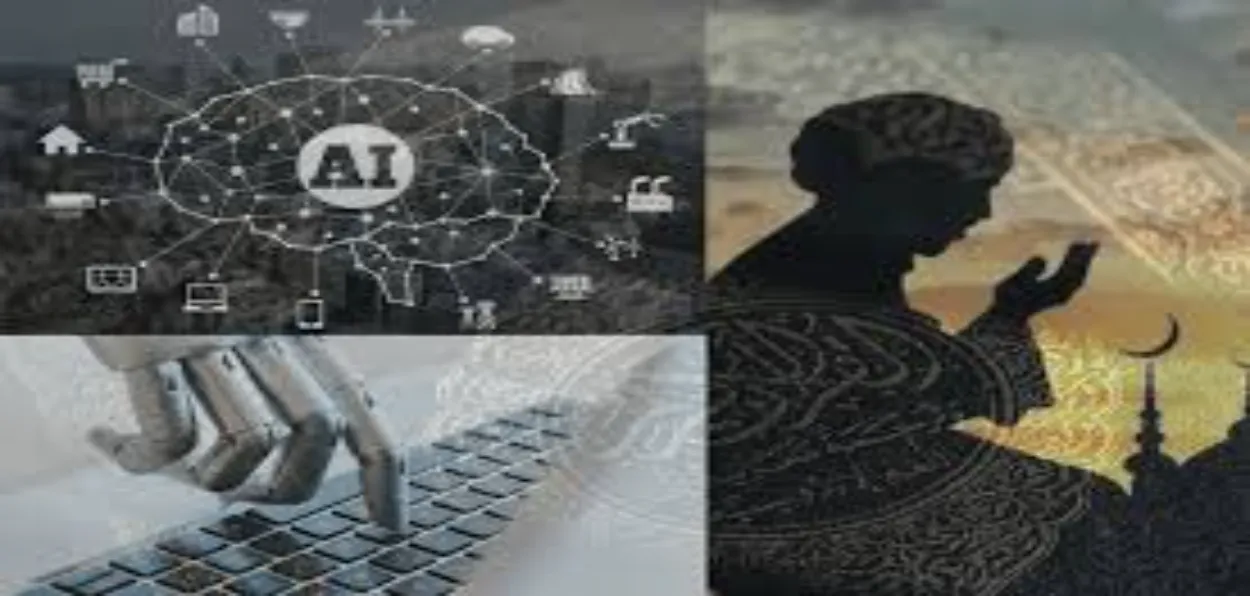
We are living in a time when machines can write, speak, analyse, and even imitate human thought. Artificial Intelligence is no longer a distant concept—it is part of daily life. From education and healthcare to finance and communication, AI is quietly shaping how we live and think. But as its presence grows, so does a deeper question: just because we can create something, does it mean we should use it without limits?
Friday Musings
For Muslims, this question is not new in essence. Islam has always emphasised that knowledge and power must be guided by morality. What is new, however, is the scale and speed at which technology like AI is evolving.
In Islam, human beings are seen as stewards on Earth. This stewardship is not limited to the environment—it extends to knowledge, innovation, and power. Every tool we create, including AI, becomes part of this trust.
AI is neither good nor evil. Its moral worth is determined by how it is utilised, just like any other instrument. A system that aids in illness diagnosis or enhances accessibility for individuals with impairments demonstrates kindness and benefit—qualities that are fundamental to Islamic beliefs. However, the concepts of justice and truth are violated when AI is employed for manipulation, unethical surveillance, or the dissemination of false information.
The Qur’anic emphasis on accountability reminds us that human intention and action remain central, regardless of how advanced our tools become.
Responsibility is one of the trickiest problems with AI. Who is responsible if an algorithm makes a bad choice? The creator? The user? The system itself?
Islamic ethics forcefully hold people accountable. Accountability cannot be transferred to machines, even in cases where tools or systems have an impact on results. This is consistent with the more general Islamic idea that people have moral agency, not the things they make.
This viewpoint is particularly crucial in fields where bias or unfairness may be ingrained in data, such as computerised decision-making. Islam's great emphasis on justice (‘adl) necessitates a thorough analysis and correction of such institutions.
AI has made it easier than ever to generate content—text, images, and even voices that can appear real. While this opens doors for creativity and education, it also raises concerns about truth and authenticity.
Islam places immense value on truthfulness. The spread of false information, whether intentional or careless, is strongly condemned. In an age where AI can blur the line between real and fabricated, the responsibility to verify information becomes even more critical.
Muslims engaging with AI—whether as creators or consumers—must be mindful of this. Sharing content without verification or using AI to mislead others goes against the ethical framework of honesty and integrity.
Another important consideration is human dignity (karamah). Islam honours the human being as a creation with inherent worth, intellect, and soul. As AI systems begin to replicate aspects of human behaviour, there is a risk of reducing human value to mere data or efficiency.
For example, relying entirely on AI for decisions that deeply affect human lives—such as justice, employment, or personal relationships—can lead to a loss of compassion and nuance. Islamic teachings remind us that not everything can or should be automated. Mercy, intention, and context are essential elements of human interaction.
Islam does not oppose progress. In fact, the pursuit of knowledge is highly encouraged. Historically, Muslim civilisations have been at the forefront of scientific and intellectual advancement. The key difference lies in how progress is approached.
AI should not be adopted blindly, nor rejected entirely. Instead, it should be engaged with critically and ethically. Questions must be asked: Does this technology benefit humanity? Does it uphold justice? Does it protect dignity? Does it bring us closer to what is right?
This balanced approach allows Muslims to participate in technological advancement while remaining grounded in their values.
The age of AI is not just a technological shift—it is a moral test. It challenges individuals and societies to think deeply about the kind of world they are building.
For Muslim youth, scholars, and professionals, this is an opportunity. Rather than being passive users, they can become active contributors—shaping AI in ways that reflect ethical responsibility. This includes developing fair systems, promoting truthful content, and advocating for policies that protect human dignity.
ALSO READ: Why 7th century Buddhist monk Hiuen Tsang is celebrated in India, China
In navigating the age of AI, the goal is not to resist change, but to ensure that change does not lead us away from our moral compass. Technology may be powerful, but it is ultimately a tool. It is human intention, guided by faith and ethics that determines whether that tool becomes a means of good or harm.



_(1).webp "Graves of Sufis at Triveni-Saptagram Khanqah")









_(1).webp)