




Farhan Israeli/Jaipur
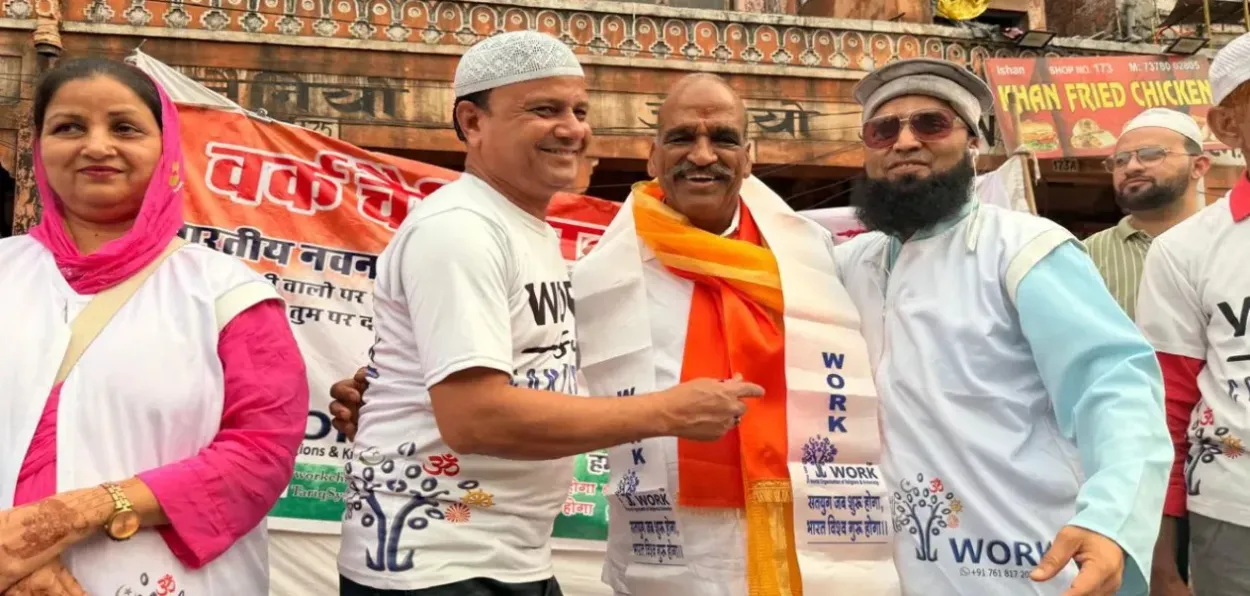
At a time when public discourse is often dominated by sharp debates over religion and conflict, a quiet yet determined group of citizens in Jaipur, Rajasthan, is working to mend social divides. Their efforts take many forms—showering petals from balconies during Ram Navami processions, serving langar at gurudwaras, distributing greeting cards in markets on the eve of Diwali, and offering medical aid to pilgrims on the way to the Amarnath cave in Kashmir.
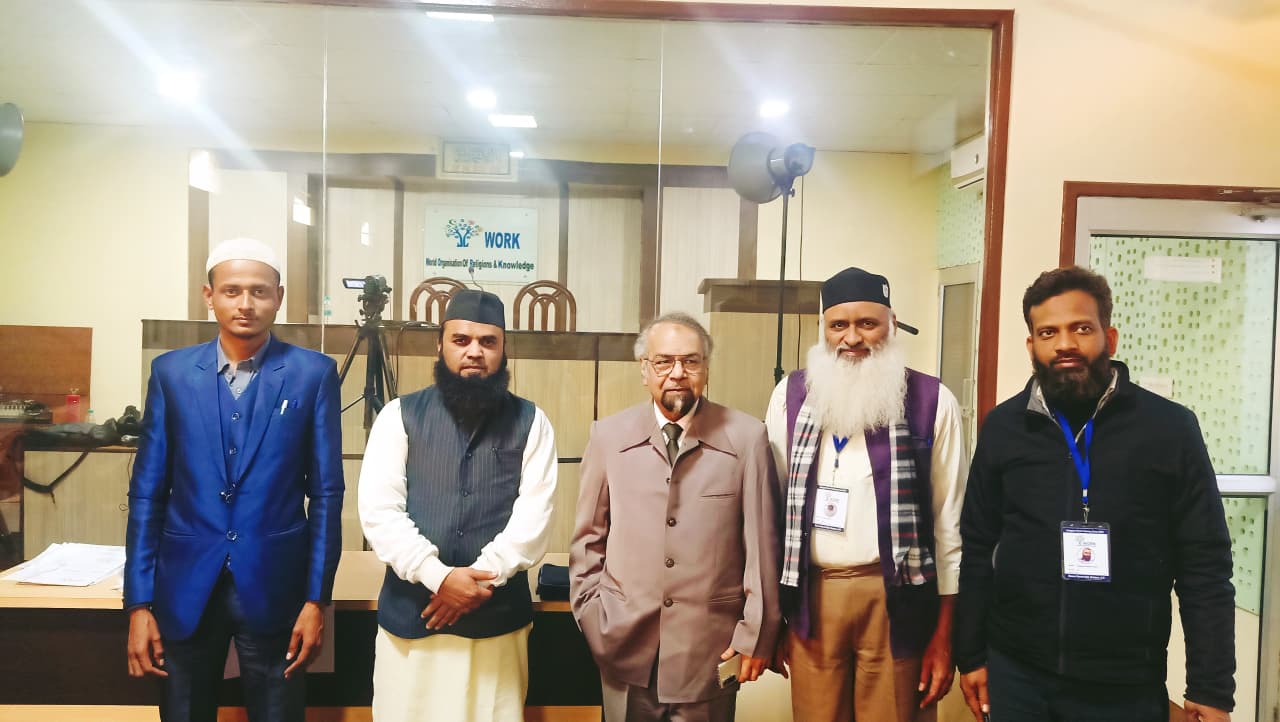
These volunteers are part of WORK—the World Organisation of Religious and Knowledge—an initiative driven by discipline, organisation, and a deeply human ethos. Each year, WORK sends a five-member medical team, including doctors and nurses, to South Kashmir during the Amarnath Yatra. The organisation also sets up two medical camps along the pilgrimage route—at Ramban, a key midpoint on the Jammu–Srinagar highway, and Baltal, one of the two base camps for the arduous Himalayan journey.
At these high-altitude camps, where oxygen levels drop and temperatures plummet, WORK provides first aid and treatment for minor ailments, offering much-needed relief to pilgrims navigating rugged terrain and harsh conditions.
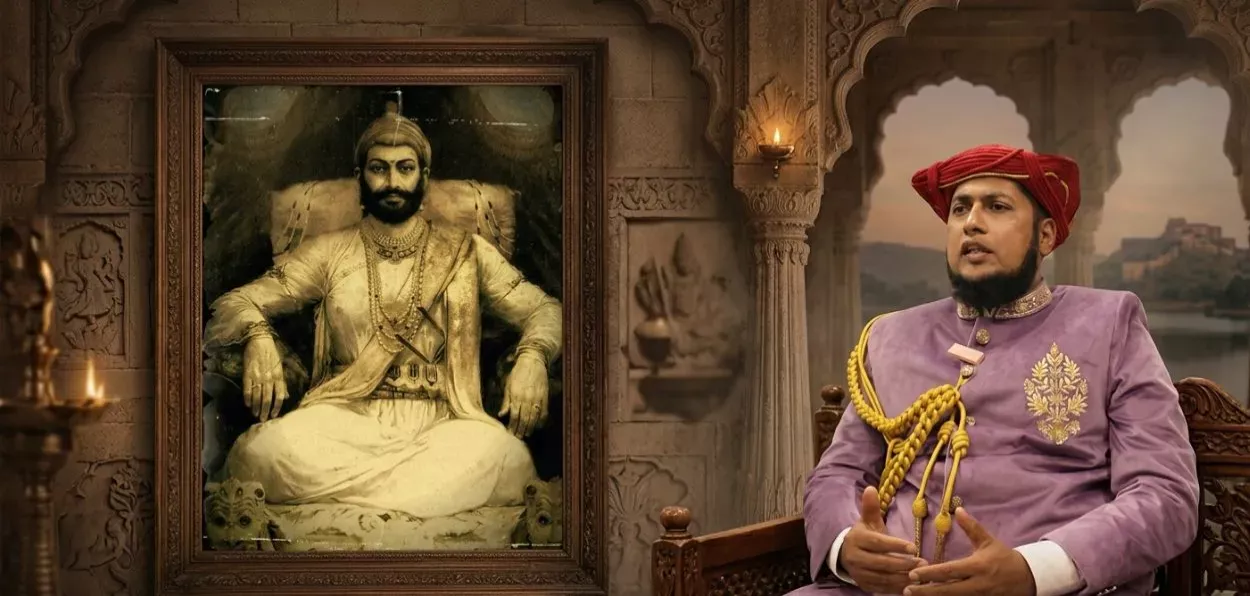
“Our goal is not to win arguments or prove ourselves right,” says Syed Asghar Ali, spokesperson for WORK. “We simply want to reach out to people and touch their hearts.” Explaining the organisation’s philosophy, he adds, “If we can convince someone that we stand with them, not against them, half the wall of hatred crumbles.”
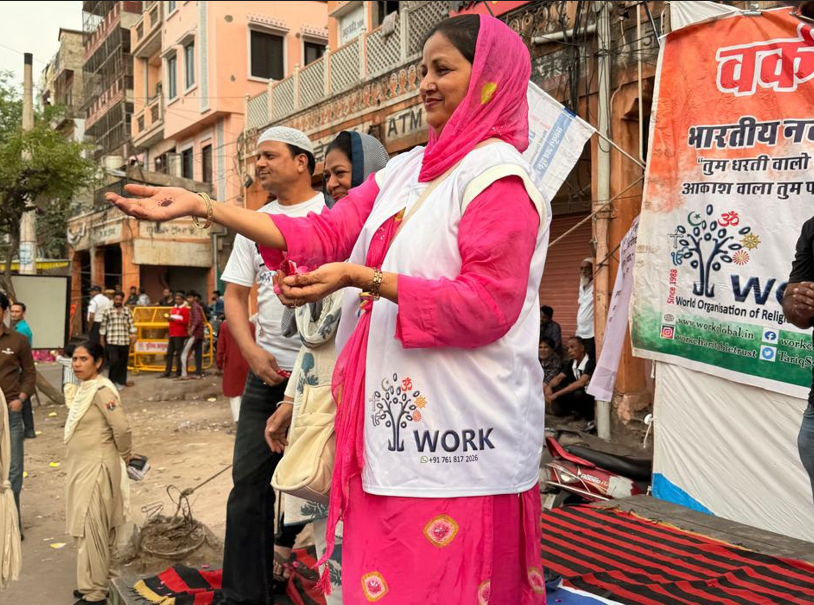
This spirit is visible throughout the year. On occasions such as Diwali, Holi, Ram Navami, Guru Nanak Jayanti, and Christmas, WORK volunteers step out with enthusiasm to engage with communities. During festive seasons, they distribute self-designed greeting cards to shopkeepers, often surprising them with gestures of goodwill. These small acts frequently open the door to meaningful conversations that might otherwise never take place.
During Ram Navami processions, volunteers line the streets to shower petals on devotees, while on Christmas, they visit churches and distribute literature on the life of Jesus Christ—symbolic gestures aimed at fostering mutual respect and understanding.
WORK’s association with the Amarnath Yatra began in 2018, and the organisation is once again preparing its camps ahead of this year’s pilgrimage, scheduled to begin on July 3. Over the years, the initiative has not only provided medical support but also created moments of unity.
One such moment came during the 2022 yatra, when security concerns led to a complete blackout and suspension of the pilgrimage. Amid the tense atmosphere, WORK volunteers organised an Independence Day flag-hoisting ceremony on August 15. The gesture struck a chord with the Army, which later invited the volunteers to an official event—an affirmation of the initiative’s spirit of national unity.
The roots of WORK trace back to 1988, when it was founded in Rampur, Uttar Pradesh, by Acharya Shams Naved Usmani—a scholar who had studied both Islamic teachings and the four Vedas. He believed that religion’s true purpose was not division but unity. Today, this legacy is carried forward by Allama Syed Abdullah Tariq, affectionately known within the organisation as “Guruji.”
WORK established its presence in Rajasthan in 2018 under the leadership of Laiq Hasan and H.R. Khan, and has since expanded across the state. In Jaipur, volunteers such as Zia-ur-Rehman and members of the women’s wing—including Dr. Shahnaz, Rehana, and Aliya—play a vital role in advancing the organisation’s mission.
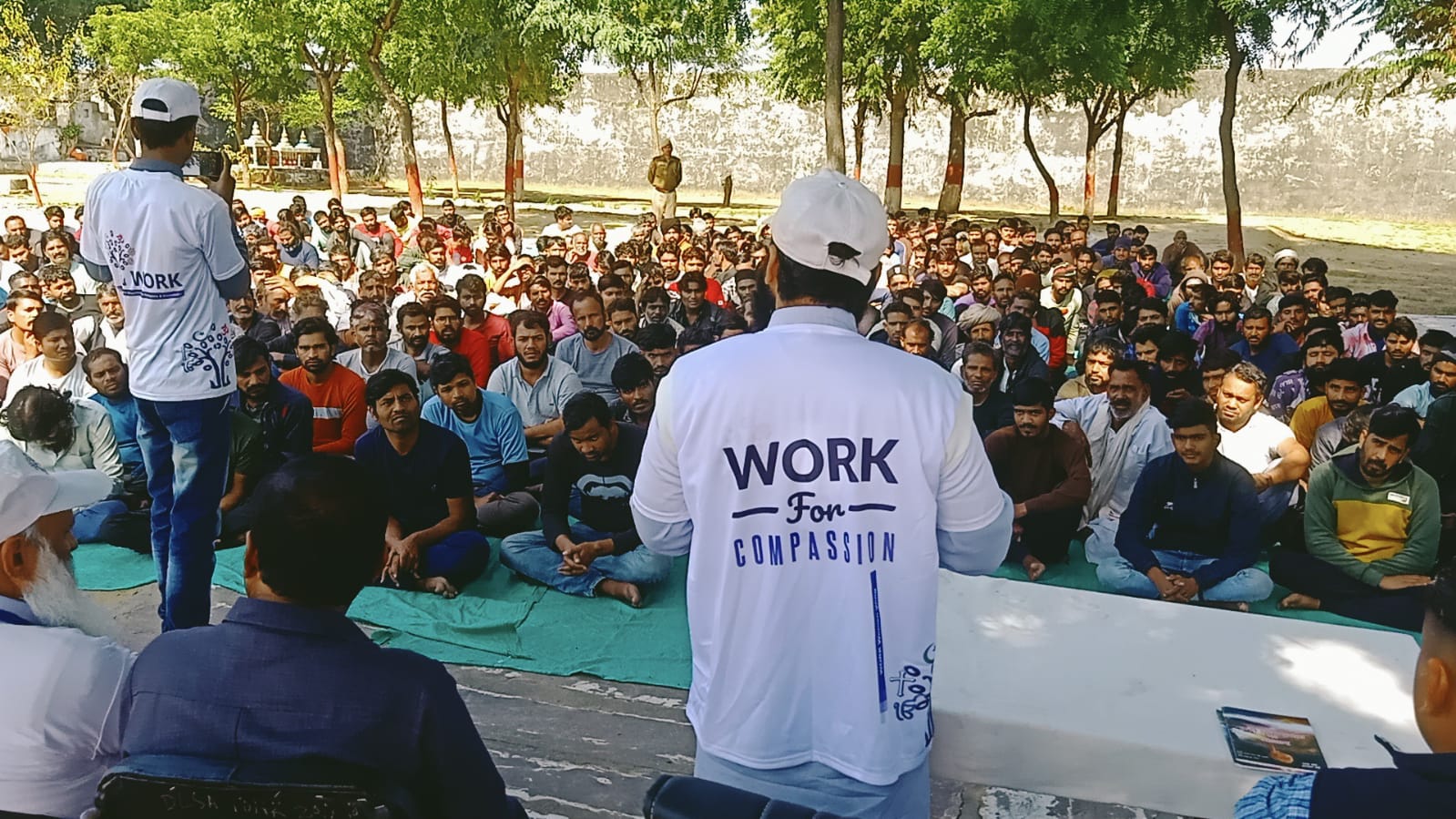
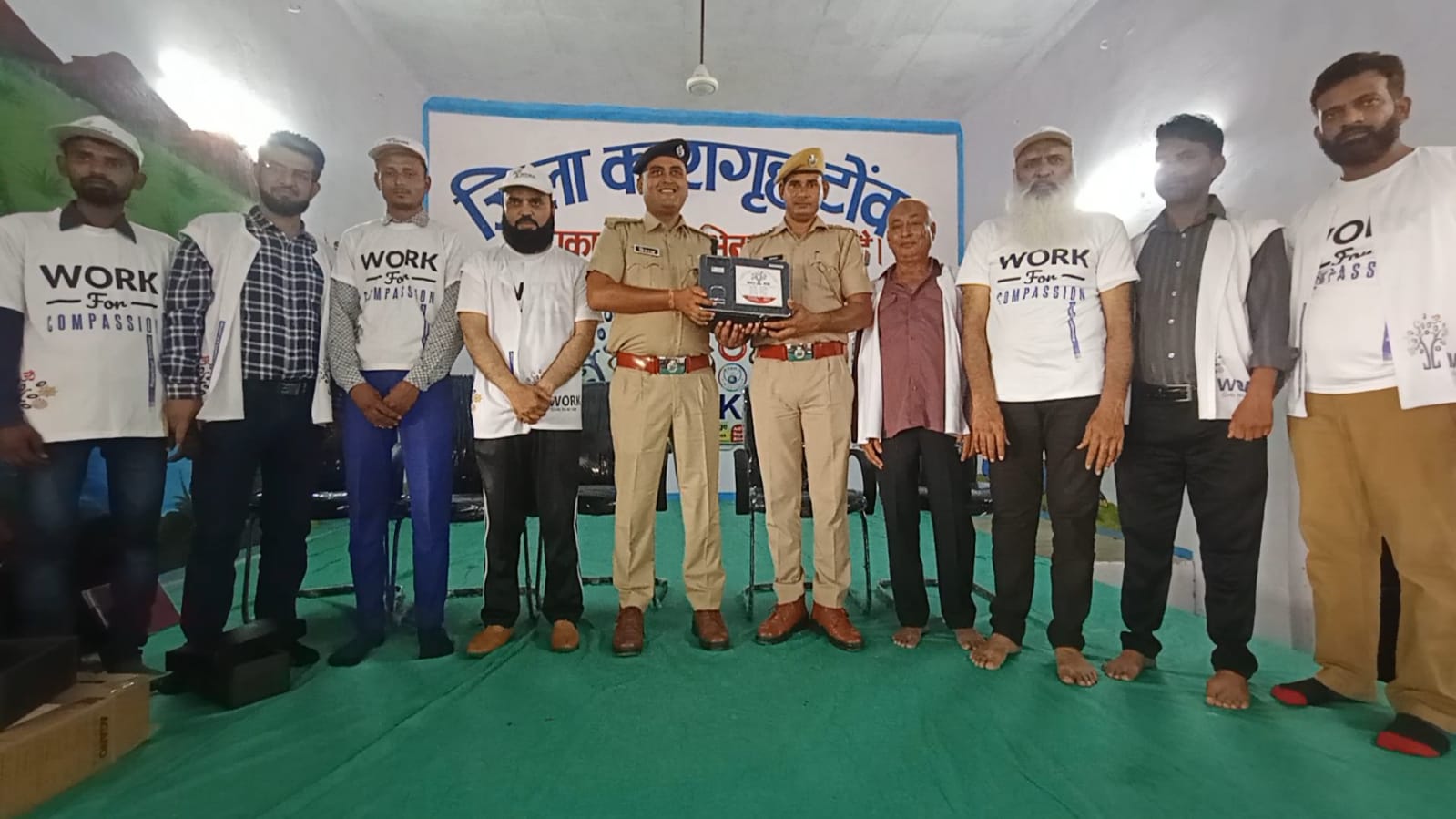
In Ajmer, WORK runs a “Janata Rasoi” that feeds hundreds each week, emphasising dignity as much as sustenance. The organisation has also extended its outreach to correctional institutions. In 2023, it organised a programme at Tonk Central Jail attended by around 500 inmates. Volunteers interacted with prisoners, emphasising that festivals are meant for everyone, not just the free.
A play staged during the event, in which Syed Asghar Ali portrayed “God,” moved many inmates to tears. Several pledged to reform, and the programme concluded with the distribution of fruit by the prisoners themselves. The organisation later donated a projector to the jail to enable access to devotional and positive content.
WORK has also taken progressive steps in promoting organ donation. On its foundation day in Jaipur on August 8, 2024, 40 members of the Muslim community pledged to donate organs—including kidneys, hearts, skin, and bones. Despite facing questions rooted in religious interpretations, the initiative, led by Laiq Hasan, drew upon the Quranic principle that saving one life is akin to saving all humanity—reinforcing the idea that service can extend even beyond life.
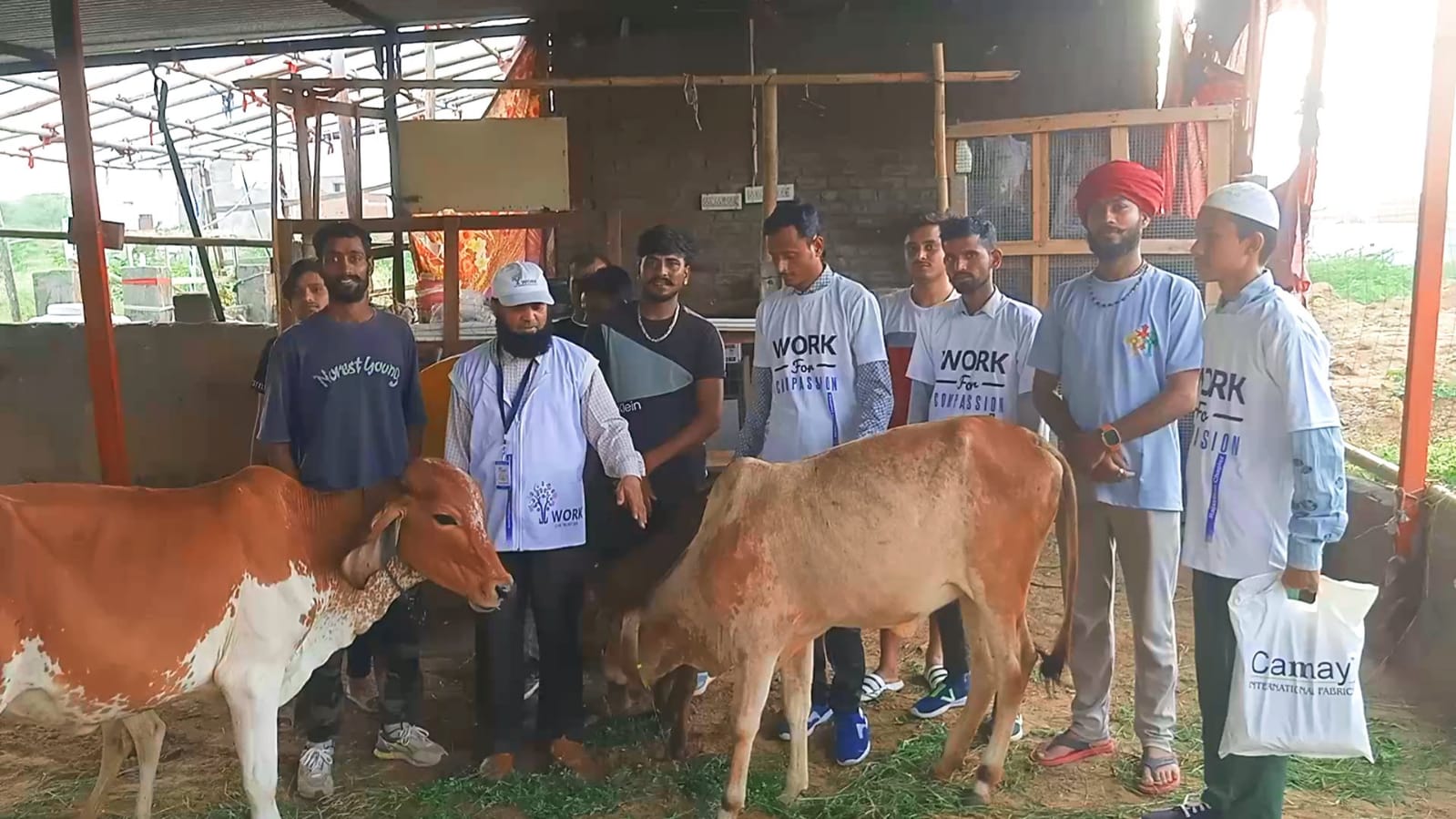
Beyond these efforts, WORK volunteers are active on the streets, assisting with traffic management and enhancing road safety by placing reflective bands on stray cattle to prevent nighttime accidents. Their environmental initiatives include preparing and dispersing thousands of seed balls and organising cleanliness drives. During the outbreak of lumpy skin disease, the organisation prepared and distributed nearly one lakh Ayurvedic feed balls for affected cattle.
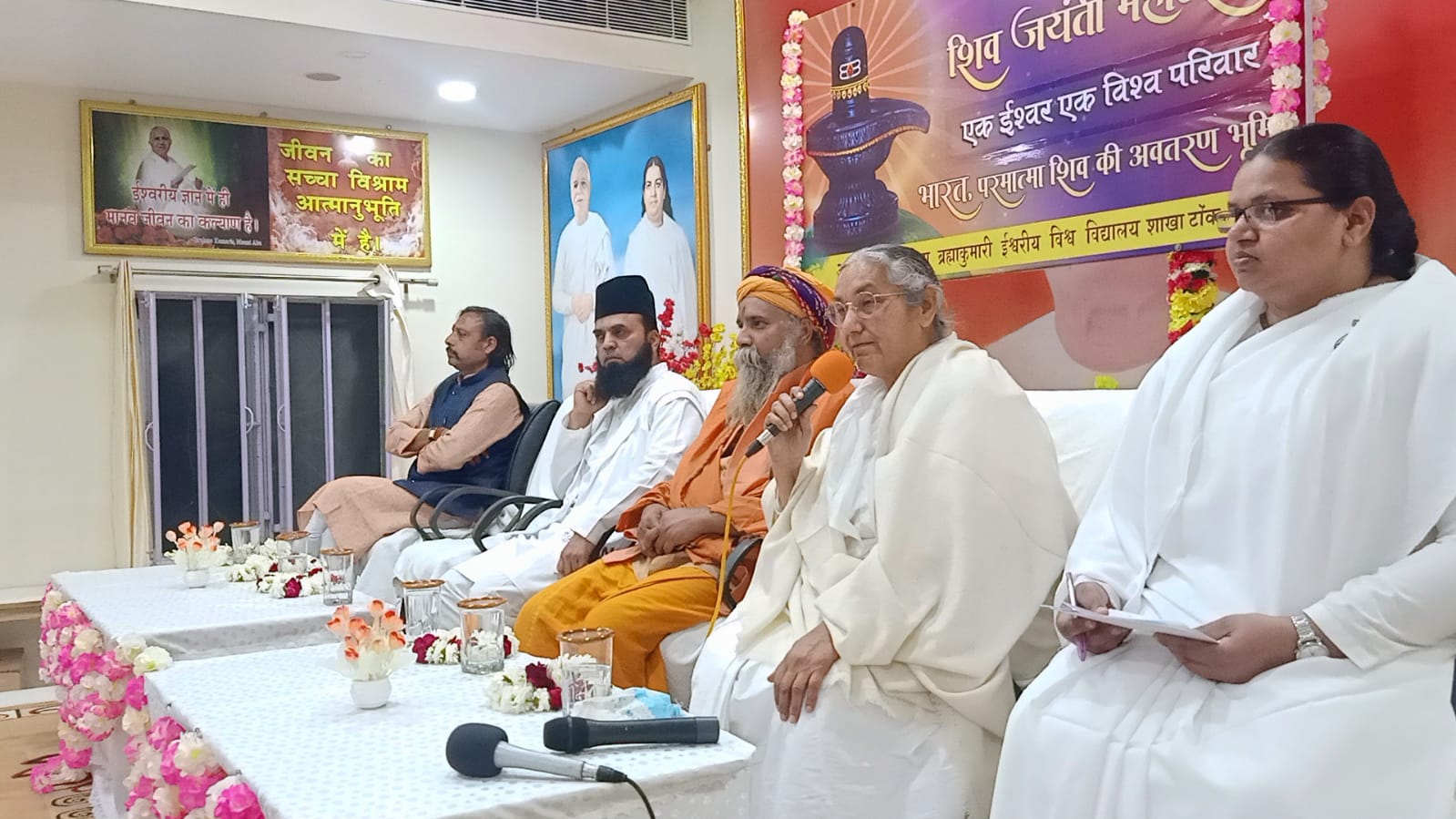
Perhaps most tellingly, WORK has emerged as a platform for dialogue. People from diverse and even opposing ideologies—ranging from RSS representatives to journalists and doctors—participate in its discussions on social issues, sharing space and conversation.
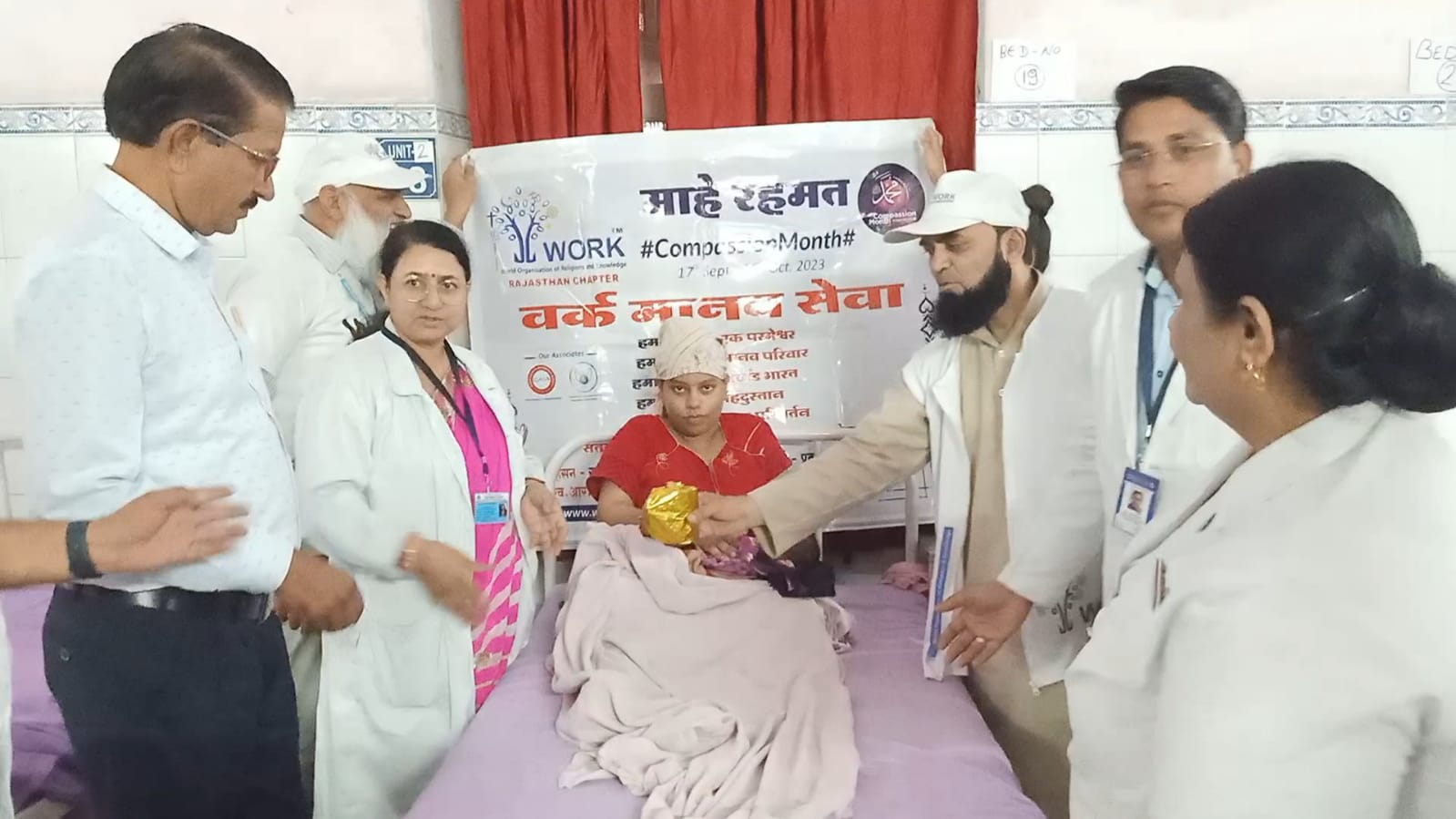
In another unique initiative, on the 12th of Rabi-ul-Awwal, WORK volunteers visit hospitals to gather information on newborns born that day, irrespective of religion—marking the occasion with a message of shared humanity.
ALSO READ: Rubika Liyaquat: Credible face of TV primetime news
In a world often defined by division, WORK’s quiet, consistent efforts offer a reminder that bridges can still be built—one gesture, one conversation, and one act of compassion at a time.










_(1).webp)
