_(1).webp "Heena Kausar Khan")
Sameer D. Shaikh
Heena Kausar Khan is among the few journalists who are trying to address the issues within the Muslim community, while most others have either chosen to ignore them or put them under the carpet. No wonder she is the recipient of many awards including the ladli media award of the government of Delhi.
Heena's reporting is engaging and forces readers to examine their own prejudices. This is the fascinating journey of a girl from a middle-class family who made a name for herself in journalism and literature.
Heena Kausar Khan's father is from Bori Kajal village in Indapur taluka, Maharashtra. However, he came to Pune for education and employment and settled there permanently. Heena's childhood and schooling were completed in the Marathi medium in Pune.
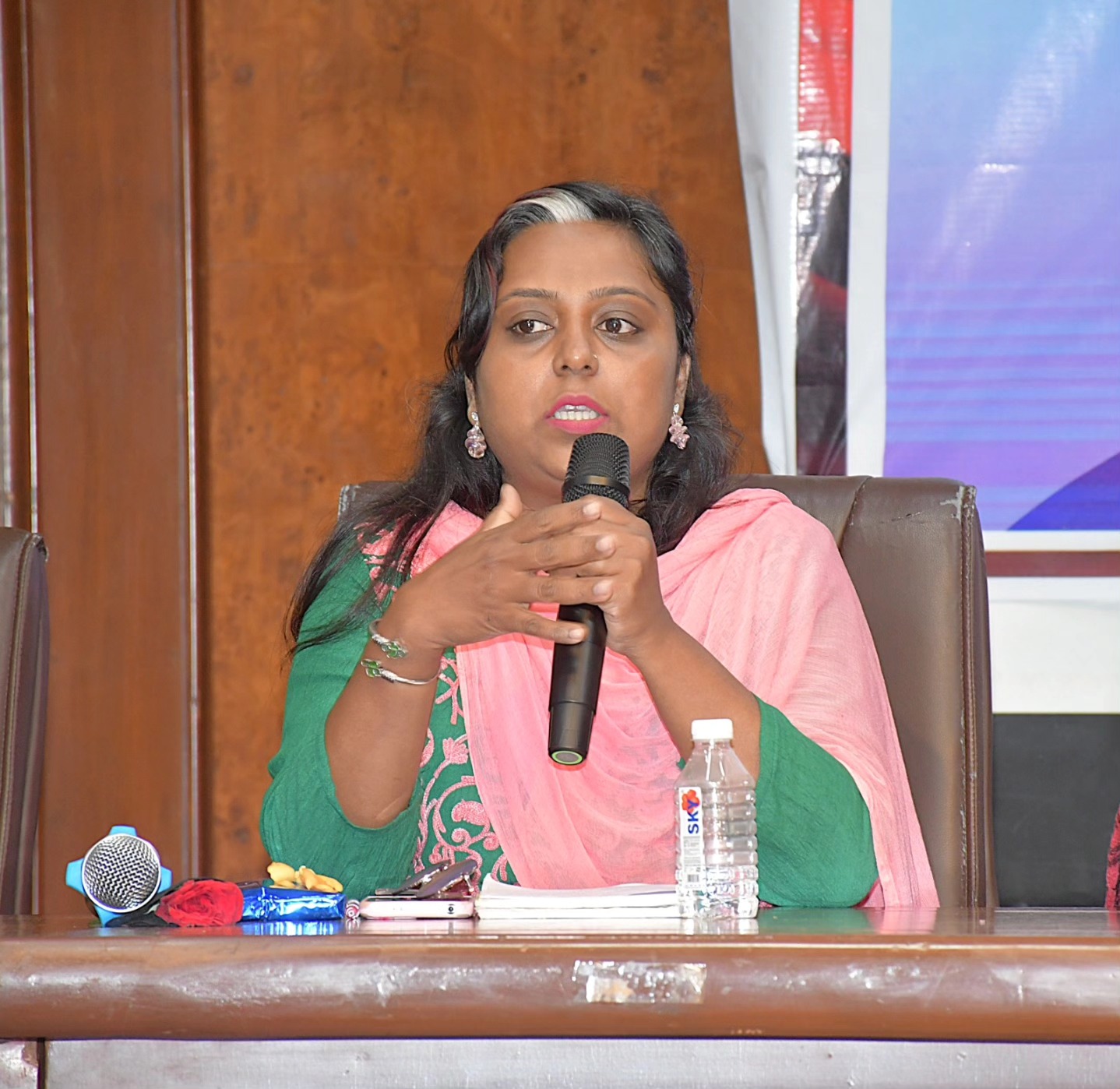 Heena Kausar Khan
Despite opting for sciences in her graduation, she kept a writer inside her alive.
Speaking about her early years, she says, "I loved writing right from my school days. So, I felt that whatever profession I choose, it should be related to writing. I didn't know exactly why I felt that way back then. But now when I look back, I realise that I probably feared that if I took up any other job or business, I would lose my writing."
She joined the journalism course at Pune University's Ranade Institute.
Heena has three sisters. Her father is a teacher, and although her mother is a graduate, she is a homemaker. Her parents made sure their daughters grew up in a liberal atmosphere.
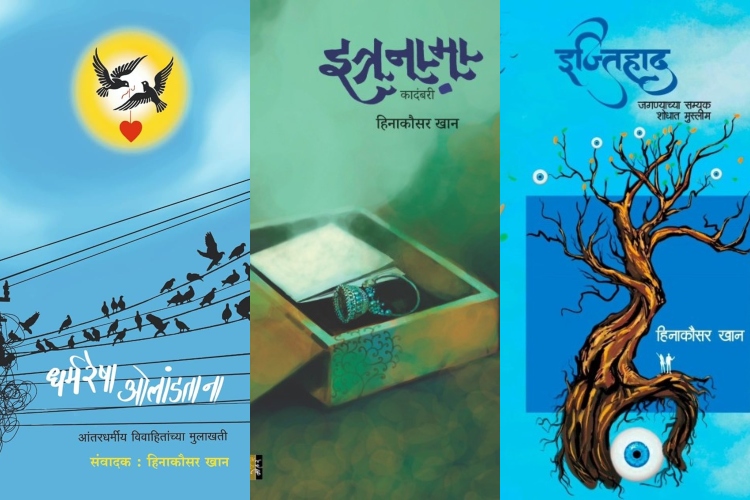 Heena Kausar Khan's books
About her childhood, Heena says, "Among my other relatives and extended family, the influence of religion was quite strong, but there was no such burden in our house. Traditions were limited only to festivals. So, we grew up in an open environment, where we could think for ourselves and make our own decisions. Of course, this didn't happen effortlessly, but there was that scope in our upbringing. We didn't have to struggle too much. Even in tough conditions, there was space and openness to communicate and get our point across."
However, Heen faced opposition to her choice of a career from her father. He thought journalism was a non-conventional career for women. With all her aunts, uncles, and a grandfather being teachers, the family had a tradition of the teaching profession.
For this reason, her father wanted Heena to opt for a teaching profession. About journalism, his main concern was the unpredictable working hours. Interestingly, her mother stood firmly behind her daughter's decision, and eventually, her father's opposition faded away.
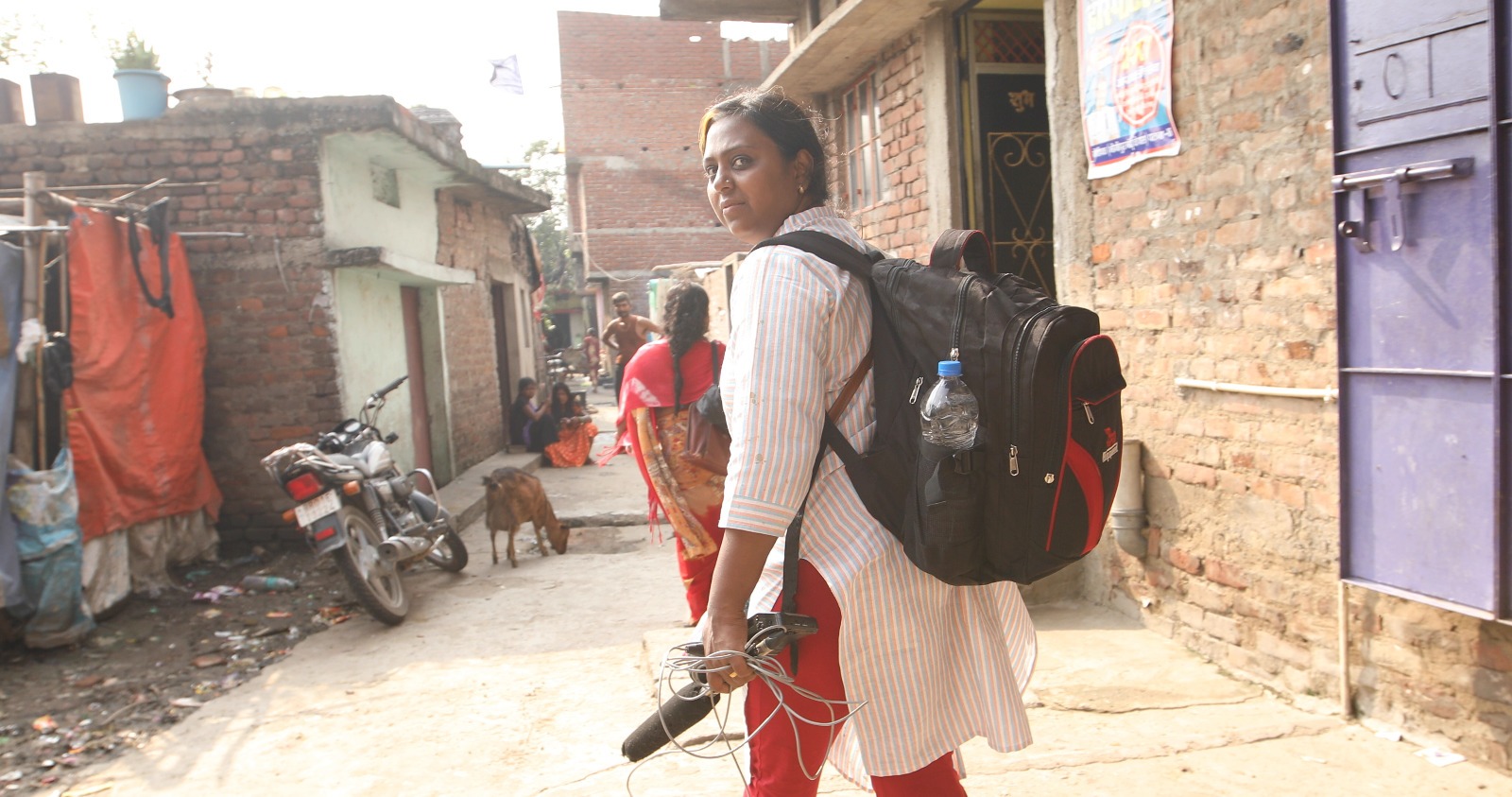 Heena Kausar Khan on an reporting assignment
Within just 3-4 months of completing her education at Ranade Institute, Heena joined the daily newspaper 'Lokmat'. Gradually, she began to feel the limitations of the hard-news framework. Explaining this shift, she says, "The space for news is fundamentally small, and it is based on immediate events. In a feature, you can go beyond the news. In a feature, you can analyse an incident and present your own perspective. You get more space to gather different viewpoints, study them, and write. Because of this, I started getting interested in feature writing."
While working in the mainstream media, Heena realised that the issues of the Muslim community were rarely handled. She acutely felt the void in Marathi journalism regarding the Muslim community.
Speaking about this, she says, “Very little is written on Muslim subjects. Discussions are mostly limited to festival news or standard stereotypes. Efforts to critically examine history and present it are lacking. I felt the need to highlight the highly educated youth of the Muslim community, their thoughts, their religion, and their perspective towards society."
Driven by this realisation, she wrote in-depth on this subject through the 'Govindrao Talwalkar Fellowship' of Sadhana Weekly. She also captured the flaws within the Muslim community and its changing consciousness.
Her strength lies in the fact that she doesn't view the Muslim community solely through the extreme lenses of 'victim' or 'aggressor', but unravels the subtle layers of human struggle within it.
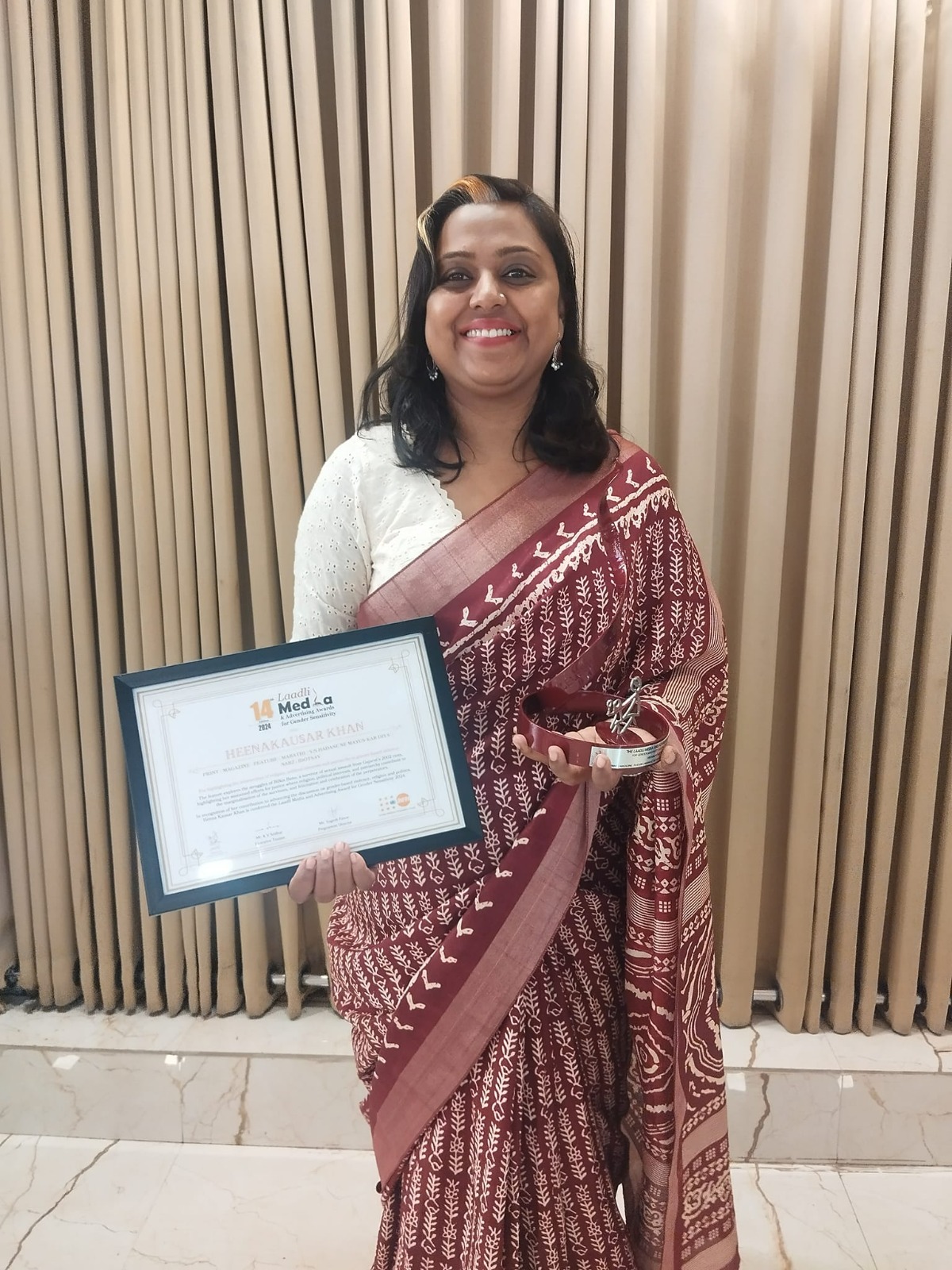
Heena Kausar Khan with her Ladli Media award
Her long reportage "Teen Talaq Viruddh Pach Mahila" (Five Women Against Triple Talaq) for Sadhana Weekly became very popular. Later, it was published as a booklet, earning Heena a good name in journalist-writer circles.
In the daily hustle of journalism, one encounters many things and experiences that cannot be directly reported as news. Heena started expressing these experiences through literature. "I tried to narrate through fiction the journalistic experiences and what I saw on the field, which couldn't be presented in a news report," she clarifies.
Initially, her novel 'Itranama', which came on the audio platform 'Storytel', became a huge hit. Later, it was also published as a physical book. This novel is considered a significant milestone in Marathi literature. Revolving around three characters—Nazia, Asad, and Sumit—the story unravels the layers of struggle and friendship between Hindu and Muslim youth. This novel is essentially a love story exploring scattered human relationships in today's political climate.
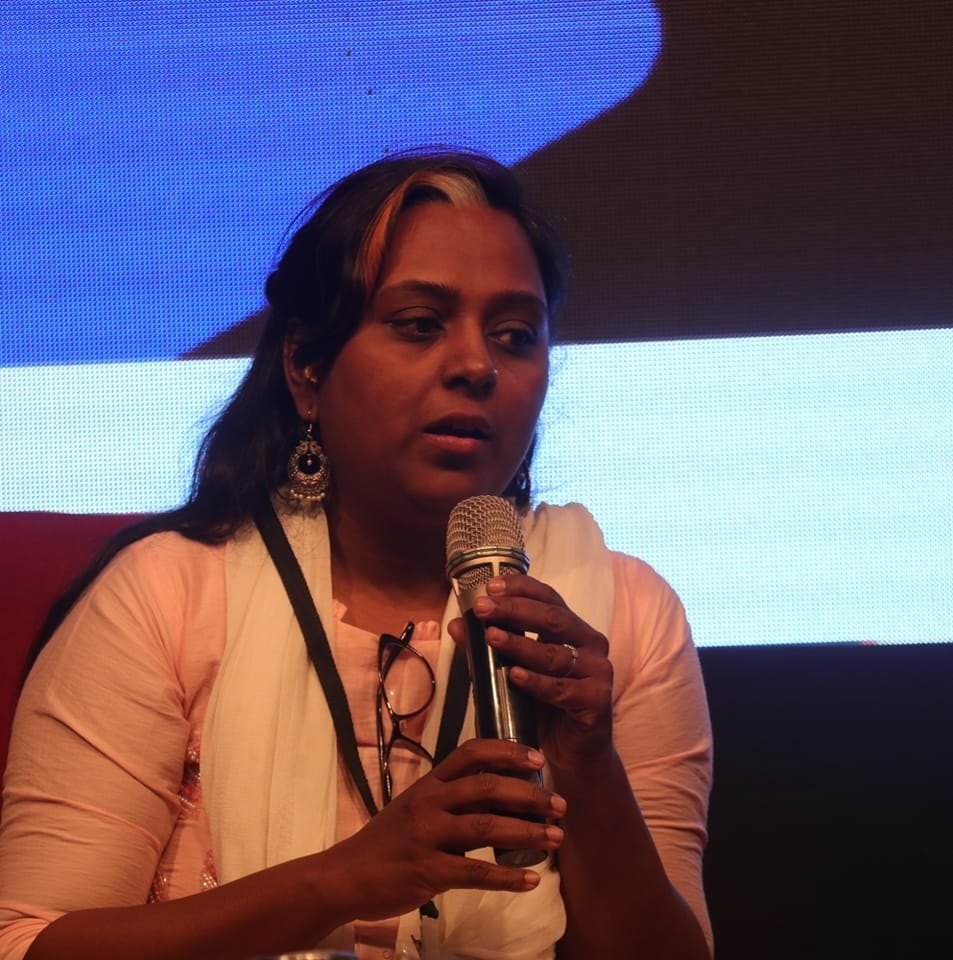 Heena Kausar Khan speaking at a function
The novel received an overwhelming response from readers and critics alike. For this literary work, she was honoured with the Yashwantrao Chavan Pratishthan's 'Kavivarya N. D. Mahanor Sahitya Puraskar' and the State Government's prestigious 'H. N. Apte Award.
Along with fiction, Heena's non-fiction writing is also highly enriching. 'Dharmresha Olandatana' (Crossing Religious Lines), a significant book based on interviews with interfaith couples conducted for the prestigious Sadhana Weekly, was published. Her special series of articles uncovering the inner world of the Muslim community in the respected daily 'Loksatta' has been published as a book titled 'Ijtihad'.
Her contributions to journalism have also been greatly honoured. Heena wrote a highly sensitive article for the Ramadan special issue 'Nabz', focusing on the life struggle and companionship of Bilkis Bano and her husband. For this special piece of writing, she recently received the prestigious 'Laadli Media Award'.
Heena's presence on social media platforms like Facebook is also highly appreciated. She does not merely use it to post updates about her books, writing, or awards. Instead, she effectively uses the medium to comment boldly on contemporary political and social events. Her Facebook posts often raise a strong voice of love and tolerance against the atmosphere of hate in society. Her literary column on Facebook, “Bhintishi Marlelya Gappa” (Conversations with the Wall), was also very popular.
Heena says, "I am writing more fiction. But it bears the influence of today's contemporary events. A collection of short stories, a collection of essays, and a novel are coming up. They cover topics like mob lynching and its consequences. I will continue to present the inner world of the Muslim community through my writing."
Heena's personal outlook on life is highly positive. She says, "If you ask my philosophy, I have great faith in love, human kindness, communication with each other, and coexistence. Humans have flaws, but we understand each other and move forward."
She adds, “If everyone were cast in the same mould, there would be no diversity in life. It is precisely because of the differences in personalities and the good and bad things that we can treat each other better and enrich ourselves in each other's company. It is because of these things that my positivity sustains."
Muslim writers have made significant contributions to Marathi literature. However, one senses a distinct maturity and depth of references in Heena Khan's writing. The way she uses Dakhni and Urdu words, along with the nuances of Islamic culture in Marathi literature, provides readers with a fresh linguistic experience.
The narrative she has built as an 'insider' of the Muslim community in Marathi journalism and literature is extremely valuable.
ALSO READ: Naghma Sahar showed the calmer, sensitive side of Television news anchoring
In Heena's own words, "Wherever there is a need and space to express my thoughts, I will continue trying to speak and write." Erasing the 'religious lines' in society, Heena's pen, which writes a new language of humanity, will undoubtedly enrich Marathi literature even more in the times to come.







.webp "Rubika Liyaquat")