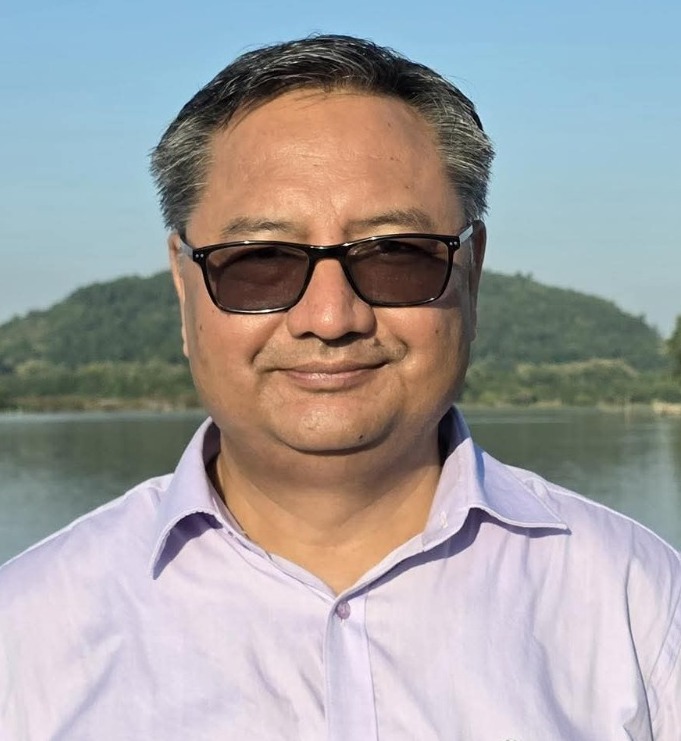
 Rajib Handique
From the outset, the electoral contest in Assam was widely seen as a cakewalk for the ruling Bharatiya Janata Party (BJP)-led NDA. It was an unmistakably asymmetric battle, with the scales tilted decisively in favour of the BJP.
One of the primary factors behind this advantage was the party’s robust organisational structure. Over the years, the BJP has penetrated deep into rural Assam through its network of Panna Pramukhs—grassroots workers responsible for a single page (panna) of the electoral roll. This micro-level mobilisation has ensured sustained voter engagement and efficient election management.
This organisational strength is further reinforced by substantial financial resources, which have created a conducive environment for party workers to promote the BJP’s political agenda. The proliferation of large party offices across the state over the past decade stands as a visible testament to this capacity.
In October 2022, the BJP distributed 40 Mahindra Bolero and Scorpio SUVs to its district and Morcha presidents in Assam to strengthen organisational work. These vehicles were flagged off in Guwahati by Union Home Minister Amit Shah and then BJP President J. P. Nadda. The move significantly enhanced the mobility and outreach of district-level leadership—an advantage that rival parties have struggled to match.
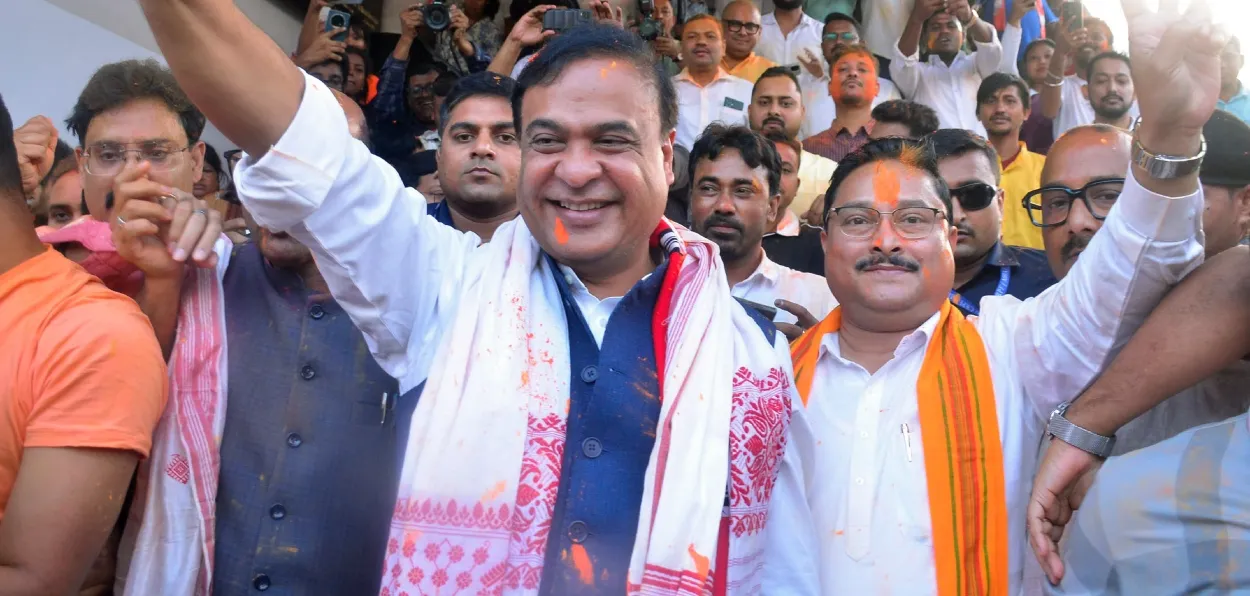
The Victory Dance.....
— CMNS_Media✍🏻 (@1SanatanSatya) May 4, 2026
Assam CM Himanta Biswa Sarma dancing after the election victory... pic.twitter.com/bD1aetm34z
Such organisational depth played a crucial role in the BJP’s electoral success. Additionally, the 2023 delimitation exercise conducted by the Election Commission of India (ECI) reshaped the political landscape. While retaining the number of constituencies, it redrew boundaries in a manner that increased representation for “indigenous” communities and reduced Muslim-majority seats, triggering considerable political debate.
Critics and several studies have pointed to what they describe as “communal gerrymandering,” noting that Muslim-majority constituencies reportedly declined from around 35–37 to approximately 20–22. The redrawing of administrative units and constituencies altered voting demographics in ways perceived to favour the ruling dispensation. The BJP, however, defended the exercise as essential to safeguarding the political future of indigenous populations.
With electoral demographics appearing favourable, the single-phase election schedule for the 2026 Assembly polls, announced by the ECI, further strengthened the BJP’s position. While opposition unity remained fragile, the BJP consolidated its alliances—reviving ties with the Bodoland People’s Front (BPF) and deepening its longstanding partnership with the Asom Gana Parishad (AGP).
Governance factors also played a role. Infrastructure development, welfare schemes for women and students, and the claim of 1,65,000 government appointments contributed to the BJP’s appeal among voters.
With my colleagues, Shri @ATULBORA2, President & Shri @keshab_mahanta, Working President of Asom Gana Parishad, our valued NDA partner in Assam.
— Himanta Biswa Sarma (@himantabiswa) May 5, 2026
NDA's thumping victory in the polls has been due to the excellent synergy between both our parties on ground in quest of Viksit Assam. pic.twitter.com/0LCLODE2I4
Meanwhile, defections weakened the opposition. Prominent Congress leaders such as Pradyut Bordoloi and Bhupen Bora exiting the party created disarray within the Indian National Congress (INC).
Despite these odds, the opposition mounted a challenge through a broad alliance comprising the INC, Asom Jatiya Parishad, Raijor Dal, CPI(M), CPI(ML), and the All-Party Hill Leaders Conference (APHLC). Although stitched together shortly before the election announcement, the alliance generated momentum both on the ground and across social media.
There were also counter-defections, with figures such as Nandita Garlosa and Jayanta Khound joining the opposition camp. Despite limited resources, the opposition fielded several strong candidates and ran a spirited campaign.
Large crowds at opposition rallies fuelled expectations of a closer contest. Congress leader Gaurav Gogoi’s decision to contest from Jorhat was widely seen as a potential game-changer. However, he was defeated by BJP’s Hitendranath Goswami by a margin exceeding 20,000 votes. One reason cited is Gogoi’s inability to focus on his own constituency, as he was simultaneously campaigning across the state in his capacity as Assam Congress president.
Expectations that Gen Z voters might swing towards the opposition—partly driven by emotional appeals related to the late Zubeen Garg—did not materialise.
The final tally of the 2026 Assam Assembly elections paints a sobering picture for the opposition. Of the 126 seats, the BJP secured 82, INC 19, AGP 10, BPF 10, AIUDF 2, and Raijor Dal 2. With a combined strength of 102 seats, the NDA is set to form the government comfortably. While managing such a large coalition presents its own challenges, it is widely expected that under the leadership of Himanta Biswa Sarma, internal contradictions, if any, will be effectively handled.
For the opposition, the road ahead is steep. Building a robust, bottom-up organisational structure is imperative. Without a credible grassroots presence, electoral success will remain elusive. In an increasingly consumerist political environment, elections are often shaped by transactional relationships between voters and parties. Redefining this dynamic will be essential if the opposition hopes to regain relevance.
ALSO READ: Mamata failed to live up to 'Ma Mati Manush' slogan: Author Manjit Thakur
For the BJP and its allies, the task is to sustain momentum—continuing with development initiatives and welfare-driven politics to consolidate their electoral dominance.
(Dr. Rajib Handique is Professor of History and Academic Registrar, Gauhati University.)









_(2).webp)