




New Delhi
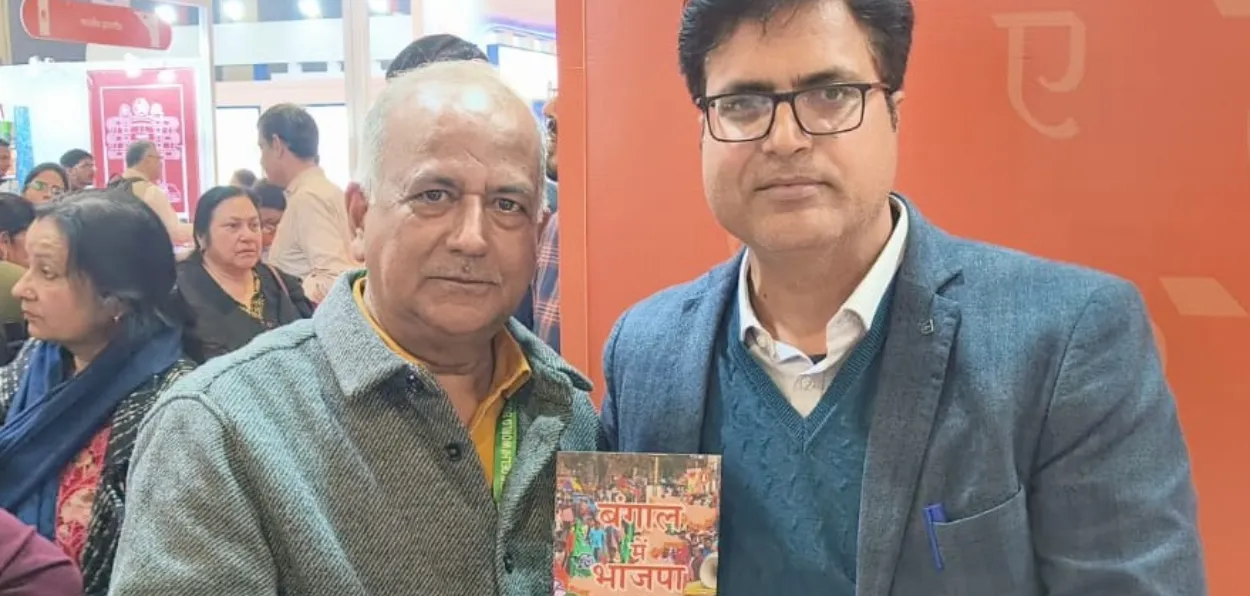
At this moment, Manjit Thakur’s book Bengal Mein Bajpa: Vaam Gadh Mein Dakshinpanth Ki Vikas Yatra (BJP in Bengal: The Journey of the Right Wing in a Leftist Stronghold) stands out as one of the most relevant accounts of the BJP’s rise in West Bengal.
A former journalist with Doordarshan and India Today, Thakur has closely observed Indian politics for over three decades. His work traces the BJP’s emergence in a state known for delivering decisive and enduring mandates—first to the Left Front, which ruled for over 34 years, and later to Mamata Banerjee’s All India Trinamool Congress, which held power for 15 years.
In this context, Thakur—now Editor of the Audio-Visual section at Awaz-the Voice—is well placed to analyse the West Bengal Assembly election results that marked the end of Banerjee’s rule and the rise of the Bharatiya Janata Party.Excerpts from the conversation:
Your book was remarkably prescient. How did you foresee the rise of the BJP in Bengal?
The BJP’s rise in Bengal is not a sudden phenomenon. From K. B. Hedgewar’s time in Kolkata to M. S. Golwalkar’s brief stay, and later the founding of the Bharatiya Jana Sangh by Syama Prasad Mookerjee in 1952, Bengal has historically been an important centre for right-wing thought.
Admittedly, the ban on the Rashtriya Swayamsevak Sangh after Mahatma Gandhi’s assassination, along with Mookerjee’s untimely death, slowed this growth. At the same time, movements like the Food Movement and the Tebhaga peasant struggle shifted public focus toward survival rather than ideology. Yet, the ideological seeds of the Right remained.
During the 2009 Lok Sabha elections, I travelled extensively across Bengal, visiting nearly every third village. I sensed a deep grassroots discontent. That same year, I wrote an article titled “Bengal is Fertile Ground for the BJP.” At the time, it was seen as far-fetched—even controversial—but I believed that sentiment would eventually translate into votes.
People in some states change governments every five years; Bengal changes only when the “roti is nearly burnt.” Before the Left Front came to power in 1977, the Congress dominated the state for decades.
It would be simplistic to say the Left was merely “given a chance.” It entrenched itself deeply—within local clubs, institutions, and even domestic life. From employment and agriculture to dispute resolution, party cadres were everywhere. Even Mamata Banerjee had to wage a long struggle before dislodging the Left in 2011.
Her political journey—from her days in Congress to forming her own party—spanned over a decade before success. In comparison, the BJP’s rise has been remarkably swift: from just three MLAs in 2016 to over 200 today.
What is the Bengali voter signalling through this verdict?
This is not just a political shift—it reflects an ideological movement as well. The BJP’s social engineering among communities such as Matuas, Rajbanshis, Gorkhas, and Namashudras, along with outreach to Dalits, OBCs, and tribal groups, played a key role.
Symbolic factors also mattered—such as the projection of Droupadi Murmu and narratives around perceived disrespect toward her. At the same time, counter-polarisation—both Hindu and Muslim—shaped the electoral outcome.
Why did voters reject Mamata Banerjee this time? Was it about development?
Mamata Banerjee’s administrative grip appeared to weaken, while that of her nephew, Abhishek Banerjee, strengthened—creating internal dissatisfaction within the party. There was also clear anti-incumbency.
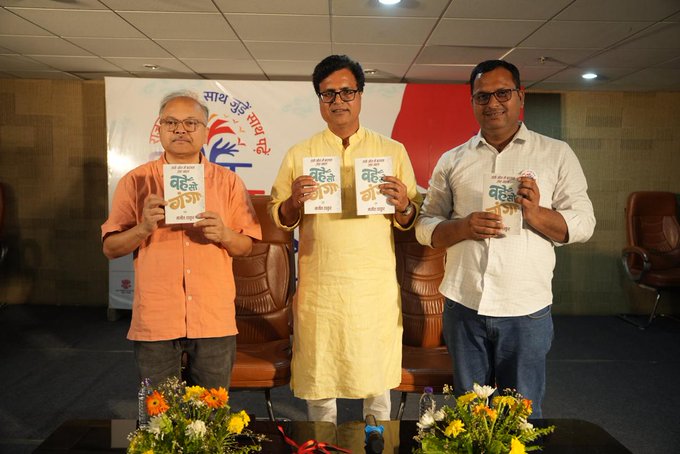 Manjit Thakur at the release of his another book on The Ganga in Patna
While Bengal lags behind western states in development, development alone rarely decides elections in India. More significant was the perception that her emotive promise—“Ma, Mati, Manush”—was not fully realised.
Her shifting stance on issues like infiltration also hurt her credibility. Incidents such as Sandeshkhali and controversies around R. G. Kar Medical College and Hospital, along with allegations of rising lawlessness, damaged her image—especially among women voters.
Ironically, the very cadre dominance she once opposed under the Left began to be associated with her own party.
What was the BJP’s key strength in this election?
Political violence has long been part of Bengal’s history. The BJP, however, entered this space as a relatively new player.
Its biggest strength was mobilising women voters and consolidating Hindu sentiment in response to perceived minority consolidation. Social media amplification played a major role—for instance, viral content around speeches and songs by TMC leaders shaped perceptions.
Additionally, while Bengal traditionally resists caste politics, this election saw localised caste and tribal consolidations emerging as decisive factors.
ALSO READ: Atika Farooqui redefining grace, intelligence and longevity in Indian Media
Governments in Bengal do not change easily—but history does make exceptions. The BJP now has the responsibility to prove that this moment is one of them.
#पश्चिमबंगाल में भाजपा ने तगड़ी जीत दर्ज की है और ऐतिहासिक रूप से पहला मौका है जब #भाजपा इस सूबे में सत्ता में आई है. 2011 में 0, 2016 में 3 विधायकों वाली पार्टी 2021 में 77 और फिर 2026 में प्रचंड बहुमत तक कैसे पहुंची बता रहे हैं 'बंगाल में भाजपा' के लेखक और आवाज- द वॉयस -एवी के… pic.twitter.com/lwrbFRqsyp
— Awaz -The Voice हिन्दी (@AwazTheVoiceHin) May 4, 2026

.jpg "Gujarat’s women entrepreneurs bring their craftsmanship to life during Navratri")








.jpg "Representational image")

.webp)