Naseem/Hyderabad
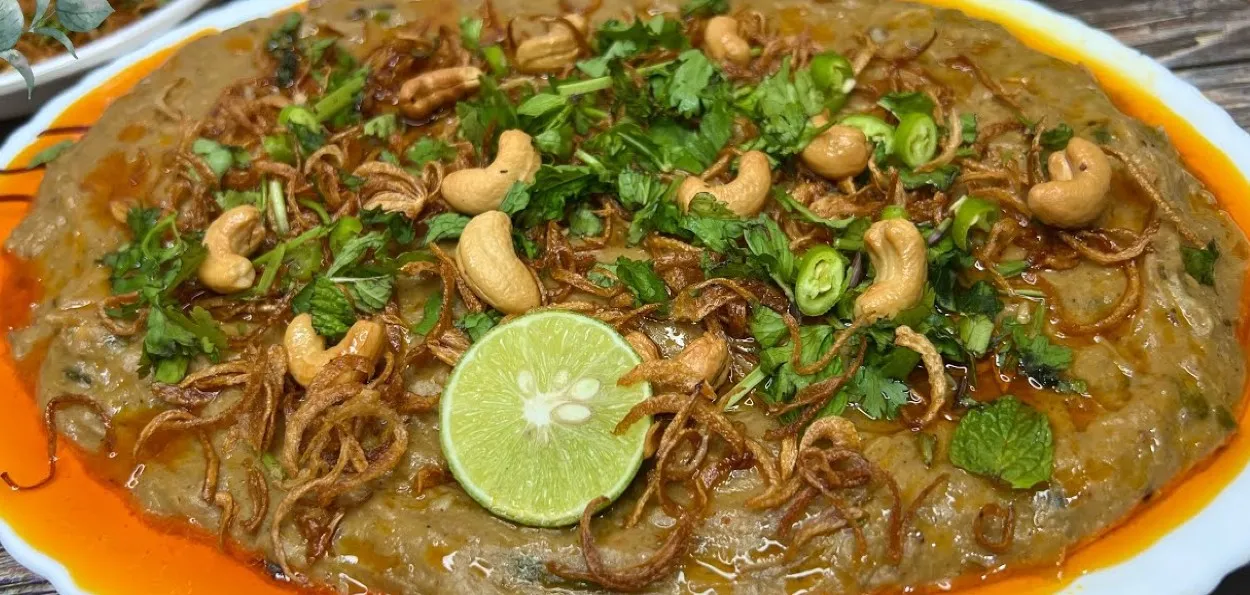
When Hyderabad's name is mentioned, the taste of Halwwm comes to the tongue. Haleem, a slowly cooked dish of mutton and wheat in Ghee, makes culture and history more interesting.
This dish is an inalienable part of the life of common people, especially in the month of Ramzan.
When evening falls in Hyderabad, and the devout break their day-long fast, the streets of Hyderabad are filled with the aroma of a slowly cooked dish.
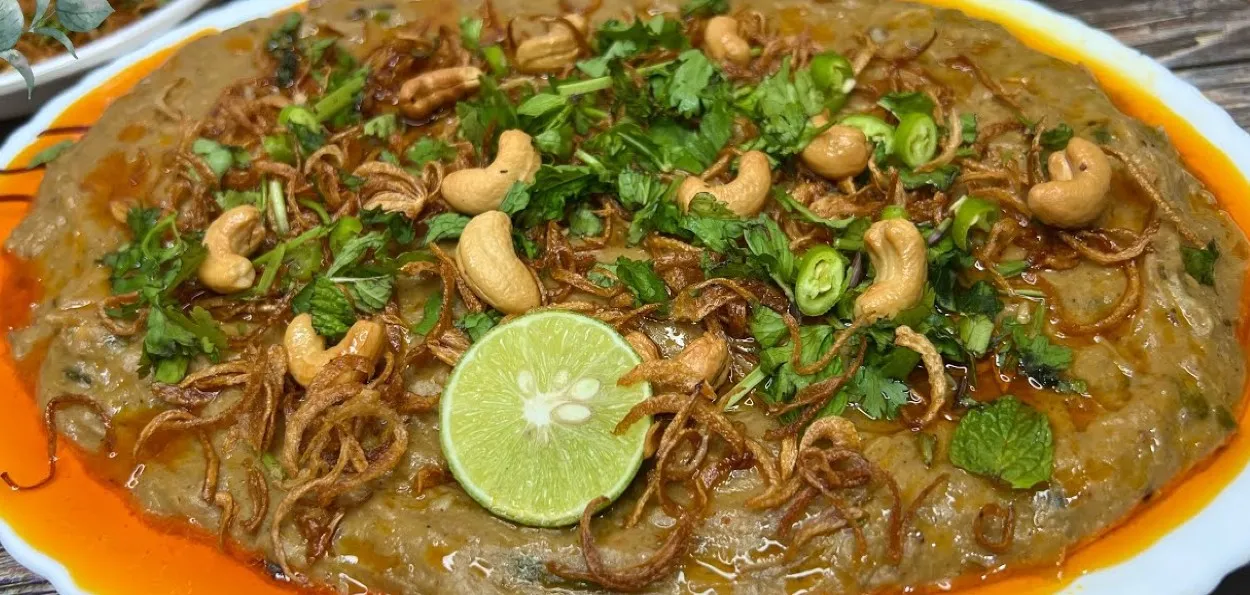
Among the innumerable flavours of the Deccan, Hyderabadi Haleem has transcended the limits of time, tradition and geography. Once upon a time, it was only cooked in Royal kitchens. Today, people of all classes eat it with gusto. It is not just a food but an emotion that has become a memory of military kitchens and an essential part of Ramzan.
Although Haleem is available throughout the year, its importance increases during Ramzan. It is considered delicious and, above all, a nutritious meal, because of the lasting energy of wheat and the protein of meat.
In Hyderabad, Ramzan is incomplete without Haleem, it has been an essential part of Ramzan celebrations for centuries and is part of the city's culture.
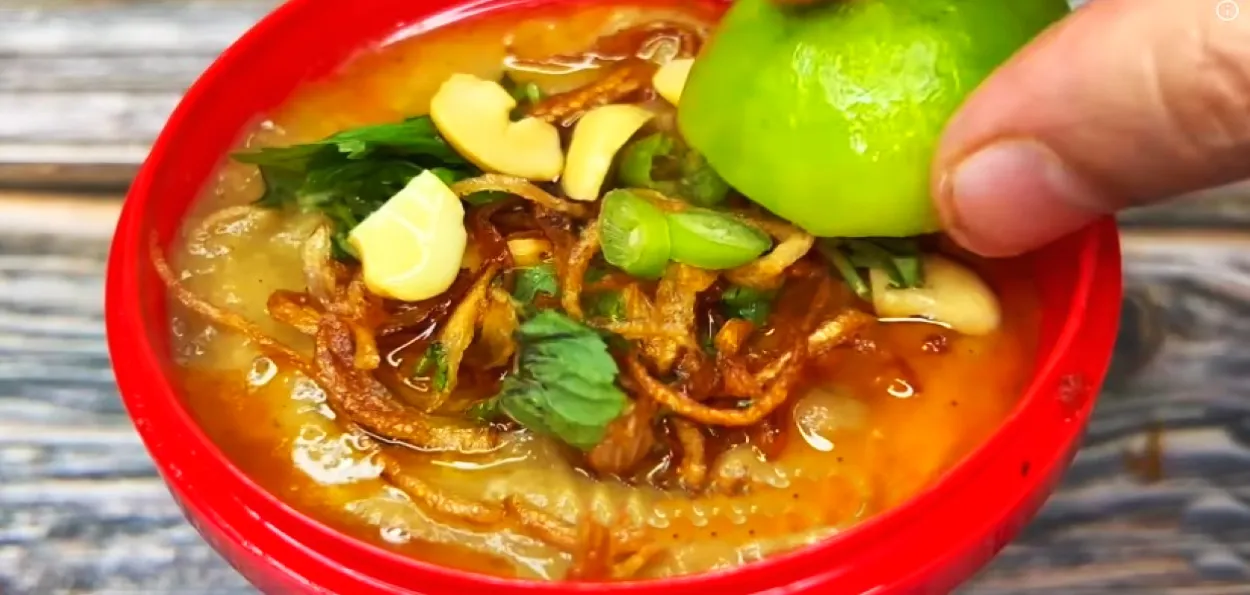
Haleem originated from the dish Haris of the Arab world, which was introduced to Egypt by Iranian and Afghan traders. During the Mughal era, it reached Hyderabad via Iran and Afghanistan through Arab traders, especially Tarkin Watan.
It came to India during the rule of the sixth Nizam of Hyderabad Mehboob Ali Khan, whereas during the era of the seventh Nizam Mir Usman Ali Khan’s period,it became moderately popular.
This dish received military patronage, due to which it gained more sophistication. The confluence of Arab and local influences made it the adornment of royal kitchens and with time it became a favorite food of the common people as well.
Preparing Haleem requires patience and skill. It is not prepared quickly like ordinary food, but by continuously stirring and keeping it on simmer for hours, its special suitable taste is created.
In the making of Haleem, the cooks used at least 21 ingredients including chilli powder, cloves, black cumin, black pepper, wheat flour, basmati rice, various Pulses (mung, lentil, mash), ginger, garlic, desi ghee, cashew, almonds and fried onions.
Initially it was a simple food prepared from wheat, beef, ghee and dry pulses, but after coming to the Deccan soil it took a new form. The exotic flavor of local spices and the slow cooking method made it unique.
The meat, wheat and spices become one in such a way that the meat becomes fibers and dissolves in the mixture. Boneless minced meat, fortified wheat pulses, saffron, Indian cinnamon and pure desi ghee add to its taste and nutrition. This is how Hyderabadi version became accepted.
Even today, at some places, it is prepared in traditional style and with original ingredients so that the taste of old times remains intact.
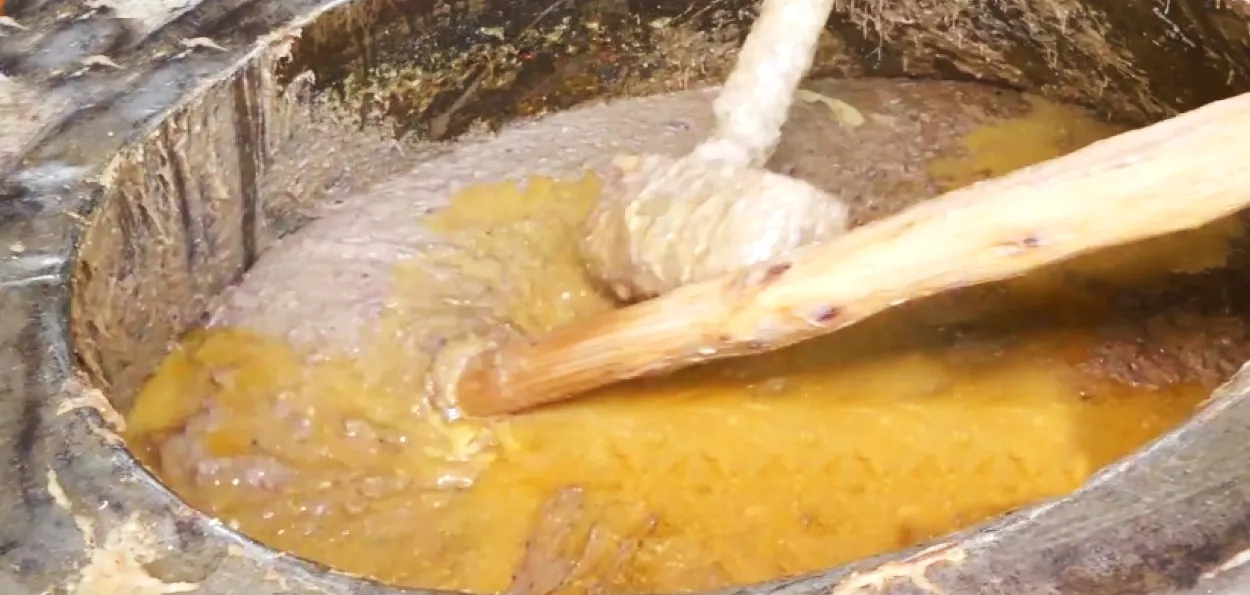
The conferring of the GI tag to Haleem means that Hyderabadi Haleem can only be cooked in the city and it’s not possible to make it outside.
The GI tag to Haleem in 2010 became possible with the efforts of more than 6000 members of the Haleem Makers Association.
This GI tag was also renewed for the second time after its expiry in the year 2019. Moreover, in 2022, it was also given the title of Most Popular GI in which it featured regional favorites like Rasgullah, Bekaniri Bakhjiya and Ratlami Sev.۔
#WATCH | Telangana: Hyderabad celebrates Ramzan with its signature dishes, including the famous Haleem, a slow-cooked stew made with wheat, lentils, and meat.
— ANI (@ANI) February 21, 2026
Pawan, a Bengaluru resident, says, "Whenever I come to Hyderabad in Ramzan season, I do not miss haleem and biryani… pic.twitter.com/REr15WM2RJ
Haleem is not just a dish; it’s an industry in Hyderabad.
According to the figures, last year its business had reached approximately Rs 800 crores whereas in the current season it is expected to cross Rs 1000 crores.
As per estimates, in the last season around 50 lakh plates of Haleem were sold. The number if expected to reach 60 lakh this season. There are about 6000 centers across the city where Haleem is sold whereas in big hotels up to 25000 kg of Haleem is prepared daily.
In this season, an estimated one lakh people get direct or indirect employment which includes cooking, delivery work and other workers.
ALSO READ: Assam's Taekwondo wonderkid Omar Faruk fought disability
The demand for Hyderabadi Haleem is not limited to different cities of the country but it is also exported to America, Britain and Gulf countries.
۔













.webp)