.webp "Agriculture Minister Shivraj Singh Chouhan")
New Delhi
Agriculture Minister Shivraj Singh Chouhan on Thursday asked the Indian Council of Agricultural Research (ICAR) to intensify efforts to raise productivity in pulses and oilseeds, sectors where India continues to rely heavily on imports.
"If countries without access to GM seeds can get better yields in pulses, why can't India?" Chouhan said, addressing scientists at the 98th ICAR Foundation Day.
Chouhan pointed out that farmers with access to irrigation tend to shift toward rice and wheat cultivation -- a pattern he said has played out across Madhya Pradesh, Bihar, Odisha and other parts of eastern India as irrigation coverage expanded, pushing the country to depend on pulse imports to meet demand.
Citing yield comparisons, the minister noted that an acre under maize can produce over 100 quintals, against roughly 30-35 quintals for rice and just about 5 quintals for pulses such as gram or moong. He called the gap "a direct challenge" for ICAR scientists to close.
Chouhan also flagged fertiliser self-sufficiency as a priority and asked how long the country could continue depending on imports.
India imports about 6-7 million tonnes of pulses and 15-16 million tonnes of edible oils annually.
On production standards, the minister said that while output has risen, the focus must now shift to quality.
Chouhan commended ICAR for developing contingency plans for regions vulnerable to climate shocks, including areas at risk from El Nino-linked disruptions, and for sharing these plans with affected states.
He said India needed a broader strategy -- beyond contingency planning alone -- to withstand the pressures of climate volatility, with export-oriented, high-quality production as part of that response.
The minister was sharply critical of research that he said was driven by the need to publish papers rather than by ground-level farmer needs.
Citing specific complaints raised by farmers, he said a widely used sugarcane variety -- referred to as "238" -- had deteriorated in quality and needed attention, that Bt cotton had once again become vulnerable to pink bollworm with a resulting fall in output, and that farmers in Bihar wanted research to extend the shelf life of litchi, which currently spoils within two to three days of harvest.
He asked ICAR's roughly 52 existing research teams to sharpen their focus and deliver results faster, noting that more than two years had already elapsed on some of these fronts.
"Research that only produces papers is a waste of time," he said, adding that research should serve the needs of the country, the land, the soil and the farmer.
Chouhan further said the government's focus had to be on raising the incomes of small and marginal farmers through integrated farming -- combining grain cultivation with horticulture, fisheries, animal husbandry, poultry and goat-rearing -- rather than grain production alone. He said ICAR's integrated farming models now needed to be implemented and validated on the ground.
Ahead of ICAR's 100th foundation year, Chouhan proposed a set of concrete commitments for the institution: Development of at least 100 climate-smart villages by the centenary; deployment of 100 young scientists to work on frontier areas such as artificial intelligence, robotics, gene editing and climate-smart agriculture; each of ICAR's 113 institutes and affiliated agricultural universities to develop, within two years, one innovation with demonstrable national impact; and each ICAR institution to adopt one aspirational district and build a replicable model of agricultural transformation there.
The minister said he wanted ICAR scientists to commit publicly to these targets, saying the institution should also set up an "ICAR Open Digital Knowledge Platform" to give farmers direct mobile access to research, advisories and technology updates.
He set a goal of at least 10 crore farmers gaining direct access to ICAR's scientific solutions by the time the institution completes 100 years, which he described as a milestone step toward a "developed India" by 2047.
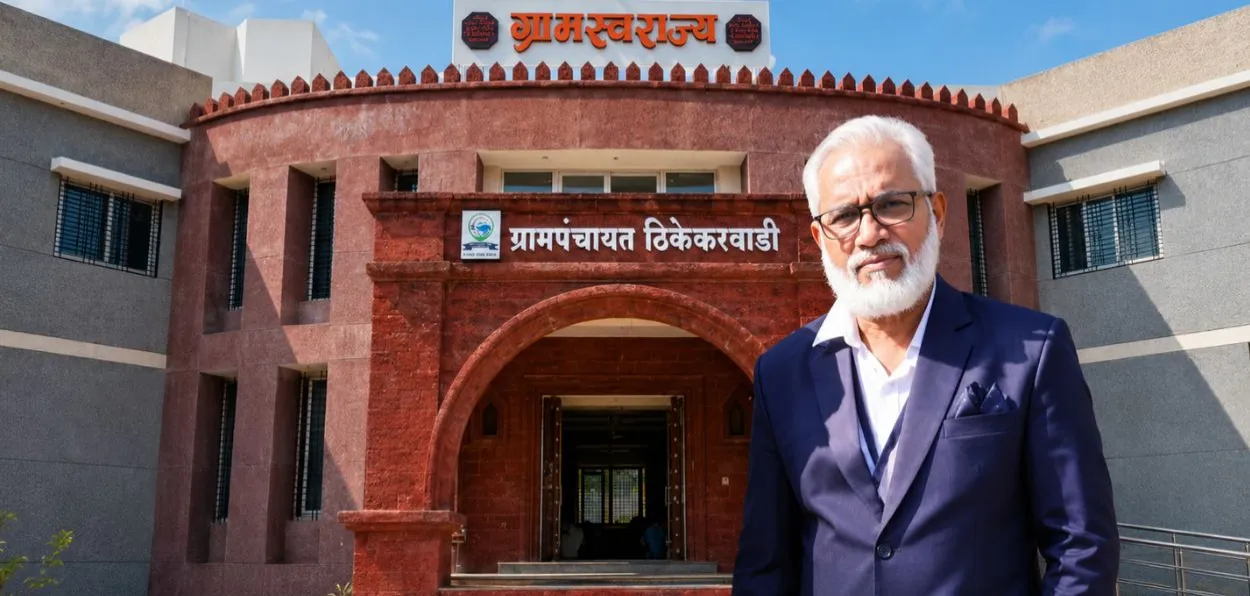
READ MORE: Gram Sevak Aslam Shaikh behind the most awarded Thikekarwadi Panchayat
Chouhan also proposed that, ahead of the centenary, ICAR scientists spend a week to ten days working directly in villages, similar to an earlier outreach drive under the "Viksit Krishi Sankalp Abhiyan", with each Krishi Vigyan Kendra (KVK) expected to cover at least 100 villages.
He suggested KVKs evolve from training centres into innovation hubs, climate advisory centres, startup support centres and farm technology demonstration centres, and said agricultural university students should also spend time working directly in the field.











.webp "Representational Image")

_(2).webp)