


_(1).webp "Dr Siddiq Ahmed Mew")
In Haryana’s literary and social landscape, the name of Dr Siddiq Ahmad Meo shines with an aura of dedication, struggle, and public service.
He is not merely a writer; he is an institution in himself—an idea, a consciousness, and a source of inspiration for the younger generation.
The journey he undertook, rising from hardship to recognition, is extraordinary. Childhood struggles, poverty, and financial constraints never weakened his resolve. He continued to learn, grow, and move forward.
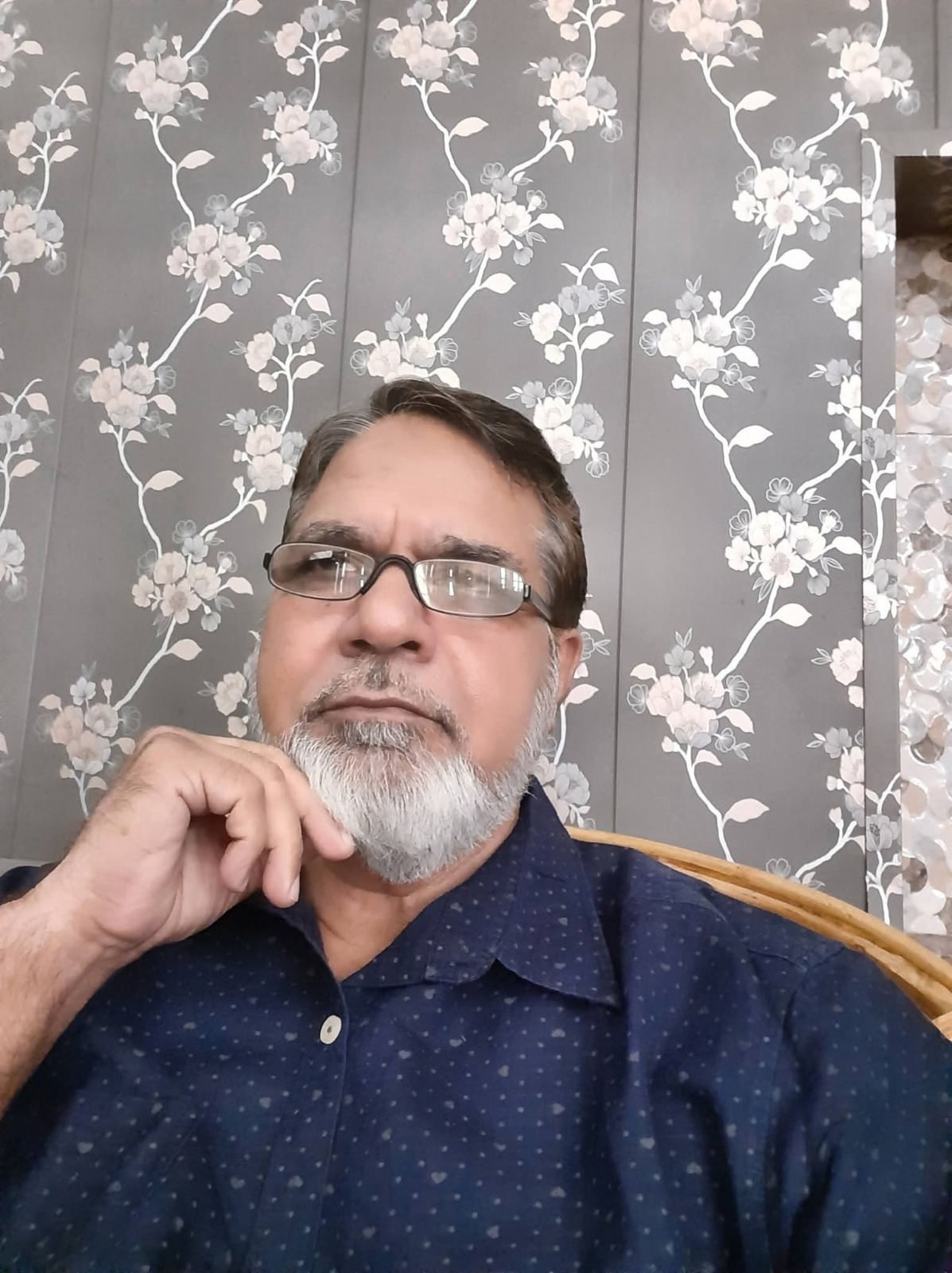 Dr. Siddiq Ahmad Meo
Born in 1961 in the small village of Banarsi in Nuh district, Siddiq Ahmad Meo came from a simple background. His father, Abdul Aziz, was a modest farmer, and his mother, Subhani, was a homemaker. He often says that his parents’ values shaped every aspect of his personality. Though his childhood was marked by deprivation, his father’s love for education kept him motivated.
He completed his primary schooling in the village, and he always excelled in studies. He was awarded scholarships in both Classes 5 and 8. Later he attended the Bazidpur High School and the historic Yasin Khan High School in Nuh.
Higher studies led him to Yasin Meo Degree College in Nuh and Jamia Millia Islamia in New Delhi, where he completed a diploma in Civil and Rural Engineering in 1982.
In 1986, he joined government service as a Junior Engineer, and while working, he earned a B.Tech degree in 2010. He retired in 2019 as an Assistant Sub-Divisional Engineer.
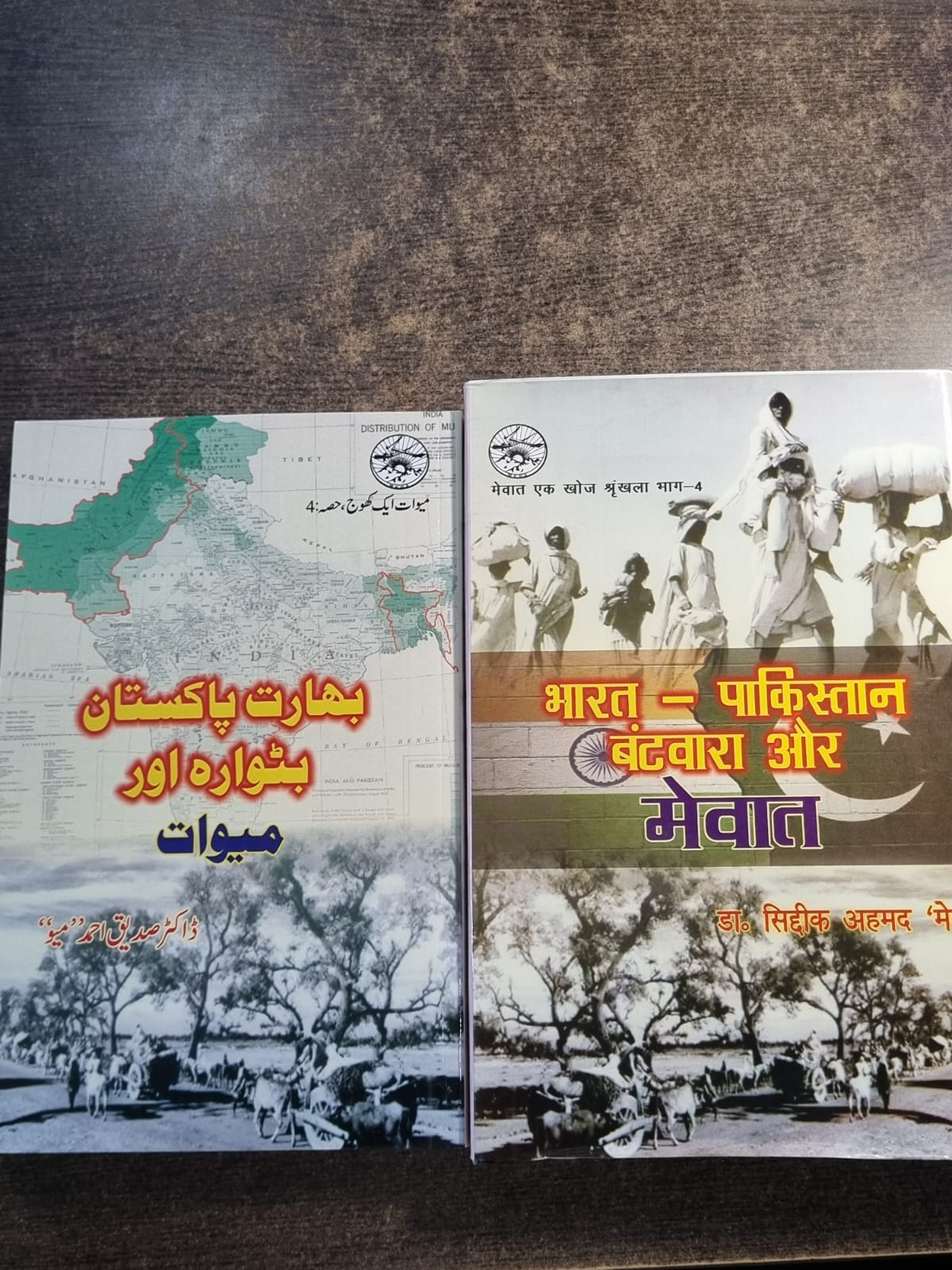 Dr. Siddiq Ahmad Meo's books
He recalls, “A job was my necessity, but writing was my passion.” He had a deep affection for reading from childhood, especially history. After joining government service, the misconceptions about Mewat and the Meo community deeply troubled him -- such as the claim that Meos were weak or that Aurangzeb had forcibly converted them to Islam. He already knew that in the Battle of Khanwa, Hasan Khan Mewati bravely fought against Babur. He understood that Mewat’s history needed to be researched and presented logically before the world.
He began an extensive study of history around 1988–89—delving into ancient and medieval Indian history, Rajputana history, Jat history, and the history of Mewat. He studied hundreds of books during this period.
He says, “My first research-based article was published in ‘Haryana Samvad’ in 1991. After that, my writing continued, and in 1997, my first book, ‘Mewat: Ek Khoj’ was published.” This was followed by a series of books: Mewati Sanskriti, Sangram 1857: Mewatiyon ka Yogdan, Zara Yaad Karein Qurbani, Amar Shaheed Raja Hasan Khan Mewati, Mewati Lok Sahitya Mein Doha Parampara, Gul-e-Shahidan, Bharamaru, Bharat-Pakistan Vibhajan aur Mewat, Vishva Sabhyata ko Islam ki Den, Pandun ka Kada, and many more. His love for poetry resulted in three published poetry collections, with two more awaiting publication. Nearly his 200 poems have been included in various anthologies.
 Dr. Siddiq Ahmad Meo's book
His extensive body of work is not just documentation of Mewat’s history and culture—it is a source of identity for future generations. His writings have earned him numerous national and state-level awards, including the Chirag-e-Mewat Award, Haryana Sahitya Akademi’s First Book Award, Saraswati Samman of the Rajasthan Sahitya Academy, Mewat Ratna Award, and the Global Pride Award. The Global Human Peace University also honoured him with an honorary doctorate.
Dr Siddiq Ahmad Meo is not only a writer but also a dedicated social worker. While serving in government, he launched literacy campaigns in Mewat in 1991 and 1996, and was among the first to enrol the Meo Muslim girls in schools. He went door-to-door, convincing parents that girls’ education was not merely a right but the cornerstone of society’s progress. Despite early resistance and suspicion, he did not give up. Gradually, people joined the movement, and girls’ education began to flourish in Mewat.
In 1996, he founded the Mewat Educational and Social Organisation, which gave organised form to the demand for Mewat to be recognised as a separate district. His relentless efforts succeeded when Mewat was officially declared a district in April 2005. The struggle did not end there. He strongly opposed attempts to relocate the Jawahar Navodaya Vidyalaya from Mewat and succeeded in getting it established in Village Bai. He also sat on a 43-day protest to demand the establishment of a medical college, which eventually led to the creation of the Shaheed Hasan Khan Mewati Medical College.
He says, “In 2017, the announcement for the Mewat Canal was made, and in 2012–13, the rail line was approved—though these projects are yet to begin, our struggle continues.” His organisation, Mewat Vikas Sabha, also played an important role in the farmers’ movement, the CAA movement, and protests regarding slaughterhouse issues. He has been the patron of this organisation since 2001.
READ MORE: 2 Muslims discover essence of India through their temple visits
His contributions in literature, social service, sports, and art are remarkable. He is also a skilled athlete and painter.










.webp)