Ranchi
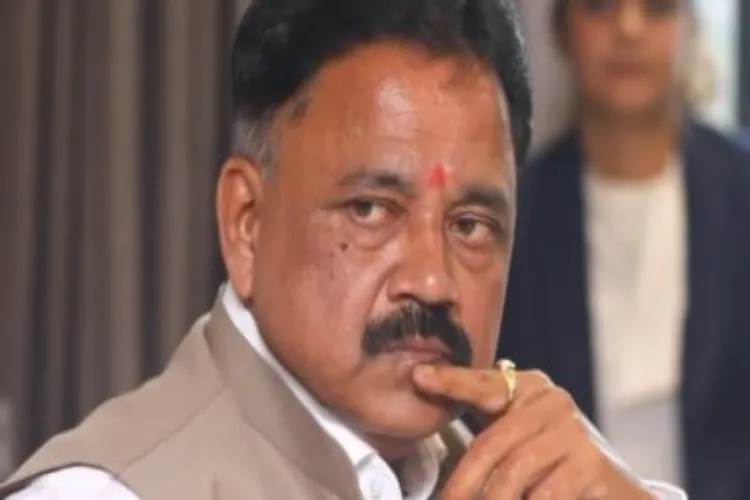
Jharkhand Higher and Technical Education Minister Sudivya Kumar on Wednesday inaugurated a two-day conclave focused on examining the challenges and opportunities involved in delivering multilingual education to schoolchildren in accordance with the National Education Policy, officials said.
Speaking at the National Multilingual Education Conclave, Kumar described the initiative as an important step towards strengthening foundational education in the state. Highlighting Jharkhand’s linguistic diversity, he said the state reflects India’s pluralistic character, where languages change across short distances.
“Jharkhand is a precious part of this diverse nation. As the saying goes, water changes every mile and language every ten miles. With such richness, it is not possible to unify all 24 districts under a single language,” the minister said.
He noted that Jharkhand is home to five major tribal languages and four regional languages, stressing the need to ensure adequate representation of this diversity in the education system. “If we are to weave together this bouquet of languages, at least nine distinct linguistic strands must find a place to truly represent Jharkhand,” Kumar added.
Referring to ongoing efforts, the minister said the Jharkhand Education Project Council (JEPC), under its Promotion of Appropriate Language and Academic Skills for Holistic Education (PALASH) project, has introduced five tribal languages—Kurukh, Santhali, Mundari, Ho and Kharia—into primary education. However, the programme is currently operational in only eight districts.
Kumar also underscored the importance of including the state’s four regional languages—Khortha, Nagpuri, Panchpargania and Kurmali—under the PALASH initiative to ensure their preservation and integration at the primary level. He said he would urge Chief Minister Hemant Soren to support the inclusion of these languages, adding that Jharkhand’s development vision would remain incomplete without such measures.
“If we fail to make education holistic, simple and practical at the foundational stage, it will merely produce students who mechanically copy from the blackboard, rather than individuals with independent thinking and intellectual capacity,” the minister said.
JEPC State Project Director Shashi Ranjan told PTI that the primary aim of the PALASH programme is to impart early education in children’s mother tongues. Citing research and survey findings, he said instruction in a child’s first language improves learning outcomes and builds confidence.
Ranjan also said delegates from several states, including Chhattisgarh, Odisha, Assam, Uttar Pradesh, Bihar, Haryana and Rajasthan, are participating in the conclave.
READ MORE: IUML's Fatima Muzaffar Ahmed is the epitome of Muslim woman leadership
The PALASH multilingual education initiative was initially rolled out in five districts and expanded to eight districts during the 2024–25 period. At present, 1,041 schools across these districts are offering multilingual education using specially developed textbooks and teaching-learning materials, he added.


.png)