New Delhi
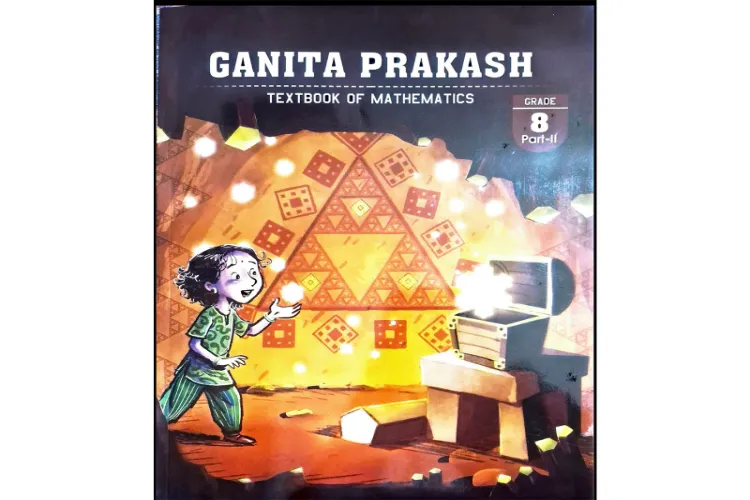
For generations, Indian students have learnt it simply as the Pythagoras Theorem. In a quiet but significant shift, the Class 8 NCERT mathematics textbook has now introduced it as the Baudhayana-Pythagoras Theorem, tracing its origins in ancient Indian mathematical texts.
The textbook titled 'Ganita Prakash' notes that ancient Indian mathematician Baudhayana, believed to have lived around the 8th-7th century BCE, was the first person in history to state this theorem, predating the Greek philosopher Pythagoras by nearly two centuries. Pythagoras.
This is the first time NCERT has formally introduced the Pythagoras theorem as the Baudhayana-Pythagoras Theorem.
Instead of presenting the theorem as an abstract formula, the book draws from Baudhayana's Sulba Sutra to explain the concept through construction.
It asks how to create a square with twice the area of another. It answers it with Baudhayana's insight that "the diagonal of a square produces a square of double the area of the original square".
The book introduced the theorem as one of the fundamental theorems of geometry".
"Baudhayana was the first person in history to state this theorem in this generality and essentially modern form. The theorem is also known as the Pythagorean Theorem, after the Greek philosopher-mathematician
Pythagoras (c. 500 BCE), who also admired and studied this theorem, lived a couple of hundred years after Baudhayana. It is also often called the transitional name Baudhayana-Pythagoras Theorem, so that everyone knows what theorem is being referred to," the chapter reads.
The chapter also explains the applications of the theorem, demonstrated through problems drawn from classical Indian texts.
One such example comes from Bhaskaracharya's Lilavati, which narrates a puzzle involving a lotus in a lake whose stem bends with the wind.
The 'About the Book' section of the book explains that the broader aim of the revised textbook is to move beyond rote learning.
"The writers have aimed to strike a judicious balance between informal and formal definitions, and methods in helping students to develop both intuition and rigour," the section said.
The historical referencing extends beyond geometry.
While introducing percentages, the book points to references in Kautilya's Arthashastra, which mentions interest rates calculated "per month per cent", suggesting that the idea of "per hundred" was in use as early as the 4th century BCE.
Comparable practices in Roman taxation and later European trade are cited to place the concept in a global context.
To anchor abstract ideas in daily life, the textbook uses familiar examples such as idli batter. By comparing rice-to-urad dal ratios such as 2:1, 6:3, and 4:2, students are asked to determine whether different quantities can still preserve the same taste, introducing proportionality through experience rather than formulae.
READ MORE: Cricket taught me to value human talent over caste and religion
Another new addition is a section on fractals, defined as patterns in which "smaller copies of the same structure" repeat at different scales. From ferns and clouds to coastlines, the book highlights how self-similarity appears across nature.
The idea is also linked to India's architectural heritage. The Kandariya Mahadev Temple in Khajuraho, completed around 1025 CE, is cited as an example of a tall temple structure composed of "smaller copies of the full structure," a pattern echoed in temples across Madurai, Hampi, Rameswaram, and Varanasi.











.webp "Union Education Minister Dharmendra Pradhan")