 Manjit Thakur
My native place, Madhupur in Jharkhand, is a sleepy town. It has the vibe of Malgudi, a village from R.K. Laxman’s Malgudi Days, a popular and classy serial of the black and white days of television. It’s laid-back in its demeanour, but pulsates with cultural and sports events.
Cricket and football are popular among the youth there. Although cricket is a religion all across India, in Madhupur, football is equally popular due to its proximity to Bengal. People buy tickets to see the matches of local football clubs.
Unforgettable Experiences
When I returned home after completing my 12th standard, I realised my elder brother, Mangal Thakur, was a cricketer of standing. He played at the inter-district level till he joined the government for a job. Our middle brother, Ratan Thakur, also played club-level cricket before leaving for higher studies in the city. Later, he was also in the university team.
I inherited this love for cricket from my brothers. Though I would play cricket as a child, it was after taking my 12th-grade examination and returning from home from my boarding school that I took it more passionately. I had plenty of free time, and I would play cricket morning, noon, and evening.
Madhupur boasted of a good cricket club in those days. (I am not revealing its name for reasons that readers will understand) All prominent local cricketers were associated with it.
My home is in the vicinity of a Scheduled Castes and Dalit ghetto. A little further away is a Muslim settlement where mostly Pasmanda community lived. The Muslims were mostly cloth merchants or weavers who, after the decline of handloom weaving, had started working as tailors, stitching ready-made clothes in bulk for traders from Kolkata.
A group of enthusiastic cricketers from our neighbourhood, including myself, expressed our desire to play for that renowned club and even went to its grounds. My teammates included a few Dalits and four or five Muslims.
Anyway, most of the people at the club were Bengali-speaking upper-caste Hindus and Ashraf Muslims. They told me that while I could play, my friends were not welcome. They didn’t hide their scorn and contempt while saying, "We won't let these low-class people play. How can they play with us!" One of them said without batting an eyelid.
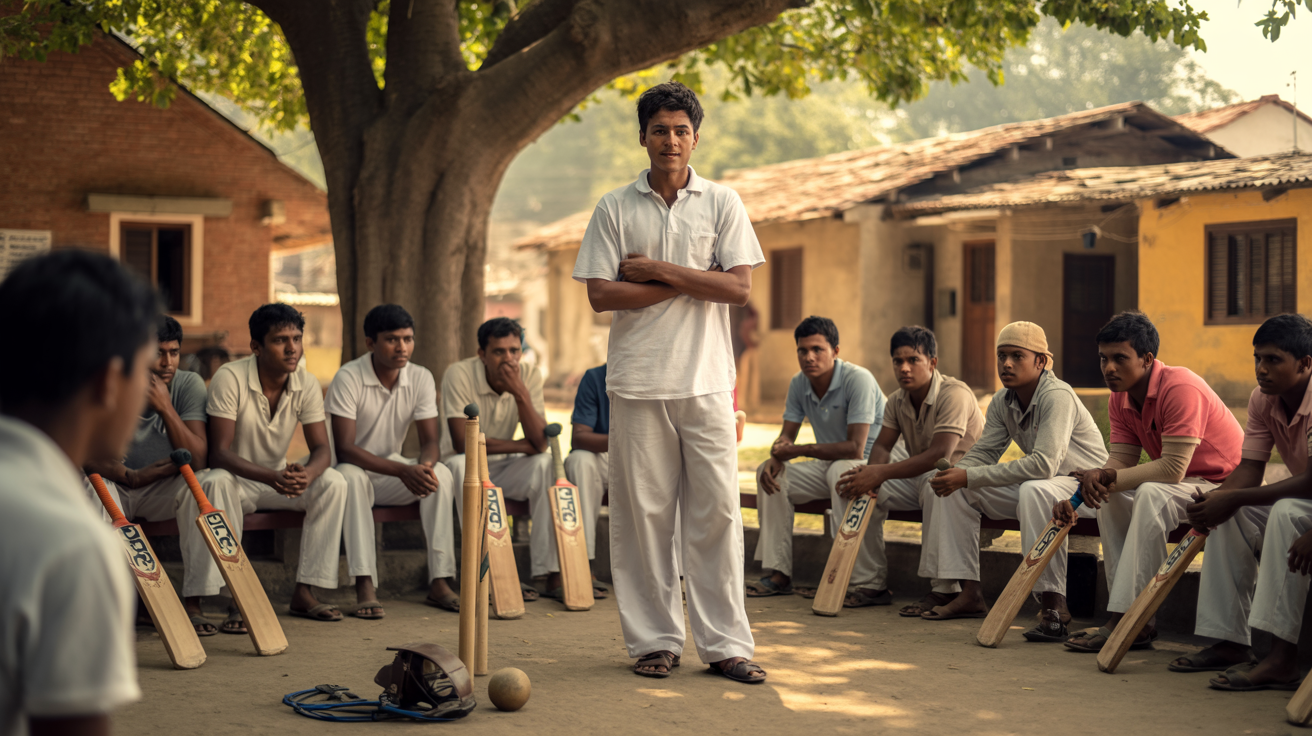
Author's brother speaking to young cricketers of Madhupur (AI-generated)
At that time, I didn't understand why I was acceptable to them, but my friends were not. After all, I celebrated Holi and Eid together. Anyway, when my friends weren't allowed to play, what would I do there? I had no wish to play with strangers and ditch my friends and buddies.Dejected, we returned home.
Around five o'clock, my brother returned from the office. He asked me why I was not at the club playing cricket. I narrated the episode of the club rejecting us.
My brother was upset. I saw a frown on his face, "They called you 'Chethri?" he said.
In Madhupur, Harijans, Dalits, and Pasmanda Muslims were locally referred to as "Chethri" (meaning ragged or tattered people).
The same evening, my elder brother took charge. He announced the formation of a new cricket team with all my friends. We were just passionate cricketers without any resources. The local girls school --the Anchi Devi Girls' High School -- in our neighbourhood had a large ground measuring around seven or eight hectares.
We prepared a pitch in its backyard which had plenty of Bael (wood apple), Shisham (rosewood), Teak, Mango, Jackfruit, Champa, and Jujube (ber) trees as a canopy of the large ground. My brother had spoken to the headmistress, Hashi Rashi Bose, who also lived in the neighbourhood, and she permitted us to play.
My brother named it Chethri Cricket Club. It was later changed to the National Rising Club, but the unique and bold original name stuck with it.
My brother made all the players take an oath that they would remain united on the field and off it. One of the key batsmen in our team, known for his powerful knocks, was nicknamed Jayasuriya after the legendary Sri Lankan cricketer. The team's wicket-keeper was called Moin, after the Pakistani cricketer Moin Khan.
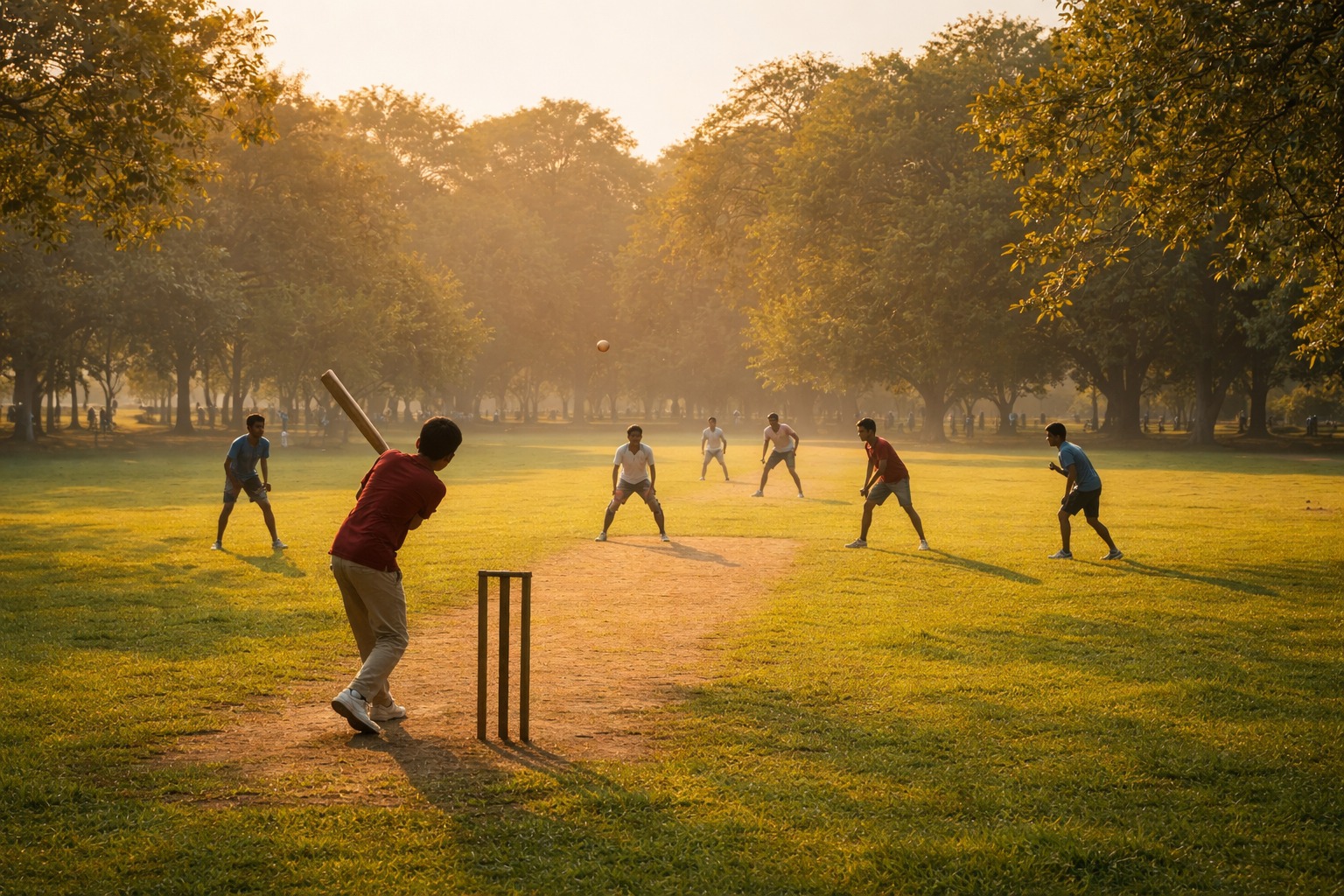
Madhupur youth playing cricket (AI-generated)
The left-handed batsman was called Saeed Anwar, and the fast bowlers were called Srinath and Prasad (after Venkatesh Prasad). Another spinner was called Raju (after Venkatapathy Raju) because we used to hit him around the park during practice, and his deliveries were very slow.
Similarly, our team had players named after Ganguly, Tendulkar, and several Pakistani players. Thoughtfully, the names of Muslim players were given to Hindu players, and most of the Muslim players were given the names of Hindu cricketers.
This club not only provided us with cricket for entertainment but also taught us valuable life lessons that sport is not meant to divide people; it unites them.
One of our Muslim teammates was an all-rounder; a fast bowler and a good batsman too. He opened both the bowling and batting for our team and was named Imran.
We all teammates visited his home on Eid and ate vermicelli pudding. On Eid al-Adha, we would eat biryani at his place. In fact, my first memory of eating biryani is from his place.
On Holi, my house hosted the team. Everyone relished the sweet-sour tamarind chutney and malpuas (crispy fried bread soaked in sugar syrup) served by my mother with jackfruit curry.
ALSO READ: When Muslims wept for Hindus fleeing killings in Kashmir
I was a fast bowler of the team and often bowled the second over in the match. (The first one was bowled by Imran Khan)
What did they call me? Let that remain a secret!
Readers are welcome to share their experiences of communal harmony or interreligious friendship on [email protected] for publication - Editor

.webp "Representational Image")









_(1).webp)