Ajmal Shah
The snow that blankets the Pir Panjal range has long served as a poetic metaphor for the peace and purity of Kashmir, yet today it conceals a malignancy that threatens to consume the very soul of the valley. For decades, we have measured the cost of the conflict in the stark arithmetic of gun battles and coffins, but failed to acknowledge that the enemy has fundamentally altered the terms of engagement. It has supplemented the roar of the Kalashnikov with the lethal hiss of the syringe.
After realising the futility of challenging the Indian state through conventional warfare and insurgency, Pakistan has resorted to a strategy of dismantling our future by poisoning our blood. This is no longer just a proxy war of ideology or territory; it is a calculated demographic assault where the weapon is a packet of heroin.
It is a tragedy that the nation that styles itself as the citadel of Islam has become the primary architect of a drug epidemic that contravenes every tenet of the faith it claims to defend. The Narco-Jihad is the ultimate hypocrisy of the Pakistani deep state. While their clerics deliver sermons on the prohibition of intoxicants and the sanctity of the human body, their intelligence agencies and military handlers have industrialised the production and distribution of heroin and methamphetamines.
They have conveniently bifurcated their morality by declaring that while the consumption of narcotics is forbidden for the believer, it is a permissible and even righteous weapon of war when used to destroy the youth of an adversary. This theological contortion allows a handler sitting in Rawalpindi to facilitate the poisoning of a Kashmiri teenager without a flicker of conscience, viewing the addict not as a victim but as collateral damage in a desperate campaign to bleed India by a thousand cuts.
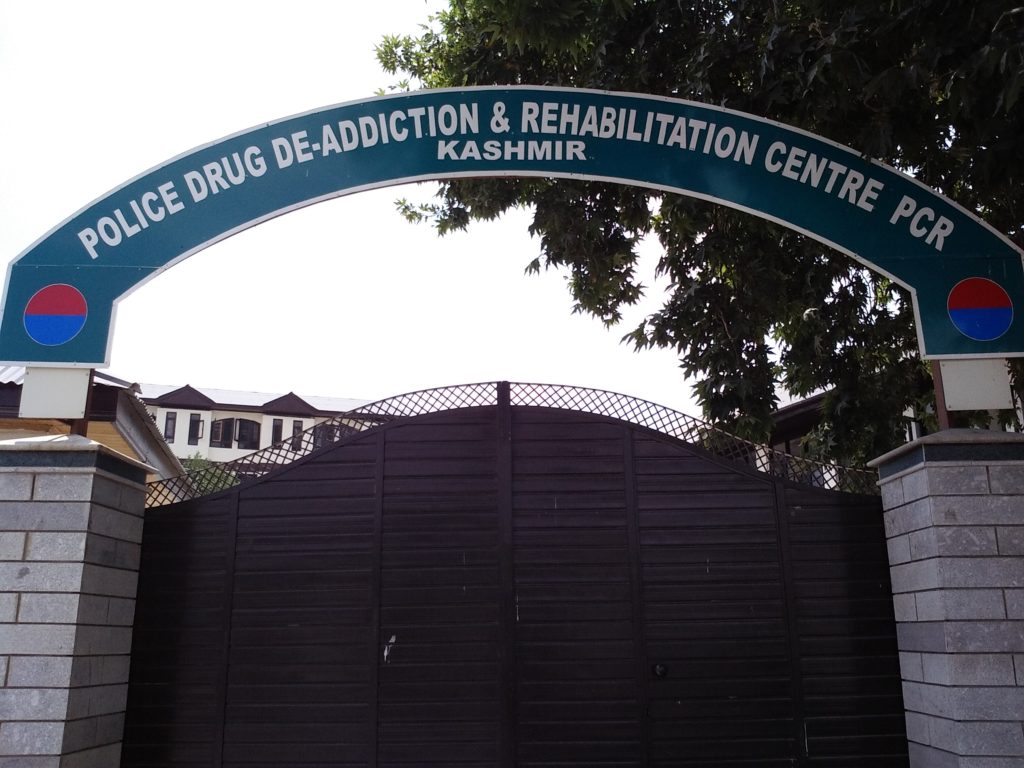 Drug rehablitation center in Kashmir
The mechanics of this warfare have evolved with terrifying sophistication over the years. We must recall the days when the Cross-LoC trade was hailed as a confidence-building measure designed to reconnect divided families and economies. Yet the masters of terror in Pakistan viewed our goodwill as a weakness to be exploited.
In the past, what was intended for the exchange of almonds and oranges was swiftly weaponised into a conduit for drugs. The trucks that crossed the peace bridge carried narcotics concealed in camouflage cavities and heroin bricks hidden inside sacks of dry fruit.
When the Indian state rightly suspended this trade to choke the flow of terror finance, the enemy did not retreat but merely diversified its logistics. They replaced the truck with the drone and the mountain pass with the maritime corridor.
Today, we see Chinese-made hexacopters buzzing over the international border in Punjab and Jammu, dropping payloads that contain a deadly barter: high-grade narcotics for the local market and pistols or sticky bombs for the militant.
This strategy is a manifestation of a pincer movement designed to encircle India, and it is here that the threat has metastasised beyond the western borders. While the world focuses on the Golden Crescent in the west, Pakistan has quietly activated a lethal eastern front by exploiting the Golden Triangle. The recent political fiasco in Bangladesh has provided the ISI with a new playground of instability, which they have weaponised with alarming speed.
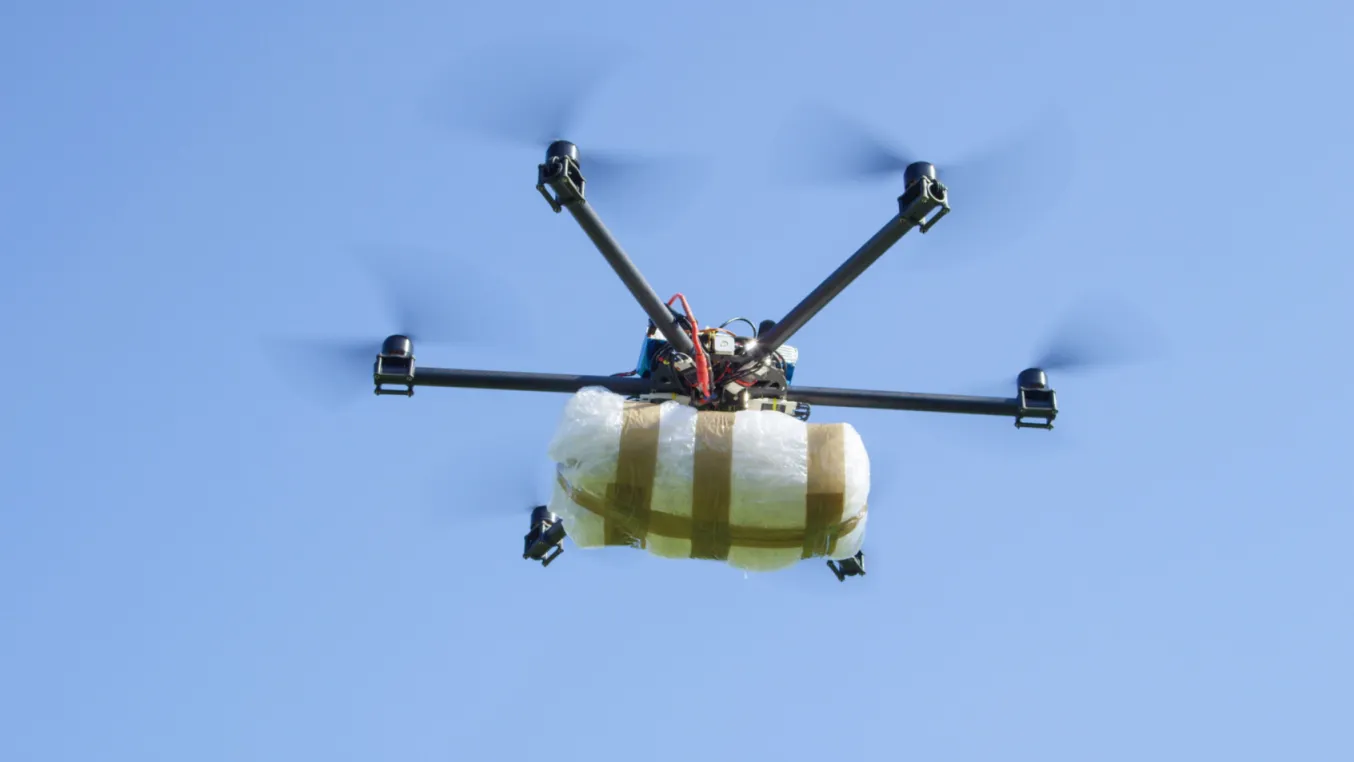 A drone carrying a payload filled with narcotics and arms
By leveraging the chaotic vacuum in Dhaka, Pakistani operatives have forged alliances with syndicates in the Golden Triangle to flood India’s eastern flank with synthetic drugs and methamphetamines.
We are now sandwiched between two corridors of poison where the heroin of the west meets the Yaba tablets of the east, both directed by Rawalpindi. This is not merely a smuggling route but a strategic encirclement where the instability of a neighbour is being used to pump death into the veins of India’s northeast and Bengal, effectively opening a second front in this narcotics war.
After 2019, there is a sense of accomplishment in the security establishment regarding curbing of foreign funding and the dismantling of the Hawala networks that once kept separatism alive. While it is true that the traditional pipelines of money from Pakistan and its overseas sympathisers have been squeezed, we often overlook the fact that terror finance is now being generated locally. The Pakistani establishment has operationalised a self-sustaining conflict economy within our borders.
However, the planners in Rawalpindi often underestimate the resilience of the Indian state and the people of Kashmir. The recent actions by the National Investigation Agency and the Jammu and Kashmir Police of attaching the properties of drug kingpins mark a decisive shift in our counterterror doctrine.
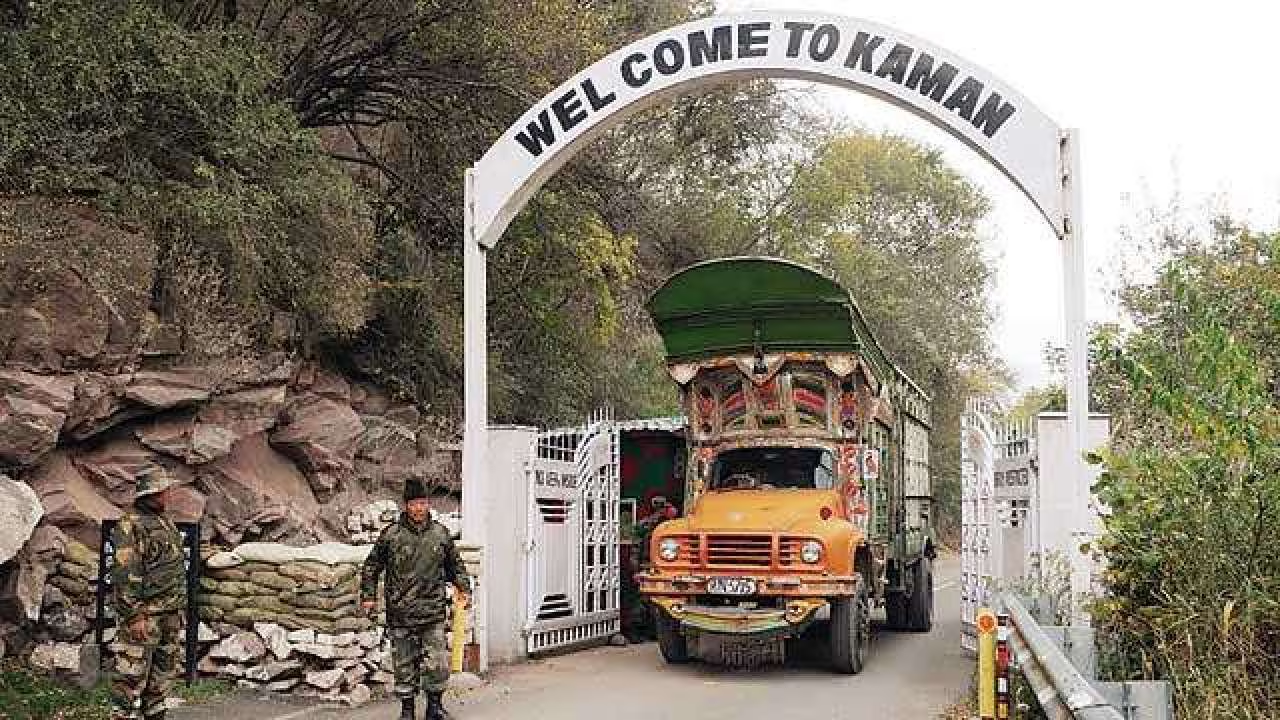 Kaman Post in Uri, which used to be a transit gate for India-Pakistan trade
By seizing the lands and the palatial houses that were built on the proceeds of this death trade, the state is striking at the very root of the incentive structure. We are piercing the corporate veil of terrorism to hold its associates accountable, sending a chilling message that there is no haven for blood money. The arrest of key operatives even from foreign soils like Saudi Arabia demonstrates that the long arm of Indian law has grown longer.
Pakistan is not feeding its agenda on the dead bodies of Kashmiris anymore; it is feeding on the dreams and aspirations of a generation that deserves better than a needle in the arm. The 2000 per cent of addicts have become the new foot soldiers in a war where the only victory lies in the destruction of human potential.
The battle that is being fought in the valleys of Kashmir and the hills of the Northeast is a contest for the preservation of human potential. The adversary’s strategy relies on the erosion of dreams and the suppression of a generation’s aspirations under the weight of addiction. Yet the resilience of the Indian ethos lies in its ability to withstand such subversive assaults through the collective will of its people and the vigilance of its institutions.
The attempt to surround India with a ring of fire fuelled by narcotics is a desperate gamble by a state that has run out of conventional options. Let it be known that the future will not be written by those who peddle poison but by a nation that refuses to let its youth be consumed by the geopolitical machinations of a neighbour that has lost its moral compass.
The author is an Advocate at the High Court of Jammu & Kashmir and Ladakh.

.webp "Representational Image")







.webp "Kassim Ahmad")
.webp)