 Shankar Kumar
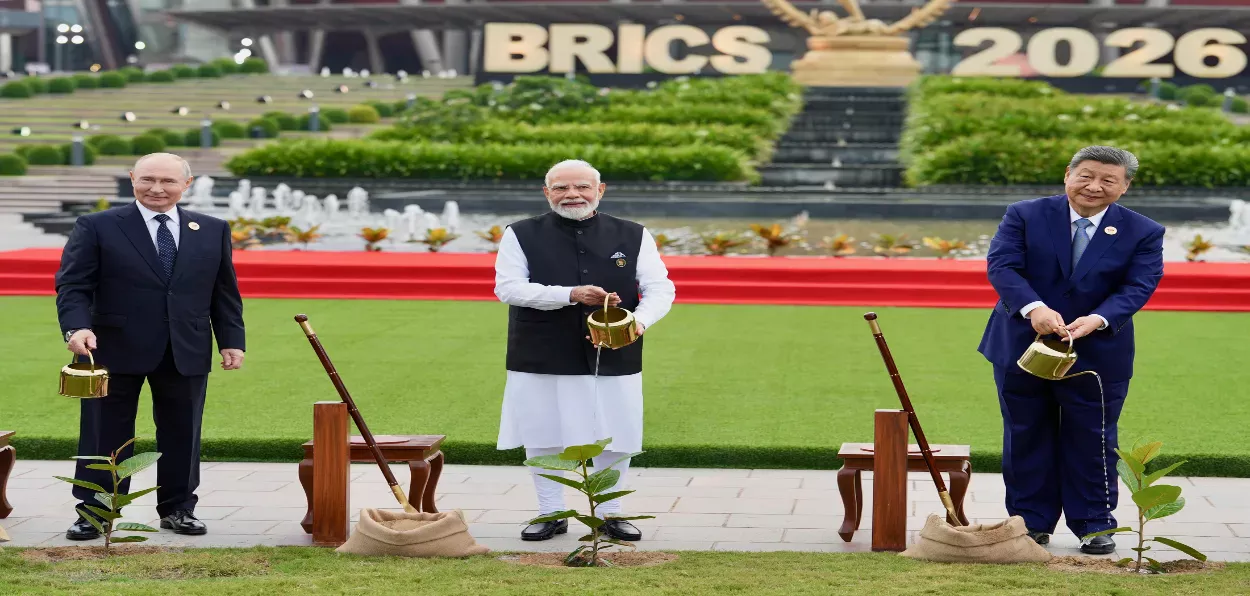
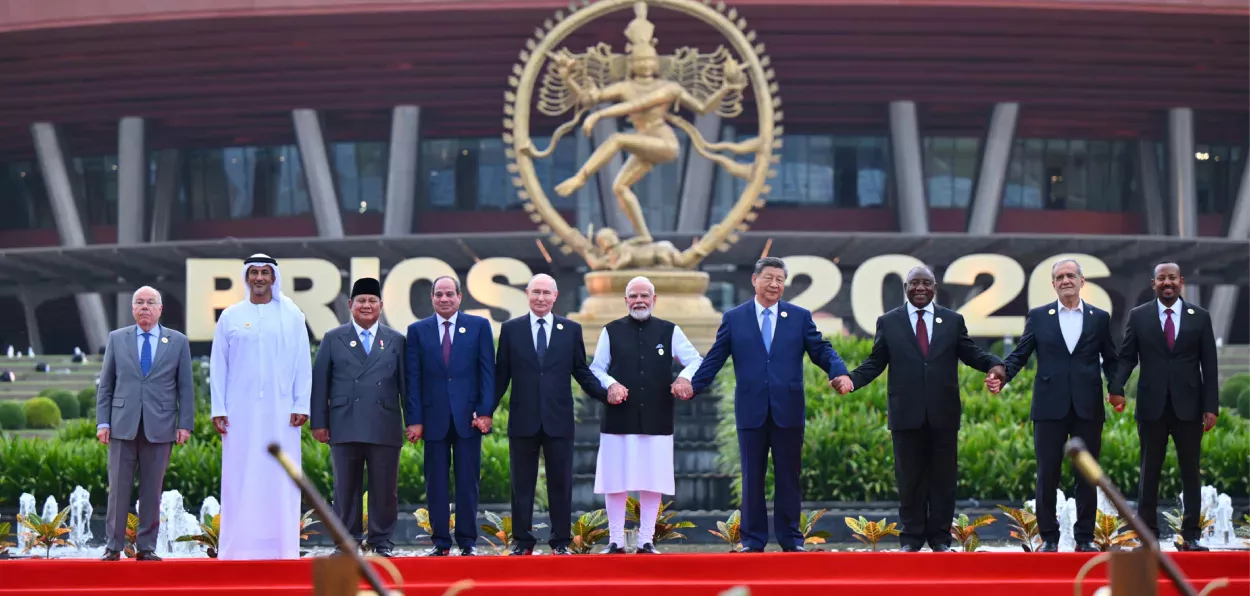
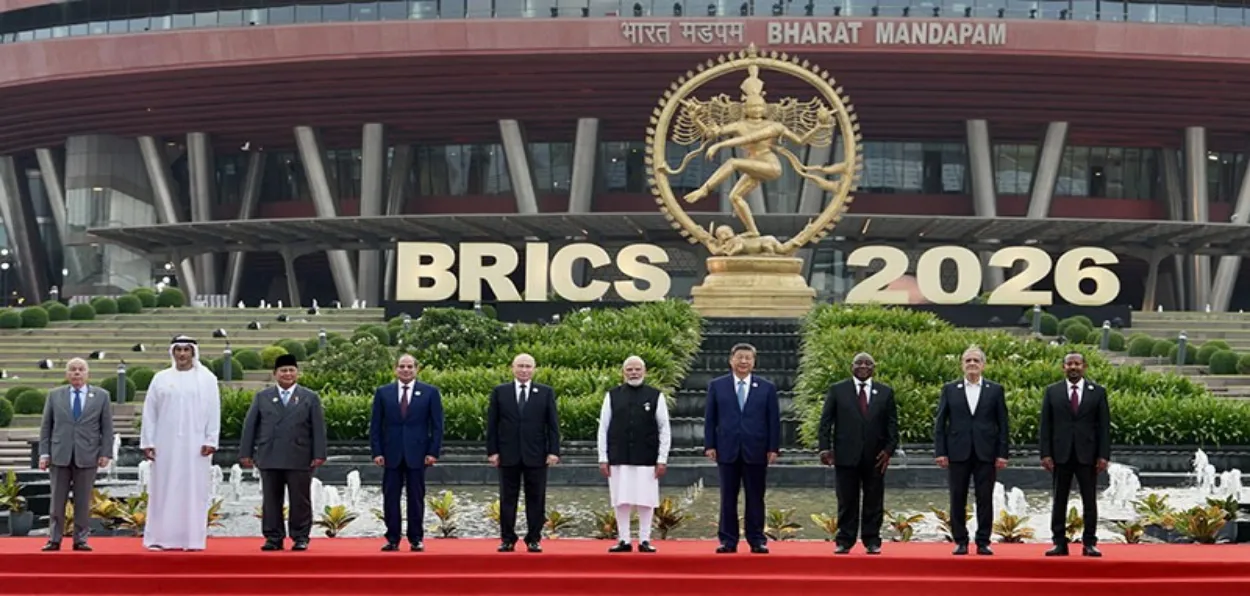
This year, India will host the BRICS summit. It is about to host Ursula von der Leyen, President of the European Commission, and Antonio Costa, President of the European Council, as chief guests for its 77th Republic Day function on January 26.
German Chancellor Friedrich Merz has just concluded his maiden visit, during which 19 Memoranda of Understanding were signed, and eight key announcements were made. As per media reports, Ukrainian President Volodymyr Zelenskyy is expected to visit India soon.
These developments indicate India’s growing recognition not merely as the 4th largest economy, but as a country that has significantly emerged as a global leader amid turbulent international situations, where uncertainty rules and chaos loom large.
This stature has not gone unnoticed as the Iranian Foreign Minister, Syed Abbas Araghchi, reached out to External Affairs Minister Dr S Jaishankar to discuss the prevailing situation in his country. Though not sharing a border with Iran, India shares warm and civilizational ties with the Middle-East country, which is currently going through a difficult phase since the 1979 Islamic Revolution. Analysts say the recent wave of mass protests in Iran has been larger and more widespread than those that erupted in 2019 and 2022.
With American troops waiting for signals from President Trump for possible action against Iran, and there is no sign of lessening of tension between Tehran and Tel Aviv, the Iranian Foreign Minister’s call to Jaishankar is seen as an acknowledgement of India’s growing diplomatic weight and its ability to engage constructively amid mounting uncertainty in the Middle East region.
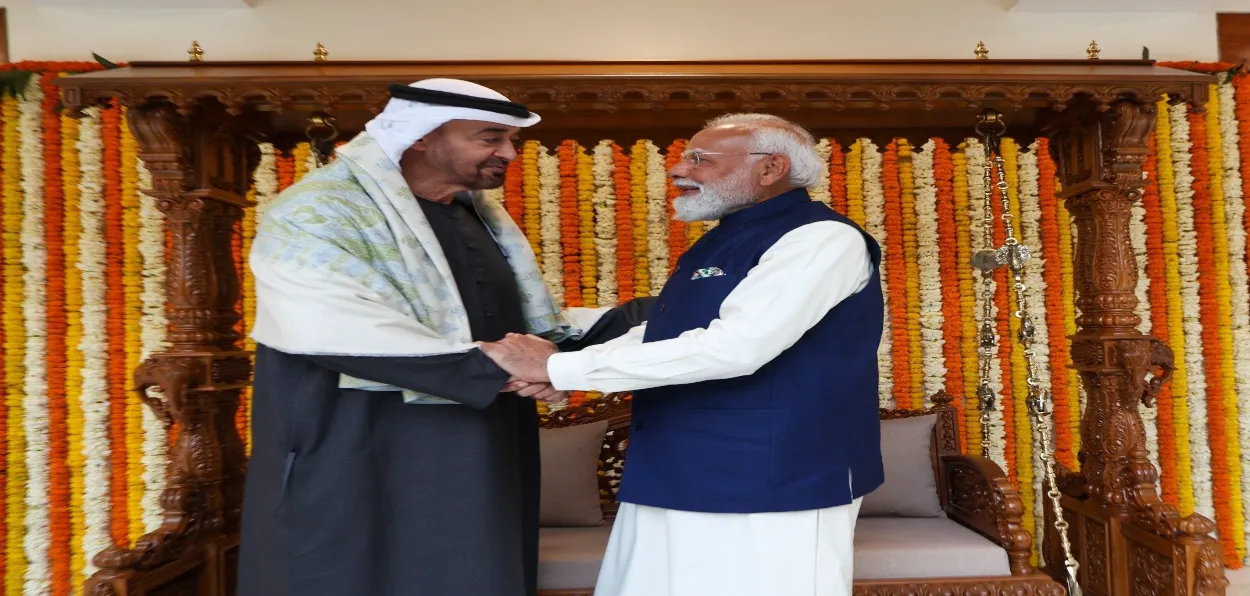
In this regard, UAE President Sheikh Mohamed bin Zayed Al Nahyan’s official visit to India on January 19 should be seen as part of a broader recognition of New Delhi’s rising strategic relevance and balancing role. The UAE President visited India at the invitation of Prime Minister Narendra Modi, and it took place at a time when the US troops had fully withdrawn from the Ain al-Asad air base in western Iraq, and the region is in turmoil due to the prevailing situation in Iran.
« The mother of all trade deals »
— Ursula von der Leyen (@vonderleyen) January 24, 2026
We are closing in on the 🇪🇺🇮🇳 Free Trade Agreement.
See you soon in Delhi. pic.twitter.com/gfiLv2eEam
India has repeatedly maintained that dialogue and diplomacy are the most effective tools to achieve a lasting resolution to any conflict or tension. This tenet has served as the main core of India’s overall foreign policy objective. Yet what has become particularly notable in recent years is the increasing credibility with which India’s voice is received by regional and global stakeholders alike.
This sense gets clearly reflected in the statement of Japanese Foreign Minister Toshimitsu Motegi. In his article, published in The Times of India on January 15, he said, “India is rapidly strengthening its presence as a global power, underpinned by its robust economic growth.”
Indeed, at a time when every corner of the world—from East and West to North and South—is engulfed in conflict, and economies are struggling to withstand challenges of unpredictability, India stands out as a rare exception. Largely due to political stability, the country is not just witnessing significant economic growth but is also doing everything possible to ward off being sucked into geopolitical power games that major global players or groups pursue for their own strategic ends.
Last week, India refused to join the joint naval exercise involving several BRICS members, including South Africa, Russia, China, and Iran. Kicked off near South Africa’s coast, the weeklong naval drills were the first of their kind from the group. Justifying India’s decision to skip the joint naval exercise, Ministry of External Affairs Spokesperson Randhir Jaiswal said, “It was not a regular or institutionalised BRICS activity, nor did all BRICS members take part in it.”
Apparently, India did not join the BRICS-led naval exercise, as it did not wish to be seen as aligning with any initiative that could be construed as a power projection exercise directed against the US. Earlier, India had dismissed claims that it was pushing de-dollarisation within BRICS.
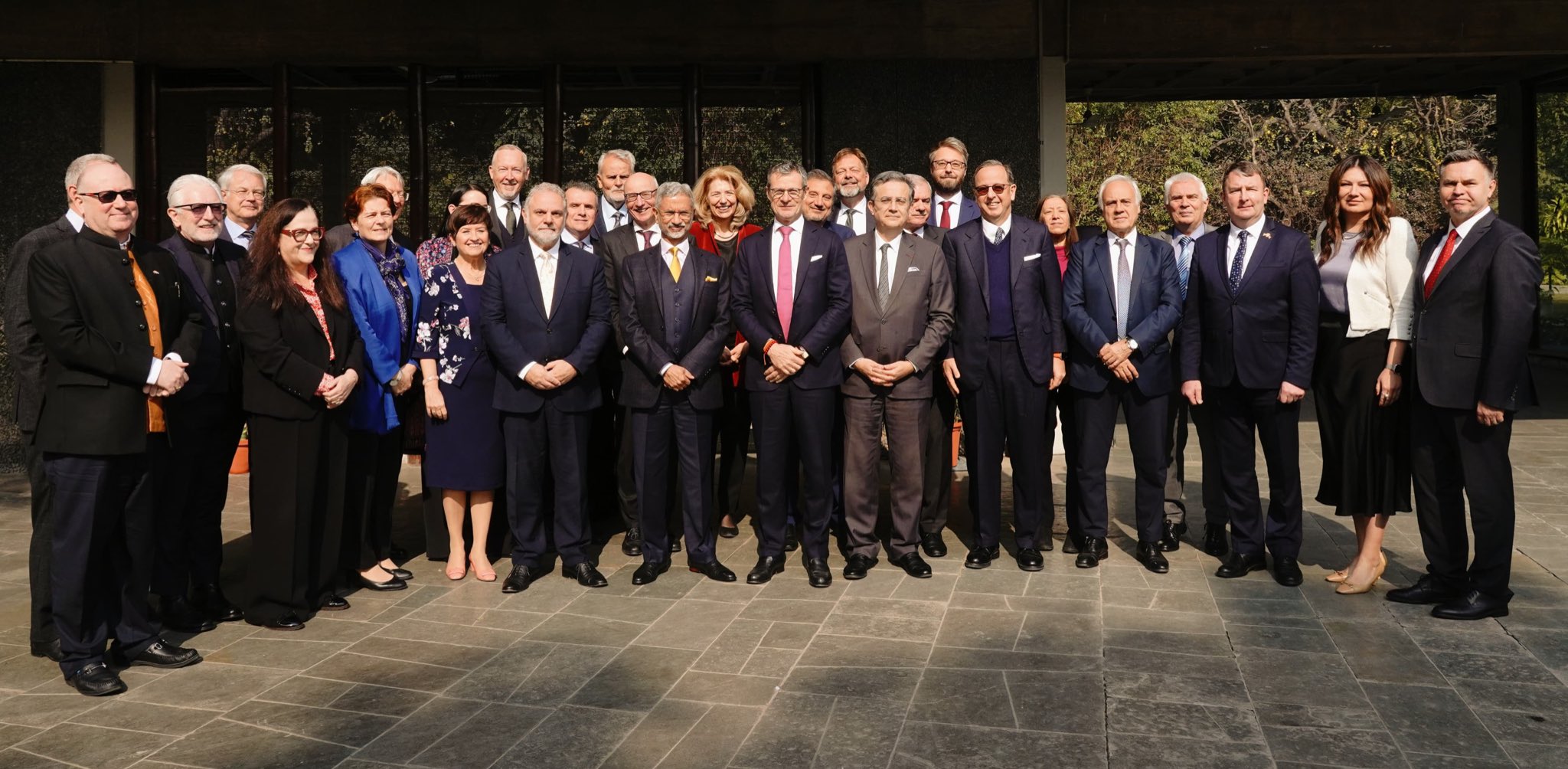 External Affairs Minister S Jaishankar with Ambassadors of European Union in Delhi
Similarly, New Delhi has consistently worked to ensure that the Quad, comprising India, the US, Japan, and Australia, is not viewed as an exclusive anti-China military alliance. However, the fact is that India has left no stone unturned in expressing its concern over China’s growing assertiveness in the Indo-Pacific.
The US has imposed 50% tariffs on India, the highest on any country in the world. This is linked with New Delhi’s continued purchase of Russian oil and its disagreements with the US over market access to its goods in India. The US is threatening to slap 500% tariffs on Indian goods entering the US market. Despite this, India has neither stopped importing oil from Russia nor has it opened its market for American goods, particularly related to dairy and agricultural products.
This approach is widely seen as a reflection of India’s resilience and its determination to safeguard strategic autonomy, even in the face of mounting economic and geopolitical pressure from major global powers like the US.
What is, however, more significant is that, faced with the US effectively blocking its market for Indian goods through the imposition of steep tariffs, New Delhi has decided to diversify its exports to different parts of the world. In this context, improvement of India’s relations with China has yielded tangible results on the economic front.
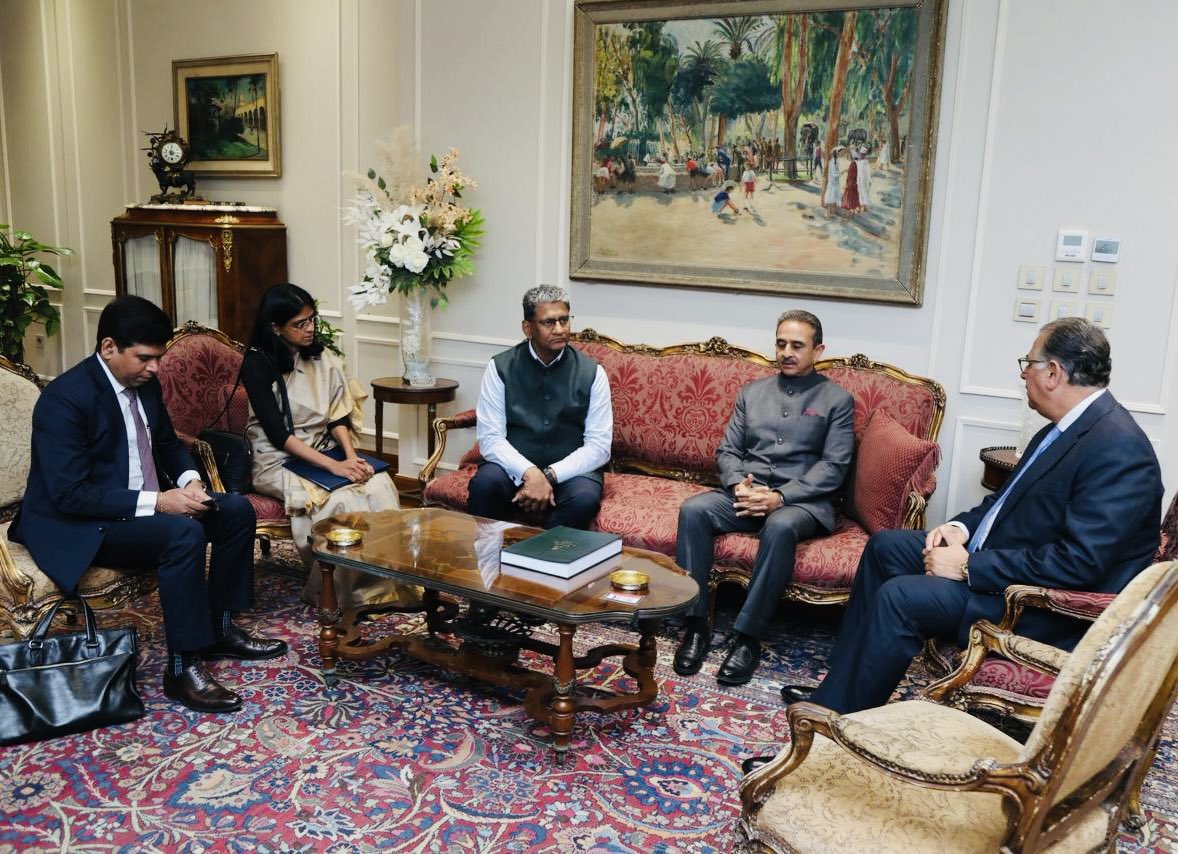 MOS Kirti Vardhan Singh meetinb Egyptian Foreign Minister Bard Andelatty
Beijing has today emerged as the top trading partner of New Delhi. India’s trade with China stood at $110.20 billion between April and December 2025, compared to $105.31billion with the US.
It can also be seen in the case of India’s growing engagement with Europe. Even as India’s neutral position on the Russia-Ukraine War is bothering Europe, it has not come in the way of its move to expand its diplomatic and political relations with New Delhi. Rather, increased engagements between India and Europe have led to a better management of differences and greater familiarity with each other’s strategic compulsions.
Significantly, Antonio Costa, the European Council President and Ursula von der Leyen, the European Commission President, are going to be chief guests for India’s 77th Republic Day functions in New Delhi.
During these two prominent EU leaders’ visit on January 25-27, India and the 27-nation European Union bloc are expected to sign a long-negotiated Free Trade Agreement. If signed, analysts say, it will mark an economic, strategic, and geopolitical turning point for the two sides. What is, moreover, notable is that it will result in both India and the EU reducing their overdependence on any single market and strengthening supply-chain resilience.
ALSO READ: Haq is tale of Muslim women's fight for dignity and justice
These developments underscore India’s position as an oasis of peace and stability, while reinforcing its growing recognition as a consequential stakeholder in global diplomacy: A country that can shape outcomes through dialogue and diplomacy and safeguard its strategic autonomy amid a vastly fragmented world order.
.webp "Representational Image")






.webp "Kassim Ahmad")
.webp)